Introduction: Why National Parks Should Be Your Next Adventure
America’s national parks offer some of the most spectacular landscapes on Earth. From steaming geysers and towering waterfalls to ancient redwood forests and dramatic canyons, these protected areas showcase nature at its finest. But with 63 national parks to choose from, where should you start if you’ve never visited before?
The best national parks for first-time visitors combine accessibility, iconic scenery, and well-developed infrastructure. You don’t need to be an experienced backpacker or wilderness expert to experience these incredible places. Many offer paved trails, visitor centers, ranger programs, and accommodations that make your first visit comfortable and memorable.
This guide covers the top national parks perfect for first-timers, complete with practical planning tips, must-see attractions, and insider knowledge that will transform your visit from overwhelming to unforgettable.
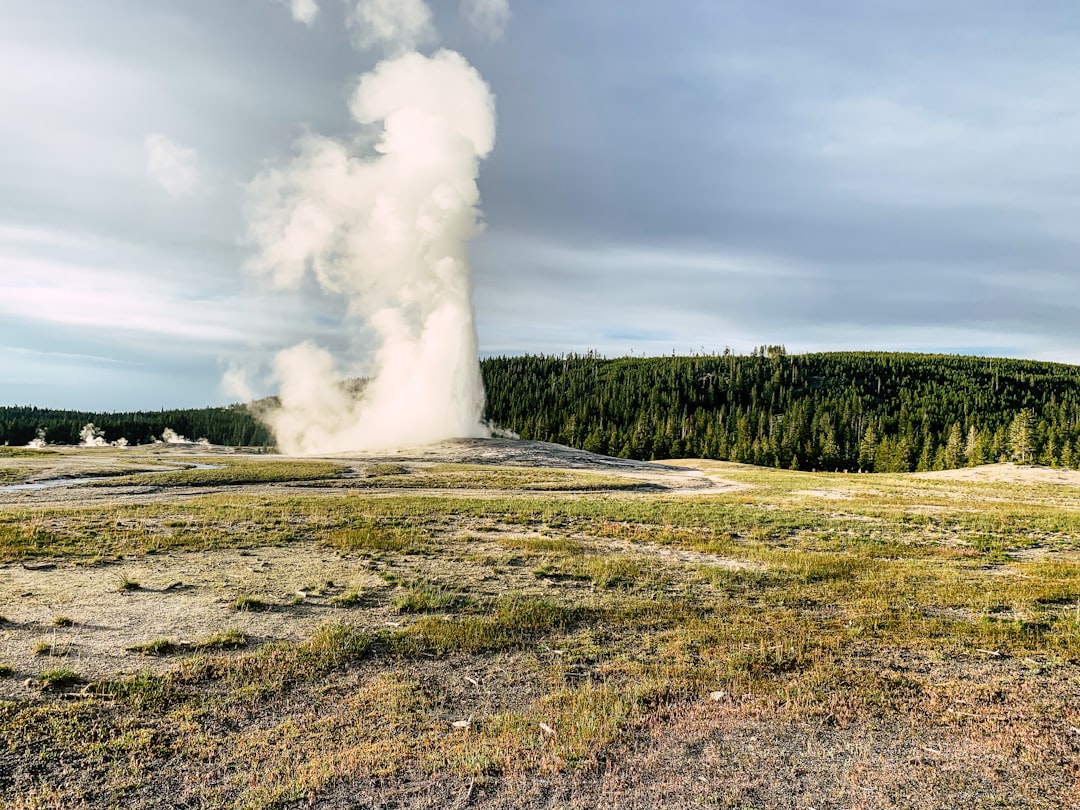
1. Yellowstone National Park (Wyoming/Montana/Idaho)
Why It’s Perfect for First-Timers: America’s first national park remains its most famous. Geysers, hot springs, and abundant wildlife make Yellowstone an unforgettable introduction to the national park system.
Getting There & Timing
Best Time to Visit:
– June-September: Peak season with full services, warm days (60-80°F), cool nights
– April-May & October: Fewer crowds, cooler weather (40-60°F), some facilities closed
– November-March: Winter season (snowshoeing, cross-country skiing, limited access)
How to Get There:
– Fly into: Bozeman (BZN), Jackson Hole (JAC), or West Yellowstone (WYS) airports
– Drive from: Salt Lake City (5 hours), Denver (8 hours), or Bozeman (1.5 hours)
Where to Stay:
– Inside the park: Old Faithful Inn (historic lodge), Canyon Village (modern hotel), Lake Yellowstone Hotel (lakefront)
– Outside the park: West Yellowstone, MT (gateway town with many options), Gardiner, MT (north entrance)
Must-See Attractions
1. Old Faithful
– Erupts approximately every 90 minutes (check visitor center for predictions)
– Upper Geyser Basin boardwalk: 2-mile loop past dozens of geysers and hot springs
– Pro Tip: Arrive 30 minutes early for a good viewing spot
2. Grand Prismatic Spring
– Largest hot spring in the US, famous for rainbow colors
– Midway Geyser Basin boardwalk: 0.8-mile loop
– Best viewing: Fairy Falls trail (1.6 miles round-trip) for overlook view
3. Yellowstone Lake & Hayden Valley
– Largest high-elevation lake in North America
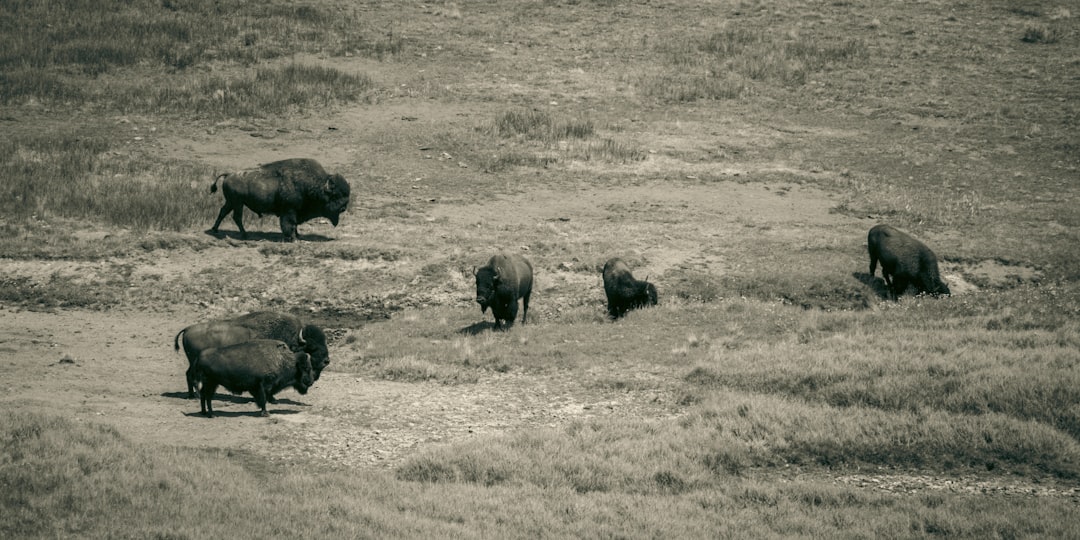
– Hayden Valley: Best wildlife viewing (bison, elk, grizzly bears)
– Bring: binoculars for wildlife spotting
4. Mammoth Hot Springs
– Terraced travertine formations created by hot water
– Lower Terraces boardwalk: 1.5 miles of accessible walks
– Elk often graze on the lawns in town
First-Timer Tips
– Allow 3-4 days to see major attractions without rushing
– Download the NPS app for geyser predictions and trail maps
– Start early (6-7 AM) to beat crowds at popular spots
– Stay on boardwalks – thermal features are fragile and dangerous
– Carry bear spray when hiking (rent in gateway towns or buy online)
2. Grand Canyon National Park (Arizona)
Why It’s Perfect for First-Timers: The Grand Canyon is one of the world’s most famous natural wonders. South Rim offers excellent infrastructure, shuttle buses, and wheelchair-accessible viewpoints.
Getting There & Timing
Best Time to Visit:
– March-May & September-November: Ideal weather (60-80°F), fewer crowds than summer
– June-August: Peak season, hot (90-100°F at rim), crowded
– December-February: Winter (snow possible, 30-50°F), peaceful, scenic
How to Get There:
– Fly into: Flagstaff (FLG) or Phoenix (PHX)
– Drive from: Flagstaff (1.5 hours), Phoenix (3.5 hours), Las Vegas (4.5 hours)
Where to Stay:
– Inside the park: El Tovar Hotel (historic), Yavapai Lodge (modern), Phantom Ranch (bottom of canyon – lottery system)
– Outside the park: Tusayan (just outside south entrance), Williams (1 hour south)
Must-See Attractions
1. Mather Point
– Classic first view of Grand Canyon from visitor center
– Paved, wheelchair-accessible trail
– Best time: Sunrise for spectacular lighting
2. Desert View Watchtower
– 70-mile panoramic views from stone tower
– Watchtowers designed by Mary Colter (1932)
– Gift shop with Native American crafts
3. Bright Angel Trail
– Most popular trail into canyon (for day hikes)
– Day hikers: Go 1.5-3 miles down (then back up – much harder!)
– Bring: 1-2 liters water per person, snacks, hiking poles help knees
4. Hermit’s Rest scenic drive
– West rim drive with multiple overlooks
– Accessible by free shuttle bus (no private cars allowed March-November)
– Hopi Point: Widest view of canyon
First-Timer Tips
– Don’t hike to bottom and back in one day – it’s 18 miles round-trip, 6,000 ft elevation change
– Bring more water than you think you need – desert environment, dry air
– Start early for hiking (before 7 AM in summer)
– Use shuttle buses – parking fills by 9 AM in summer
– Altitude sickness: South Rim is 7,000 ft – drink water, avoid alcohol first day
3. Great Smoky Mountains National Park (Tennessee/North Carolina)
Why It’s Perfect for First-Timers: Most visited national park in the US. Free entry, accessible from major East Coast cities, and offers diverse hiking options from easy to challenging.
Getting There & Timing
Best Time to Visit:
– April-May: Wildflowers, waterfalls at peak flow, moderate temperatures (60-70°F)
– October: Fall foliage (world-famous), cool weather (50-70°F), crowded
– June-August: Lush greenery, warm (70-85°F), very crowded, afternoon thunderstorms
How to Get There:
– Fly into: Knoxville (TYS) or Asheville (AVL)
– Drive from: Knoxville (1 hour), Asheville (2 hours), Atlanta (4 hours)
Where to Stay:
– Inside the park: LeConte Lodge (accessible only by hiking – reservations 1 year in advance)
– Outside the park: Gatlinburg, TN (lots of hotels, restaurants), Pigeon Forge, TN, Cherokee, NC
Must-See Attractions
1. Clingmans Dome
– Highest point in Smokies (6,643 ft)
– Observation tower with 360-degree views
– Drive: Clingmans Dome Road (closed December-March)
– Note: Can be 10-20°F cooler than lowlands
2. Cades Cove
– Valley with historic buildings, abundant wildlife
– 11-mile one-way loop road (plan 2-4 hours)
– Wildlife: White-tailed deer, black bears, wild turkeys
– Bring: camera with telephoto lens
3. Laurel Falls
– 80-foot waterfall, 2.6-mile round-trip hike
– Paved trail (moderate difficulty)
– Go early: Parking fills by 9 AM in peak season
4. Newfound Gap Road
– Scenic drive crossing the park (33 miles)
– Multiple pullouts with views
– Stop: Newfound Gap overlook (5,046 ft elevation)
First-Timer Tips
– NO entrance fee – rare among national parks
– Black bear safety: Never approach, feed, or harass bears (stay 100+ yards away)
– Traffic: Expect delays, especially in Cades Cove and on Newfound Gap Road
– Weather changes quickly: Mountains create own weather – bring layers
4. Zion National Park (Utah)
Why It’s Perfect for First-Timers: Dramatic red cliffs, narrow canyons, and diverse hiking. Shuttle system makes visitation easy, and park is relatively small (easy to see in 2 days).
Getting There & Timing
Best Time to Visit:
– March-May & September-November: Ideal temperatures (60-85°F), manageable crowds
– June-August: Peak season (100°F+), crowded, start hikes before 7 AM
– December-February: Winter (30-50°F), snow possible, some trails closed
How to Get There:
– Fly into: Las Vegas (LAS) or Salt Lake City (SLC)
– Drive from: Las Vegas (2.5 hours), Salt Lake City (4 hours)
Where to Stay:
– Inside the park: Zion Lodge (historic lodge inside canyon)
– Outside the park: Springdale, UT (gateway town with many options)
Must-See Attractions
1. Zion Canyon Scenic Drive
– Only accessible by shuttle (March-November)
– Multiple stops: Zion Lodge, The Grotto, Weeping Rock, Temple of Sinawava
– Tip: Get off at every stop – each offers different views
2. Angels Landing
– Difficulty: Strenuous, 5-mile round-trip, 1,500 ft elevation gain
– Not for: Fear of heights (narrow ridge with drop-offs on both sides)
– Permits required (2024+): Day-use lottery via recreation.gov
– Alternative: Scout Lookout (before chains section) – still great views
3. The Narrows
– Difficulty: Moderate-strenuous, hike in Virgin River
– Distance: 2-10 miles (out-and-back)
– Required: Neoprene socks, wooden walking stick, rent dry pants locally
– Best time: Late June-September (water warmest, levels lowest)
– Flash flood danger: Check weather forecast, rangers for conditions
4. Emerald Pools
– Three pools: Lower (easy), Middle (moderate), Upper (moderate)
– Total: 3-mile round-trip to all three
– Waterfall crossings: Can be slippery – bring waterproof hiking shoes
First-Timer Tips
– Park in Springdale – take free town shuttle to park entrance
– Start popular hikes early – Angels Landing by 6 AM, Narrows by 7 AM
– Bring tons of water – desert environment, strenuous hiking
– Shuttle system: Runs frequently, last shuttle from park ~8 PM
5. Yosemite National Park (California)
Why It’s Perfect for First-Timers: Iconic granite cliffs, waterfalls, and giant sequoias. Well-developed infrastructure, free shuttle buses, and something for everyone.
Getting There & Timing
Best Time to Visit:
– May-June: Waterfalls at peak flow, wildflowers, moderate temperatures
– September-October: Fewer crowds, fall foliage, cool temperatures
– July-August: Peak season, crowded, warm (80-90°F), but amazing
How to Get There:
– Fly into: Fresno (FAT), San Jose (SJC), or San Francisco (SFO)
– Drive from: Fresno (2 hours), San Jose (4 hours)
Where to Stay:
– Inside the park: The Ahwahnee (historic luxury), Yosemite Valley Lodge, Curry Village
– Outside the park: Mariposa, El Portal, or Oakhurst
Must-See Attractions
1. Yosemite Valley
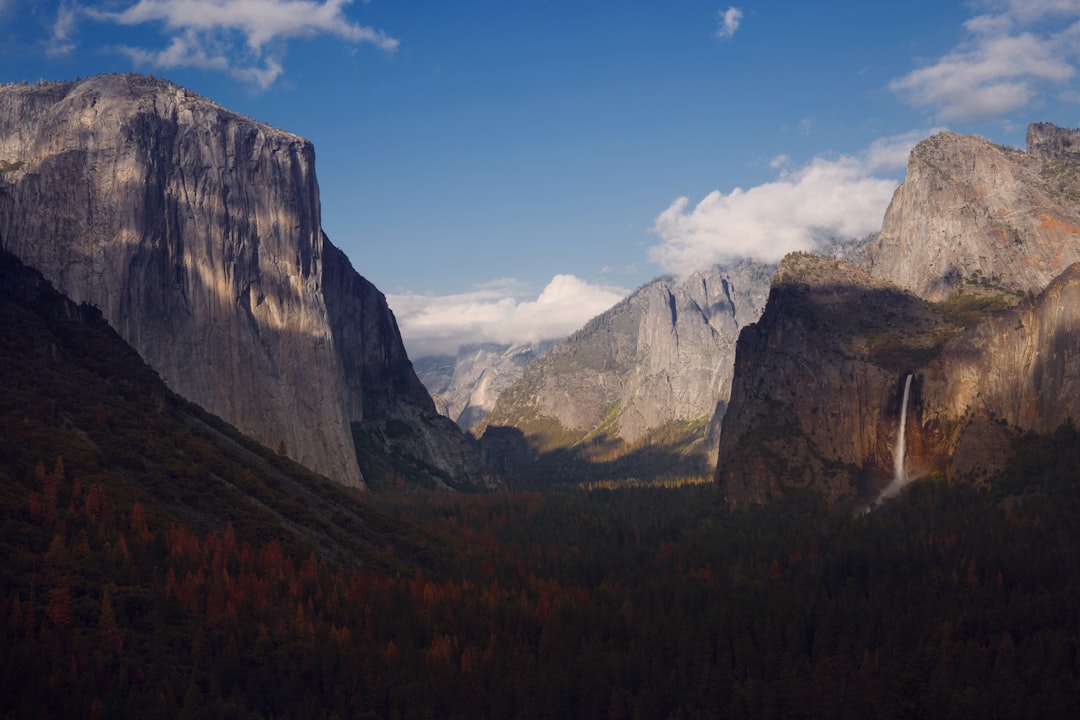
– Tunnel View: Classic view of El Capitan, Half Dome, Bridalveil Fall
– Valley Loop: 7-mile paved/path trail (easy)
– Bridalveil Fall: 20-minute walk to waterfall base
2. Glacier Point
– View: Panoramic overlook of Yosemite Valley, Half Dome
– Drive: 30 minutes from valley
– Sunset: Best time to visit (golden light on granite walls)
3. Mariposa Grove of Giant Sequoias
– Trees: 500+ mature giant sequoias
– Hiking: 0.3-mile boardwalk (Big Trees Loop) to Grizzly Giant (2-mile loop)
– Shuttle: Required in summer (free from visitor center)
4. Vernal & Nevada Falls
– Mist Trail: 3-mile round-trip to Vernal Fall (strenuous, wet staircase)
– Full hike: 5.4 miles to Nevada Fall and back
– Bring: rain jacket for Mist Trail
First-Timer Tips
– YARTS shuttle: From gateway towns (required in summer for some areas)
– Reservation system: Required for entry during peak season (check NPS website)
– Bear safety: Store all food in lockers (black bears are aggressive)
– Waterfalls: Peak flow in May-June, dry by August-September
Planning Your First National Park Visit
Trip Planning Timeline
3-6 Months Before:
– Decide which parks to visit (based on interests, time, budget)
– Book accommodations: Inside park lodges fill 6-12 months in advance
– Check if reservations are required (many parks now require advance entry reservations)
1-3 Months Before:
– Book flights (if flying)
– Rent a car (many parks require personal vehicle)
– Backcountry permits (if camping or backpacking) – apply as early as allowed
2-4 Weeks Before:
– Download apps: NPS app, park-specific apps
– Check road conditions: Some park roads close seasonally
– Pack gear: Hiking boots, layers, water bottles, day pack
– Buy National Parks Pass ($80/vehicle, covers entry fees for all parks)
What to Pack
Essential Gear for Any National Park:
– Day pack: 20-30L with comfortable straps
– Water: 2-3 liters per person (more in desert parks)
– Food/snacks: Trail mix, sandwiches, energy bars
– Layers: Weather can change quickly – waterproof jacket, fleece, moisture-wicking base layers
– Hiking boots/shoes: Break in before trip!
– Sun protection: Hat, sunglasses, sunscreen
– Navigation: GPS device or downloaded maps (cell service unreliable)
– First aid kit: Blisters, cuts, scrapes
– Headlamp/flashlight: In case hike takes longer than expected
Park-Specific Additions:
– Yellowstone/Grand Teton: Bear spray
– Zion/Narrows: Water gear (neoprene socks, walking stick, dry pants)
– Yosemite: Bear canister (if backpacking)
– Desert parks (Zion, Grand Canyon): Extra water (3-4 liters/person), sun hat, cooling towel
Budget Planning
Entry Fees:
– Single park: $20-35 per vehicle (valid 7 days)
– Annual pass: $80 (covers all parks for year – pays for itself after 3-4 parks)
– Free entry days: 5-6 days per year (check NPS website)
Accommodations (per night):
– Campgrounds: $20-35 (book 6 months in advance)
– Park lodges: $150-400+ (book 6-12 months in advance)
– Gateway towns: $80-250+ (more options, lower prices)
Other Costs:
– Gas: Plan for $50-100+ depending on distances
– Food: $30-60/day per person (more if dining in restaurants)
– Gear: $200-500+ if buying new (boots, pack, etc.)
Safety Tips for First-Timers
Wildlife Safety:
– Never approach or feed wildlife – even cute squirrels
– Bears: Stay 100+ yards away, carry bear spray in grizzly country
– Bison/elk: Stay 25+ yards away (they can run 35 mph)
– Snakes: Watch where you step/hands, wear boots on trails
Weather Safety:
– Check forecasts – mountain weather changes quickly
– Lightning: Get off exposed ridges/peaks during thunderstorms
– Flash floods: Avoid slot canyons (Narrows) during/after rain
– Heat: Start early in desert parks, carry extra water
Trail Safety:
– Stay on marked trails – protect fragile ecosystems, avoid getting lost
– Tell someone your plans – which trail, when you expect to return
– Turn back if: Weather turns bad, you’re exhausted, it’s getting late
Making the Most of Your Visit
Ranger Programs (Free!):
– Evening campfire talks: Learn park history, wildlife
– Guided hikes: Rangers share insights you’d miss otherwise
– Junior Ranger program: Kids (and adults) earn badges
Photography Tips:
– Golden hour: Best light is sunrise/sunset
– Don’t just shoot: Put camera down sometimes and experience the moment
– Get up early: Beat crowds, get best light, see wildlife
Avoid Crowds:
– Start early: Popular trailheads fill by 8-10 AM
– Visit offseason: Spring and fall have fewer crowds, great weather
– Explore less-visited areas: Every park has hidden gems
Conclusion: Your National Park Adventure Awaits
America’s national parks offer life-changing experiences for first-time visitors. You don’t need to be an experienced outdoors person to enjoy these incredible places. Start with accessible parks like Yellowstone, Grand Canyon, or Great Smoky Mountains, and you’ll be hooked.
Key Takeaways:
1. Plan ahead – Accommodations fill months in advance
2. Start early – Beat crowds and heat
3. Stay flexible – Weather happens, trails close, have backup plans
4. Leave no trace – Protect these places for future generations
5. Have fun – This is YOUR adventure
Ready to start planning? Pick one park from this guide, book your lodging, and get ready for an adventure you’ll remember forever.
Have you visited any of these parks? Share your experiences and tips for first-timers in the comments below!
Related Articles:
– Best Time to Visit Hawaii: Your Complete 2026 Guide
– Essential Road Trip Gear: What You Really Need (2026 Edition)
– Valentine’s Day Romantic Getaways: A Complete 2026 Guide
2 thoughts on “Best National Parks for First-Time Visitors: A Complete 2026 Guide”