Why Desert Super Blooms Are Nature’s Most Spectacular Show
There’s something almost supernatural about standing in a desert valley that was barren brown last week, watching it erupt in color overnight. I’ve chased wildflower seasons across the American Southwest for nearly a decade, and 2026 has already delivered one of the most extraordinary desert superbloom seasons I’ve ever witnessed. Death Valley’s rare February spectacular—the first in ten years—kicked things off with carpets of desert gold stretching to the horizon. Now Anza Borrego is following suit, and Arizona’s deserts are putting on shows that have wildflower enthusiasts scrambling for last-minute road trips.
Most people think of deserts as dead landscapes, but that’s precisely why superblooms feel so miraculous. These plants aren’t just pretty—they’re survival artists that can wait decades for perfect conditions. When the stars align (just the right rainfall at just the right time, followed by perfect temperatures), entire desert ecosystems synchronize their blooming in a synchronized explosion of color that lasts just weeks. I’ve driven hundreds of miles out of my way to catch these windows, and I’m here to tell you: the pilgrimage is absolutely worth it.
What makes 2026 particularly special is the timing. We’re seeing overlapping blooms across multiple desert regions—something that usually happens once every decade or so. While I can’t promise you’ll catch peak conditions everywhere in one trip (that would require covering thousands of miles in a few weeks), I can help you strategize, time your visit, and choose the right locations based on real-time conditions.
Death Valley: The February Showstopper
Let me be honest about Death Valley: I’d been there five times before 2026 and never seen anything beyond scattered flowers. That’s normal. Death Valley’s famous superblooms are notoriously rare—maybe once every decade, when winter rains soak the valley floor just right. But February 2026 delivered conditions so perfect that rangers were calling it the best bloom since 2016.
I arrived expecting a light dusting of desert gold, maybe a few patches of gravel ghost. What I found was mind-bending. Badwater Basin’s usually-cracked salt flats were fringed with miles of yellow flowers. The alluvial fans around Funeral Mountains were carpeted in purple notch-leaf phacelia and orange desert marigold. Photographers I talked to who’d been documenting Death Valley for 30 years said they’d never seen anything like it.
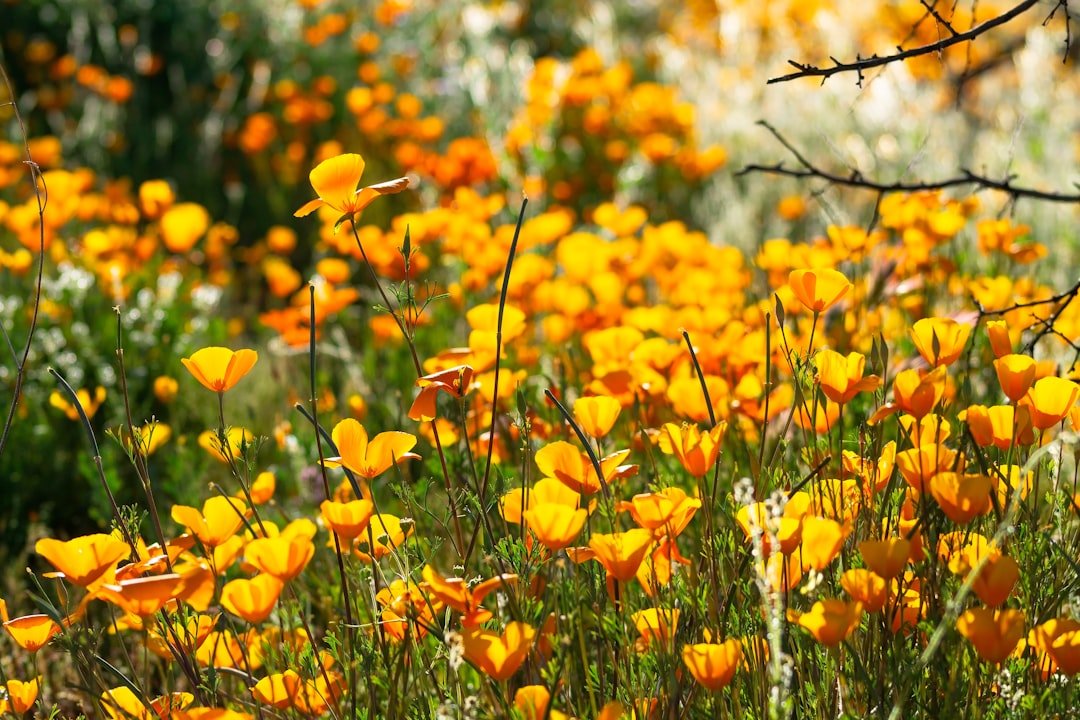
Here’s the thing about Death Valley blooms: they’re deceptively delicate. Desert gold (the showy yellow daisy-like flower that dominates these events) is surprisingly fragile. One footstep can crush dozens of plants that took months to develop. I stuck to established roads, pullouts, and trails—no cross-country hiking through flower fields. Most visitors I saw were respectful, but I did encounter a few people trampling through blooms for Instagram photos. Don’t be that person. These plants survive in one of the harshest environments on Earth; the least we can do is give them some space.
Practical note: Death Valley’s peak bloom is usually February through mid-March. By late April, most flowers have gone to seed. However, higher elevations like Telescope Peak and Wildrose Peak often bloom later (April through May), so you can still find color if you’re willing to do some elevation gain. I brought my waterproof hiking boots and was glad I did—those higher elevation trails still had snow patches in early March.
Anza Borrego: California’s Desert Garden
If Death Valley is the marquee event, Anza Borrego Desert State Park is the reliable favorite. This park consistently delivers solid blooms most years, and 2026 has been particularly spectacular. What sets Anza Borrego apart is diversity—you’ll find more species here than almost anywhere else, and the terrain varies dramatically from sandy washes to rocky canyons to mountain slopes.
I spent three days exploring Anza Borrego in mid-March, and the highlight was unquestionably the coyote canyon area. Desert lilies—elegant white trumpets on tall stalks—were everywhere, interspersed with vibrant purple sand verbena and bright yellow desert dandelions. The washes were lined with brittlebush, which creates these masses of yellow flowers that absolutely glow during golden hour. I shot one of my favorite wildflower photos ever just after sunrise, with backlit brittlebush flowers against a canyon wall.
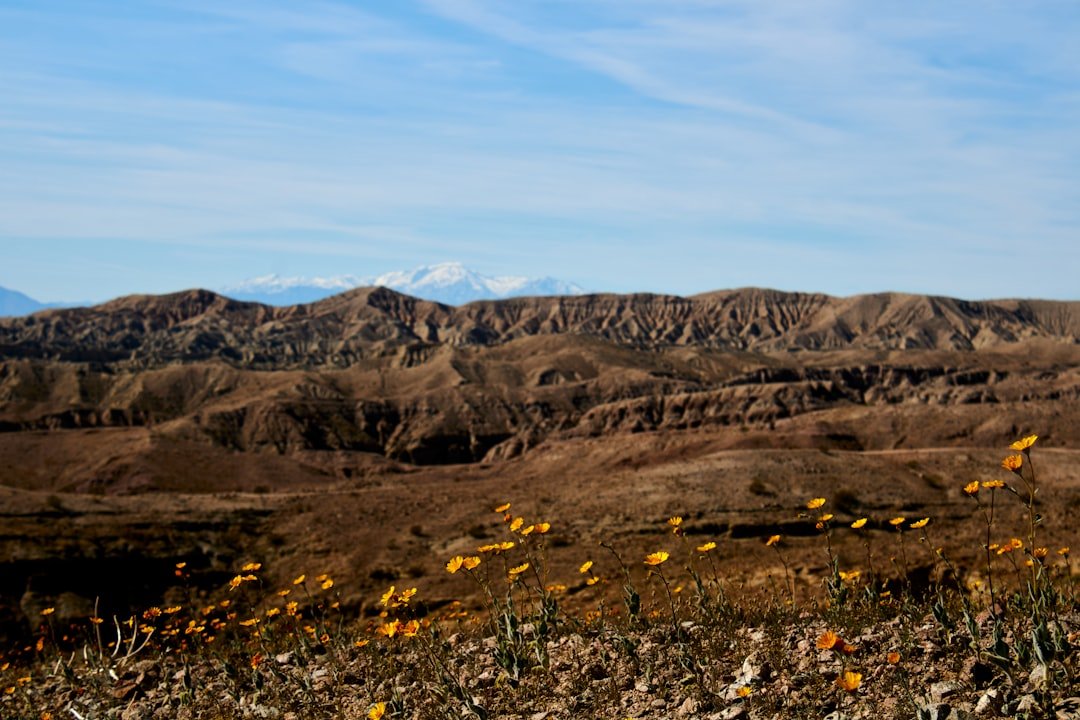
What I love about Anza Borrego is accessibility. You don’t need a high-clearance vehicle to reach prime viewing areas. Borrego Palm Canyon, Henderson Canyon Road, and Di Giorgio Road are all paved and deliver spectacular displays. That said, I’d recommend a high-clearance SUV if you want to explore some of the more remote washes—just be prepared for deep sand in places. I got my sedan slightly stuck in Coyote Creek Wash and had to spend an hour digging it out.
Timing for Anza Borrego is typically March through early April, though elevation plays a huge role. Lower elevations (like Borrego Springs) peak first, while higher areas (like Culp Valley) can still be going strong into late April. The park’s wildflower hotline and website post weekly updates during peak season—I’d recommend checking before you go. Weather can also dramatically affect timing. A late-season rain event can trigger a second flush of blooms, while an early heat wave can cut the season short.
Arizona Deserts: The Late-Season Surprise
While Death Valley and Anza Borrego grabbed headlines earlier in the season, Arizona’s deserts are currently putting on shows that have wildflower chasers rerouting their trips. Reports from Tonto National Forest and Saguaro National Park are describing exceptional blooms, particularly in areas that received monsoon rains last summer followed by consistent winter moisture.
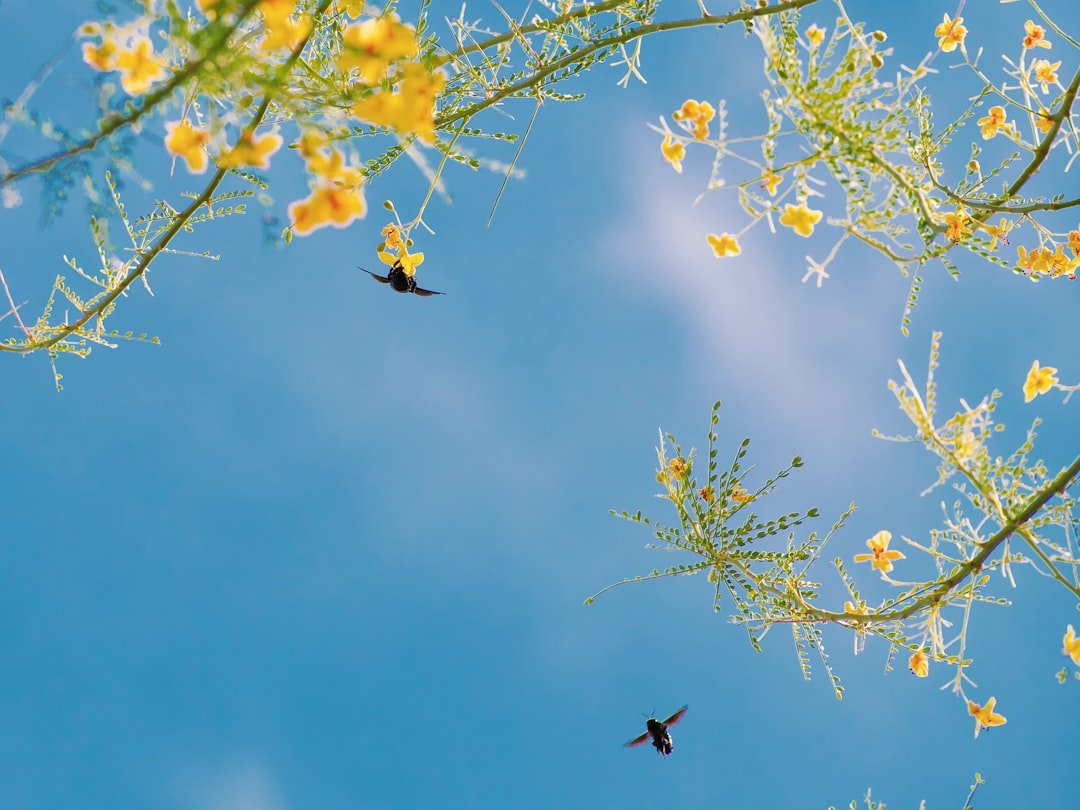
What’s fascinating about Arizona blooms is the different character compared to California deserts. You’ll find iconic species like Mexican gold poppies, lupine, and penstemon, but also desert specialties that don’t appear west of the Colorado River. Globe mallow—with its vibrant orange flowers—can create entire hillsides of color. Desert mariposa lilies (not to be confused with mariposa lilies elsewhere) are these delicate pink treasures that reward close inspection.
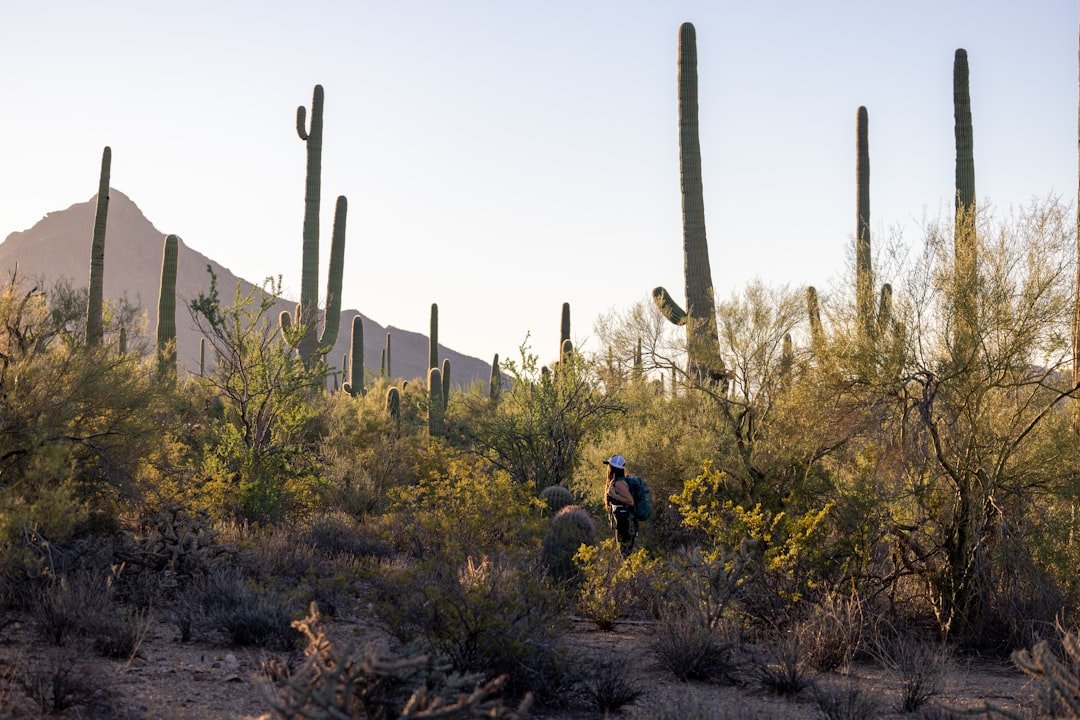
I’m particularly excited about what’s happening in the Sonoran Desert around Tucson. Saguaro National Park is reporting excellent conditions, with Mexican poppies creating carpets of orange at the base of saguaro cacti. The visual contrast between bright green cactus flesh, orange flowers, and blue sky is absolutely striking. If you’re planning Arizona travel, late April through mid-May is typically prime time—later than California deserts because of the different rainfall patterns and slightly higher elevations.
One practical consideration for Arizona: some of the best bloom locations require hiking. Unlike Anza Borrego’s road-accessible flower fields, Arizona’s prime spots often involve moderate trails. I’d recommend bringing comfortable hiking gear and plenty of water—Arizona’s spring temperatures can already reach the 90s by late morning. I made the mistake of doing an 8-mile wildflower hike near Phoenix with only two liters of water in late March and regretted it.
Essential Gear for Desert Wildflower Chasing
After eight years of chasing blooms across the Southwest, I’ve refined my gear list down to essentials that make these trips more enjoyable and safer. Desert conditions can be deceptive—mild mornings can turn into brutally hot afternoons, and sudden weather changes are common during spring.
First, sun protection is non-negotiable. I use SPF 50 sunscreen and reapply religiously, even on cloudy days. Desert sun reflects off light-colored soil, amplifying exposure. A wide-brim sun hat provides better coverage than baseball caps, and I’ve found that polarized sunglasses make flower colors pop while reducing eye strain from bright desert light.
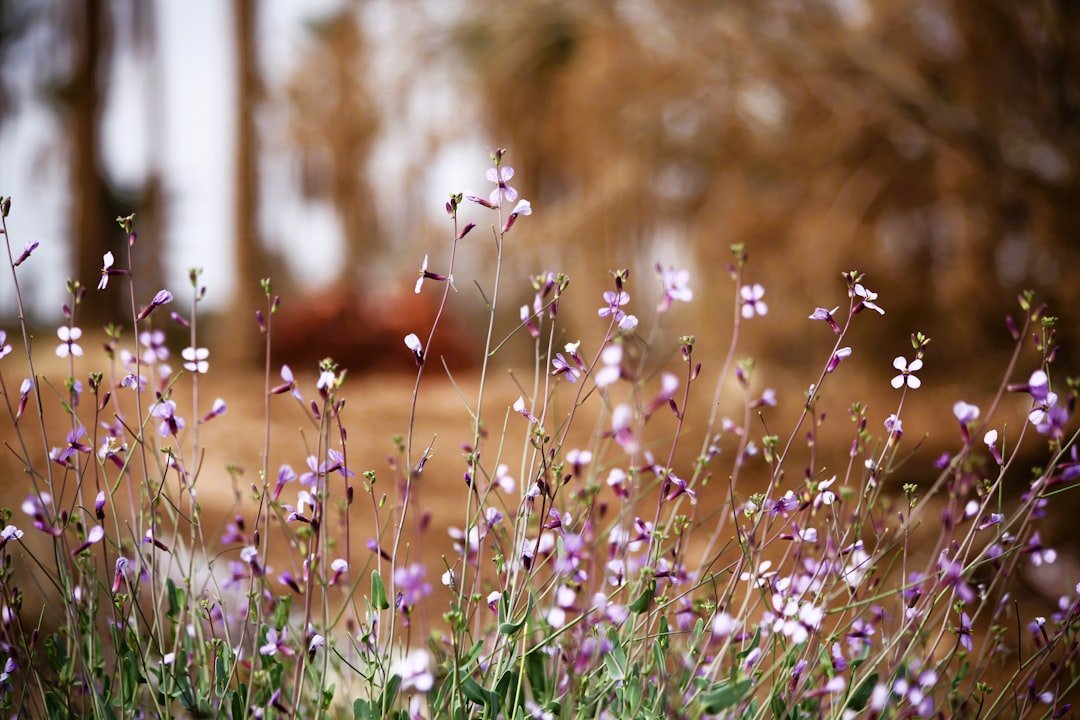
Footwear matters more than most people realize. I wear lightweight hiking shoes rather than sandals or fashion boots. Desert soil can be deceptively soft—you might think you’re on solid ground until you sink ankle-deep into a cryptobiotic crust or loose sand. Good traction also matters on rocky trails, and I’ve never regretted having waterproof shoes during surprise creek crossings or morning dew.
Hydration is serious business in the desert. I carry at least three liters of water for a full day of flower hunting, more if I’m doing significant hiking. A quality insulated water bottle keeps water cool in scorching temperatures—warm water is unappealing, and you’re less likely to drink enough if you’re not enjoying it. I also pack electrolyte supplements for longer trips, especially if temperatures are forecast above 85°F.
Finally, navigation tools are essential. Cell service is nonexistent in many desert wildflower areas. I download offline maps using Google Maps or AllTrails before leaving home, and I always carry a portable power bank for my phone. I’ve also learned to bring a physical compass and basic map-reading skills—GPS batteries die, and satellite devices can fail in slot canyons or deep washes. Getting disoriented in the desert is no joke, especially when temperatures are rising.
Photography Tips That Actually Work
I’m not going to lecture you about aperture settings or the Rule of Thirds—you can find that anywhere. Instead, here’s what I’ve learned from three seasons of photographing wildflowers in conditions that range from overcast to brutal midday sun.
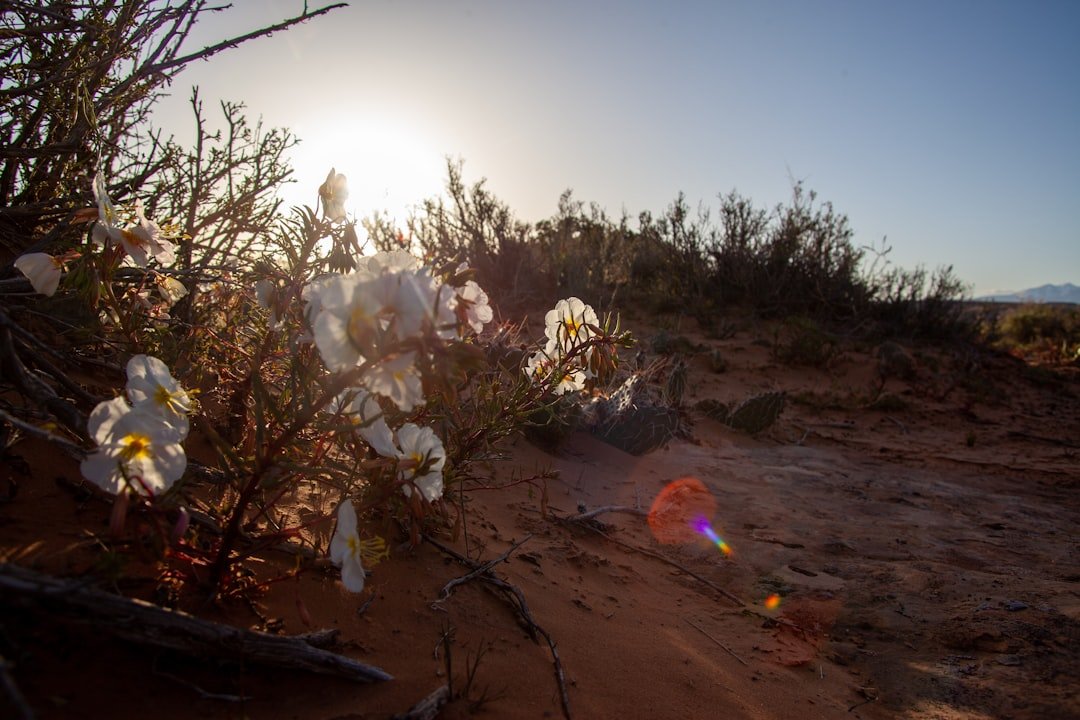
Golden hour is real, and it matters. Early morning and late evening light transforms wildflower photos. Midday sun washes out colors and creates harsh shadows. I’ve had mornings where the light on a flower field made individual petals seem to glow from within—that doesn’t happen at noon. If you can only shoot during midday, find open shade (under a tree, in a canyon’s shadow) where light is softer and more diffuse.
Get low. Some of my favorite wildflower shots were taken literally from ground level, lying carefully in established paths. Looking straight across a field of flowers instead of down on them changes the whole perspective. You see the horizon, the sky, layers of color. Just watch where you’re lying—fire ants, snakes, and cactus spines are all things I’ve learned to avoid the hard way.
Include context. Straight macro shots of individual flowers are beautiful, but they don’t capture the SCALE of desert superblooms. Some of these displays cover acres. Your photos need to show that vastness. Back up. Include mountains, roads, fences, people. Those elements tell the story of place, not just flower. One of my most-shared photos shows a single hiker walking through a field of desert gold that extends to the horizon—it conveys scale better than any close-up could.
Don’t obsess over perfection. Some of my most evocative photos have a stray blade of grass, an imperfect petal, or a bug mid-flight. Perfection is fine, but personality is better. Wildflowers are, by definition, wild. Let that come through. I spent way too much time early on trying to create magazine-perfect compositions, only to realize that the shots people actually responded to were the ones that felt authentic and spontaneous.
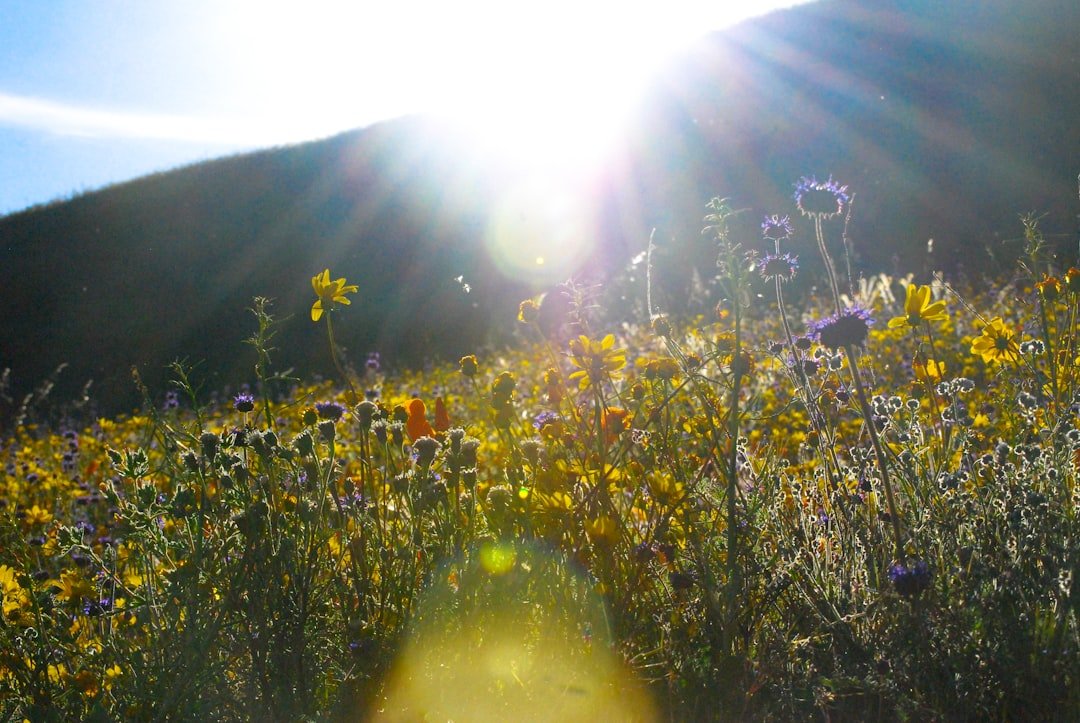
Bring a polarizing filter if you’re shooting with a camera that accepts filters. This one piece of gear makes a bigger difference than anything else. It deepens the blue of the sky, reduces glare on petals, and makes colors pop. The difference between a polarized and non-polarized shot of the same scene is dramatic. I use quality circular polarizers on all my landscape lenses, and I’d rank them second only to the lens itself in terms of importance.
Planning Your Trip: Timing and Logistics
Here’s where most people go wrong: they pick a date and book it, then hope for good blooms. That’s backwards. Successful wildflower trips require flexibility and real-time planning. Blooms don’t follow calendars—they follow weather patterns.
The first step is following bloom reports. Every major desert area has some form of wildflower reporting system. Death Valley National Park posts updates on their website and social media. Anza Borrego has a wildflower hotline (yes, an actual phone number). Arizona State Parks maintains bloom reports for Saguaro and other locations. I start checking these in February and continue through May. When conditions look promising, I’m ready to go within days.
Accommodation is another consideration. During exceptional bloom years, motels and campgrounds within 100 miles of prime areas can book out weeks in advance. I’ve learned to have backup plans—if Borrego Springs is full, I might stay in Julian (45 minutes away) or even Escondido. Camping is an option, but desert camping during wildflower season can be crowded. I’ve arrived at popular campgrounds at 7 AM and still found full sites. If you’re camping, bring a quality tent with good ventilation—desert nights can still be surprisingly cool in spring.
Vehicle choice matters for some locations. While you can access prime viewing areas in Anza Borrego and Death Valley in a sedan, some of Arizona’s best spots require high clearance. I’ve rented SUVs specifically for wildflower trips, and it’s absolutely worth the extra cost if you want to explore beyond the main roads. That said, don’t overestimate your vehicle’s capabilities—I’ve seen plenty of stuck rental cars in sandy washes.
Finally, have realistic expectations. Not every year is a superbloom year. Most years, desert wildflowers are good but not mind-blowing. I’ve had trips where I saw scattered flowers instead of carpets, and I still enjoyed them because any desert wildflowers are special. The difference is managing expectations. If you’re chasing a specific Instagram-famous scene, you might be disappointed. If you’re there to experience the desert coming alive in whatever way it chooses, you’ll have a great time.
Why These Trips Matter Beyond Pretty Pictures
Here’s something I’ve learned after years of chasing wildflowers: these trips aren’t just about photos. They’re about presence. Standing in a field of desert gold at dawn, listening to the wind, watching the light change across the valley floor—you’re fully there. No phone notifications, no work stress, no urban noise. Just you and a landscape that’s performing its annual miracle.
There’s also something profoundly hopeful about superblooms. These plants don’t bloom for us. They don’t bloom for Instagram. They bloom because it’s what they’re programmed to do, responding to conditions that have been developing for months, sometimes years. Some desert wildflower seeds can remain dormant for decades, waiting for the perfect combination of moisture and temperature. Witnessing that—a landscape transforming almost overnight from brown to Technicolor—feels like being let in on a secret.
Climate change is making these events more unpredictable. Scientists are studying whether increased variability in rainfall patterns will make superblooms more or less frequent. Some models suggest we might see more frequent but less intense blooms, while others predict longer intervals between major events. What we do know is that each superbloom feels increasingly precious—there’s no guarantee we’ll see another one like this anytime soon.
That’s why I keep going back. Every trip is different. Every season teaches me something new about patience, timing, and the astonishing resilience of desert ecosystems. I’ve sat in flower fields during light rain, watching petals close and reopen. I’ve photographed flowers at sunset, sunrise, and under full moons. I’ve met fellow wildflower enthusiasts who’ve been chasing these events longer than I’ve been alive, and their passion is infectious.
The desert teaches you something fundamental about wildness. These landscapes don’t exist for our entertainment. They follow ancient rhythms that have nothing to do with human schedules. When we’re lucky enough to witness a superbloom, we’re being granted access to something that would happen whether we were there or not. That humility, that recognition that we’re witnesses rather than participants, is what keeps me coming back year after year.
So if you’re thinking about chasing desert wildflowers in 2026, do it. Check the reports, pack your sun protection, bring more water than you think you’ll need, and go. The flowers won’t wait, and neither should you. Some experiences are worth driving hundreds of miles for, and a desert in full bloom is absolutely one of them.