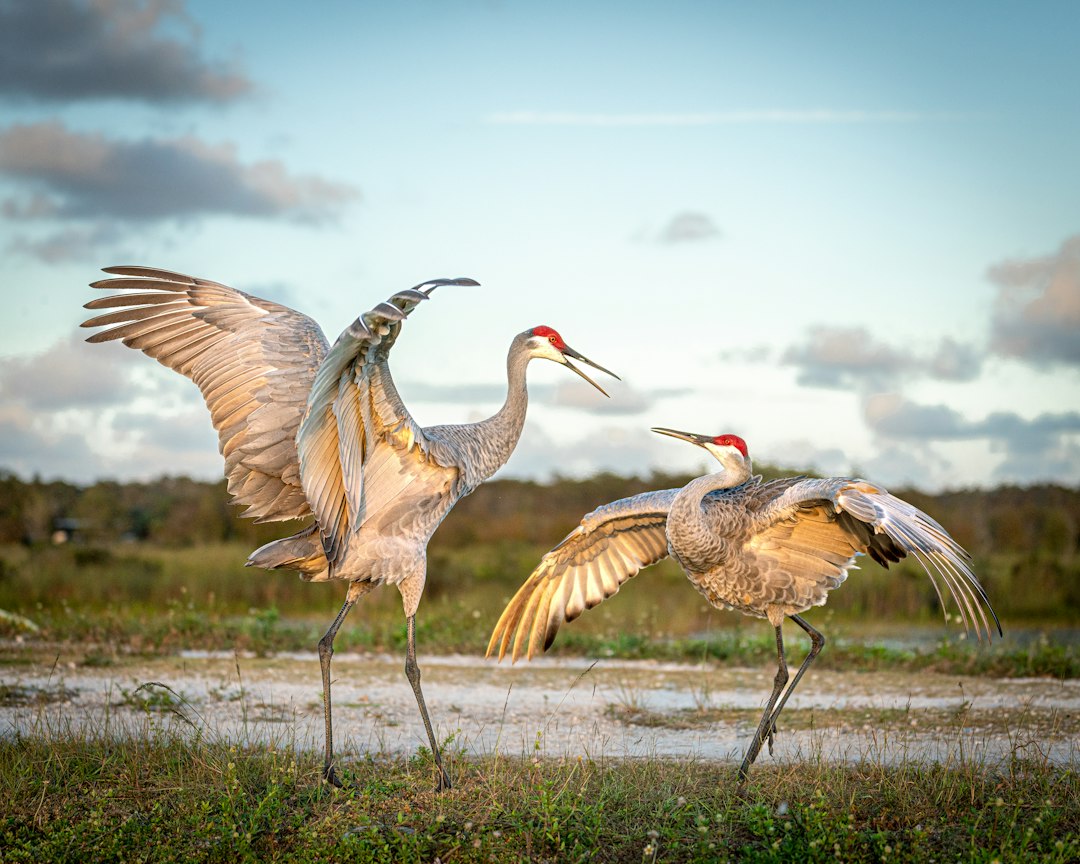
The text came in a little after seven on a Tuesday morning: “First whoopers on the Blackjack. Two adults, one cinnamon juvenile, working the marsh east of the observation tower.” One of my researchers had been driving the Texas coast for a week on a hunch, and the hunch had just paid off. The last wild migratory flock of whooping cranes on Earth had started landing at Aransas National Wildlife Refuge, right on schedule, and I loaded the car the next morning.
I’ve chased a lot of seasonal wildlife around this continent, from Churchill’s five-week polar bear season to the fall monarch migration moving through Texas, and I’ll say this about the whoopers: no other species on this list comes with a backstory this improbable. There are hotels in Houston with more individual organisms in their lobby plants than this entire species had alive in 1941.
The Bird That Went Down to Fifteen
Let that number sit for a second. Fifteen. In the fall of 1941, the migratory flock that summers in Canada’s Wood Buffalo National Park and winters on the Texas Gulf Coast had been hunted, drained, and farmed down to fifteen individual birds. The tallest bird in North America — five feet of white feathers, black wingtips, and a scarlet crown, with a bugling call that carries for miles across open marsh — was one bad storm or one outbreak away from a museum exhibit.
Then the species caught a series of breaks. Wood Buffalo, their remote nesting ground, was protected. Aransas was established as a refuge in 1937, and the coast around it stayed relatively wild. Controversial, painstaking work with captive breeding and ultralight aircraft training followed decades later. This winter, biologists expect more than five hundred whooping cranes along the Texas coast, centered on the refuge’s 115,000 acres of marsh, bay, and oak motte. It is still one of the rarest wildlife sightings you can plan a trip around. But you can plan a trip around it, reliably, every single winter. That’s the miracle here — not just that they survived, but that they turned into something a regular traveler can go see.
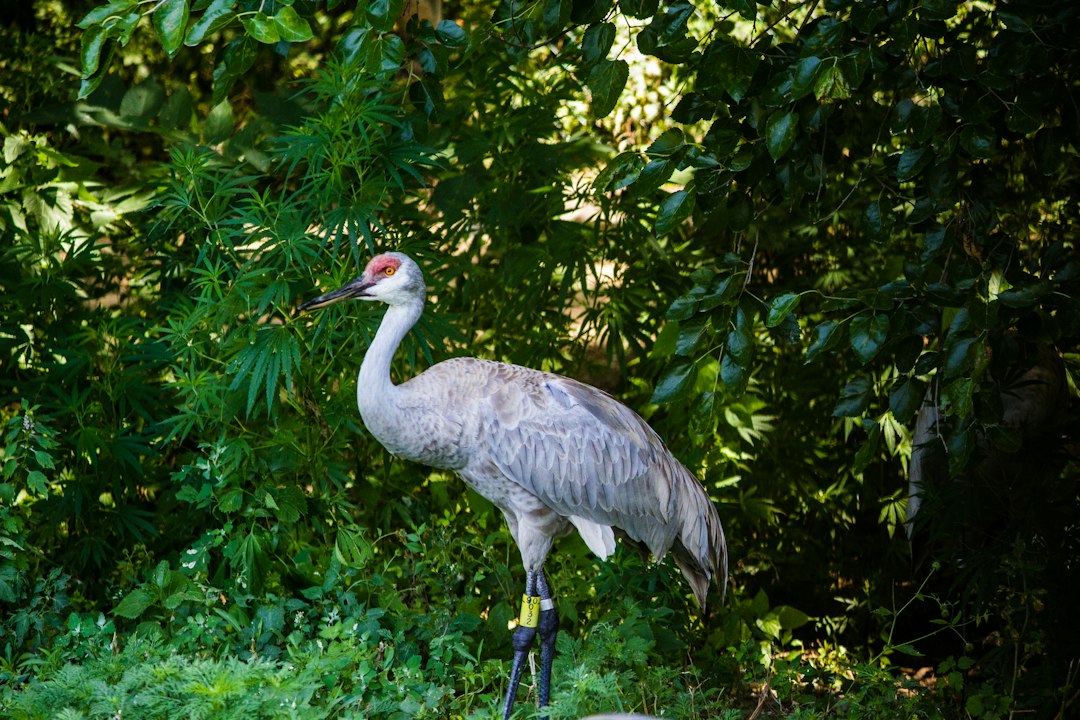
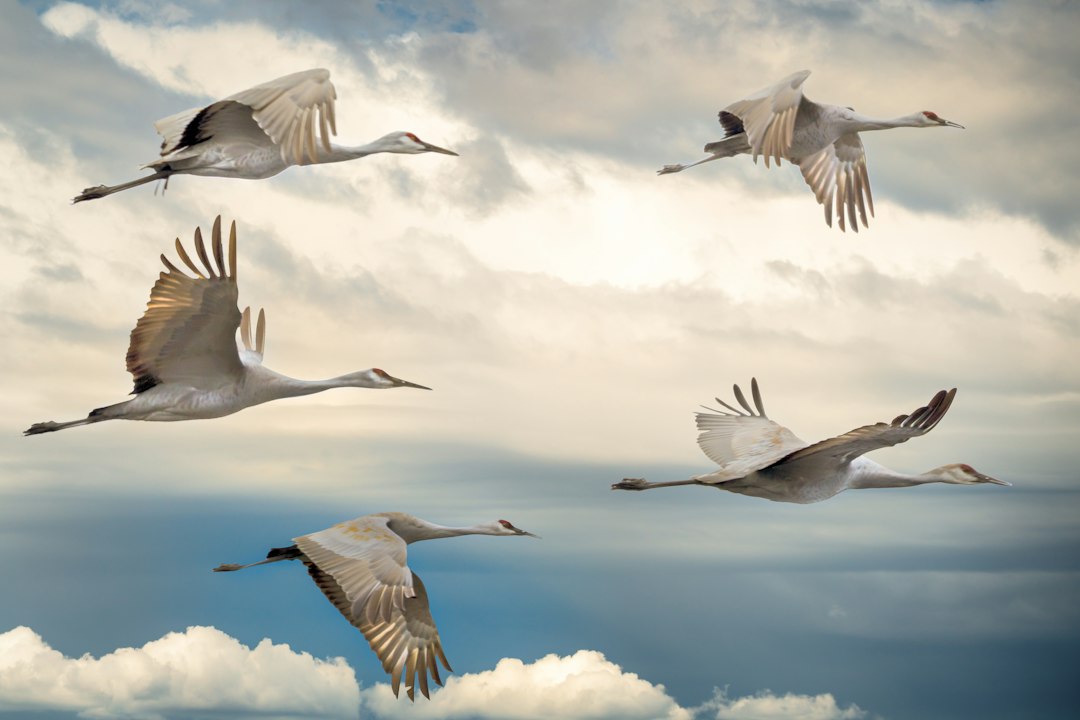
The journey itself is part of the legend. Every fall the flock flies roughly 2,500 miles from the Northwest Territories to this specific stretch of Texas shoreline, a migration the young birds learn by following their parents — no shortcuts, no second flock to fall in with. When you watch a juvenile land in the marsh in late October, you’re watching a bird complete its first crossing of the entire Great Plains. Some of them do it at five months old. I’ve flown that route in a 1964 Mooney and I was tired at the end of it.
Why a Texas Salt Marsh Owns Their Winter
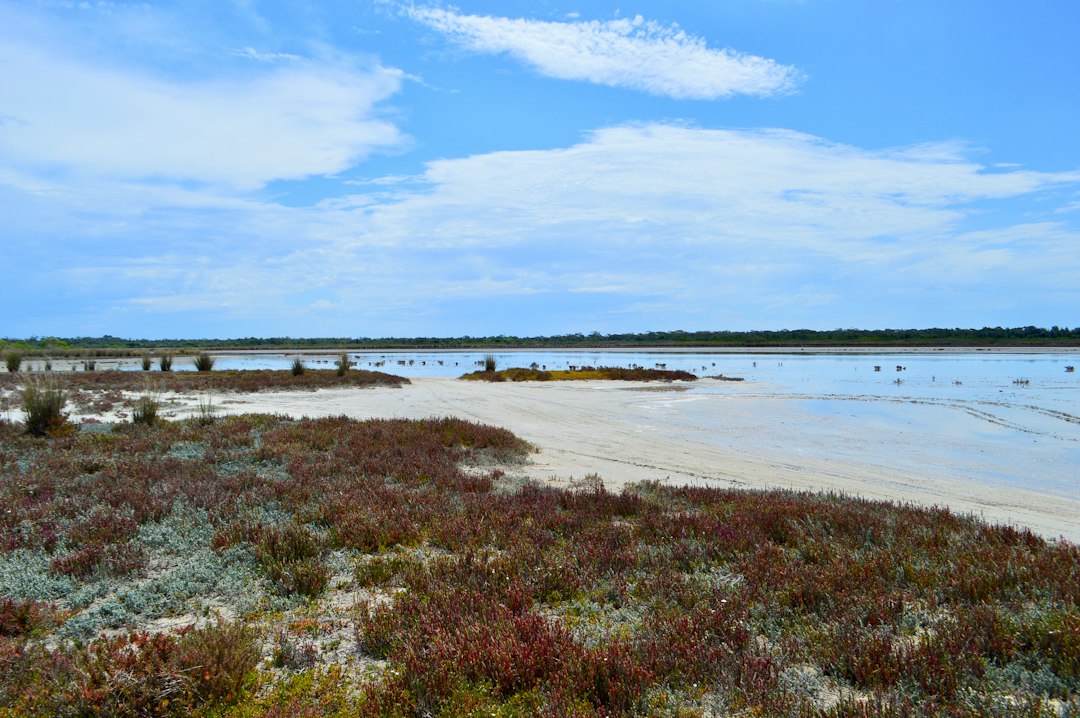
Whooping cranes are picky winterers, and the Aransas salt marsh has exactly what they want: acres of shallow tidal flats, a steady supply of blue crabs and clams, and just enough elevation — in the form of shell ridges and oak mottes — to keep a five-foot bird dry during bay surges. Mated pairs set up winter territories on the Blackjack Peninsula and the barrier islands and defend them all season, which is why the same tour captains can tell you, roughly, which family group lives on which stretch of shoreline in any given year.
The blue crab part matters more than it sounds. A crane needs to pack on protein over the winter to fuel the spring flight north and the breeding season beyond it, and in lean crab years the birds will expand their territories, wander, and generally become harder to find. Good crab years mean settled, visible birds. Nobody books a trip around crustacean census data, but the boat captains absolutely know, and it’s worth asking them.
Tides matter too, and this is the single most useful planning detail I can give you: the cranes feed in the shallows, and at low tide the mudflats open up and the birds walk out into the open to dig for crabs and clams. Around the new and full moons, when the lows drop furthest, even the land-based viewing spots come alive. Check the NOAA tide predictions for Rockport and Port Aransas before you pick your dates, and build your mornings around the low. A marsh that looks empty at high tide can be a whooper cafeteria three hours later.
Three Hours on the Water With the Skimmer
Here’s the honest logistics of this trip: the heart of the refuge, where most of the cranes spend the winter, is water-locked — tidal marsh cut by channels and the Gulf Intracoastal Waterway. You can see cranes from land (more on that below), but the classic experience is a boat tour out of Rockport, and it deserves its reputation. My team and I booked a three-hour coastal birding cruise, the standard format several local captains run, and it remains one of the best-organized wildlife operations I’ve paid for anywhere.
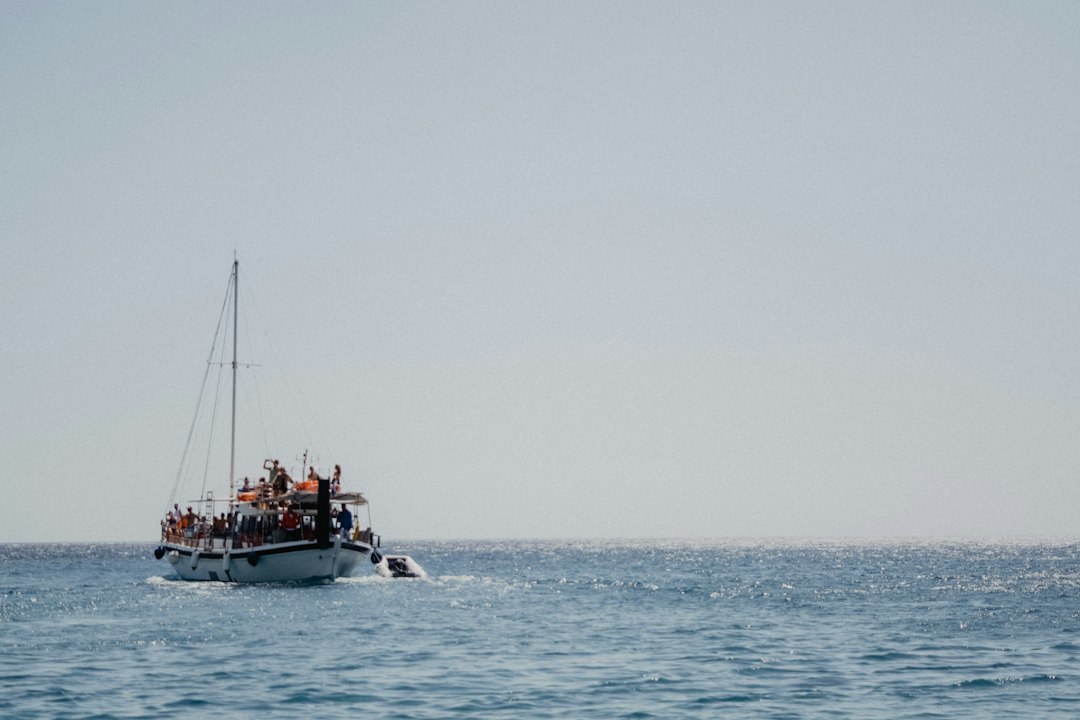
The better-known operations have been running these trips for decades, run by captains who know individual crane families the way deer hunters know their herds. Ours guaranteed whoopers, which sounds like marketing bravado until you understand the math: with the flock distributed across the same bays every winter and thirty to sixty bird species logged on a typical run, a miss would be an event. We had our first pair, standing sentry on a shell bar, forty minutes out of the harbor. By the end we’d logged six whoopers, a raft of white pelicans that looked like a snowbank melting into the bay, roseate spoonbills working a flat, and a peregrine that sent every shorebird on the marsh up at once.
Two things to know before you book. First, distances stay honest — you’ll generally view cranes from across a channel, close enough for a spotting scope, usually too far for a phone camera, and the captains deliberately keep their distance so the birds never burn energy fleeing boats. Second, bring more layers than the forecast suggests. A December morning run across San Antonio Bay cuts right through whatever that 65-degree daytime high promised you. I wore a packable rain shell over a fleece and was glad for both, and I’ve stopped pretending I’m above the crushable UPF hat that lives in my daypack for the glare off the water.
Rockport: The Town the Cranes Built a Season Around
Rockport, about an hour northeast of Corpus Christi, is the logistical base for this whole operation, and the town has fully embraced its role. Art galleries sell whooper prints, the grocery store bulletin board has a crane-sighting chalkboard, and half the boats in the harbor exist because of birders. It’s the same quiet-coastal-town energy we loved paddling Caddo Lake’s cypress in East Texas — a place whose natural asset is also its whole personality.
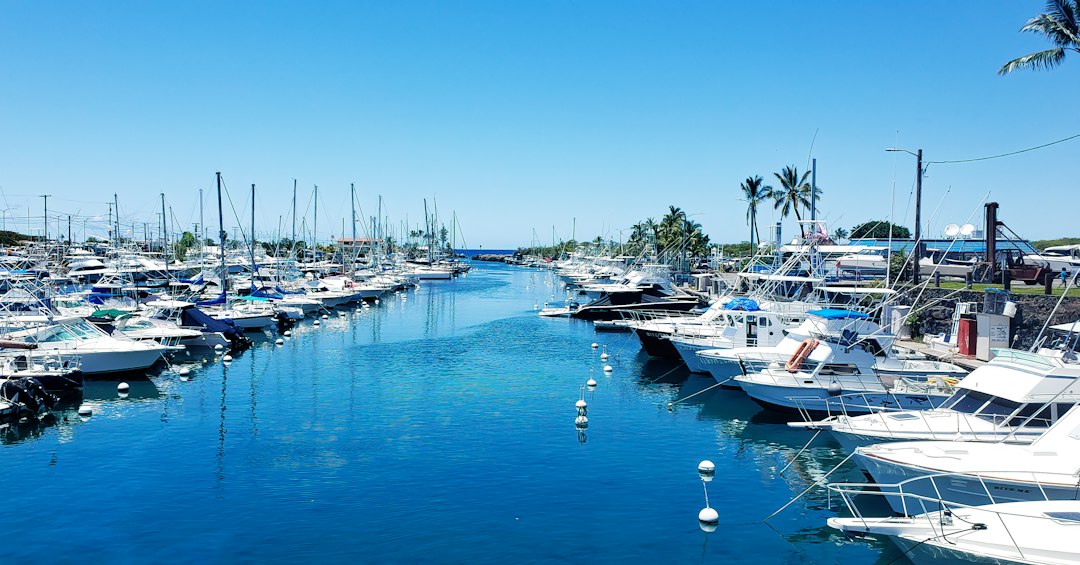
Rooms thin out over the winter holidays and around the big February festival (below), but in November this is shoulder season with shoulder-season prices, and seafood that was swimming that morning. Port Aransas, thirty minutes south across the ferry or the causeway, is the livelier alternative base with a beach-town streak; Rockport-Fulton is quieter and closer to the boats. You cannot go wrong with either, and the drive between them passes several of the land-viewing spots anyway.
Seeing Them Without a Boat
The boat is the headliner, but it’s not the only ticket. Lamar Beach Road, on the north side of Rockport, runs right along the shoreline where some crane families winter, and on a good low tide you can glass birds from your car window. The Aransas refuge itself has a driving tour loop and observation towers that put the marsh on a platter — the visitor center staff will point you at the morning’s activity. Down in Port Aransas, the Leonabelle Turnbull Birding Center’s boardwalk gets you over the water for herons, spoonbills, and the occasional crane flyby, and Goose Island State Park pairs shoreline birding with the Big Tree, a thousand-year-old live oak that deserves its own fifteen minutes of your afternoon.
For land viewing, the gear calculus changes: distance is your whole problem, and this is where a spotting scope earns its trunk space. A good spotting scope for birding turns a white smudge into a countable bird, and honestly, even from the boat I used my 10×42 binoculars three hours straight — the same pair that owned September’s wildlife shows. Rubber-armored ones survive the salt air better; I keep a Birds of Texas field guide in the door pocket because the coast will hand you 40-year-lifers you didn’t plan for. Wear shoes you don’t mind salting — the shoreline grass bites back, and waterproof boots are worth it on the flats. The rubber boots I use for marsh work have crossed their fifth winter.
The Kit We Bring for a Whooper Week
Since people always ask, here’s the full packing logic, team-tested across several winters on this coast. Optics first, camera second: unless you’re carrying serious glass, the superzoom point-and-shoot cameras birders love will outperform a phone at whooper distances, and they fit in a jacket pocket. If you do bring a big lens, a lightweight travel tripod helps on the boat’s slower stretches — though on smaller skiffs, shoot handheld and brace against the rail.
Then the Texas-coast specifics: the sun here is no joke even in December, bouncing off water on two sides of you, so polarized sunglasses and reef-safe SPF 50 sunscreen are on the list every single day, winter included. Mornings can be 45 degrees and afternoons 75, which means layers you can shed on the water and a shell for the wind. And bring a small bag for your gear — salt spray finds everything eventually.
Four Hundred Other Reasons to Look Around
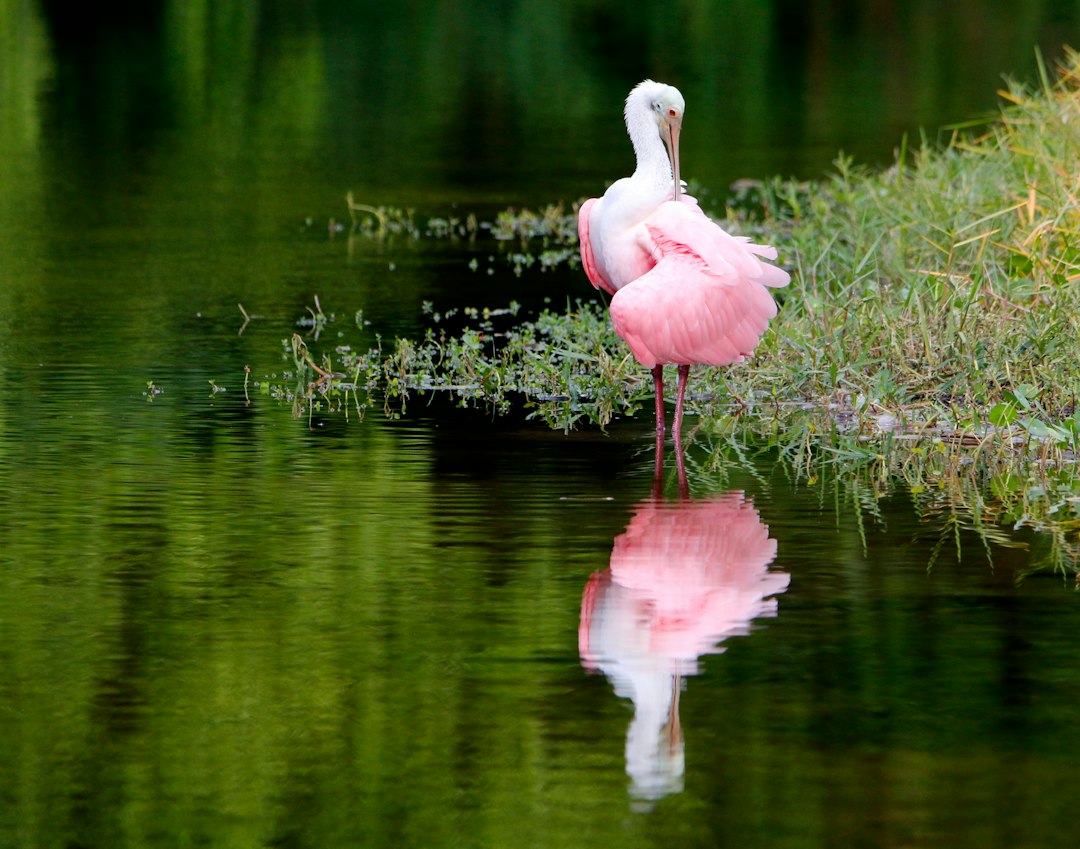
Aransas and the surrounding bays have logged over 400 bird species, which is a number usually associated with entire states. While the whoopers are the appointment viewing, the supporting cast is what makes the trip feel rich rather than single-purpose: roseate spoonbills sweeping the shallows pink, reddish egrets doing their ridiculous dancing-hunting routine, white pelicans by the hundred, tricolor and great blue herons stacked along every ditch line. In late October and November the fall songbird movement is still trickling through the live oak mottes, and the duck flight arrives in waves all month.
If you want the full festival experience, Port Aransas hosts its Whooping Crane Festival every February — the 2026 edition is the 29th — with boat trips, speakers, and a small town’s worth of people who can tell a crane’s age by its plumage from two hundred yards. February is peak crane season, but it’s also peak crowds by Rockport standards. Pick your poison.
When to Go, Straight Answer
The first cranes land in late October and the flock builds through November; everyone is settled and territorial by December, and the birds stage out again in late March and early April. My window, after several trips: mid-November through mid-February. You get settled birds, workable weather, and — in November and early December — winter rates before the festival crowd arrives. The only genuinely wrong time is summer, when the whoopers are in Canada and the coast is doing its best impression of a sauna.
Go while the getting is good, in other words. And when you’re standing on a December morning at the edge of a Texas salt marsh, watching a five-foot bird that flew 2,500 miles on wings it grew that summer dig a blue crab out of the mud — the same species that was down to fifteen living souls when my grandmother was born — you’ll understand why my researcher texts me arrival dates like playoff scores. Some birds you check off a list. These you stand there and watch until your arms are cold.