The agent at the rental counter in Denver was friendly, fast, and completely unhelpful on the one question I actually cared about. I asked whether the compact SUV on my reservation had all-wheel drive. She smiled and said the class “usually does.” I asked what tires were on it. She said “all-season.” I asked whether I could put chains on it if Interstate 70 went to a chain law on the way up to the mountains. She paused, read something on her screen, and said, “Not unless it’s required by law.”
That last answer turned out to be the whole story. Most of the big rental brands don’t want metal chains anywhere near their cars, but almost all of them carve out an exception for when the state says you need traction. And this winter, Colorado has made that exception matter a lot more. Under the latest update to the state’s traction law, the Colorado State Patrol now says every passenger vehicle on the I-70 mountain corridor between Morrison and Dotsero should be carrying chains or an approved alternative traction device from September 1 through May 31, whatever kind of tires or drivetrain it has. Your rental is included.
So my team and I spent the last two weeks sorting out what a holiday traveler should actually do about it: what the rules say in the places people drive rentals into snow, what the rental contracts allow, and the small traction kit that settles the question without a fight at the counter or a fine on the shoulder.
The Short Answer for Anyone Renting Into the Mountains
- Carrying is never the problem. A traction device sitting in its bag in the trunk doesn’t break a rental agreement. Installing one is the moment the contract cares about.
- “Except where required by law” is your permission slip. Enterprise and National both say traction devices are allowed on their cars when state law requires them, and both name Colorado’s traction and chain codes specifically.
- Textile snow socks beat metal chains on a rental. A pair of AutoSock Textile Snow Socks is on Colorado’s approved list, California’s rules treat textile devices as legal traction devices, and socks are far kinder to a car you don’t own.
- Look at the tires before you leave the garage. Check for M+S or the mountain-snowflake symbol and measure the tread. Swap cars right then if it falls short.
- If you need guaranteed four-wheel drive, book the Jeep class. Most brands won’t promise AWD on an SUV class, but the Wrangler-type class comes with 4WD.
What Colorado Changed for the 2026-27 Season
Colorado has had a passenger-vehicle traction law for years, but it used to be fairly forgiving: a four-wheel-drive or all-wheel-drive car with decent tires was basically fine. The state tightened it in 2025 and again in 2026. The Colorado State Patrol’s current guidance, citing SB25-069 and HB26-1237, reads like this: from September 1 through May 31, all vehicles on the I-70 corridor between Dotsero and Morrison need quality tires with adequate tread and must carry tire chains or have an approved alternative traction device, “regardless of tire type (e.g., 2WD, AWD, or 4WD).”
Then there are two levels of what happens when weather moves in. When CDOT turns on the Passenger Vehicle Traction Law, usually shown on the overhead signs and on COtrip, a 4WD or AWD vehicle can comply with tires alone if they have at least 3/16 inch of tread and are rated M+S, all-weather, or mountain-snowflake. A two-wheel-drive car can’t. The State Patrol says it plainly: there is no tire-only option for 2WD anymore, and upgrading the tires doesn’t change that. A front-wheel-drive rental sedan needs chains or an approved device actually on two drive tires when the signs light up.
The second level is the Passenger Vehicle Chain Law, which is the last step before CDOT closes the road. Under that one, every passenger vehicle needs chains or an approved device on at least two drive tires, no matter what it’s driving on. Per the State Patrol, getting caught out of compliance costs a $100 fine plus a $33 surcharge. If your car is the reason a travel lane gets closed, that jumps to $500 plus a $157 surcharge. That’s still cheap next to the real cost, which is sitting at a closure for three hours while the tow trucks work.
The 3/16-inch number is worth remembering. It’s more than most states require for normal driving, and plenty of rental tires that look fine at the counter are close to it. I wrote about the bigger Colorado traction picture when I put together a Christmas base in Steamboat, but the rental-car piece deserves its own look, because that’s where most visitors get stuck.
What the Rental Counter Will and Won’t Promise
The rental companies are honest about this if you read the fine print. Enterprise’s FAQ says it doesn’t offer snow chains or traction devices and that they can’t be placed on its cars “unless required by state law,” and adds that in Colorado they’re allowed during Code 15 and Code 16 advisories. That’s the traction law and the chain law. National says the same thing almost word for word. Enterprise also says its cars come with all-season tires, and National says it can’t guarantee four-wheel drive. The vehicle you get is whatever is on the lot when you arrive.
Hertz and Avis have historically allowed customer-supplied chains while making you responsible for any damage they cause. That’s a fair deal if you know how to fit chains and a bad one if you don’t. Whichever brand you rent, read the agreement at the counter, find the line about traction devices, and take a phone photo of it. If anyone asks later, you’ll have the exact wording that applied to your rental.
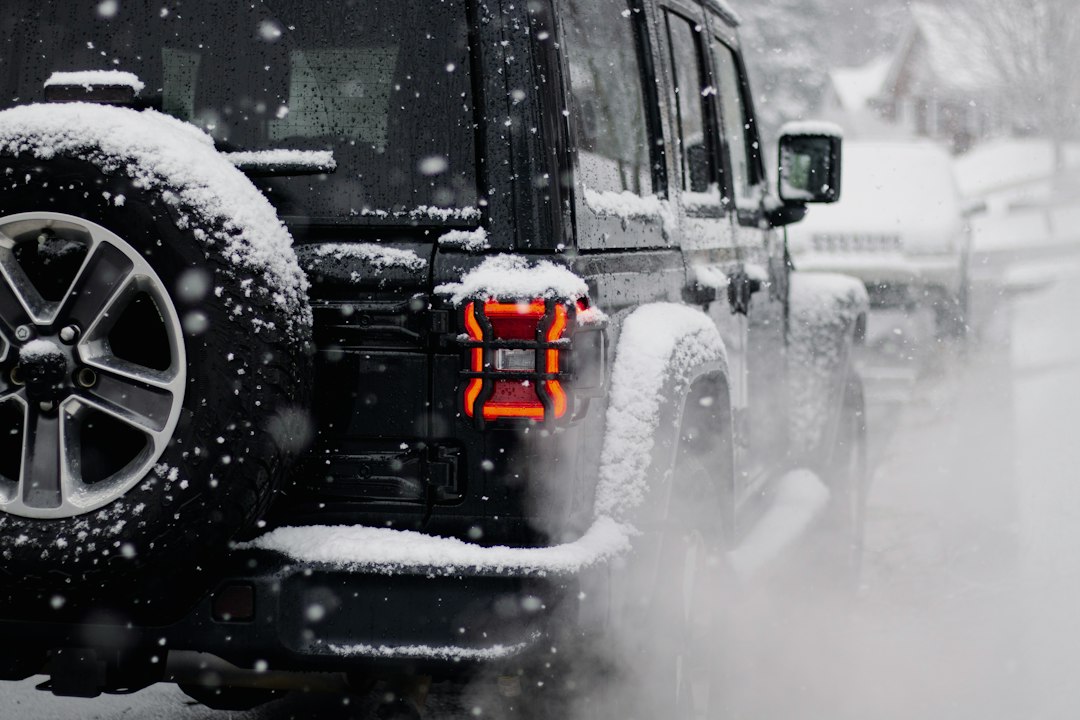
The one booking trick I trust is the Jeep class. Most brands list it as “Jeep Wrangler or similar,” and that class comes with four-wheel drive in a way a “standard SUV” doesn’t. It costs more and rides like a Jeep, but if your holiday plan includes Vail Pass at night, it removes one variable. If you need seats more than ground clearance, the booking strategy I laid out for a seven-seat holiday rental still applies: book early, rebook when rates drop, and ask the branch which models are actually in the class.
One more thing about the walkaround. Before you pull out, film the car, including all four tires and the wheel wells. If a traction device ever leaves a mark, you want proof of what the wheels and fenders looked like before you touched them. I got burned on this once and wrote up how a phone video beat a $1,100 rental damage claim. The same two-minute routine works here.
The Five-Minute Tire Check Before You Leave the Garage
Rental garages are dim and everyone’s in a hurry, which is exactly when people skip this. Don’t. Crouch down at each front tire and read the sidewall. You’re looking for “M+S,” “M/S,” or a small three-peak mountain with a snowflake inside it. Most all-season rental tires carry M+S. Some don’t, and that’s worth knowing before you’re at 11,000 feet.
Then measure. A Tire Tread Depth Gauge costs less than a garage coffee and takes the guesswork out of the 3/16-inch rule. If the tread is close, walk back to the counter and ask for another car. A branch will usually swap a car with worn tires, but the time to ask is now, not halfway up the mountain.
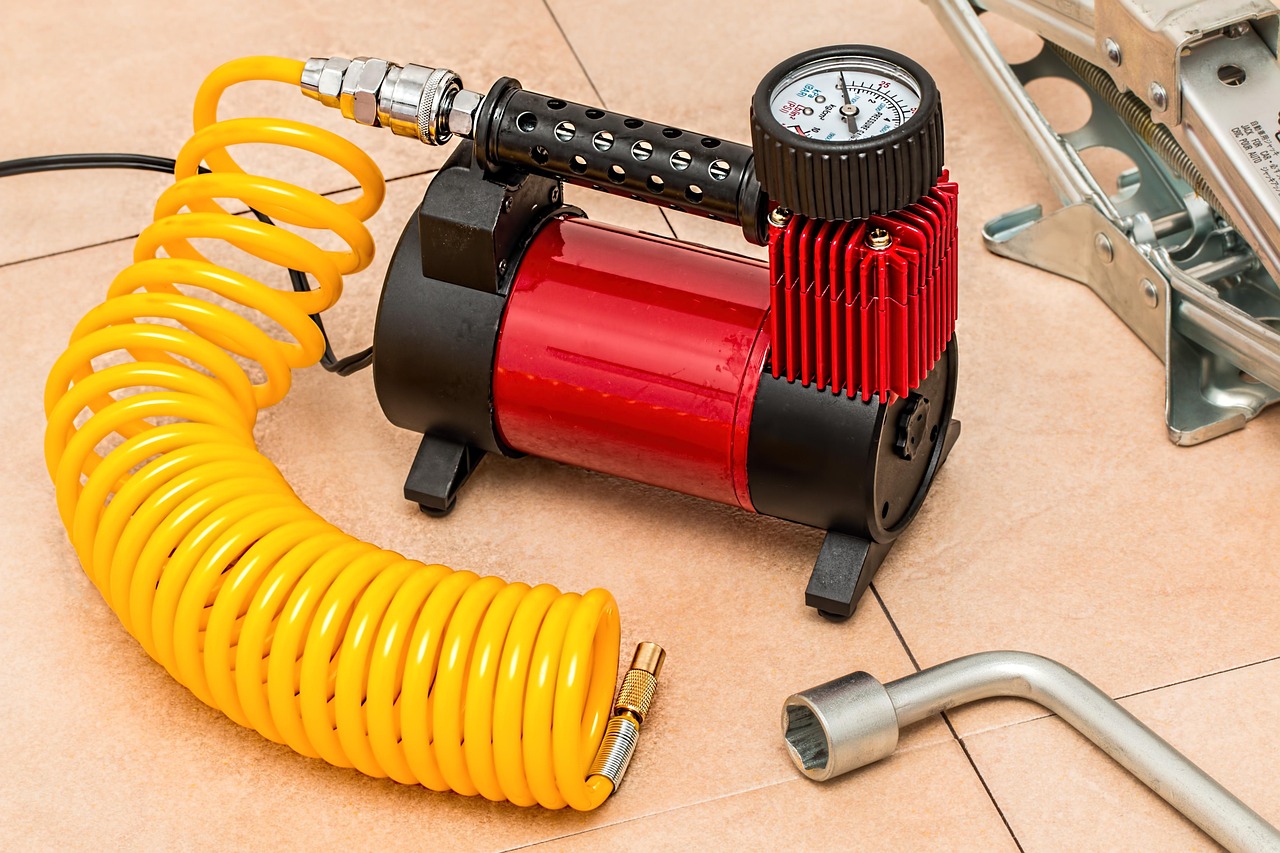
Check pressure too. Cold air drops tire pressure fast, and a car that sat overnight in a 10-degree lot can be several pounds low by morning. A Digital Tire Pressure Gauge tells you in seconds, and the correct number is on the sticker inside the driver’s door, not on the tire. If you’re low, a Cordless Portable Tire Inflator beats a gas-station air machine that wants quarters and isn’t working. Underinflated tires hurt grip in snow, and they’re the easiest thing on this list to fix.
Why Textile Snow Socks Belong in a Rental
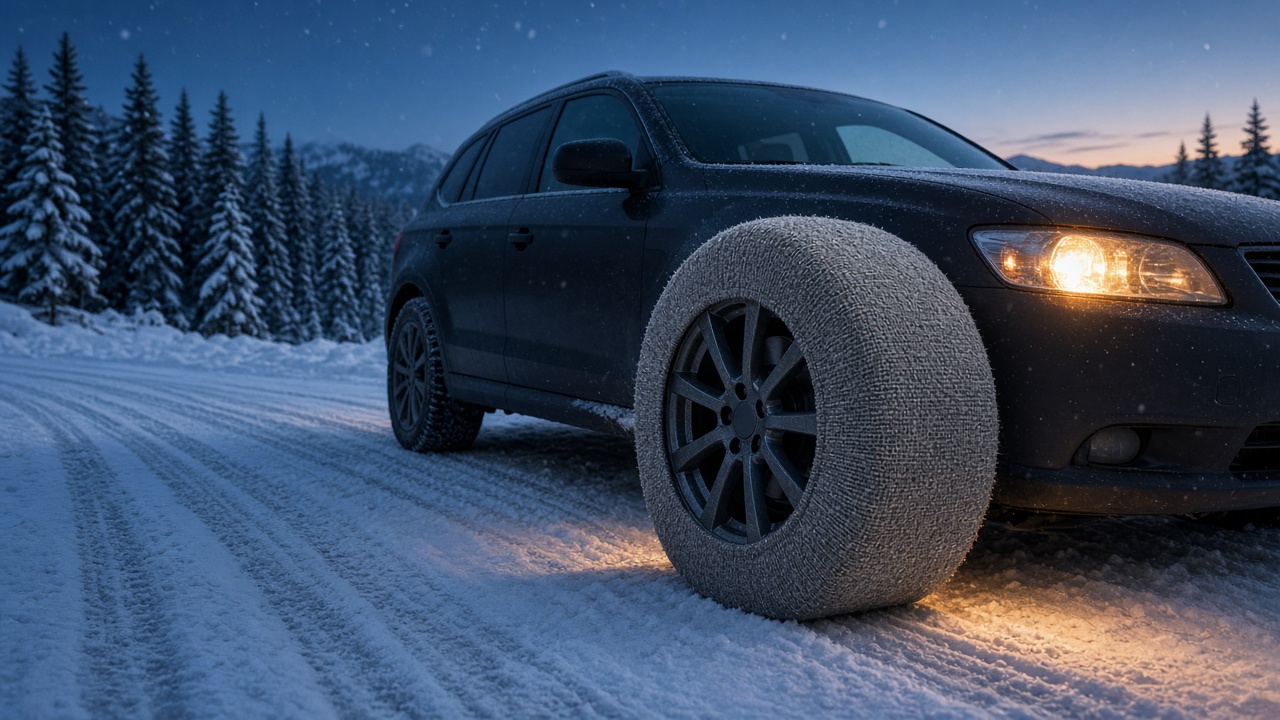
Here’s where I’ve ended up after a lot of reading and a couple of cold chain-ups. On a car I don’t own, I’d rather carry textile snow socks than metal chains. Socks are fabric covers that slide over the tire and grip the snow with fibers instead of steel links. They’re light, they fold into a bag about the size of a lunch box, and they’re much less likely to scratch an alloy wheel or nick a brake line if something goes wrong.
They’re also legal where it matters. CDOT’s list of approved alternative traction devices for passenger vehicles includes AutoSock. California’s regulations specifically name textile traction devices as a kind of alternative traction device, as long as they meet the state’s standards for chains and cables. Caltrans says officers at a checkpoint can turn away a device they don’t think meets the code, so stick with an established, labeled product and not a no-name bargain.
The one I’d pack is a pair of AutoSock Textile Snow Socks, because it’s the brand that shows up by name on Colorado’s list. Installation is simple, which is the main point on a dark shoulder. Pull the sock over the top of the tire, roll the car about half a wheel turn, pull the rest of it on, and the sock centers itself as you start driving. Socks are meant for snow and ice. Take them off once you’re back on bare pavement, because dry asphalt wears them out quickly.
The catch with a rental is sizing. Socks are sold by tire size, and you won’t know your tire size until you’re standing next to the car. My team found three workable approaches. You can call the branch a week ahead and ask which models are in your class, then look up those tire sizes. You can buy after pickup at an auto parts store near the airport. Or you can choose a sock size that covers the tire sizes common to that class. Whichever you choose, check the size printed on the actual tire before you leave town.
California’s Three Levels, and Why Your AWD Still Carries
California’s chain controls confuse a lot of drivers coming up from the coast, so here’s the short version from Caltrans. R1 means chains are required except on passenger cars and light trucks under 6,000 pounds with snow-tread tires on at least two drive wheels, and those cars still have to carry chains. R2 means chains or traction devices on everything except four-wheel or all-wheel drive with snow-tread tires on all four wheels, and those vehicles must carry traction devices in the chain control area. R3 means traction devices on every vehicle, no exceptions. In practice the road usually closes before it reaches R3.
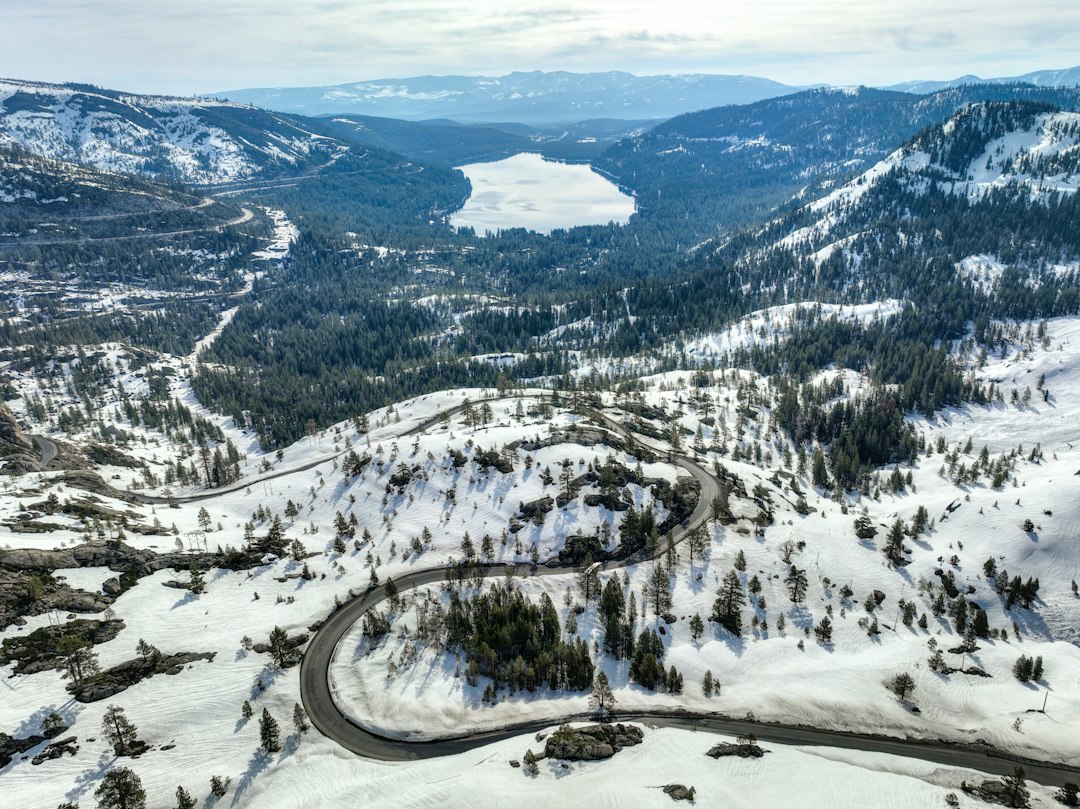
Look at what’s common to all three: carry. Even the AWD SUV that gets waved through on R2 is supposed to have traction devices in the car. Caltrans also says you’ll usually have about a mile between the “Chains Required” sign and the checkpoint where you put them on. That mile is where a light, quick device pays off.
The National Park Service makes a similar point for Yosemite in winter: rental companies generally don’t provide chains, but rental cars aren’t exempt from chain requirements. If you’re flying into Fresno or Sacramento for a snowy holiday in the park, plan the traction question before you land, not at the entrance station.
A Quick Note on the Rest of the Map
Colorado and California get the headlines, but they aren’t the only places where a rental needs a plan. Washington and Oregon post their own traction and chain requirements on the mountain passes, and their transportation departments keep live pass reports that are worth checking the night before. National’s FAQ points out that Quebec rentals come with winter tires from December 1 through March 15 because provincial law requires it, so a Christmas trip to Quebec City is one place where the rental tires take care of it for you. Utah’s canyon roads up to the ski resorts have their own traction rules on storm days, and so do plenty of national park roads. The habit stays the same everywhere: check the official road site the night before, then again before you leave.
The Small Kit That Rides in My Checked Bag
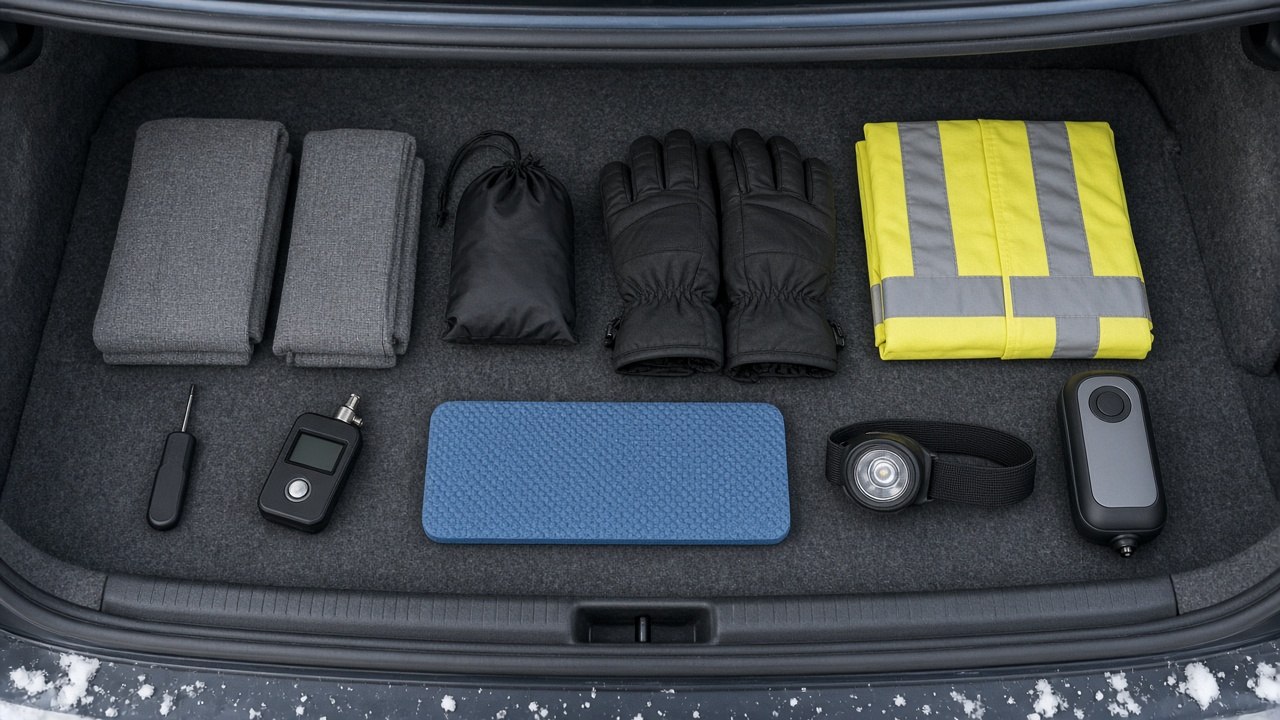
Since I’m usually flying in, the kit has to fit in a suitcase and survive a baggage cart. The whole thing weighs about the same as a pair of winter boots, and I pack it into one of my Compression Packing Cubes so it comes out of the suitcase as one bundle and goes straight into the trunk. The socks ride in their own bag with the tire size written on a strip of tape, and the three tools from the counter check go in alongside them. Here’s the rest:
- Hands: a pair of Waterproof Insulated Work Gloves. Your ski gloves will get soaked and gritty during a fitting, and you’ll want them dry later.
- Knees: a thin Foam Kneeling Pad, which turns a slush-soaked shoulder into something you can kneel on for five minutes.
- Visibility: a High-Visibility Reflective Safety Vest that packs down to the size of a sandwich, because a person crouched by a wheel at dusk is hard for other drivers to see.
- Light: a Rechargeable LED Headlamp. Fitting a sock by phone flashlight means doing it with one hand.
Two bulkier things I usually pick up after landing, or check whether the car already has: an Extendable Snow Brush and Ice Scraper long enough to clear an SUV roof, and a Collapsible Aluminum Car Snow Shovel for the morning the plow buries the car at the condo. Rentals almost never come with either. If you do end up digging, take it slow; my colleagues on the health side have a good piece on protecting your back and heart while you shovel that’s worth reading before the first big storm. For a car you own and keep all winter, the fuller winter car kit I build before the first freeze covers jump packs, blankets and the rest.
Practice in the Parking Lot, Not on the Pass
The best advice I’ve seen from the Colorado side is also the simplest: put the device on once before you need it. When you pick up the car, find a quiet corner of the rental lot or the hotel garage and fit one sock to one tire. It takes about five minutes the first time and two the second. You’ll learn which way the elastic goes, how far to roll the car, and whether the size you bought actually fits, all while it’s dry, light and nobody’s honking.
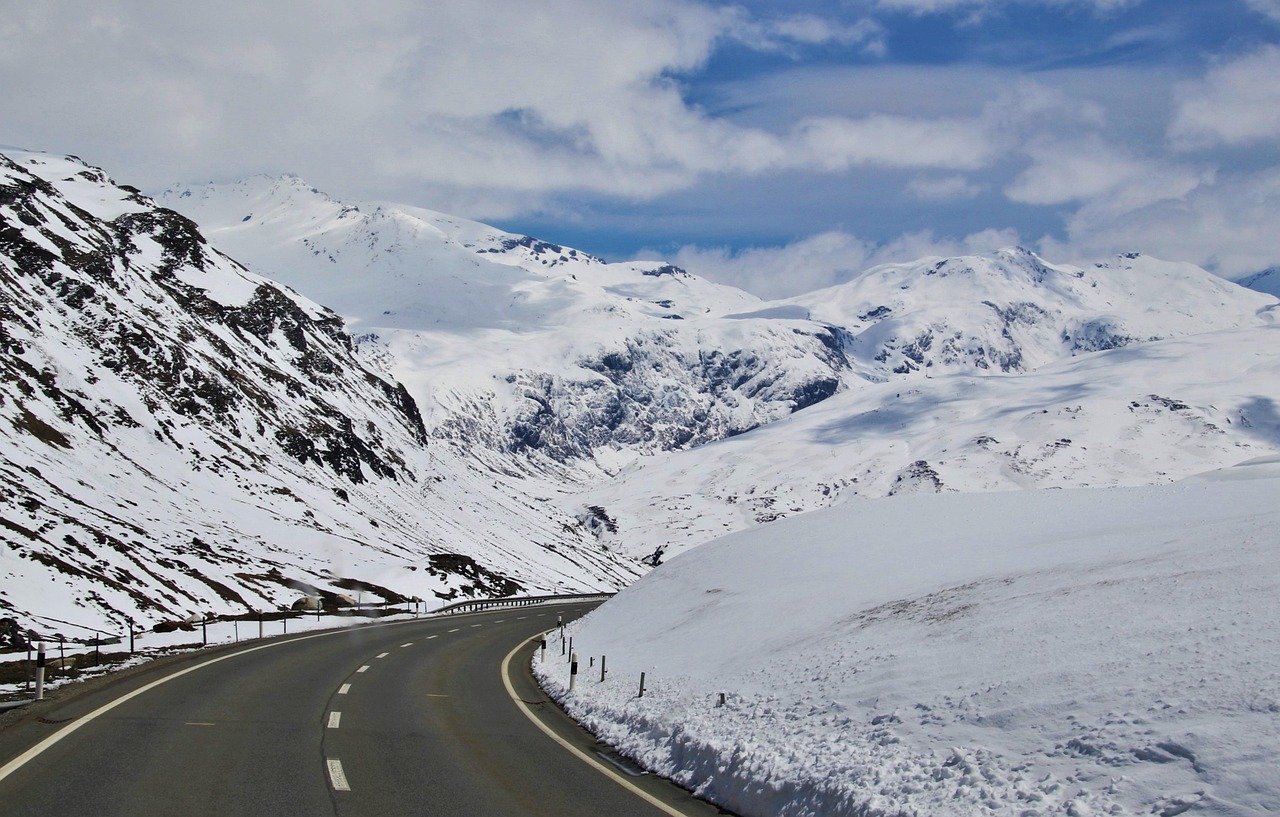
On the road, the plan is just as simple. Know where the chain-up areas are on your route, because Colorado and California both mark them. When the signs say the law is in effect, pull fully into a designated area or a wide, plowed pullout, not the narrow shoulder. Hazards on, vest on, headlamp on. Socks go on the drive wheels. That’s the front on most rental sedans and small SUVs, so check the owner’s manual in the glovebox if you aren’t sure. Drive slowly, follow the device maker’s speed limit, and pull them off once the pavement turns clear and wet instead of white.
Most of the time none of this will happen. You’ll drive up I-70 on a clear morning with the socks still in their bag and feel a little silly for carrying them. That’s fine. The kit is for the afternoon the storm comes in early and the overhead signs change while you’re still at the bottom of the hill.
When the Better Move Is Not Driving at All
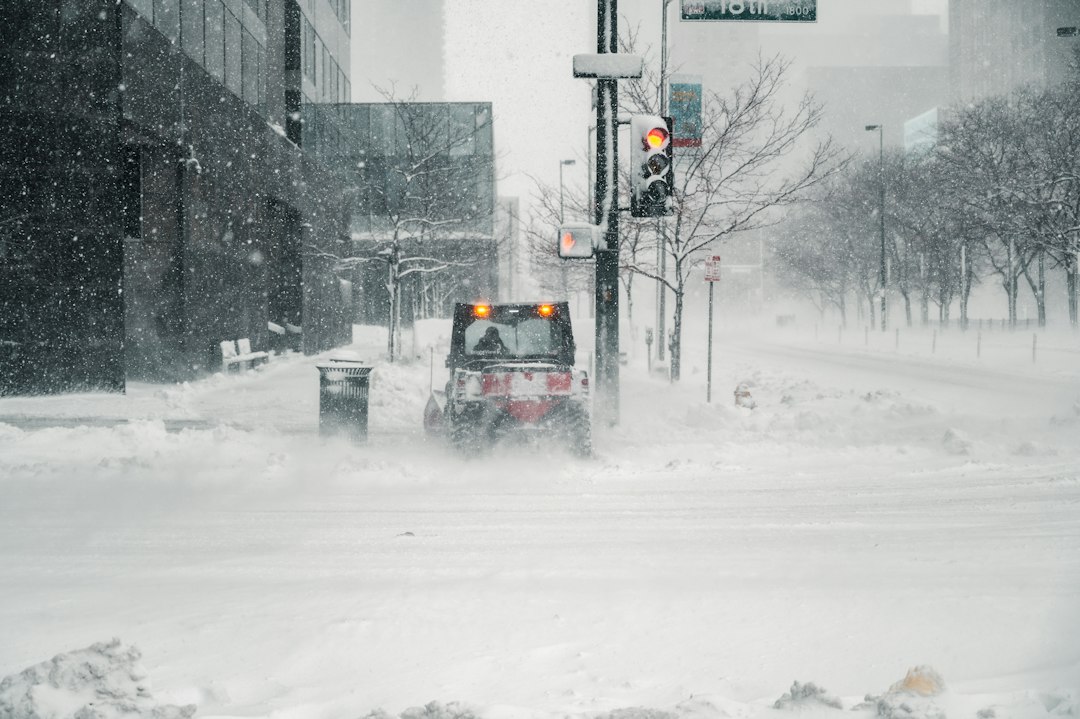
Traction gear lowers the risk. It doesn’t make a bad storm drivable. If the forecast calls for heavy snow on the day you planned to drive up, the smartest thing you can do with a rental is often to wait: spend another night near the airport, or leave at first light after the plows have been through. Check COtrip in Colorado or QuickMap in California, and look at the cameras, not just the color-coded map. If the passes are closing, one more night in Denver costs less than a tow.
And when you’re running late for a holiday dinner, remember that the people who end up blocking a lane on a chain-law day are almost always the ones who tried to beat the storm. Leave the extra hour in the plan. The socks, the gauge and the gloves are there so you’re ready if the signs change. They’re not a reason to push on through a closure.
When I drove up that night from Denver, the traction law came on just past Idaho Springs, and the compact SUV turned out to be all-wheel drive with M+S tires and plenty of tread. I didn’t need the socks. But I’d fitted one in the rental lot that afternoon, and having that done made the whole drive easier.