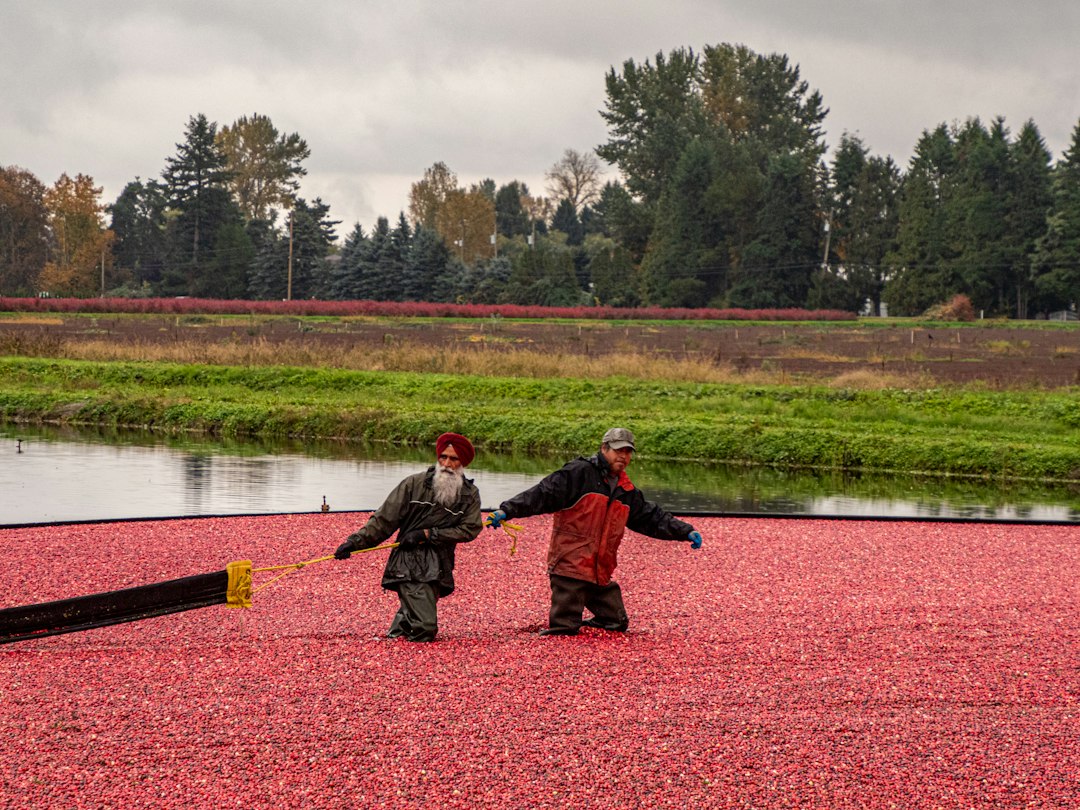
The floodgates open before sunrise. By the time we pulled onto the dike outside Wisconsin Rapids, the grower’s crew had already been walking the bog for an hour, and the bed we’d driven past as a green carpet the evening before had turned the color of a wound. Millions of cranberries, loosed from their vines by a beating machine called an egg beater, riding the surface of six inches of water. My photographer stopped talking mid-sentence. That happens maybe twice a year.
Here’s the part nobody tells you: the commercials are real. Every autumn, Wisconsin floods a landscape the size of a small town and floats its state fruit to the surface, and for roughly three weeks — late September through October — you can stand on a dike and watch it happen. The catch is that most Americans will only ever see it through a phone screen tilted vertically. The other catch is that the season closes around the end of October, which makes this weekend and the next one very much the last call.
Three Weeks of Red, Then It’s Over
Wisconsin grows about six in ten of the cranberries produced in the United States, on roughly 20,000 acres spread across 18 counties. Wood County alone — the stretch of cranberry country centered on Wisconsin Rapids — is credited with producing roughly one in nine cranberries grown anywhere on Earth. When the sauce hits your table in late November, the odds are overwhelming that it started here, in beds of glacial sand that growers keep more meticulously than golf greens.
The first misconception to die is that cranberries grow in water. They don’t. The vines grow in carefully drained sandy beds, and water is a tool the grower adds on purpose — a shallow flood in spring to protect buds from frost, and the deeper harvest flood in fall that turns each bed into a red lake. Machines nicknamed egg beaters churn through the water and knock the berries loose; each one has four air chambers inside, which is why it floats. The crew then corrals the crop with floating booms, the way you’d gather leaves in a pool, and pumps or conveyors lift it onto trucks. What took the vines all summer to grow leaves the marsh in a single afternoon.
The second surprise is how old the plants are. Cranberry vines are perennials, and a well-kept bed can produce for decades — some commercial marshes in Wisconsin are running on vines planted before the Great Depression. You are not looking at an annual crop. You are looking at an heirloom that gets harvested, flooded, frozen under ice all winter, and trusted to do it again.
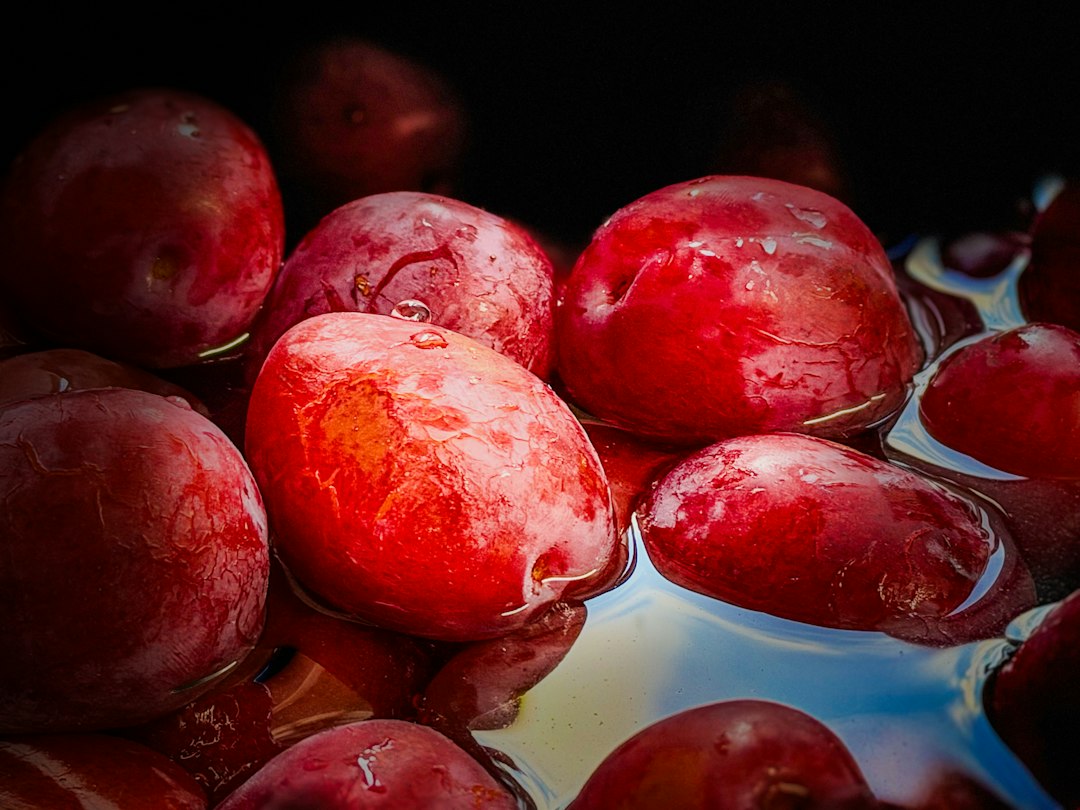
There’s a dry harvest too, and it matters if you want berries in a bag rather than a bottle. Walk-behind pickers comb the vines without any flood at all, and that fruit — firmer, unbruised, dry — is what gets sold fresh. The old-timers’ quality test still applies: a good cranberry bounces, because those air chambers act like a tiny suspension system. Sorting machines have used the physics for a century. Drop one on a kitchen counter from a foot up and you’ll see the whole industry’s founding hack in action.
A wet harvest is loud, mechanical, and oddly beautiful — but it is also a working farm operation with pumps, booms, and a schedule set by sugar content and nightly frost forecasts. You’re a guest. Act like one and the marshes will make room for you.
The Sand Plain That Made It Possible
Why here, two hours north of Madison? The last glacier left behind beds of pure sand and a water table close to the surface — wetland engineering waiting for tenants. Growers dammed and ditched these flats 150 years ago, and the marshes now read like a topographic map from the air: rectangular beds stacked down the hillsides, each one a step lower so gravity moves the water instead of pumps. From a dike or a drone, it’s one of the strangest and most orderly agricultural landscapes in North America.
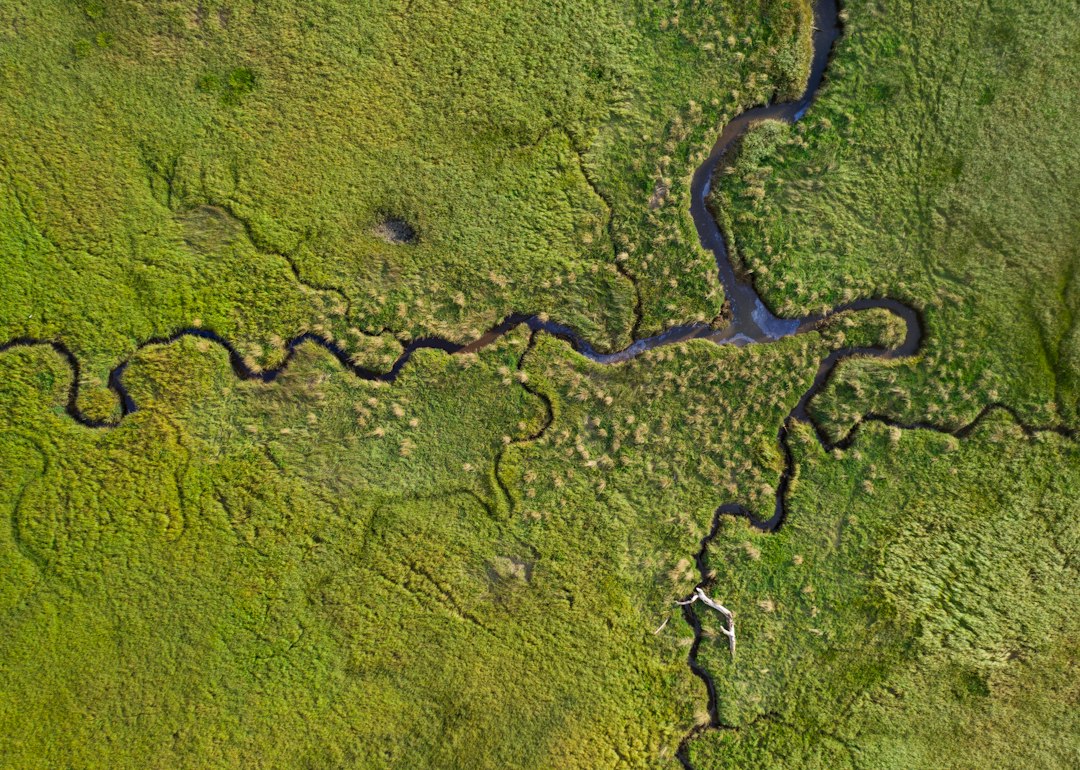
We mapped the region from the air on our first morning with a photographer who shoots harvests for the growers’ association, and I’d argue the overhead angle is the single best free view in the state that nobody knows about. You don’t need a drone to get it, either — several county road bridges cross beds at elevation, and the view down onto a flooded marsh in morning light is the shot everyone thinks they need a helicopter for.
Driving the Cranberry Highway
The Cranberry Highway is the region’s loose backbone: a couple dozen miles of county pavement between Wisconsin Rapids and Babcock, threading past working marshes that sit close enough to the road to see the booms from your window. Go at first light. The water is glass, the steam comes off the beds if the night was cold, and the reds read like a color grading decision. By two in the afternoon you’ll have flat light, tour buses, and dew-free berries that photograph like gravel.
Two rules from a grower who flagged us down when we parked somewhere dumb. One: every marsh is private property, and the dikes are load-rated for equipment, not curiosity. Two: harvest crews are on a clock between frosts, so if someone in waders waves you past, wave back and keep moving. There are legitimate ways onto the beds — that’s the next section — and they cost less than the gas it took to reach them.
Getting Onto a Marsh (Legally, In Waders)
The single best development for visitors is that marshes now run real tour programs during harvest. Rooted in Red, the visitor operation based in Wisconsin Rapids, runs cranberry farm wagon tours through the marshes with extended October hours for harvest season — and their Cranberry Harvest Immersion Experience is the one that stops traffic: you put on waders and get INTO the flooded bog with the floating berries. That immersion weekend lands October 17 and 18 this year, so if you’re reading this in time, that’s your move. If you miss it, the wagon tours and harvest programming run through late October, weather and crop willing.
South of the main drag, Wetherby Cranberry Company outside Warrens has been in the same family for more than 120 years, and they do things the other way: this is fresh-fruit country, dry-harvested, with marsh tours in season and a farm stand that sells the actual bagged berries. Walking a dry bog is a completely different education — you see the vines, the bees’ summer work, and the architecture of the beds without the theater of the flood. Warrens also throws the state’s enormous cranberry festival every September, worth knowing about for next year’s calendar if you like your harvest with a parade attached.
Up north, Lake Nokomis Cranberries near Eagle River runs harvest tours as well, which gives you an excuse to fold the whole thing into a North Woods color trip. Our rule of thumb after three visits: book the tour before you book the hotel. Harvest windows slide with the weather, tour seats are few, and operators would rather tell you on the phone to shift a day than have you miss the flood.
Dressing for a Cold, Wet, Wonderful Morning
Harvest weather in central Wisconsin runs from sunny and fifty to sleet sideways at thirty-five, occasionally before lunch. The marshes hold cold like a refrigerator, and you will be standing still on a damp dike for hours. This is a dressing-like-a-grower situation.
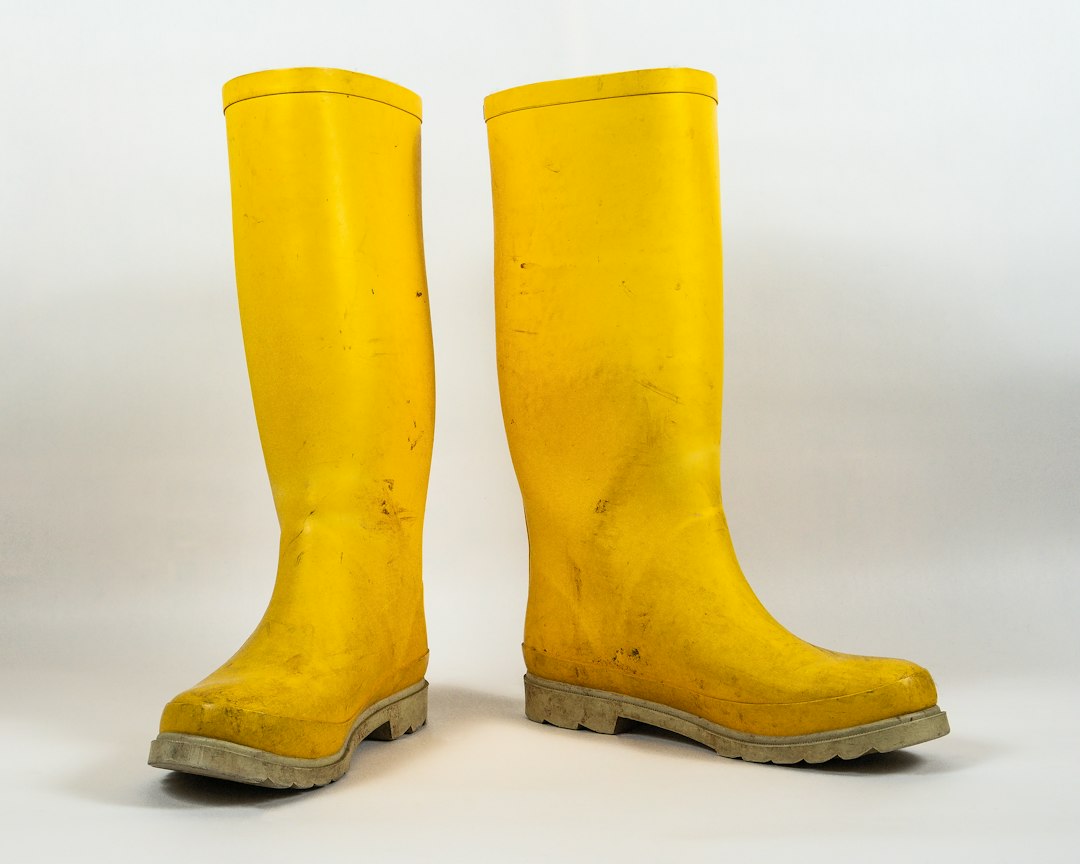
Feet first. Marsh grass, dew, and dike mud will find every shoe you own, which is why waterproof rubber boots are the region’s unofficial uniform — ours have crossed every bog county in the state and clean up with a garden hose. Over a merino base layer that stays warm even when the mist gets you, add a packable rain shell that stuffs into a pocket when the sun breaks. Skip cotton entirely; the growers certainly have.
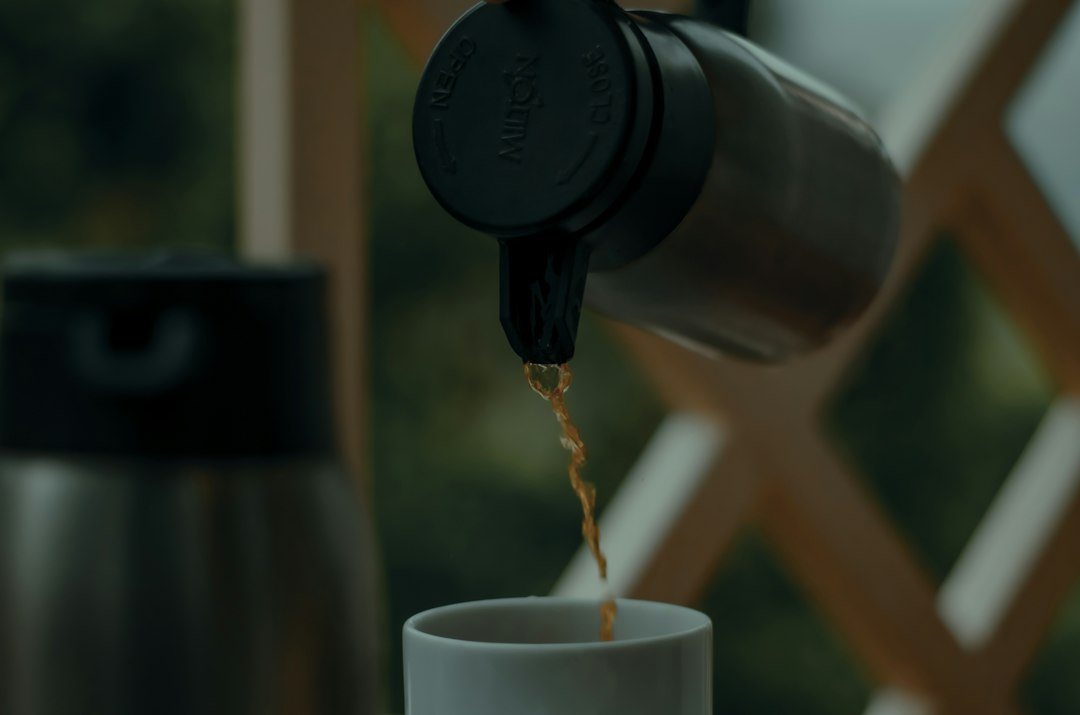
The small stuff matters more than the jacket. A wool beanie, because the classic mistake is a perfect coat over a bare head. Thin touchscreen gloves, so you can work a camera without bare fingers, and a fistful of hand warmers tucked into pockets an hour before you need them. If you’re shooting photos at the water’s edge — and you will be — a waterproof phone pouch on a lanyard has saved more than one device from the bog around here. And pack the one item our whole crew now considers mandatory: a 32-ounce vacuum thermos of coffee, because the nearest shop may be twenty miles of sand road away and the light show doesn’t wait for a refill run.
The Cranes Are In On It
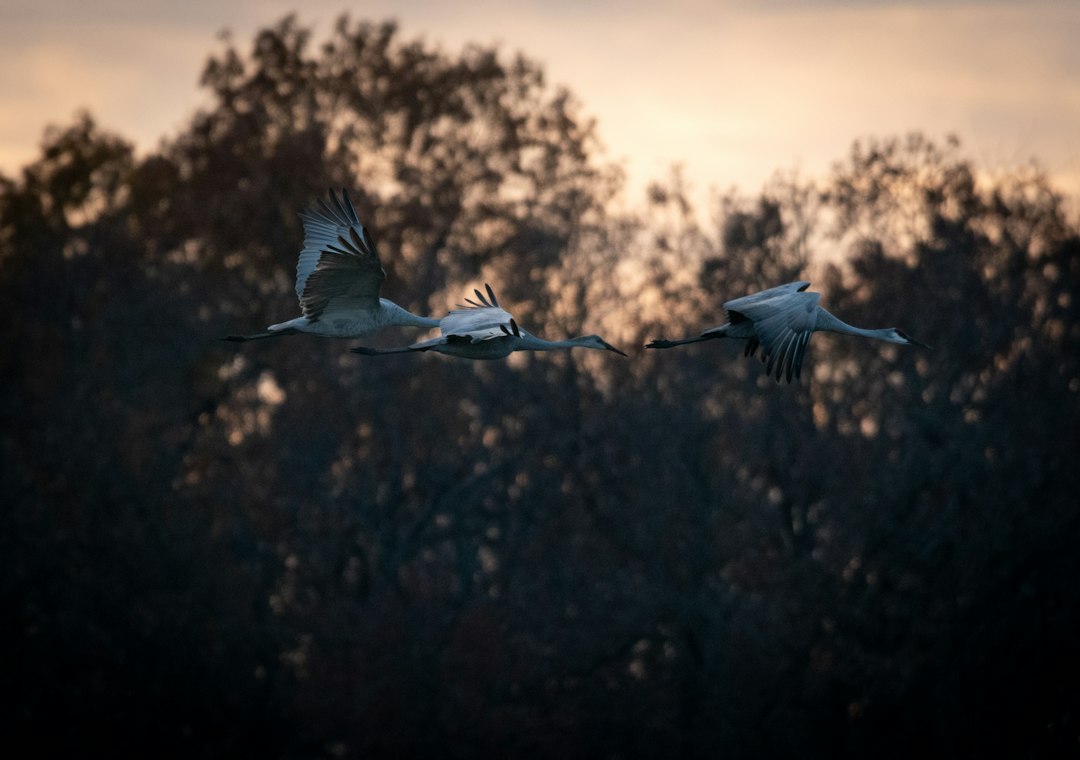
October in Wisconsin’s marsh country comes with a second spectacle that most leaf-peepers never budget for. Sandhill cranes stage in the wetlands here before migration, gathering in the very same wildlife areas that border the cranberry beds — Sandhill Wildlife Area near Babcock and Necedah National Wildlife Refuge are the big names — and at dawn and dusk the sky fills with birds the size of lawn furniture, bugling like it’s their last week in town. Because it is.
We keep compact binoculars in the car year-round for exactly this — they turned a drive between marsh tours into the wildlife highlight of the trip. If you want the fuller case for traveling with a pair, I wrote up how twelve ounces of glass changed our wildlife season after a September in the field with them.
Bringing the Harvest Home
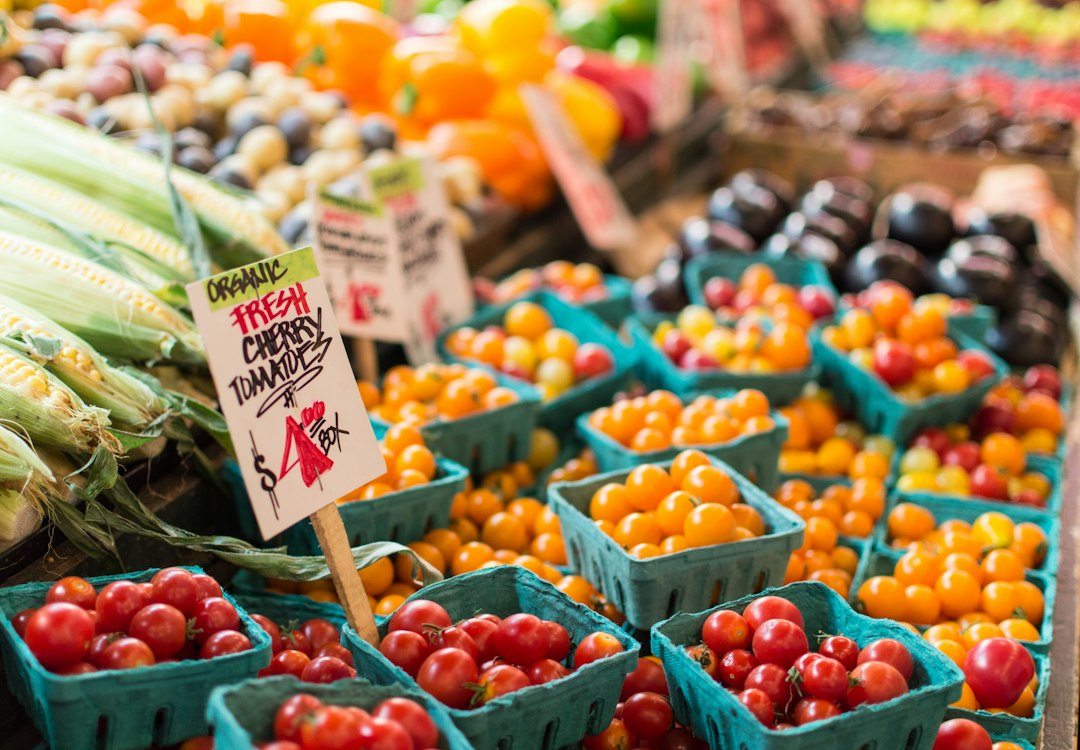
Farm stands along the highway sell fresh, dry-harvested berries in season, and this is the version of cranberry country you can actually take with you. Fresh berries are tart, firm, and keep for weeks refrigerated — and here’s the trick the growers taught us: toss the bag straight into the freezer, unwashed. They freeze individually like marbles, and you can pour what you need for sauce or muffins all winter. We left Warrens with six bags and an insulated tote that kept them cold through two more days of shooting, which is the most Wisconsin souvenir imaginable.
If your travel brain works in produce seasons — and ours does, apparently — the state is generous that way. We’ve timed Wisconsin around Door County after the cherry trucks stop running and planned whole Octobers around catching apple orchards at their peak weekend. Cranberry harvest is the last crop standing in that calendar, and the quietest of the three. Go now and you’ll wonder, like we did, why it took you this long.
If You Go
Base yourself in Wisconsin Rapids for the main marsh corridor, or Warrens if you’re coming up from the Madison side — both have honest motels and better diners than they have any right to. Budget one full day for a marsh tour and the Cranberry Highway, a second morning for the cranes at Sandhill or Necedah, and don’t schedule anything tight after a tour; growers stop mid-ride to let harvest happen, and you want to be there when they do. Call ahead on everything: tour days track the crop, not the calendar.
And if you’re the type who plans trips around a single photograph, make it this one: the reflection of a tamarack in a flooded bed at 7:40 a.m., red berries at the waterline, steam rising where the warm water meets the cold. The season gives you maybe twenty chances a year to take it. About three of them are left.