Ask ten people when to visit Door County and eight of them will say July. That’s exactly the problem. In July, Wisconsin’s Thumb — that 75-mile peninsula pinched between Green Bay and Lake Michigan — belongs to everyone from Chicago, and the line at the fish boil stretches past the picnic tables. By the second week of October, the cherry stands have closed their registers, the summer rentals have emptied out, and the peninsula quietly hands itself back to people willing to wear a fleece. My team and I have now made the drive three Octobers running, and I’ll say it plainly: it’s the best month this county has.
The math is simple. You trade reliably warm water for reliably empty overlooks, rooms that drop 30 to 40 percent, and roughly 300 miles of shoreline burning with maple and aspen color. Door County has more lighthouses than any other county in the United States — eleven of them — and in October you can actually park near one.
Reading the Thumb’s Color Clock
Here’s the part most first-time visitors get backwards. In mountain country, color runs downhill, so you chase elevation. On the Door Peninsula, color runs down the map. It lights up at the tip — Washington Island and the northernmost forests around Northport — around the end of September, then walks south county by county, usually peaking around Sturgeon Bay and the southern orchards in the second or third week of October. My researcher calls it “the slow-motion burn,” and she’s right: you can stand in bare trees near the canal on October 1st and drive forty minutes north into full flame.
One of the things I appreciate about planning this region is how honestly the local tourism board tracks it. Destination Door County publishes a running fall-color map instead of the vague “peak season!” cheerleading you get elsewhere — it’s the same skepticism I brought to our overall 2026 foliage forecast, and it pays off the same way. A four-day weekend in the second week of October gives you the best odds of catching at least half the county at peak.
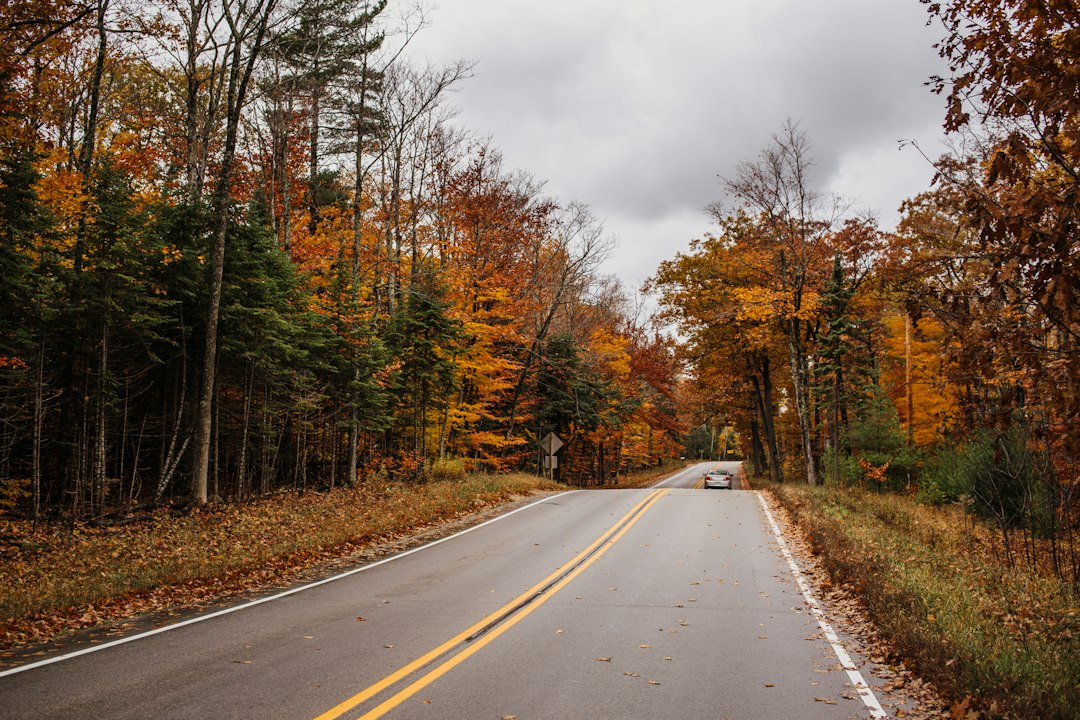
The corridors worth building a day around: County Road B north of Ephraim, Shore Road wrapping around the northern loop past Girl and Kangaroo Lakes, and the rollers of County F between Fish Creek and Egg Harbor. None of them are secret, exactly — but in October you’ll share them with a dozen cars instead of a few hundred. If you’ve done the leaf circuits in Ohio, the quiet here will feel familiar; it’s the same uncrowded logic we documented chasing Hocking Hills’ October color like a local.
Peninsula State Park, One Tower Above It All
If you only clear one afternoon on your calendar, make it Peninsula State Park outside Fish Creek. Nearly 4,000 acres of maple-beech forest on a bluff nose sticking straight out into Green Bay, laced with twenty-some miles of trail. The Sunset Trail loop is the crowd-pleaser — an easy, mostly flat ramble that keeps sliding in and out of water view — but the Skyline Road drive through the park’s interior is where the color gets dense enough to feel tropical, in a strictly boreal way.
The signature stop is Eagle Tower. The original wooden fire tower was torn down years ago; the replacement, opened in 2021, keeps the 60-foot view of the islands but adds a gentle ramp the whole way up, so everyone from toddlers to my editor’s 78-year-old mother can do it. From the deck you look straight across the canopy of the peninsula to Chambers Island, with the ferry wake drawing a white stitch across the water below.
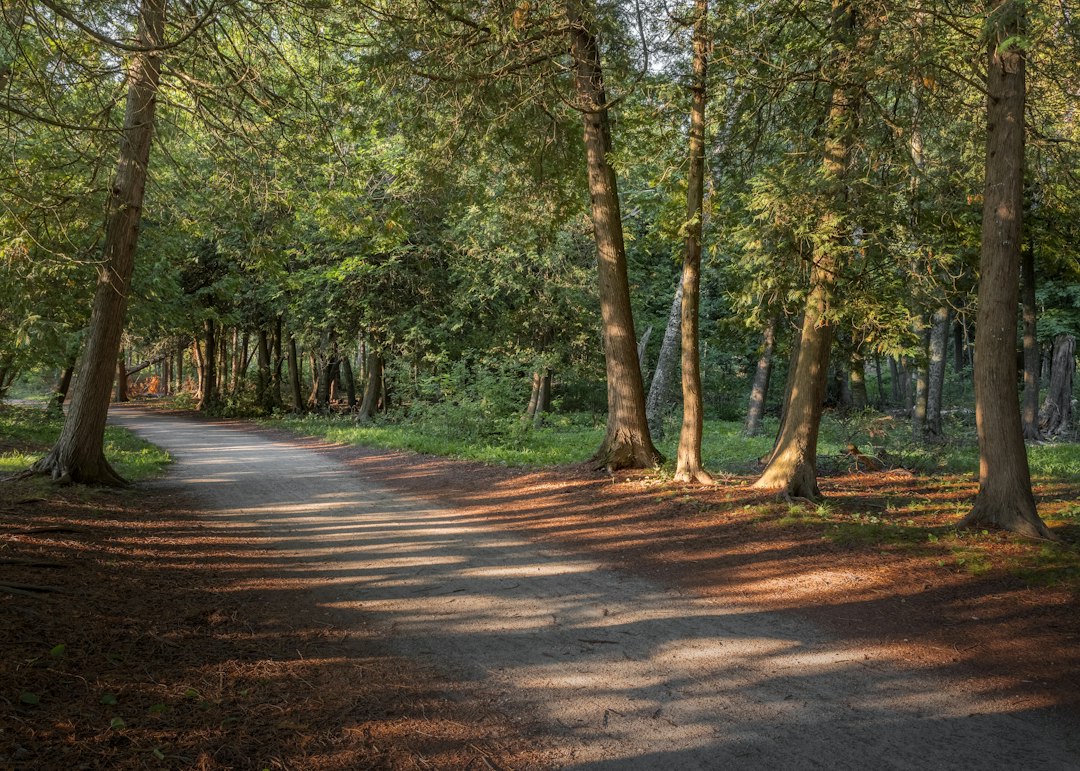
Do the park in the morning, then linger. October light off Green Bay runs long and gold, and the same overlook that’s a parking battle in July will have three cars and a wedding photographer in it now. I carry a stripped-down 20-liter daypack for exactly this kind of afternoon — water, layers, a lens — and the packable waterproof daypack I’ve settled on stuffs down to nothing for the drive between stops.
The Lighthouse Circuit, Without the Queue
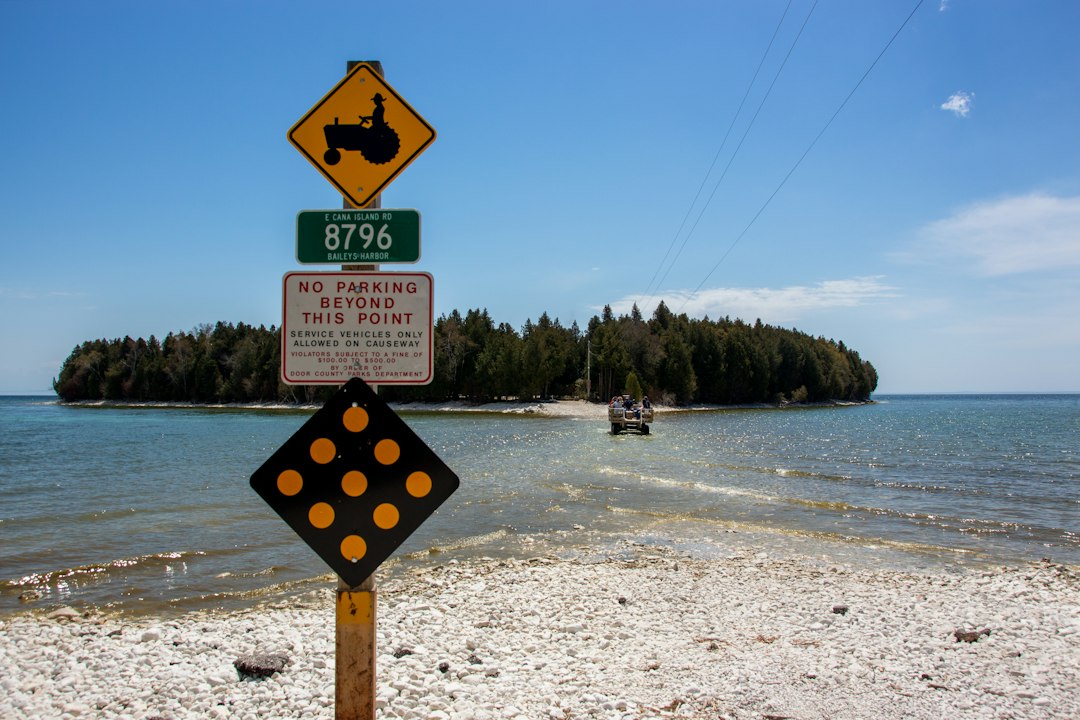
Eleven lighthouses on one peninsula is a ridiculous number, and October is when you can actually build a circuit of them. Start at the crown jewel: Cana Island, north of Baileys Harbor. You reach the 1869 light by walking a limestone causeway across a marshy channel — at high water it can be ankle-deep, so this is the day for real footwear. I’ve stopped pretending sneakers survive it; the waterproof hikers I wear on every Great Lakes trip now earned their keep on that causeway in about ninety seconds. The keeper’s house is a small museum, and climbing the tower puts the whole ribbon of shoreline color in one frame.
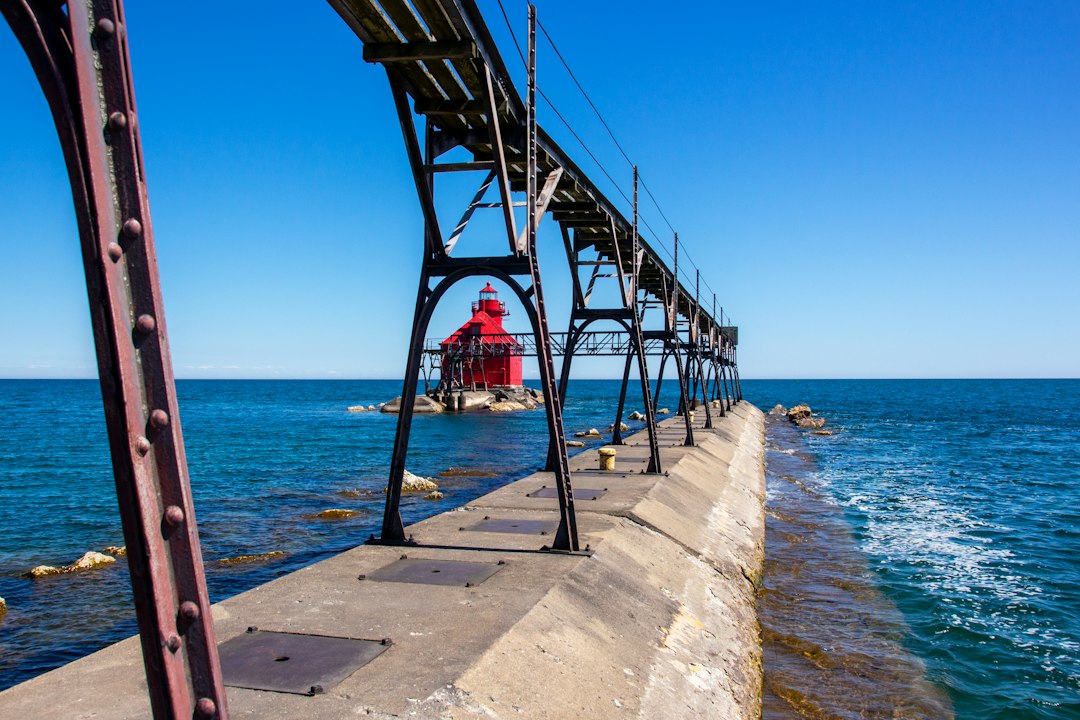
Work your way down the coast from there. Eagle Bluff Light sits inside Peninsula State Park, a squat 1868 building that photographs beautifully against late color. The paired Range Lights at Baileys Harbor sit inside the Ridges Sanctuary, one of the odder landscapes in Wisconsin — a swale-and-ridge sand spit you can walk on boardwalk loops. And in Sturgeon Bay, the red North Pierhead Light at the ship canal mouth is the county’s most-photographed fixture for a reason. Respect the posted rules there; it’s an active Coast Guard zone and the pier genuinely closes when waves come over the top.
Two tips worth their weight. First, October is lighthouse-festival season in the county, and the fall weekend events sometimes open lights that are locked the rest of the year — Chambers Island and Plum Island among them. Check the schedule before you lock your route. Second, bring glass. The water crowd in October is migrating waterfowl and hawks riding the lake shore south, and a pair of 12×25 compacts that live in my door pocket have turned more than one lighthouse stop into a half hour of birding.
The Boilover Worth Building a Night Around
Every region has one dinner that explains the place, and Door County’s is the fish boil. The script hasn’t changed in a century: Lake Michigan whitefish, new potatoes, and onions in a giant kettle over an open wood fire on the lawn. When everything’s cooked, the boiler master dumps a cup of kerosene on the flames, the fireball that follows rolls the pot over, and the bitter fish oils burn off the top in the boilover. The crowd applauds. Then you eat cherry pie.
The Old Post Office Restaurant in Ephraim runs the classic version — boiler master and all — straight through the last Sunday in October, which is a gift to leaf season because the dinner was literally invented for lumber camps and fishermen who worked cold months. Watching flames against an October dusk, steam rising off the kettle while half the county’s maples glow behind it, you understand why the tradition outlived the industry that created it.
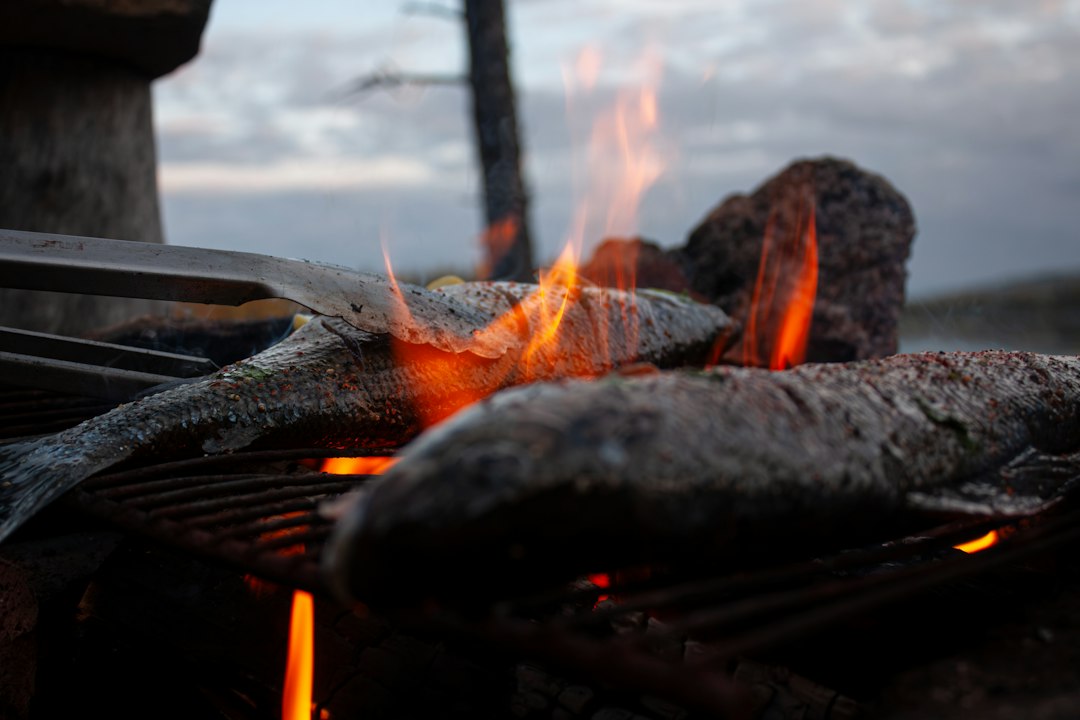
Reserve ahead even in October. The boils run on fixed seatings, and autumn weekends still fill them — this is the one dinner where off-season Door County still crowds. If your dates miss the last boil of the year, Rowleys Bay Resort on the lake side keeps a version going into the shoulder season, and frankly any whitefish you eat within sight of the water it came from is going to be the best fish of your month.
Cherry Country in Its Second Season
People forget that this peninsula grows a serious share of the country’s tart cherries — around 2,500 acres of orchards, most of them harvested by late July. So what’s the point in October? Two things: apples and distillation. The farm markets switch over to cider, apples, squash, and cider donuts, and the cherry economy spends the fall turned into preserves, dried fruit, wine, and the pies that boil-house kitchens keep baking long after the orchards go quiet.
Lautenbach’s Orchard Country outside Fish Creek is the dependable stop — market, winery, and orchard in one, with a porch that catches afternoon light through the fruit trees. Seaquist’s up north is the sprawling one. My photographer treats the orchard rows in October as a texture subject: gnarled trunks, the last fruit hanging, and the lake’s humidity turning the morning air silver. Pack something to sit on — the ground is cold and damp by mid-month, and a pocket blanket that folds to the size of a wallet has saved more than one cider-and-donut stop for us.
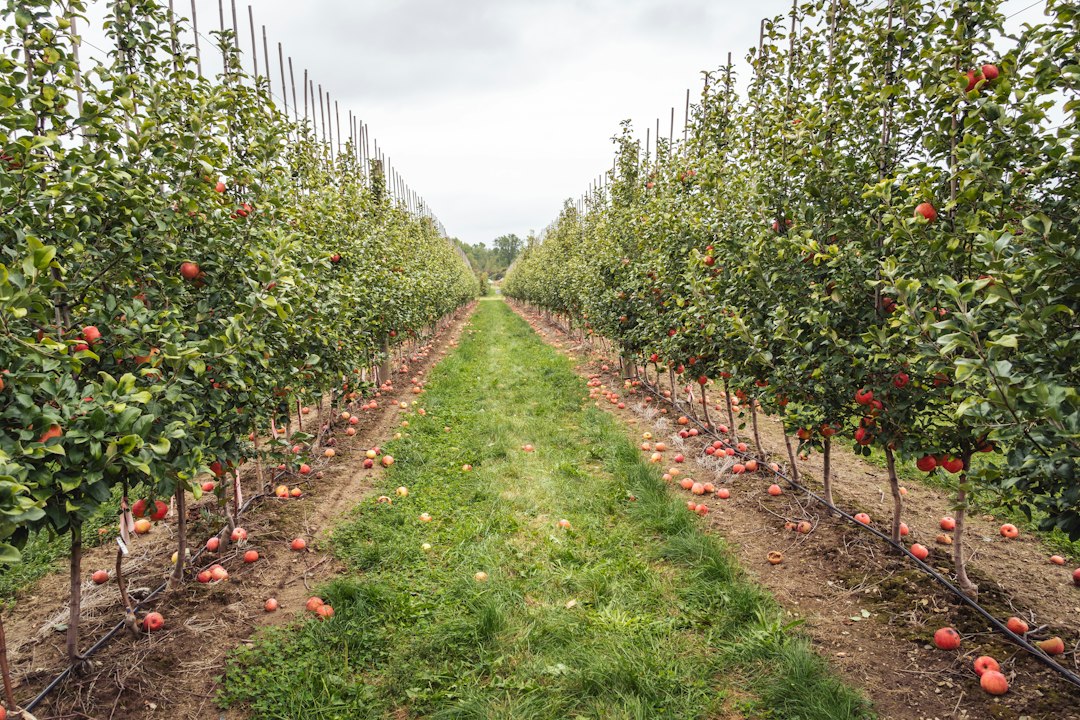
Budget an unhurried loop for this. The orchards, the farm markets, and the shoreline back roads all sit within a fifteen-minute drive of each other, and the temptation to turn “one quick stop” into four is the entire point of October here. This is the same slow-drives philosophy behind our fall foliage trains piece — let the scenery set the pace — except here you’re the engineer.
The Washington Island Ferry Gamble
Drive the Thumb to its knuckle and the road ends at Northport, where a ferry has hauled people the 4-ish miles to Washington Island since the 1940s. The crossing takes about half an hour, and in October it’s a different animal than in summer: fewer sailings, thinner crowds, and a deck wind that will find every gap in your jacket. The payoff is an island that’s essentially one quiet village ringed by water — Schoolhouse Beach and its impossibly smooth limestone cobbles, the lavender farm’s last stand of the season, and color that peaks a week before the mainland’s because the island is the county’s northernmost forest.
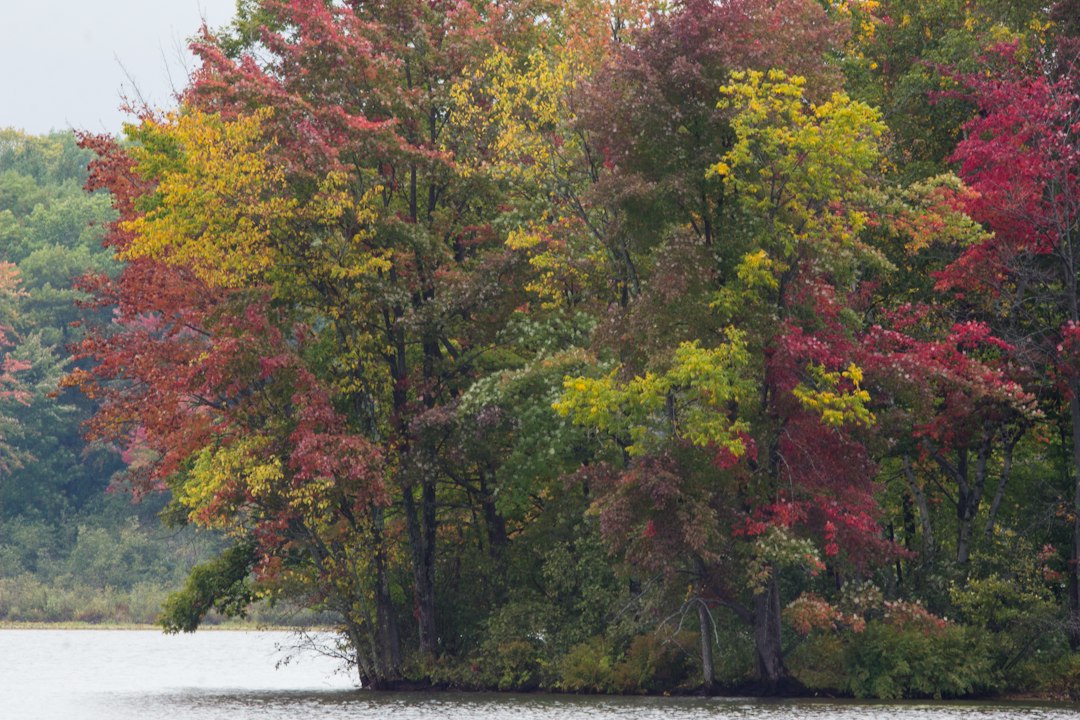
Go early in your trip if peak color matters to you — remember, the north lights first — and check the fall sailing schedule the night before, because it compresses after mid-October. Stand on the open deck for the crossing. The wind coming off the strait is the whole experience, and it’s also the moment you’ll be glad you packed like you meant it: my rechargeable hand warmers get handed around the crew like contraband on that ferry, and the leak-proof travel mug that lives in my door pocket has made the crossing survivable more than once.
If the ferry schedule defeats you, consolation is close: Garrett Bay and the northern bluffs above Northport give you island-grade color without leaving the mainland, and you’ll likely have the overlook to yourself.
What October on the Lake Demands of Your Pack
Door County in October is a forty-degree-morning, sixty-degree-afternoon kind of place, and the lake adds wind that resets your expectations. I’ve watched perfectly pleasant Octobers turn to sideways drizzle in an afternoon, and the trips that stayed good were the ones where everyone packed like the lake was watching. The core of my October kit is boring and proven: a men’s packable down jacket that disappears into its own pocket when the afternoon warms, and on the women’s side of our team, the packable hooded puffer that’s become the office favorite. Layer a merino beanie under your hood on ferry mornings, and trust me on merino socks — cold, damp trails are where cushioned merino hiking socks quietly save entire days.
The logistics are friendlier than the weather. Green Bay’s airport is 45 minutes from Sturgeon Bay; Chicago is a four-and-a-half-hour drive, most of it up the lake. Lodging in October runs noticeably cheaper than July, and the good inns in Ephraim and Fish Creek keep weekend availability late into the season — book a week out and you’ll still have choices. One honest caveat: this is the shoulder season, so a few restaurants and shops close midweek or shut for the year after the fish-boil finale. The county doesn’t roll up the sidewalks so much as fold them neatly. Call ahead on anything you’d hate to miss.
That’s the trade the Thumb offers in October: a little less open, a lot less crowded, and color you’ll do more than look at — you’ll drive through it, climb above it, eat dinner in front of it. The cherries had their month. This one belongs to the maples, and to whoever’s smart enough to show up now.
3 thoughts on “Cherry Season’s Over. That’s Exactly When Door County Gets Good.”