
Every shoreline has one spot that locals stop apologizing for. In Door County — a peninsula that runs on cherry stands, fish boils, and lighthouse postcards — that spot is a scrappy little county park on the Lake Michigan side where the waves do the talking. Cave Point doesn’t have a marina, a gatehouse, or much of anything you’d call infrastructure. What it has is a half mile of raw dolomite ledge that Lake Michigan has been chewing on for about four hundred million years, and the lake has never once asked permission before taking another bite.
The first time you walk out along those ledges, two things happen at once. You notice how loud open water is when there’s nothing between you and the horizon except four hundred miles of lake. And you notice the people in swimsuits standing at the edge, peering down into water so clear you can count the rocks on the bottom, doing the particular math that swimmers do before they commit. This is the shore that made Door County interesting long before anyone put a cherry orchard on the map — and it’s still the best free show on the peninsula.
A County Park Hiding Inside a State Park
Here’s the geographical oddity that makes Cave Point worth explaining to your travel companions: it is, as far as anyone can tell, the only county park that sits entirely inside a state park. The boundaries of Whitefish Dunes State Park wrap around it like a hand around a coin. That arrangement came about through land deals and happenstance rather than grand design, but the practical effect is wonderful — you get two parks for one drive, and the transition between them is a five-minute walk through cedar and beech woods.
Access is refreshingly simple. You park in the Whitefish Dunes lot, walk the short trail east toward the lake, and the forest simply opens up onto the ledges. There are no concessions and no rentals, so arrive with whatever you plan to eat, drink, and swim in. Most visitors tack Cave Point onto a loop around the Lake Michigan side of the peninsula; if you’re plotting the full drive, our Door County coastal drive guide covers the rest of the route, from Sturgeon Bay up to the bluffs north of Baileys Harbor.
Give the place two hours minimum. That’s enough to walk the ledges, watch the water, take a swim if the season’s right, and still have time to sit at one of the picnic tables under the trees and let the whole thing settle.
Why the Ledges Look Like That
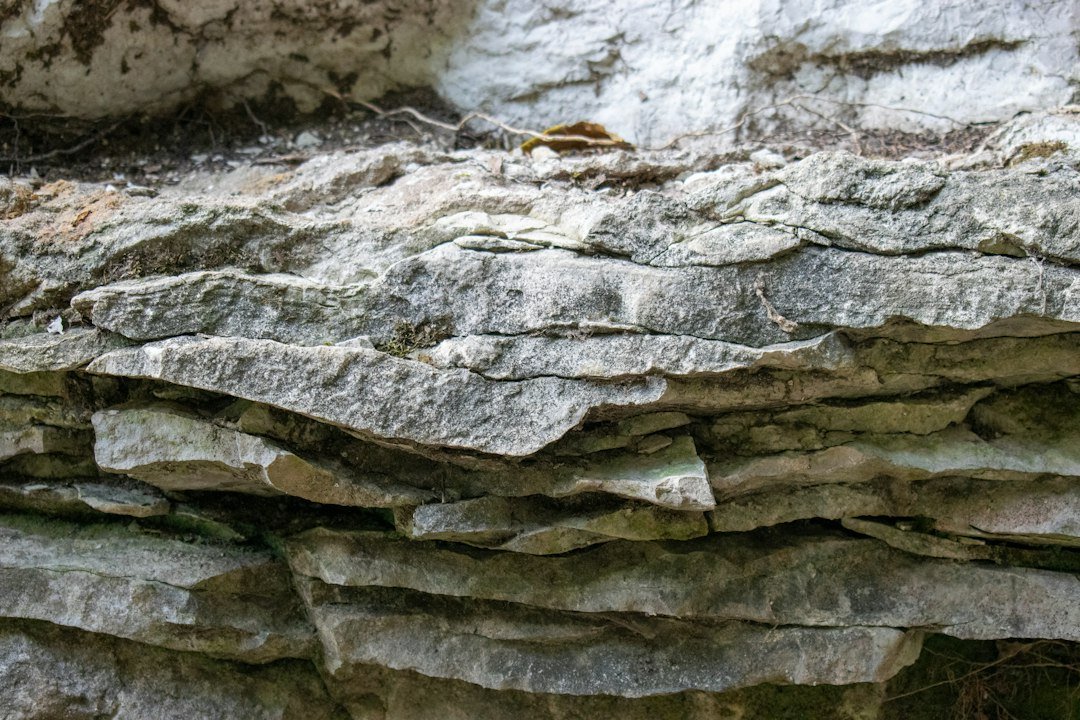
The short version is chemistry and violence. The rock here is Silurian-age dolomite — limestone’s harder cousin — laid down when this part of the world was a warm, shallow sea somewhere south of the equator. Fast forward through an unfathomable stretch of time, and Lake Michigan’s waves began working the cliff face: freezing spray wedges cracks open, and slightly acidic water dissolves the stone into ledges, flutes, and shallow caverns that run back under the shelf.
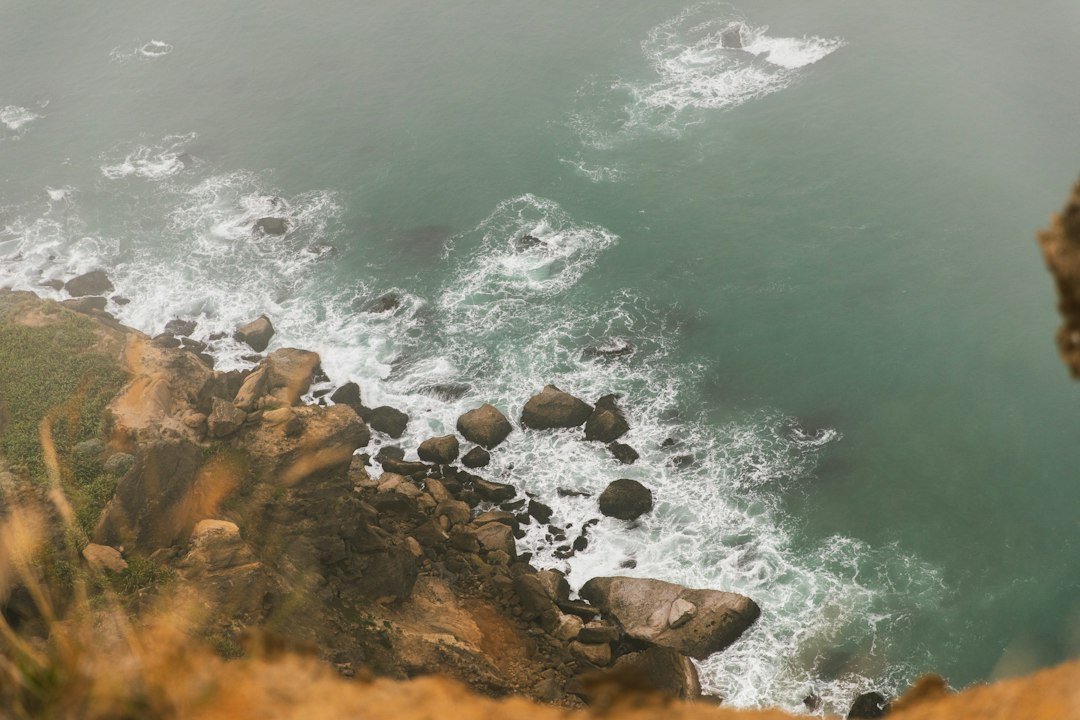
Those underwater caves are the park’s signature feature, and here’s the catch — from the top of the ledge, you can’t see them. The real architecture hides below the waterline, which is why kayakers and scuba divers treat Cave Point as a destination in its own right. On calm days the water is clear enough that standing on the edge feels like hovering over an aquarium; the rock drops away in shelves, each one a slightly different shade of green-blue, until the light gives out.
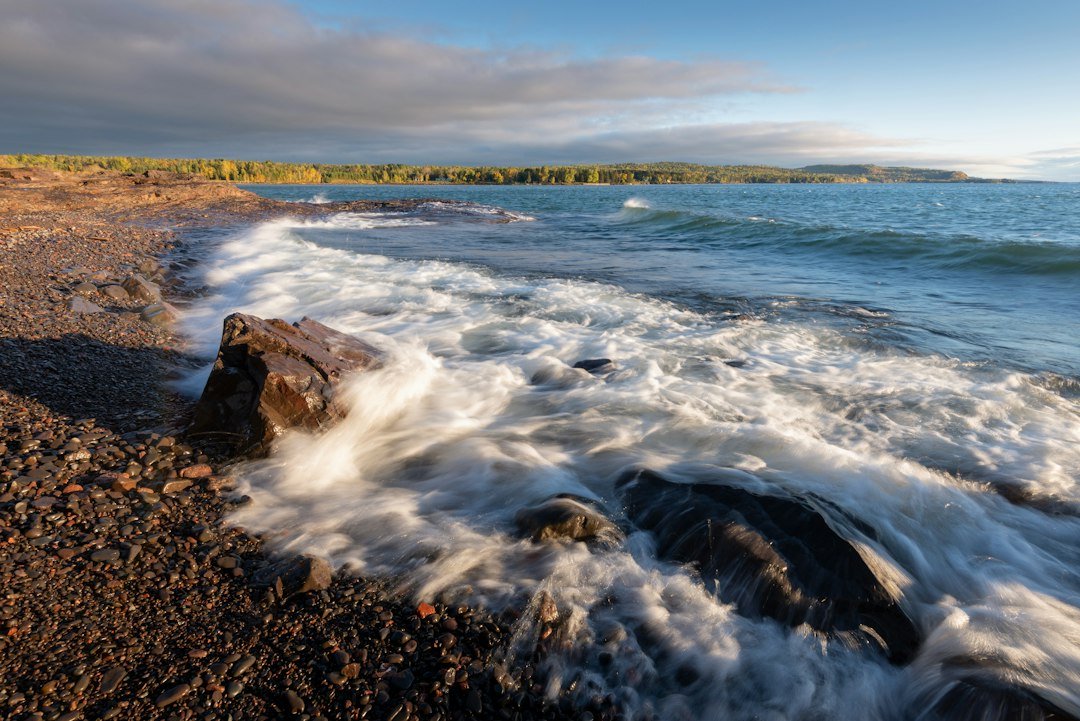
When a big wind has been pushing across the lake for a day or two, the show changes character entirely. Waves detonate against the lower ledge and throw spray thirty feet up, over the tops of the trees in a serious blow. Locals time their visits to gales the way surfers time them to swells. Bring a rain shell you don’t love, stand well back from the edge, and prepare to understand why the county put up all those signs about watching your footing.
The Jump Everyone Photographs
Let’s address the aluminum ladder in the room: Cave Point is famous, in certain Midwestern circles, as a cliff-jumping spot. On any warm weekend from June through August, you’ll find teenagers lining up at the edge, working up the nerve while their friends film from the water. The ledges step down from ankle-deel shelves to jumpable drops — locals will tell you the popular ones run roughly ten to fifteen feet, deepening as you move north along the point.
It’s worth being honest about the official position: nothing at the park prohibits jumping, but the county and rescue squads actively discourage it, and they’re not being killjoys. The ledges are limestone, which means sharp edges and holding the lake’s temperature well into July. Waves that look gentle from above will shove a swimmer toward the rocks below. Every summer someone misjudges the depth or the surge and learns about it the expensive way. If you jump, jump sober, jump with someone watching from the water, check your landing zone yourself before you commit, and know that the smartest locals jump only on flat-calm days.
The rest of us can have a perfectly great time watching. The cliff jumpers against that blue-green water make one of the best free photographs in Wisconsin, and the rocks warm up in the afternoon sun like stadium seats. Either way, you’ll want real footwear — the path out and the shelves themselves are unforgiving on bare feet, and a solid pair of quick-dry water shoes will earn their spot in your bag before the day is over.

Swimming the Shelf and the Beach Bailout
Jumping aside, Cave Point is a legitimately lovely place to swim. There are gentler entry points along the southern ledges where the shelf slopes gradually into deep, extraordinarily clear water, and on a calm August afternoon the experience is closer to a quarry swim than a Great Lakes plunge. The water is cold — this is Lake Michigan, not the Gulf — but that clarity is addictive, and the bottom drops away so gradually that nervous swimmers can wade forever before committing.
If small children or cautious swimmers are in your group, the escape hatch is right next door: Whitefish Dunes State Park’s mile-long sand beach, one of the finest on the lake, is a ten-minute walk down the trail. It’s the family-friendly version of the same shoreline — lifeguard-free but gradual and sandy, with dunes rising behind it like a backdrop. Many families set up on the beach and take turns walking over to the ledges for the scenery.
One of the best ways to preview the terrain before you get your feet wet is to wander it virtually — a slow 360-degree walk along the paths above the water gives you a real feel for how the ledges, the picnic clearing, and the swim entry points fit together, and it captures the strange quiet of the place on a weekday morning better than any still photo manages.
Paddling Into the Caves
To actually see the caves, you have to be on or under the water, and kayaking is the accessible version of that. On calm mornings, paddlers launch from the Whitefish Dunes beach and work their way up the shoreline to the point, where the underwater caverns reveal themselves as dark, rippling openings in the cliff base. Guides from the villages up the peninsula run trips here for good reason — the combination of clear water, pale rock, and overhanging forest is about as good as flatwater kayaking gets in the Midwest.
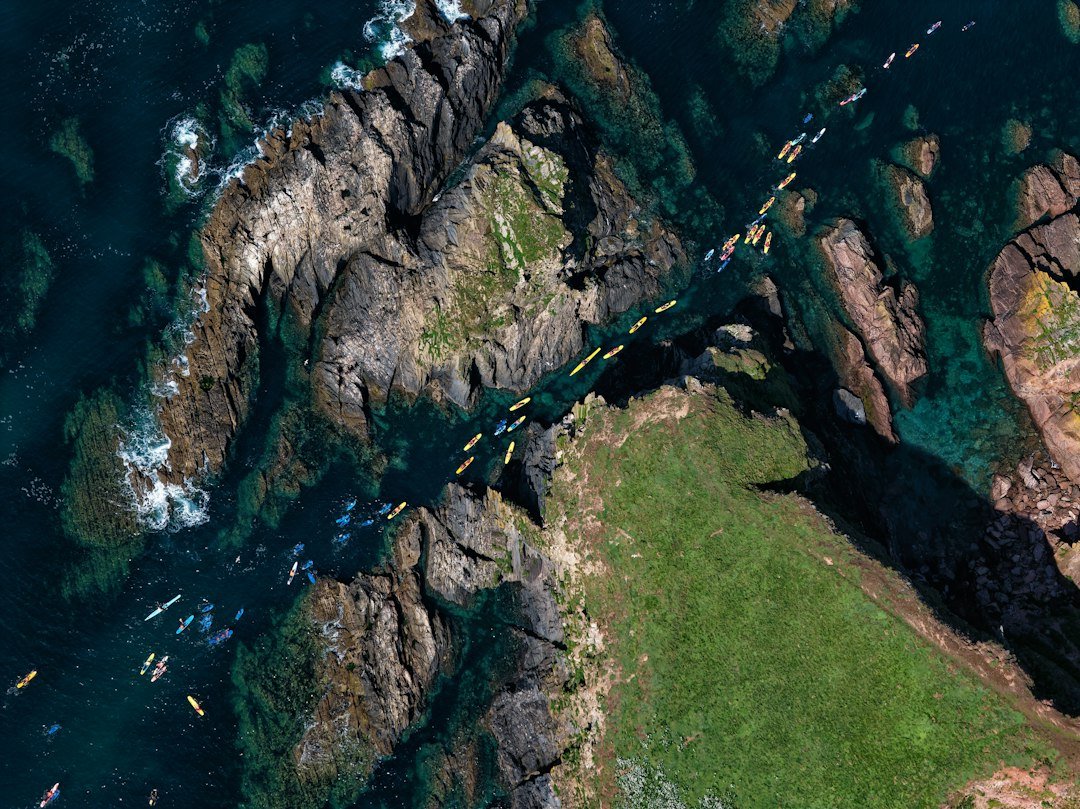
Two rules govern the experience. First, this is open water, not a river: check the marine forecast, stay close to shore, and respect offshore winds, which can shove an inexperienced paddler out fast. Second, whatever you want to stay dry — keys, lunch, camera — belongs in a roll-top dry bag lashed to the deck, because every kayaker eventually provides entertainment for the people on the cliffs by capsizing in the shallows.
The photography potential here is absurd, and it’s no accident that a lot of the cave imagery you see online comes from 360-degree cameras — the one we’ve watched paddle this shoreline repeatedly is the Insta360 One X3, which swallows the whole cliff in a single frame. Pair it with an invisible-selfie-stick tripod and you can film yourself paddling straight through the frame like your own drone crew.
Picnic Tables, Squirrels, and Slow Afternoons
Between the parking area and the ledges sits the picnic clearing, and I’d argue it’s an underrated feature rather than an afterthought. The tables sit back in the trees, out of the wind that so often owns the point itself, and the resident squirrels have fully committed to a life of sandwich-related crime. Pack a real lunch — Door County makes this easy, with bakeries and farm stands lining Highway 57 on the drive up — and claim a table for the middle of the day.
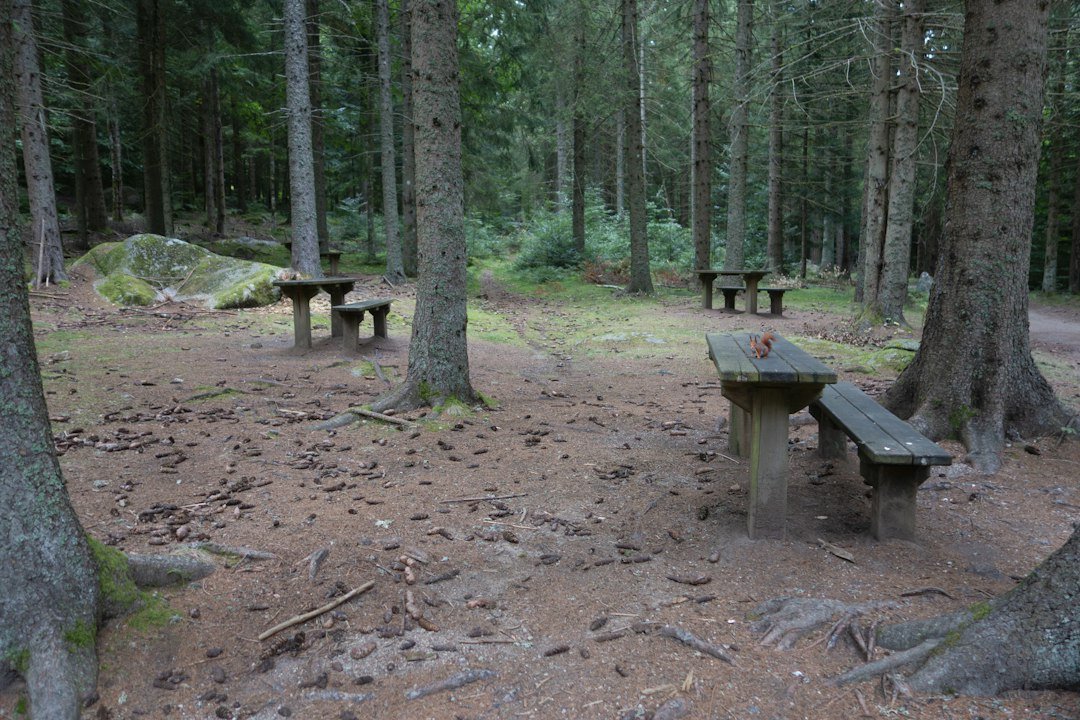
This is also the spot where the park’s slower pleasures become obvious. You can spend an hour here doing absolutely nothing productive: watching clouds build over the lake, listening to the waves thump the ledge, taking terrible portraits of squirrels. For families, it’s the pressure-release valve — kids who found the hike to the cliffs boring will happily spend an hour within sight of the tables. A good Door County book for kids in the bag buys the adults another twenty minutes of coffee, and the phone photographers among us will find the dappled light through the cedars far more cooperative than the wind up on the point. Speaking from experience chasing that light, a camera you actually carry — like the Pixel 7 Pro that shot much of this shoreline — beats the one you left at home every single time.
Keep an eye on the sky. Afternoon winds build fast on the lake side of the peninsula, and a picnic interrupted by spray from a rising surf is a Door County memory of the best kind, as long as the sandwiches made it into something waterproof first. A cheap waterproof phone pouch survives being dropped off a kayak; your pockets do not.
When the Point Changes Personality
Cave Point runs on two seasons that most visitors never separate. Summer — June through early September, water at its warmest — is jumping-and-swimming season, loud with kids and splash contests. September quietly hands the ledges back to adults: the water is cooling toward the sixties, the crowds evaporate after Labor Day, and a 3mm shorty wetsuit suddenly doubles your swimming season. This is the window locals guard. The lakeshore towns empty out, as we’ve argued before in our piece on Door County after cherry season, and the peninsula starts feeling like it belongs to whoever showed up.
Then October flips the switch entirely. The jumpers are gone, the water turns gunmetal, and the park becomes a wave-watching and foliage destination — the forest inside Whitefish Dunes goes gold while maple-red rolls down the bluffs, and a cold wind out of the northeast turns the point into front-row theater. Time a late-fall trip against our fall foliage forecast and you can have both. Bring layers with real intent; a hoodie built for exactly this kind of shoreline is the unofficial uniform, and the wind coming off fifty-degree water will explain why by mid-morning.

Packing for a Day on the Ledges
The full kit, in order of importance: water shoes (the rock is grippy when dry and treacherous when wet, sometimes within the same step), a dry bag for anything that must survive a swim, a towel you don’t mind sitting on bare rock with, more water than seems reasonable, and wind layers even in August. Swimmers should add the wetsuit in September and skip the bravado. Photographers should bring more battery than they think they need — the light off that pale limestone at golden hour drains a phone faster than you’d believe, and golden hour on the point, with the sun dropping over the forest behind you and the ledges glowing amber, is worth the wait.
Leave the drone expectations behind; the wind has opinions. Leave the sandals behind; the rock has opinions too. And leave some time unplanned. The whole charm of this park is that its best moments — a bald eagle working the updraft off the point, a wave detonating against the lower shelf, a squirrel making off with half a pretzel roll — refuse to be scheduled.
The Souvenir That Isn’t a Souvenir
There’s no gift shop at Cave Point and never will be, which is precisely the point. What you take home is the specific blue of that water, the sound the ledges make when a swell moves through the caves beneath them, and the slightly smug knowledge that you found the spot most visitors drive past on their way to a lighthouse. If you want a physical reminder, a print of the point’s ledges over the desk does the job nicely. But honestly, the water handles it. Nobody who has swum off that shelf on a calm September morning has ever entirely stopped thinking about it.
Go once for the spectacle and the photographs. Go twice for the quiet weekday version, the one where the only company is a heron working the shallows and the lake going about its four-hundred-million-year project of rearranging the rock. Either way, Cave Point will quietly ruin every other county park for you — and you’ll let it.