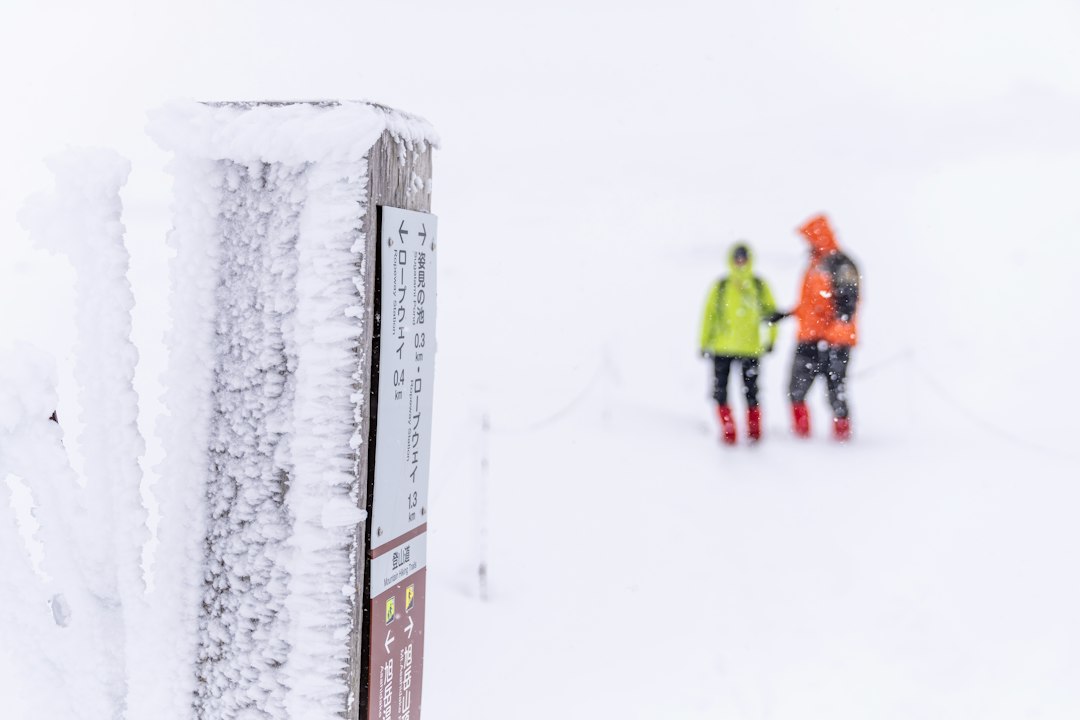
There is a week in late October when the trails change character overnight. The maples have dropped, the mud has stiffened, and the first hard frost turns every root and rock ledge into something closer to glass than dirt. I took a fall two seasons ago on what I would have sworn was a gentle walk — a shaded drainage on the north side of a ridge, eight in the morning, hands full of coffee thermos. My feet went out from under me so fast I never got a hand down. Nothing broke, but my wrist sang for a month, and I spent the drive home recalculating how many months of the year I had quietly written off.
The answer, once I actually counted, was embarrassing. Here in the northern states, the freeze-thaw season runs from roughly November through March, and it does not take a blizzard to make a trail dangerous. It takes one clear cold night after a rainy afternoon. Locals call the result verglas — a skin of ice on bare ground — but I just call it the season of glass, and it turns out the difference between sitting it out and hiking straight through it is about seventy dollars of steel and rubber strapped to your boots.
This year my team and I did the homework before the first real freeze instead of after it, because that is the other lesson October teaches: the good traction options sell out exactly when you need them. Here is everything we sorted.
Why I Buy Traction in October, Not December
Retail moves faster than weather. By the time the first ice storm makes the evening news, the warehouse stock of the proven models has already thinned, and what remains is sized for nobody you know. Every winter I watch the same pattern: panic buying in mid-December, backorders through January, and then a wall of inventory in March that nobody wants. Buying in late October costs the same and guarantees you get to choose instead of settle.
October also gives you practice time, which sounds trivial until you are standing at a frosty trailhead with numb fingers trying to stretch a rubber harness over a lugged sole for the first time. Traction goes on easier at home, at room temperature, in good light. Do it twice before you need to do it for real. The thirty seconds you spend fumbling in the cold is the thirty seconds you decide to skip it — and that is exactly how the season of glass catches people.
One more thing worth saying plainly: this is the cheapest safety margin in outdoor gear. A set of coil grippers costs less than a nice lunch; the serious spike sets cost about what a pair of trekking poles does. Compare that to a wrist X-ray and an orthopedic copay, and the math stops being math.
The Three Families of Grip
Walk into the ice-cleat aisle — or more realistically, scroll it — and the options look endless. They are not. Nearly everything on the market descends from three basic architectures, and once you can name them, the whole category sorts itself in about a minute.
The first family is coils and studs: steel springs or stamped cleats strapped under a rubber or elastomer frame. The second is chain-style spikes: short steel spikes hanging from a chain harness, the classic MICROspikes formula. The third is the new hybrid generation, like Kahtoola’s EXOspikes, which bed tungsten-carbide teeth into a flexible plastic traction matrix instead of chains. Each design answers a different question about where you walk and how steep it gets.
Choosing wrong in either direction is its own kind of misery. Too little grip and you are postholing your confidence on every downhill; too much and you are clanking across bare pavement, dulling steel with every step and feeling like you strapped crampons on for a dog walk. Match the tool to the terrain you actually cover.
Coils and Studs: The In-Town Answer
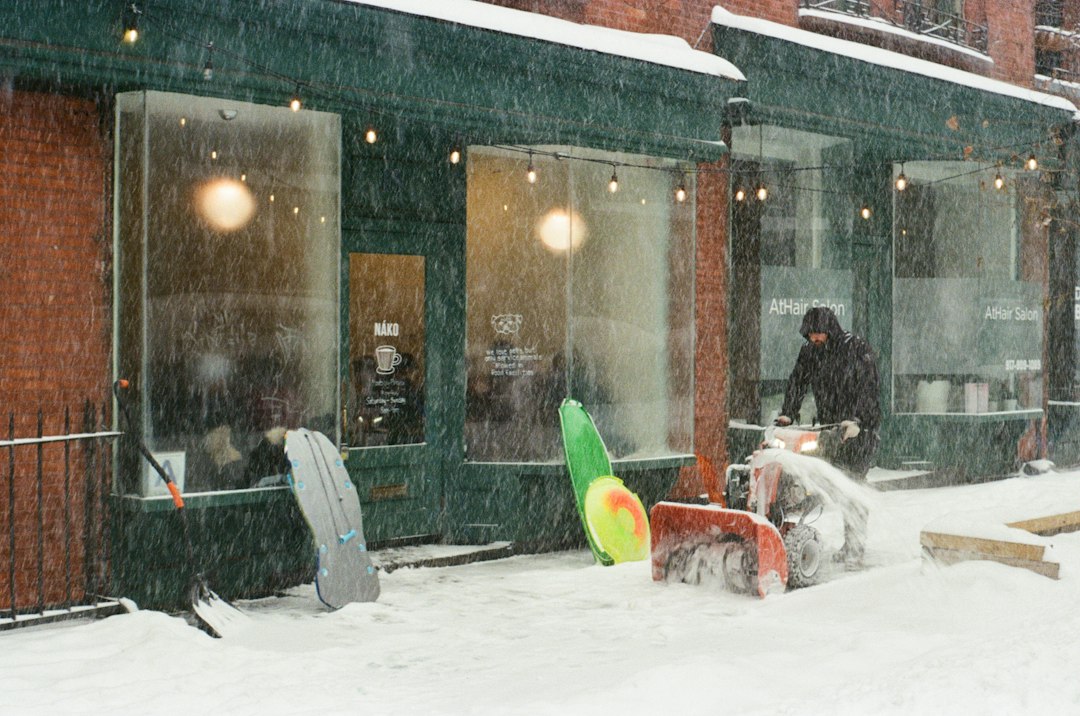
If your ice problem is a sidewalk, a parking lot, or a flat rail-trail, you do not need spikes — you need Yaktrax Walk-style coil grippers. The coiled steel bites glazed concrete and packed snow well enough for flat ground, and the whole contraption is light enough to live in a coat pocket. My editor runs a pair all winter in a lake-effect town and swears by them for exactly one use case, which is the point: they are honest tools with an honest limit.
Two upgrades exist if you look. The Yaktrax Pro adds a cross-strap that keeps the coils seated when you walk fast or hit deeper patches, which matters because the number one failure mode of cheap coil grippers is the rear coil sliding off the heel mid-stride. And the step-up in durability is real: the off-brand clones tend to snap their rubber frame within a season, while the name-brand elastomer survives being stretched over boots hundreds of times.
For mixed town terrain — gravel driveways, broken pavement, the dirty refrozen slush of February — the studs-and-plate designs bite harder than coils. Something like STABILicers puts actual steel cleats through a full rubber sole, and Yaktrax’s Diamond Grip hangs chunky multi-sided beads that tolerate bare pavement better than pointed spikes. My rule of thumb: coils for the walk to the bus, studs for the driveway from hell.
What none of these will do is hold a slope. Ask coil grippers to climb a icy hill with any grade and they go from adequate to decorative with about ten degrees of pitch. That is not a flaw; it is a design boundary, and crossing it is how people learn the second family exists.
Chain-Style Spikes: When the Trail Tilts
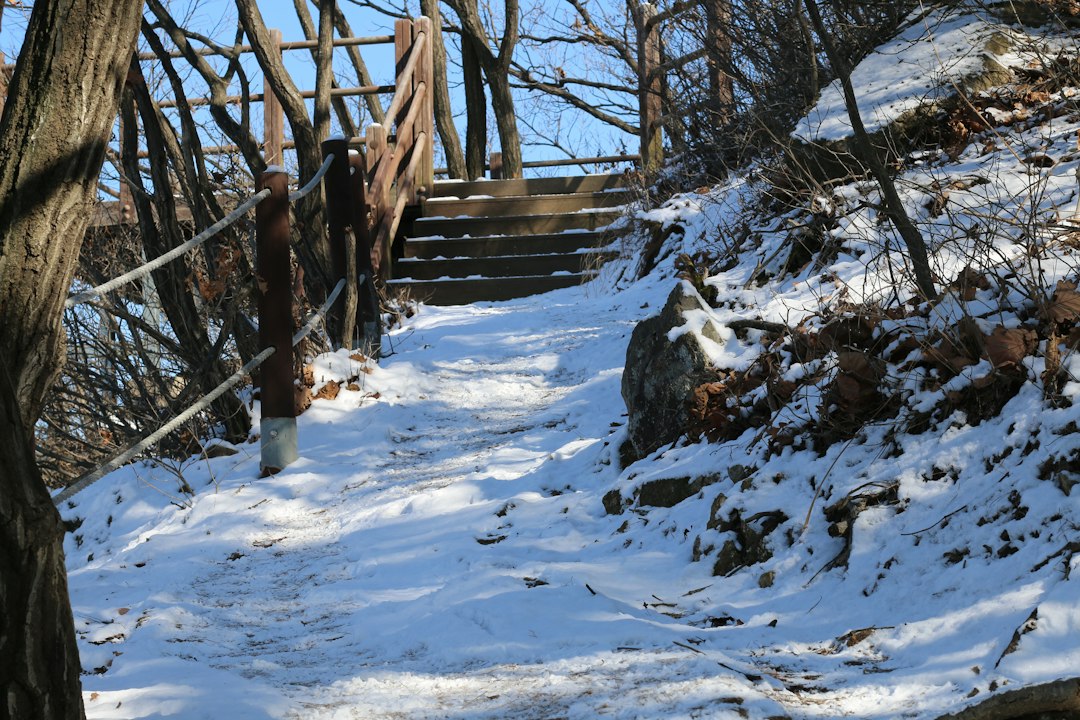
The serious answer for real trails is the chain-and-spike harness, and the benchmark is still Kahtoola MICROspikes: a stretchy rubber rand that pulls over your boot, a stainless chain linkage, and a dozen short spikes that press into ice like tiny crampons. They handle packed snow, frozen mud, glazed rock, and moderate grades — the entire bread-and-butter repertoire of a winter hike. Our testers found they bite on everything from frozen footbridges to the wind-scoured stretches above treeline.
The category has honest rivals now. Yaktrax’s spike-equipped hiking models put extra teeth under the toe for steep ground, and the Hillsound Trail Crampon line adds a front platform and steel chain that some of my taller testers prefer on steeper, harder water ice. Any of the three will carry you through a normal winter of hiking; the differences live at the edges — fit on your particular boots, how fast the elastomer stretches out, and how easily they shed slush instead of balling up underfoot.
What separates the good from the cheap here is invisible until it fails. The spikes themselves almost never break; it is the harness that goes. Budget clones use a harder rubber that cracks in deep cold or tears where the chains pass through, usually at the worst possible distance from the car. The established brands use a vulcanized elastomer rated for repeated flex at freezing temperatures, and Kahtoola in particular has a long-standing reputation for replacing hardware when it wears. Buy the harness, not the spikes.
Know the ceiling, too. These are hiking tools, not mountaineering tools. Steep water ice and firm snow slopes above roughly thirty degrees belong to real crampons and the skills that come with them. The day you find yourself front-pointing up a frozen waterfall with chain grippers is the day you needed a different sport.
The Hybrid Lane for Runners and Mixed Ground
The newest family exists because of a specific annoyance: the on-again, off-again trail. Anyone who runs or walks routes that swing from ice to bare asphalt to dirt inside a single mile knows the dilemma — spikes that grip the ice punish you on the dry stretches, so you end up stopping to pull them off every quarter mile. The hybrid designs say fine, leave them on.
The EXOspikes approach sinks short tungsten-carbide teeth into a flexible thermoplastic matrix spread across the whole sole. On ice the teeth bite; on rock, roots, and pavement the plastic lugs carry the load and shield the teeth from dulling. For winter trail runners and fast walkers on variable ground, our crew rated this the single biggest quality-of-life upgrade in winter gear. Road-first runners have it even easier: Kahtoola’s NANOspikes put a row of low-profile carbide dots under a running-shoe last, grippy on glare ice and unnoticeable on dry concrete.
The trade is that hybrids sit a half-step below chain spikes in raw bite on hard, steep ice. On moderate grades they are superb; on a steep glazed pitch you will notice the difference immediately. If your winter is mostly rolling terrain and pavement sections, this is your lane. If your trails tilt, stay with chains.
Fit Is Half the Battle
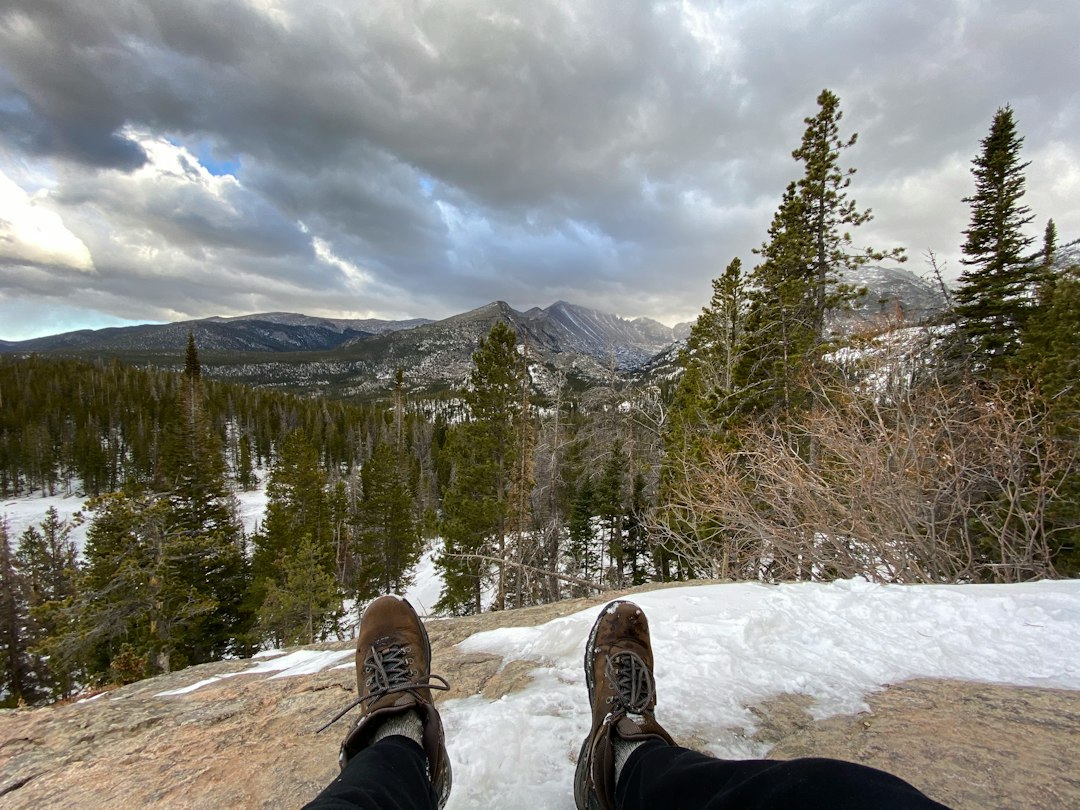
Traction sizing is boot sizing, and the single most common mistake I see at trailheads is a set of spikes fitted to summer footwear then stretched over January’s insulated monsters. If your winter boots are puffy and lugged, size the harness for the boots, not the shoes, and check the manufacturer’s chart against actual sole length — the brands run differently and the chart is the only honest source.
Stiff soles outperform floppy ones under any harness. A flexible trail runner lets the elastimer shift around; a stiffer insulated hiking boot gives the chains a platform to press from, which is why the same spikes can feel transformative on one shoe and vague on another. My team’s winter runners solve it with the hybrid matrix styles, which tolerate soft shoes far better, and our hikers simply keep a dedicated pair of stiff boots for the frozen months.
Practice the on-and-off ritual until you can do it standing on one leg with gloves on. Check the orientation every time — the toe bail or toe chain goes at the front, and yes, we have watched someone hike a mile with them on backwards, complaining the whole way about how overrated spikes are.
What Actually Destroys This Gear
None of these devices die of ice. They die of pavement, of neglect, and of storage. Walking any significant distance on bare concrete is sandpaper for coils and spikes alike — it rounds the steel, and dulled traction is worse than none because you trust it. Dry rock ledges do the same on the trail. The habit to build is simple: when the surface clears, pull them off and stash them. The hybrid designs exist precisely for people who will not do that, which is a confession as much as a feature.
Then they die of salt and damp. Road salt corrodes chain links, and a set of spikes shoved wet into a pack pocket in March will greet you in November as a lump of orange. Rinse them, dry them, hang them. Inspect the harness elastomer before each season for the hairline cracks that announce a failure mid-hike. And retire anything that has gone vague — gear that half-grips is a liar, and the season of glass does not forgive liars.
The Rest of the Winter System
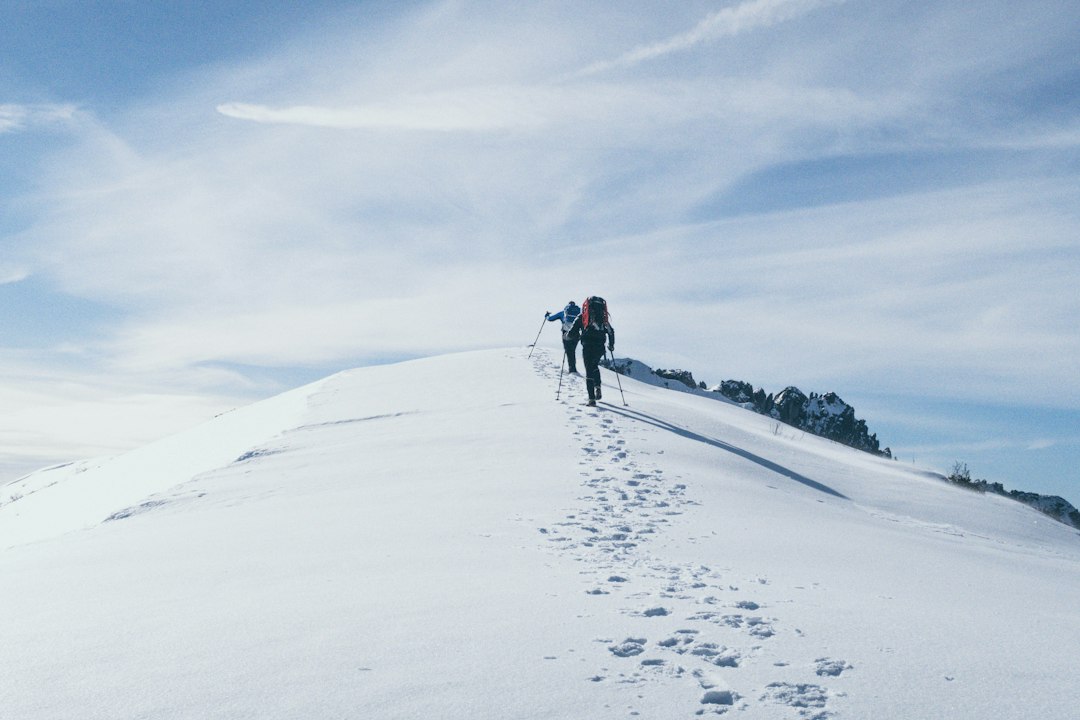
Traction does not work alone, and the pieces multiply each other. Poles are the other half of the equation: the trekking poles I use all summer get snow baskets screwed on and become outriggers for the icy months, and a spike-and-pole combo will get you through conditions that stop hikers wearing either one alone. I wrote up my full pole conversion for fall hiking a few weeks back if you want the details.
The rest stacks the same way. A packable down layer handles the strange thermal swings of a winter afternoon, and I run through my favorites in the jacket piece from leaf season. For anyone pushing into quiet country, the satellite messenger decision matters even more on ice, where a slip can immobilize you fast. And before any of it, the winter car kit I build before the first freeze is the piece that gets the whole system to the trailhead — a frozen car in a cold parking lot ends the trip before traction gets a vote.
My Verdict After Five Winters of Testing
If you are a town walker or flat-trail regular: coils with a strap, the Yaktrax Pro tier, replaced every couple of seasons. If you hike real trails through the frozen months: chain-style spikes on a stiff boot, full stop — this is the pair I recommend to friends, and the one purchase that has never once disappointed the crew. If you run or cover wildly mixed ground: the hybrid matrix generation was built for you and is worth every dollar over the knockoffs.
And if you do nothing else this week, do the October thing: order before the freeze, fit them to your actual winter boots at your actual kitchen table, and hang them by the door where you cannot pretend you forgot. The season of glass arrives on its own schedule. Whether it cancels your hikes or just changes your footwear is a decision you make now, in late October, while the ground is still merely frosty and forgiving.