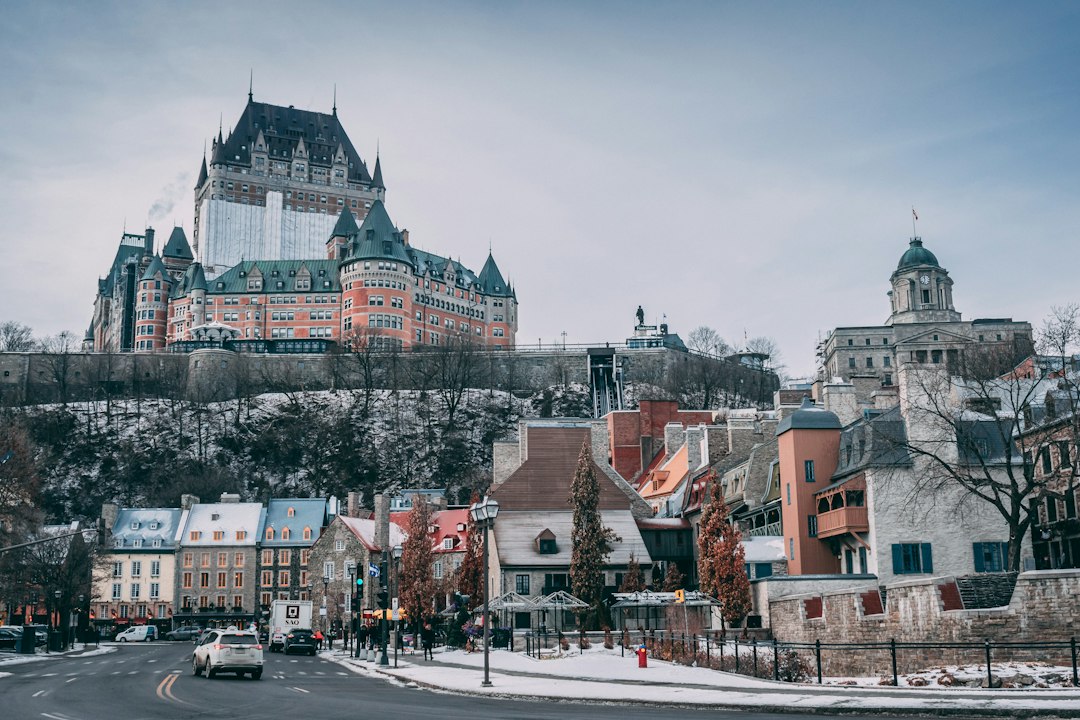
Most Christmas markets in North America are open whenever you feel like showing up. Québec City’s is not. The Marché de Noël allemand de Québec, the German Christmas Market that takes over the old walled city every winter, is closed Monday, Tuesday and Wednesday for almost its whole run. It opens Thursday morning, goes dark Sunday evening, and repeats that rhythm for five weeks.
That one quirk shapes the whole trip. You can’t wander in on a random Tuesday. You have to plan a long weekend around it, and if you plan it well, you get one of the best winter city breaks on the continent: wooden chalets under stone walls, mulled wine you can hold in mittened hands, a funicular down to the river, and a French-speaking city that has been doing winter properly for four centuries. My team and I spent the last few days pulling the 2026 schedule apart, and this is the Thursday-to-Sunday plan I’d use.
The 2026 Market in Plain Numbers
Here’s what the organizers have published for this season. I’d still check the official site the week you go, because small details shift.
- Dates: Thursday, November 19 through Wednesday, December 23, 2026.
- Regular hours: Thursday to Saturday 11 a.m. to 9 p.m.; Sunday 11 a.m. to 6 p.m.
- Closed: Monday through Wednesday, every week until the final stretch.
- The last week is different: from Thursday, December 17, it opens every day. Sunday the 20th runs until 9 p.m., Monday the 21st and Tuesday the 22nd until 9 p.m., and the final day, December 23, closes at 8 p.m.
- Admission: free. No tickets, no timed entry.
- Size: more than 125 exhibitors spread across five sites in Old Québec, all within a few minutes’ walk of City Hall.
- Crowds: the organization estimated close to 700,000 visits last season, a record.
That last number matters. The old town is small and the lanes between chalets are narrow. On a Saturday night in December, you will be shuffling, not strolling. The rest of this plan is about putting yourself in the right place on the right day so you get the market at its best.
Why Thursday Is the Day to Arrive
The market’s director told Radio-Canada this fall that if you want crowds and atmosphere, come on the weekend, but if you want calm and time to talk with the exhibitors, Thursday or Friday is better. I’d take that advice literally. Arrive Thursday, do your serious browsing Thursday afternoon and Friday, and treat Saturday as the night for atmosphere rather than shopping.
Thursday also has a quieter advantage for Americans. On the weekend of November 26 to 29, US Thanksgiving falls on a market Thursday, but in Canada it’s just a normal workday. Canadian Thanksgiving was back in October. So if you skip the turkey at home, or eat it early and drive north on Friday, you get a market weekend while a lot of your neighbors are stuck at the mall.
Here’s how the five weekends stack up, from my point of view:
- November 19 to 22 (opening weekend): fresh decorations and excited locals, but less chance of snow on the ground.
- November 26 to 29 (US Thanksgiving): my favorite for American visitors who can get away. Fewer US tourists than you’d expect.
- December 3 to 6 and 10 to 13: the sweet spot for snow and lights. Also the busiest Saturdays, so lean on Thursday and Friday.
- December 17 to 23: open every day, which takes the pressure off, but it’s the last-minute gift rush and lodging is at its priciest.
The Five Sites, and the Order I’d Walk Them
The market isn’t one square. It’s five clusters, each with a German name, scattered around City Hall in the Upper Town. The organizers list them as:
- The Bergdorf (Alpine Village) at Place D’Youville, just inside the walls by the Porte Saint-Jean.
- The Marktplatz (Market Square) at Place de l’Hôtel-de-Ville, the heart of the market.
- The Rathausgarten in the City Hall gardens.
- The Kirchgasse (Church Alley) in the courtyard of the Holy Trinity Cathedral and along Rue Sainte-Anne.
- The Weihnachtsschloss (Christmas Castle) at Place d’Armes, beside the Château Frontenac.
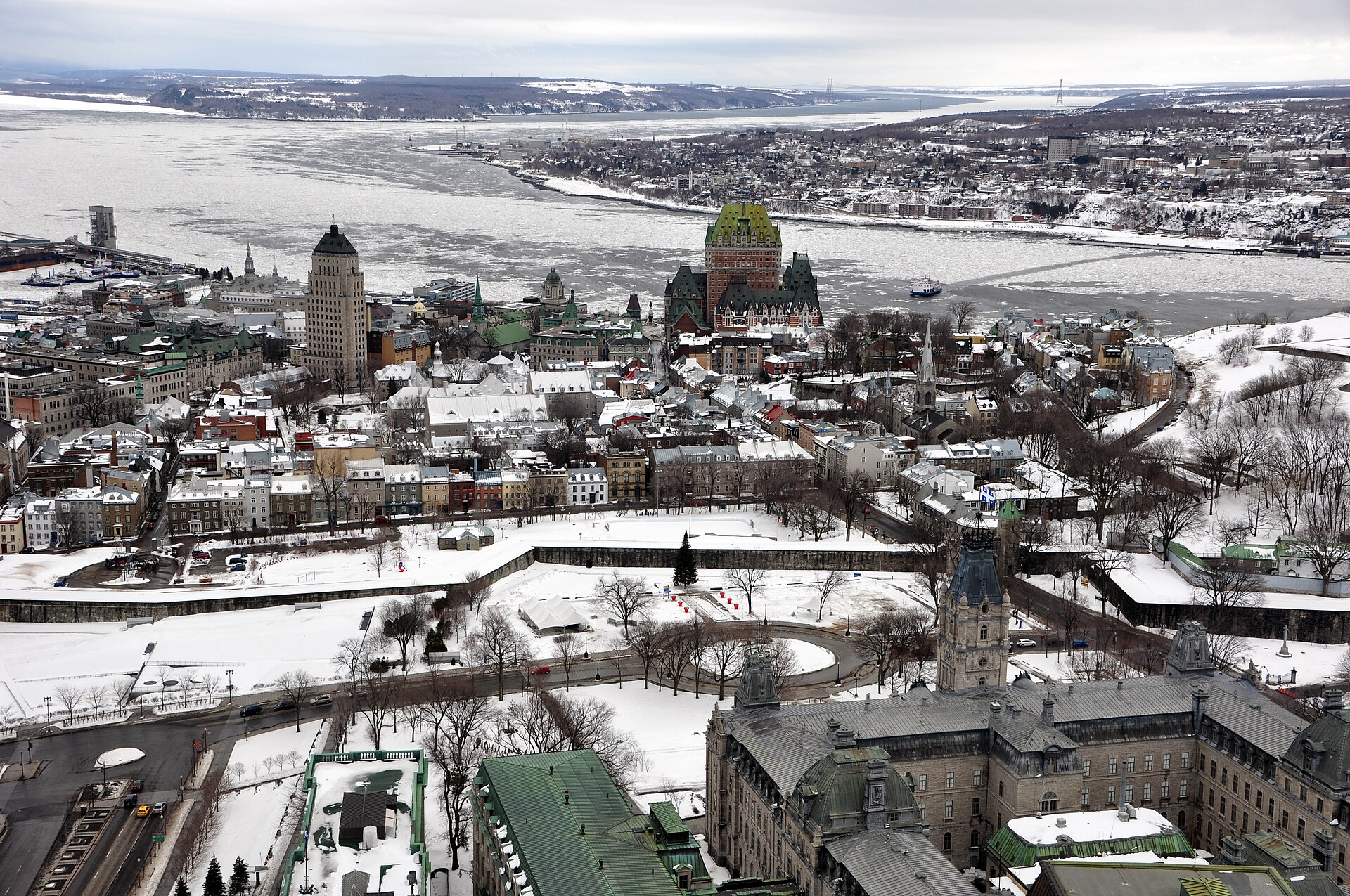
My route is simple: start at Place D’Youville when the market opens at 11, work east through the Marktplatz and the gardens, cut down Rue Sainte-Anne through the cathedral courtyard, and finish at Place d’Armes. That last stop puts you right at the top of the Terrasse Dufferin boardwalk and the funicular, which is exactly where you want to be when the light goes.
The light goes early. In late November and December, the sun sets in Québec City a little after 4 p.m. That gives you about five hours of daylight browsing, and then the chalets switch over to their evening glow. Plan your walk so you’re in the busiest part of the market at dusk, not in a restaurant.
What’s Actually in the Chalets
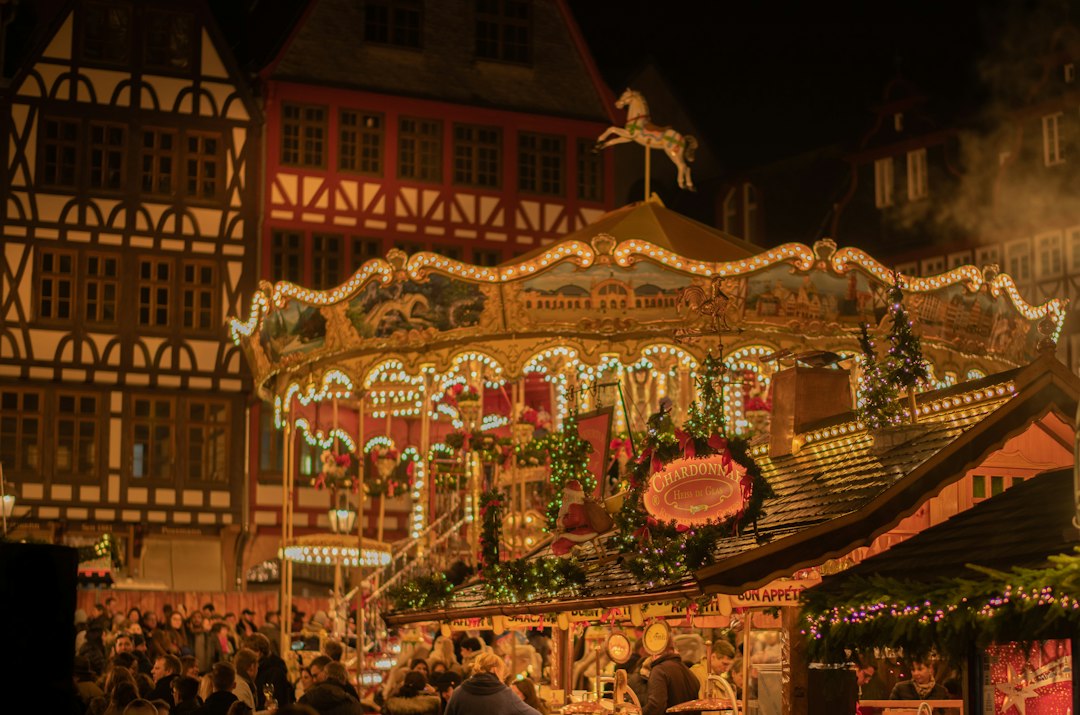
The market was started by Québec City’s German community, and it shows. You’ll find imported German goods next to Québec artisans: hand-carved ornaments, beeswax candles, wool, wooden toys, small-batch spirits and maple products. The food leans hard toward the source country. Think soft pretzels (Bretzels), sausages, potato pancakes and stollen, washed down with Glühwein.
Two practical notes. First, most kiosks take cards, but not every one, so carry a little Canadian cash for small purchases. Second, the organizers actively ask visitors to bring their own cups, containers and bags to cut down on single-use items. That’s the single best tip in this guide. An insulated mug with a lid keeps your mulled wine hot for an entire loop of the market instead of the four minutes a paper cup gives you. I’d bring something like the Stanley Classic Trigger-Action Travel Mug, which seals tight enough to go back into a coat pocket.
For the haul itself, a packable tote that folds down to the size of a fist is worth its tiny weight. The BAGGU Standard Reusable Shopping Bag holds a surprising number of ornaments and jars of maple butter, and it doesn’t add to the clutter in your suitcase on the way up.

Dressing for Cobblestones at Minus Ten
Québec City is cold in a way that surprises people from the US Northeast. The city’s own averages put December highs around -5°C (about 23°F) and lows around -13°C (about 9°F). Late November is milder, with highs just above freezing, but that’s also when slush freezes overnight into a glaze on the sloped streets. Old Québec is steep, cobbled, and full of stairs. You’ll be standing still for long stretches while you browse, which is when cold really gets into you.
I dress from the ground up for this trip.
Feet first. Waterproof, insulated boots with real tread are non-negotiable. Something like the Sorel Caribou Waterproof Winter Boots keeps your toes warm through an evening of standing on snow. If the forecast shows freezing rain or a melt-freeze cycle, I add a pair of Yaktrax Pro Traction Cleats for the Côte de la Montagne and the stairs down to the Lower Town. I wrote a whole piece on choosing ice traction before the trails freeze, and the same rules apply on city sidewalks that tilt toward the river.
Then layers. A merino base layer does more than any single heavy coat because it keeps working when you duck into a warm café and come back out. The Smartwool Classic Thermal Merino Base Layer is the one I’d reach for. On top of that goes a down jacket that packs small, like the Columbia Delta Ridge Down Jacket. Our health site’s twenty-degrees-warmer dressing rule is a good primer on base layers, with one important flip: that rule is for people who are running and making their own heat. A market crawl is the opposite. You’re mostly standing still, so dress warmer than the thermometer suggests, not lighter.
Then hands, neck and pockets. Mittens beat gloves in real cold. I like the Black Diamond Mercury Mitts because the liner pulls out when you need your fingers to pay a vendor. A Buff Merino Wool Neck Gaiter covers the gap a scarf always leaves, and a few HotHands Hand Warmers in your pockets make the after-dark loop far more pleasant.

Getting There: Drive From New England, or Fly?
This is a long-weekend trip, so the travel time on either end matters more than usual.
Driving. From Boston, Québec City is roughly 400 miles, about six and a half to seven hours, depending on which border crossing you use and how long the line is. From New York City, it’s closer to 500 miles via Montreal, a full day in the car. In both cases you’ll be driving the last stretch after dark for much of the season, and the weather can turn fast north of the border. Québec law requires winter tires on passenger vehicles registered in the province from December 1 to March 15; US-plated cars aren’t covered by that rule, but it tells you what the locals are driving on. If you take your own car, pack a proper winter kit. My winter car kit list is the one I’d load before crossing the border.
Cold also eats phone batteries, and your phone is your map, your translator and your boarding pass. A small power bank like the Anker PowerCore 10000 Portable Charger lives in my inside jacket pocket all weekend.
Flying. Québec City’s Jean Lesage International Airport (YQB) is about 25 minutes from the old town, but direct flights from the US are limited, so many routes connect through Montreal or Toronto. If you’re already pricing holiday flights, the booking-window advice in my Christmas flight booking playbook applies here too: the cheapest seats for mid-December get sold well before Thanksgiving.
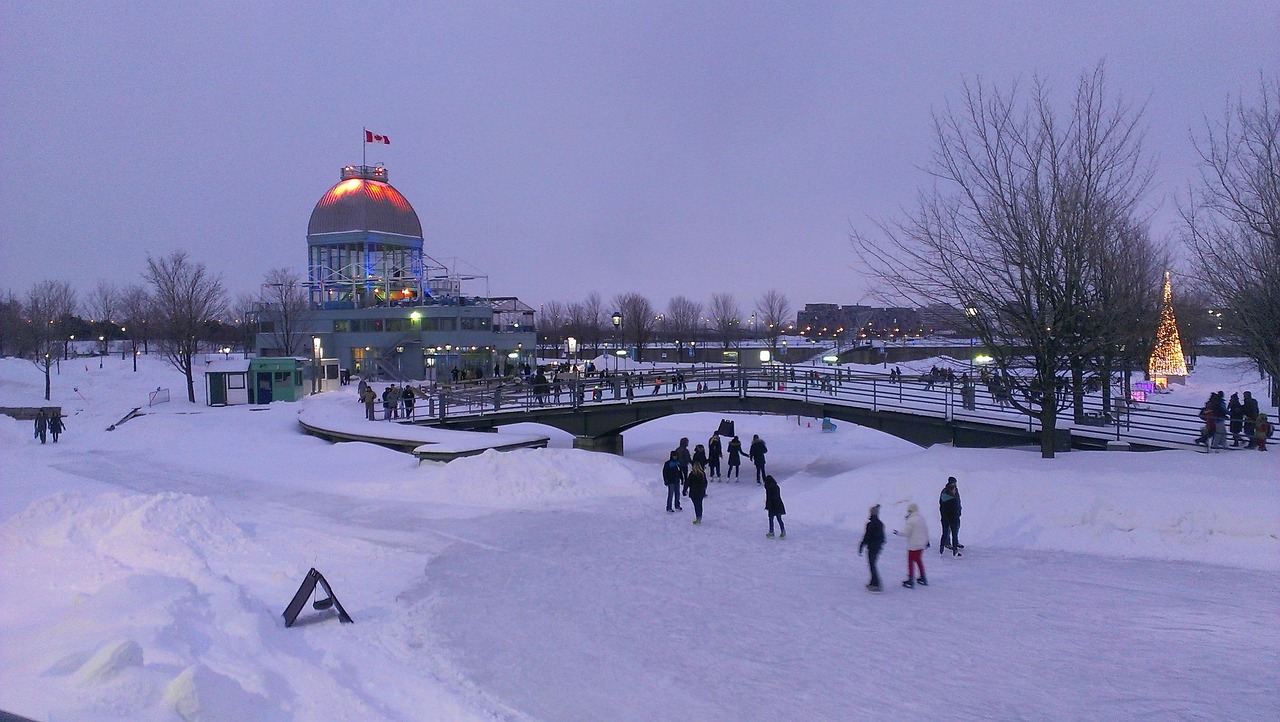
The hybrid. Fly into Montreal, which has far more US service, and either rent a car or take the train. The drive between the two cities is about two and a half to three hours, and VIA Rail runs the corridor several times a day. You can even split the weekend: Old Montreal’s waterfront has its own outdoor skating and lights, and it makes a natural first or last night.
Papers and Parking
Because this is an international trip, check your documents early. A REAL ID driver’s license, the topic of my REAL ID and TSA ConfirmID explainer, does not get you into Canada. For flights you need a passport book (or a NEXUS card). At land crossings, a passport, passport card, NEXUS card or a state-issued enhanced driver’s license works. A Zero Grid Neck Wallet keeps the passport under your layers and out of the market crowds.
Once you’re there, park the car and forget it. The market strongly encourages public transit, and the city’s bus network, the RTC, runs free park-and-ride lots on the outskirts. Route 11 stops right in front of City Hall, and several other routes end at the Place D’Youville terminus. If you’re staying inside the walls, you won’t need a car at all until you leave. Street meters in Old Québec fill quickly on weekend evenings, and the paid lots near Place D’Youville are your fallback.
Where to Sleep
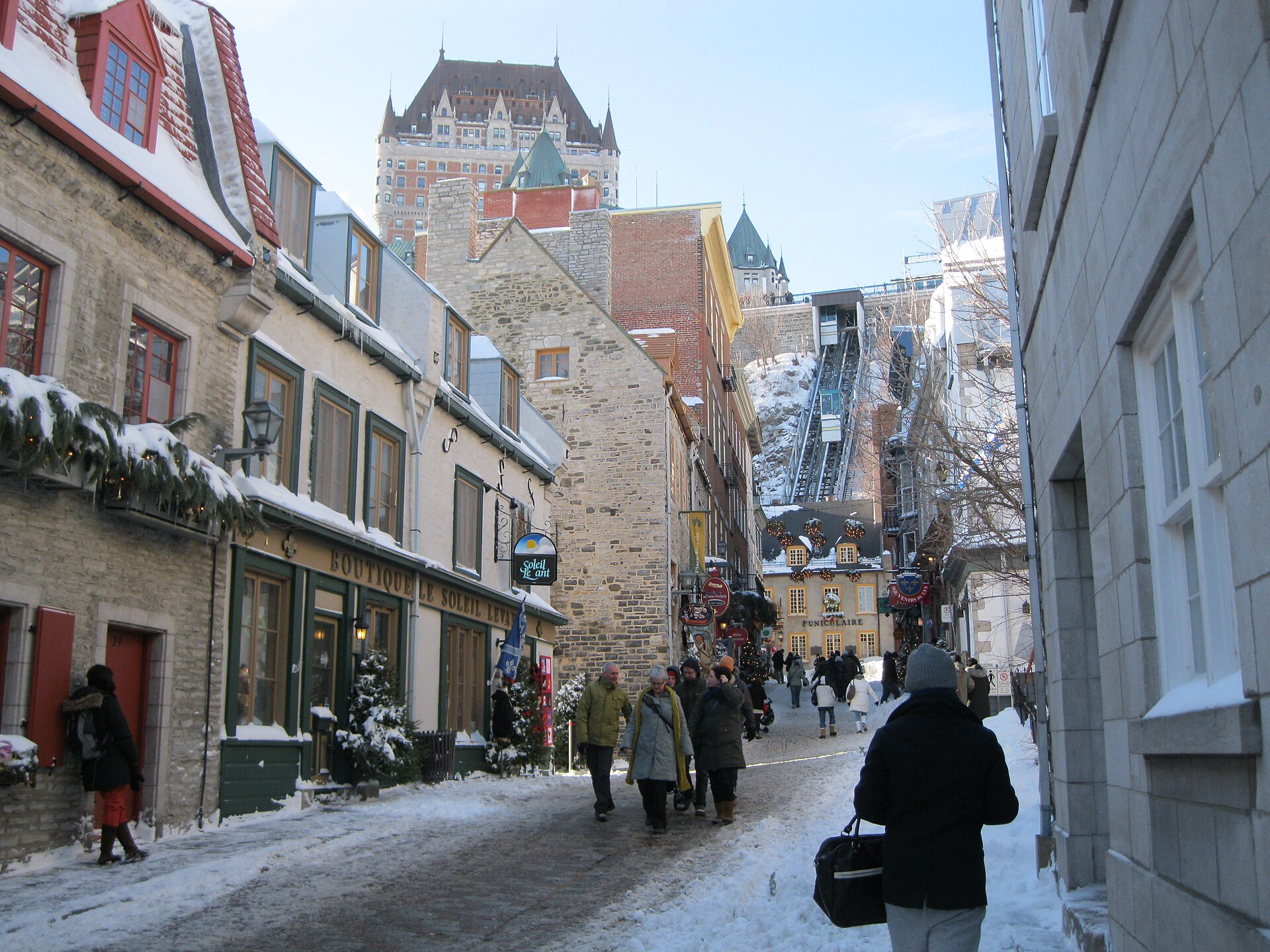
The tourism office’s advice is the same as mine: stay inside the walls or on Parliament Hill, just outside the Porte Saint-Louis, and you can walk to every market site. The Lower Town neighborhoods of Petit-Champlain and the Old Port are also close. You’ll either climb the hill (the views reward you) or ride the funicular up to the Terrasse Dufferin.
Book early for December weekends, especially the first two. If prices inside the walls are too much, the Saint-Roch and Montcalm neighborhoods are a short bus ride away and have their own excellent cafés and restaurants, which you’ll want on Friday morning before the market opens.
A Thursday-to-Sunday Plan That Works
Here’s how I’d shape the four days. Swap things around to suit your arrival time.
Thursday: Arrive and Browse Before the Crowds
Get into town by early afternoon, drop your bags and head straight to Place D’Youville. Thursday afternoon is the calmest market time of the whole week. Do your real shopping now, while the vendors have time to talk. Stay out through sunset, then have a slow dinner in the old town. If there’s ice on the ground, use this first evening to test your boots and cleats on the hills before you’re carrying shopping bags.
Friday: Lower Town and the River
Spend the morning below the cliff, before the market opens. Walk Rue du Petit-Champlain, go down the Breakneck Stairs (the Escalier Casse-Cou), and stand in Place Royale, where the city was founded in 1608. Ride the funicular back up. It’s quick, inexpensive, and a lot kinder to your legs than the stairs. Carry a few Canadian dollars in case cards aren’t working. In the afternoon, go back to the market for a second look at anything you were thinking about on Thursday.
Saturday: Atmosphere Night
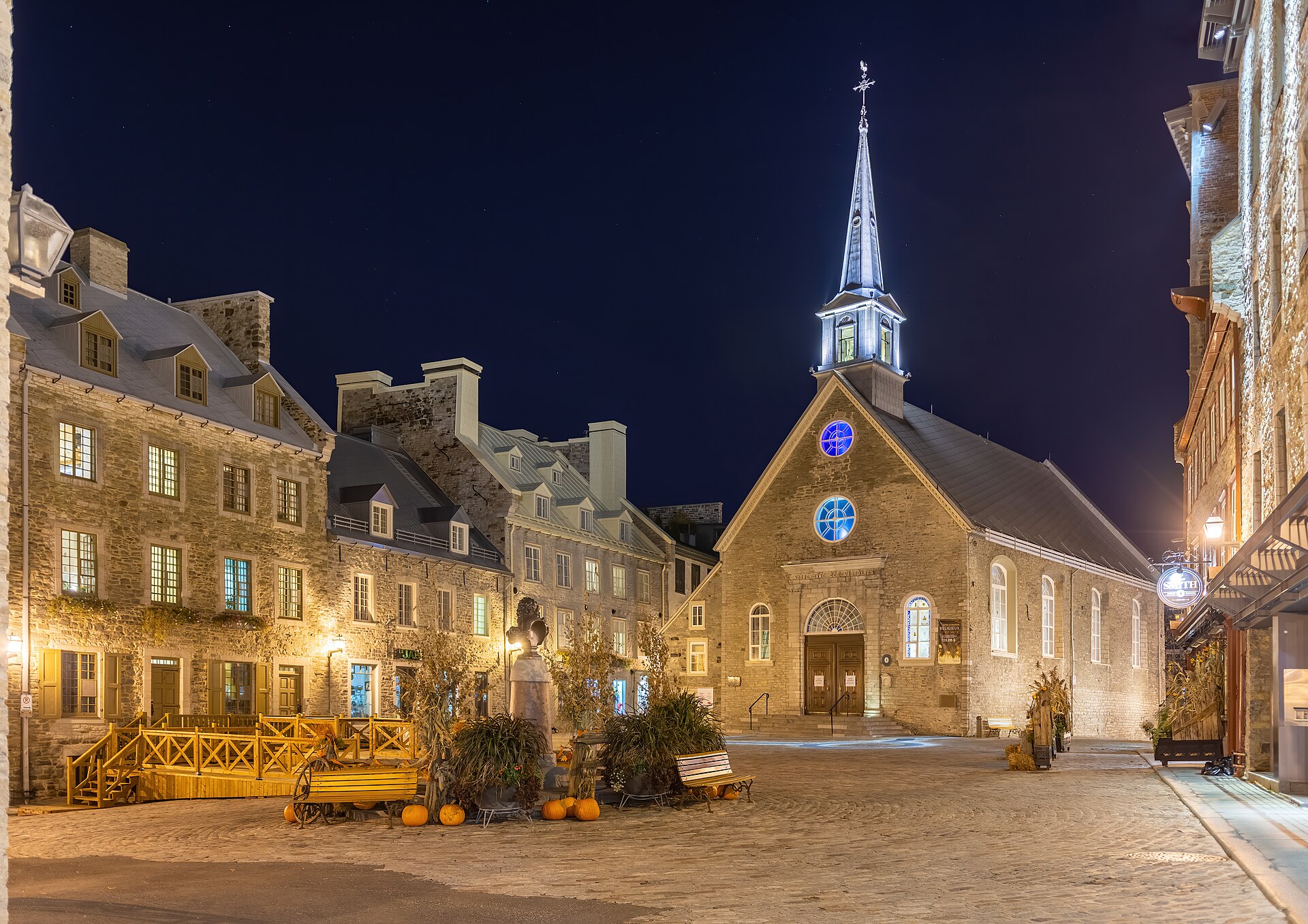
Saturday is the market’s busiest day. I’d plan around that rather than fight it. Spend the morning outside the old town: the Île d’Orléans and Montmorency Falls are both short drives, or take a museum morning if the weather is bitter. Come back for the evening and treat the market like a party, not a shopping trip. Get your mulled wine, catch a show, walk the Terrasse Dufferin above the river, and let the crowds be part of it.
Sunday: Last Loop and an Early Exit
Remember that Sunday closes at 6 p.m. for most of the season. Do a final morning-to-early-afternoon loop for anything you regret not buying, then head out before dark if you’re driving south. The border lines on a Sunday afternoon can build, and the drive is far more relaxed in daylight.
A Little French Goes a Long Way
Québec City is a French-speaking city, and while most people in the old town switch to English easily, opening with “Bonjour” changes the tone of every conversation. A pocket phrasebook like the Lonely Planet French Phrasebook & Dictionary is a nice backup when your phone dies in the cold, and it’s a good way to learn the names of the dishes you’ll see on the chalet menus.
If this is your first Christmas market of the season, Québec City makes a fine anchor for a longer holiday route. My 2026 Christmas market road trip from Bryant Park to Denver covers the US side of the map, and it pairs well with a northern detour.

My Québec Market Weekend Short List
If you only pack a dozen things beyond your usual clothes, make them these:
- For hot drinks on the go: Stanley Classic Trigger-Action Travel Mug
- For warm, dry feet: Sorel Caribou Waterproof Winter Boots
- For icy hills and stairs: Yaktrax Pro Traction Cleats
- For the base layer: Smartwool Classic Thermal Merino Base Layer
- For a packable outer layer: Columbia Delta Ridge Down Jacket
- For your hands: Black Diamond Mercury Mitts and HotHands Hand Warmers
- For your neck: Buff Merino Wool Neck Gaiter
- For your purchases: BAGGU Standard Reusable Shopping Bag
- For your phone in the cold: Anker PowerCore 10000 Portable Charger
- For your passport: Zero Grid Neck Wallet
- For ordering in French: Lonely Planet French Phrasebook & Dictionary
The Bottom Line
The Québec City German Christmas Market runs from November 19 to December 23, 2026, and its Thursday-to-Sunday schedule is both its only inconvenience and its best feature. It forces you into a proper long weekend. Arrive Thursday, shop while it’s quiet, spend Friday morning in the Lower Town, give Saturday night to the crowds, and leave Sunday before the sun does. Bring your own cup, dress for colder than the forecast, and check your passport before anything else. Do that, and you’ll find one of the most European winter weekends you can have without crossing an ocean.