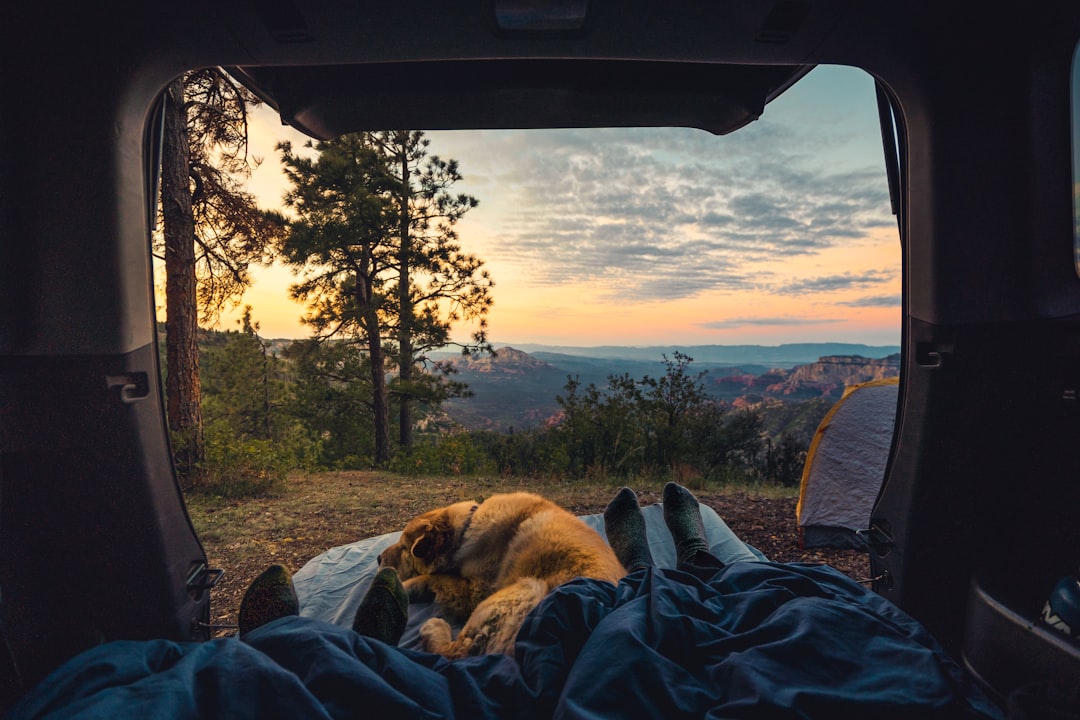
When I started planning my second campervan build, I did what every earnest DIYer does: I taped butcher paper across the garage wall and drew the layout I’d been imagining for two years. Bed platform here. Garage storage there. A kitchen galley with just enough counter for a camp stove and a cutting board. My crew came over to sanity-check the plan, took one look, and asked a question that rearranged everything: “Where does Moose sleep?”
I stood there with the marker in my hand and realized I didn’t have an answer. Not a real one. The honest answer was “wherever he wants,” which is exactly how you end up with a 60-pound dog claiming half a memory foam mattress while you fold yourself into the remaining third.
If you’ve read this site before, you’ve met Moose. He turned seven this spring, and he’s logged more miles than most people I know — three national parks, fourteen state forests, and enough dirt roads to fill an atlas. Somewhere around our third breakdown on a fire road in the Ozarks, I promised myself I’d stop treating his comfort as an afterthought. This build is where that promise finally got a tape measure.
The principle I’d give anyone starting a van build with a dog is simple: build for the dog you have, not the dog in your head. The dog in your head is two years old forever, has iron hips, never sheds, and drinks politely from a bowl that stays miraculously full. The dog you have is seven, sheds like a timber industry, and will be six inches from your face at 2 a.m. if the temperature drops. Here’s how each of those realities reshaped the build.
The Harness Came Before the Floor Plan
It says something unfortunate about my priorities that insulation, solar, and a diesel heater all came together in my head before I once thought hard about how Moose actually rides down the highway. The math fixed that. In a 30-mph collision, an unrestrained 60-pound dog becomes roughly 1,200 pounds of force moving through the cabin. That’s not a passenger anymore. That’s a wrecking ball with a collar, and it doesn’t matter how much you love each other in that moment.
So before a single furring strip went up, the crew and I anchored rated tie-down points into the floor structure — through the plywood subfloor and into the van’s structural ribs, not into cabinetry, not into trim. The harness matters as much as the anchor. A crash-tested harness with a proper steel buckle and a short, fixed tether keeps Moose contained to a survivable zone instead of letting him fly. My rule: if I’m in the driver’s seat, he’s clipped in. No exceptions, not even for the last quarter mile of a campsite loop.
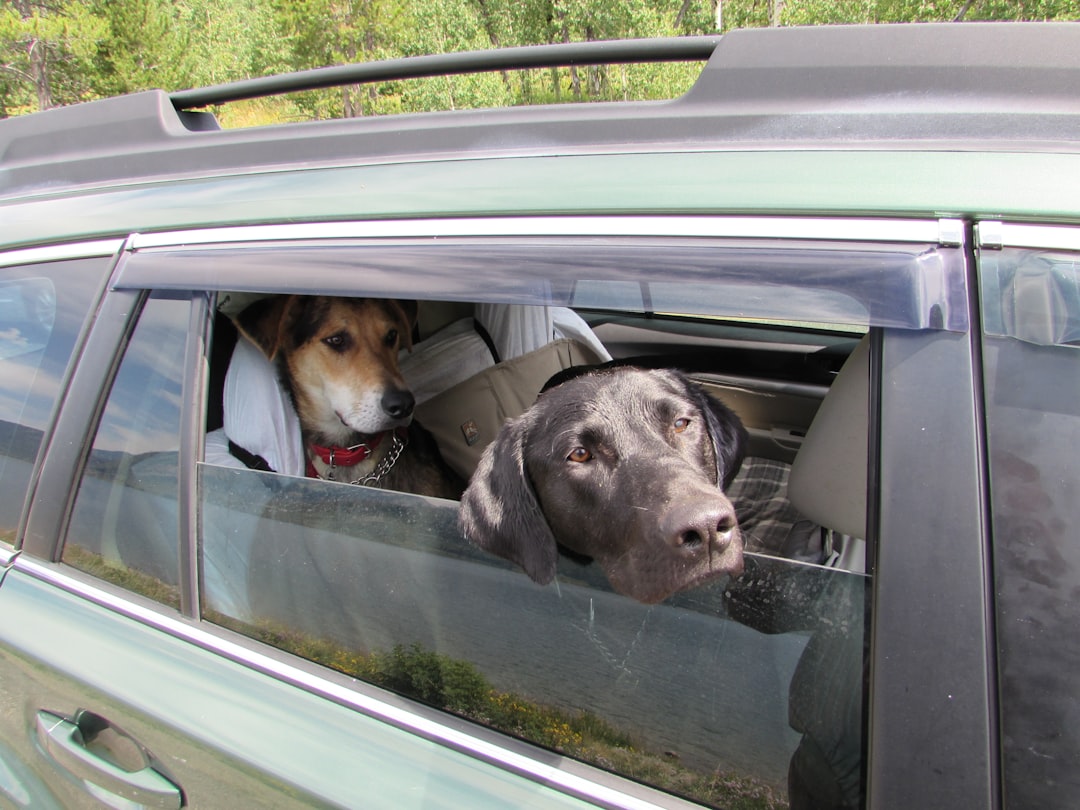
Where he rides matters too. The zone behind the driver’s seat, over the wheel well, turned out to be the sweet spot — away from the sliding door, close enough to the dash fan for summer airflow, and positioned so I can glance back and see him in the mirror. He can stand, turn around, and lie flat. It’s not spacious, but neither is the rest of the van, and he has never once complained about the commute.
Fur Is a Building Material
Nobody warns you about the fur volume. A dog living in a vehicle isn’t like a dog living in a house, because in a house the fur has somewhere to go. In a van, the fur is a roommate. It works itself into every seam, every hinge, every slice of foam padding you thought was sealed.
This is why I will defend my flooring decision against all comers: sheet vinyl with welded seams and a coved edge up each wall, zero carpet anywhere in the build. Carpet in a dog van is a fur sponge that also stocks moisture, sand, and whatever died on the trail last week. Vinyl sweeps in ninety seconds. I laid two small washable rugs down for grip and warmth, and both are sized to shake out one-handed from the sliding door.
For everything the fur still reaches — the seat fabric, the mattress cover, the jacket I keep pretending is clean — a roller that actually pulls hair out of upholstery earns its storage cubby every single week. I went through the sticky-roller phase and burned through a refinery’s worth of adhesive sheets in a month. The reusable roller was one of those small purchases that quietly reordered my weekly routine.
Fabric choice up front saves grief later, too. I went with a tight-weave canvas for the cushions and skip-color anything in the gray-beige dead zone that turns every dog’s undercoat into a permanent installation. Moose is tan and white, so I picked colors where tan and white disappear. It’s not vanity. It’s triage.
The Thermometer Runs the Household
Here is the uncomfortable truth at the center of van life with a dog: the outside temperature dictates your day more than any itinerary does. Dogs don’t sweat like we do. A van sitting in the sun can climb fifteen degrees above ambient in the time it takes to eat a diner breakfast, and heatstroke in dogs moves fast and unforgiving.
My first line of defense is architectural — the roof fan, the reflective window covers, parking nose into shade — and I wrote about the cooling strategy that saved my Arizona summer if you want the full engineering story. But the piece of gear that changed my willingness to leave him at all is a cellular temperature monitor. It runs on a 4G signal instead of WiFi, which matters when you’re camped two canyons past the last bar of service, and it texts me the moment the interior climbs past the range I set. It’s the difference between running a fifteen-minute errand with your full attention and spending that errand doing constant mental math about a metal box in the sun.
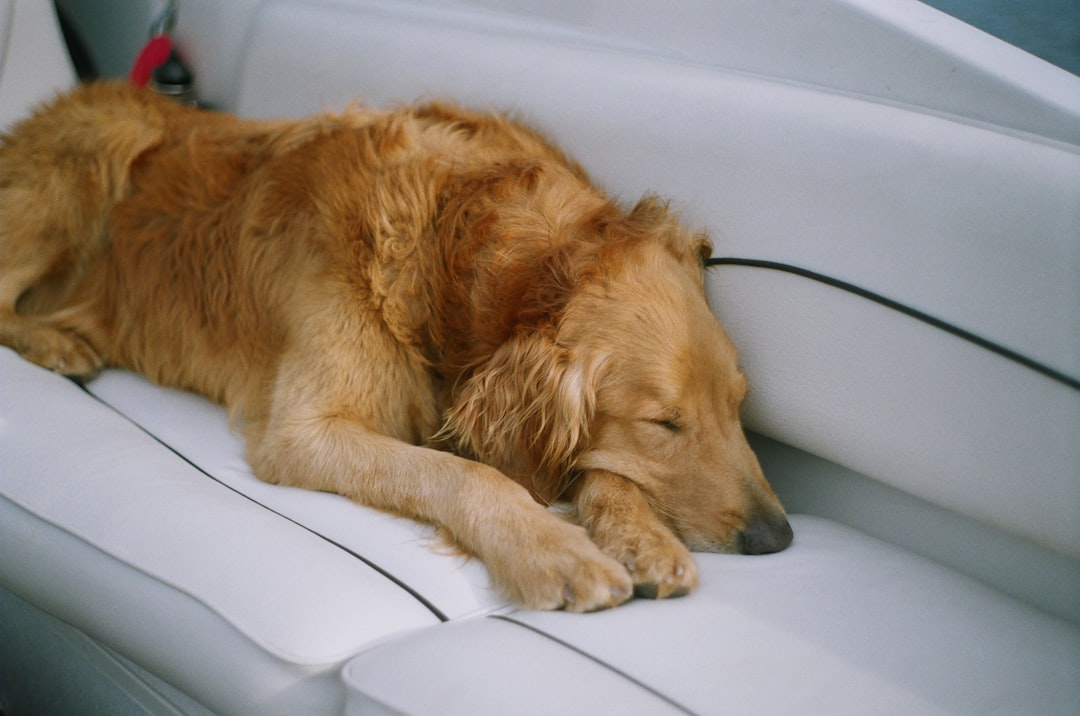
On hot afternoons when we’re parked and working, Moose has a pressure-activated cooling mat laid over his rug. It’s not refrigeration — it just pulls heat away from his body when he lies on it — but he chooses it every time the interior creeps past eighty. Watch what a dog does, not what the marketing says. He votes with his nap.
The protocol that governs everything: under 75 degrees, normal life. Over 75, fans running, shade mandatory, errands get split or skipped. Over 85, he doesn’t stay in the van alone at all, and I don’t care how good the coffee is. The day that rule feels inconvenient is the day to remember that it exists because the alternative is unthinkable.
Water Within Nose Reach
Dogs dehydrate faster than their humans notice, especially on trail days, and especially when they’re seven and slightly too proud to slow down. In the house, a water bowl is furniture. In a van, it’s a systems problem: how do you keep water available, clean, and — the hard part — upright on washboard gravel?
My answer was a low station at the base of the galley, a heavy-sided no-tip bowl sitting in a shallow lip that catches the slosh. The water system feeding it came from a season of trial and error I documented in detail when planning the plumbing, and if you’re designing your own, that build log will save you a weekend. On trail and around town, collapsible silicone bowls live in the door pocket, one clipped to my daypack, one in the van, because a thirsty dog at the summit is a solvable problem only if you packed the solution.
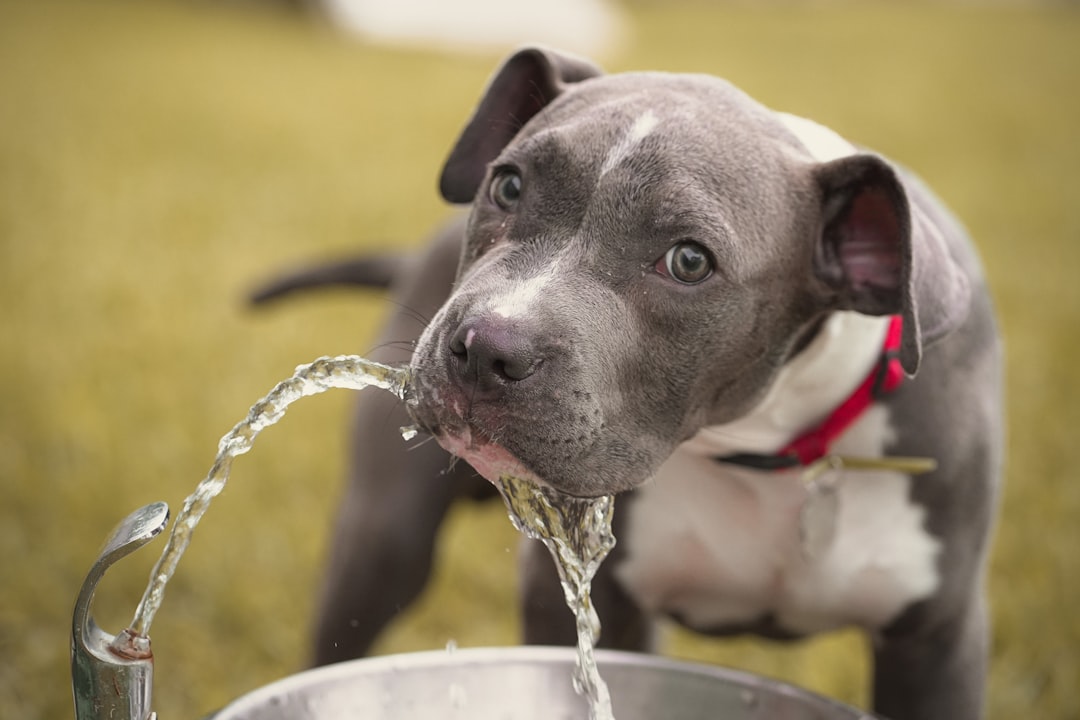
The routine that stuck: fresh water at every stop, every fuel-up, every trailhead, whether he seems thirsty or not. I track his intake the way I track my fuel gauge — roughly, but daily. The first sign I watch for on hot days isn’t panting, it’s pace. A dog who suddenly trots behind you instead of ahead of you on a warm afternoon is telling you something.
Ramps, Boots, and the Long Game
Moose is seven. Not old — but the math of a big dog’s joints stops being abstract around now, and every jump out of a tall van is a withdrawal from an account I’d rather leave untouched. The rear sill on my build sits high enough that the drop looks trivial from a human’s perspective and isn’t from his. Repetitive impact on elbows and shoulders is exactly the kind of slow damage you don’t see until you’re scheduling it.
So the build grew a door: a folding ramp with real traction that stows against the garage wall and deploys in ten seconds. The advice that matters here — train the ramp before your dog needs it. A healthy three-year-old learns it in an afternoon and treats it as normal. A stiff nine-year-old learns it as an insult and a fear. Moose grumbled through week one, took treats through week two, and now takes it at a canter because it’s simply The Way We Exit The Van.
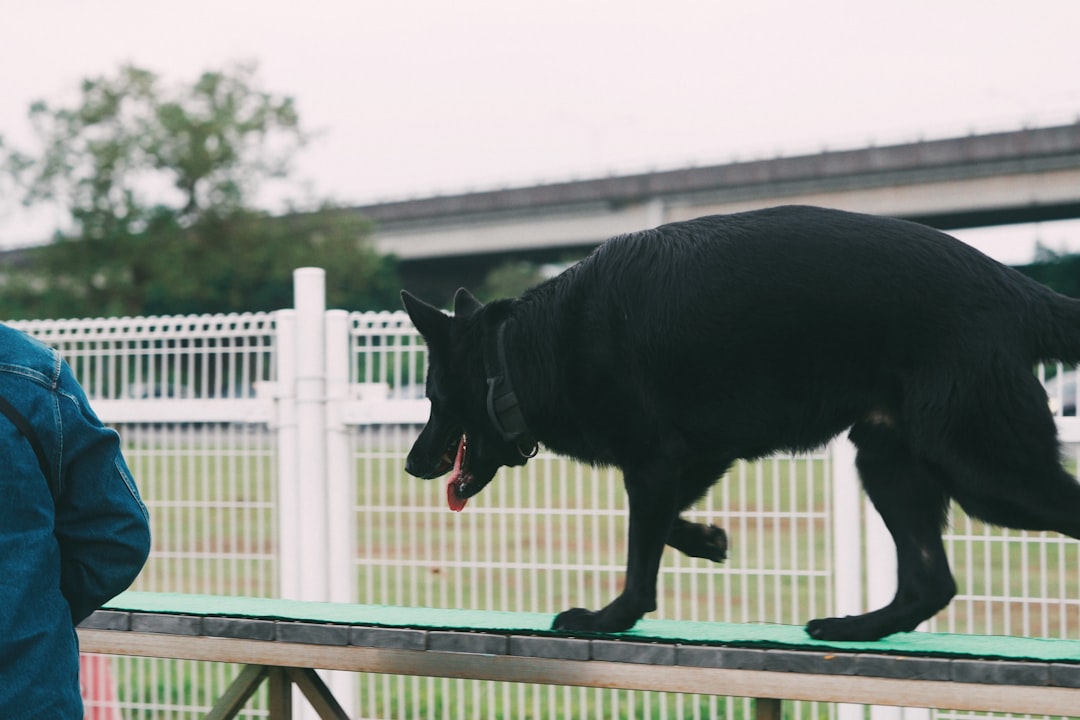
Boots live in the same category of unglamorous foresight. Summer pavement in the Southwest gets hot enough to blister pads in seconds — my test is pressing the back of my hand to the asphalt for a count of seven; if I can’t hold it, he doesn’t walk it bare. A set of Grip Trex boots handles scree, hot rock, and the nasty salted shoulders of early spring. He tolerates them with the weary dignity of a man in office attire, and then he bounds across terrain that would have left his pads raw.
Where the Land Actually Wants Your Dog
Here’s the part nobody puts in the Instagram captions: most of America’s most famous public land is only barely dog-friendly. National parks allow dogs on six-foot leashes in developed areas — campgrounds, paved roads, parking lots — and on only a scattering of trails. Some allow more, many allow almost none. I’ve stood at trailheads in places Moose and I had driven two days to reach, reading a sign that said he couldn’t come, and rearranged the whole day around it.
The flip side is that the land managed by the Forest Service and the BLM — the dispersed, wide-open, bring-your-own-water half of the American West — is generally delighted to have him. Rules vary by district, but the pattern holds: leashed in developed areas and campgrounds, under voice control on the trail, and when you’re boondocking out on open land as I usually am, the requirement is simply that your dog stays under control. For us, that means off-leash fetch in the evenings and a stake-and-cable setup with a swivel whenever we’re camped near a road or neighbors. Thirty feet of arc is enough room to be a dog and short enough to stay out of trouble.
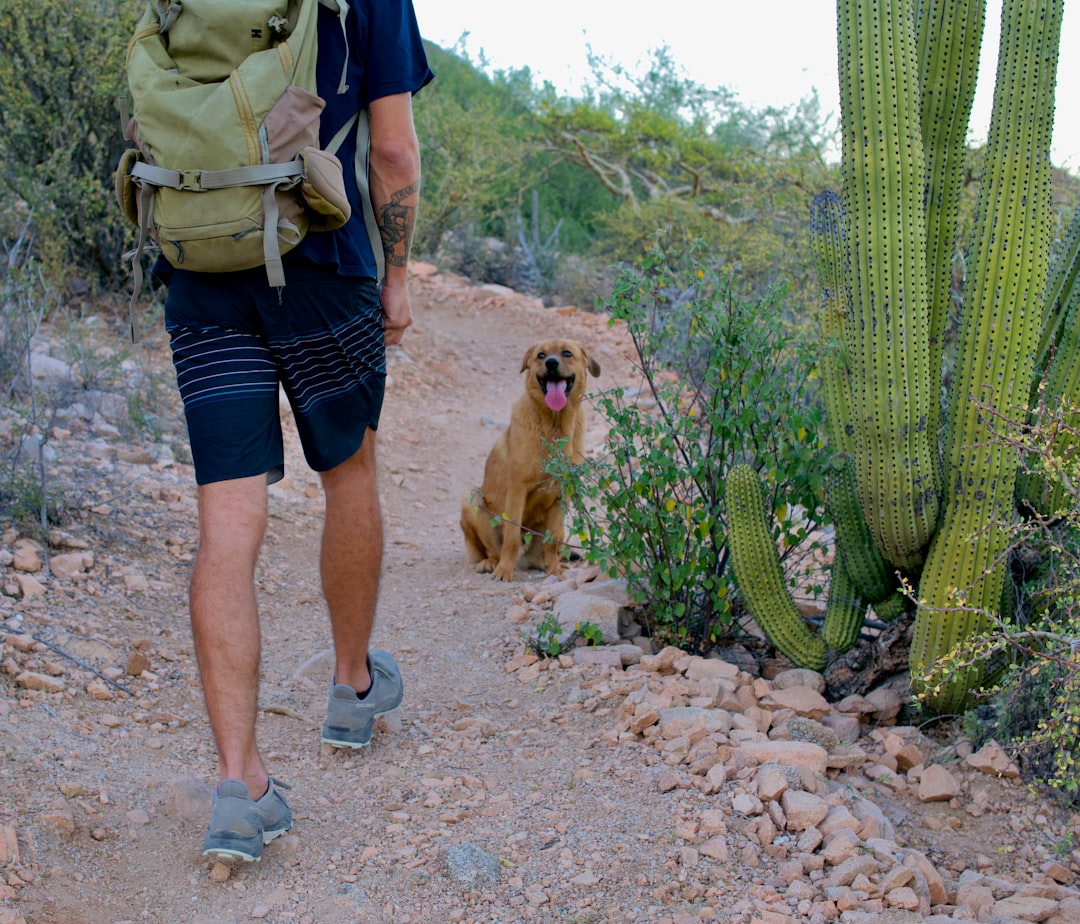
Plan the trip around the land that wants you both. My routing rule of thumb: national forests over national parks when the dog is coming, and when a park is unmissable, I build it as a people-only day and schedule his long walk for the forest corridor on either side of it. Nobody feels shortchanged, least of all the dog getting two trail days instead of one tourist afternoon.
Mud Season and the Kit That Saves the Interior
Every van lifer has a season they dread, and mine is mud. One wet week in the Ozarks taught my first build what a single muddy dog can do to plywood interiors and light-colored fabric in the space of four door-openings. The second build was designed with a mud protocol, and the center of it is embarrassingly low-tech: the MudBuster cup. Add water, insert paw, twist, repeat. It sits just inside the sliding door, and it has single-handedly saved my floor more times than any other object in the van.
The rest of the dog kit lives in one labeled bin under the bed, next to my own. The human half is documented in the first aid kit I actually carry; the canine half answers different questions, so it gets its own supplies — vet wrap, a tick key, saline, non-stick pads. I pack a dedicated trail dog medical kit as the base and add Moose’s specifics on top. The rule that formed it: the nearest vet is never as near as you’d like it to be. On a good boondocking night, the nearest vet is ninety minutes and two unlocked gates away, and you plan for the night that matters, not the night that’s convenient.
The Short Version
If you’re standing where I stood, marker in hand, dog at your feet, here’s the whole build philosophy compressed: anchor the restraint points into structure, not cabinetry. Floor it in vinyl and resign yourself to fur-colored cushions. Let the thermometer run your schedule and put a cellular monitor between your dog and your errands. Keep water low, heavy, and always full. Install the ramp while your dog is still young enough to think it’s a game, and the boots while the pavement is still an abstraction. Route the trip through the forests and BLM land that actually want him there, and keep the paw washer and the medical kit inside arm’s reach of the door, not buried under the bed.
Half of this kit was on the trail dog gear list I put together back in June, and I can report after a full summer that the list held up — nothing bought, nothing broken, nothing regretted.
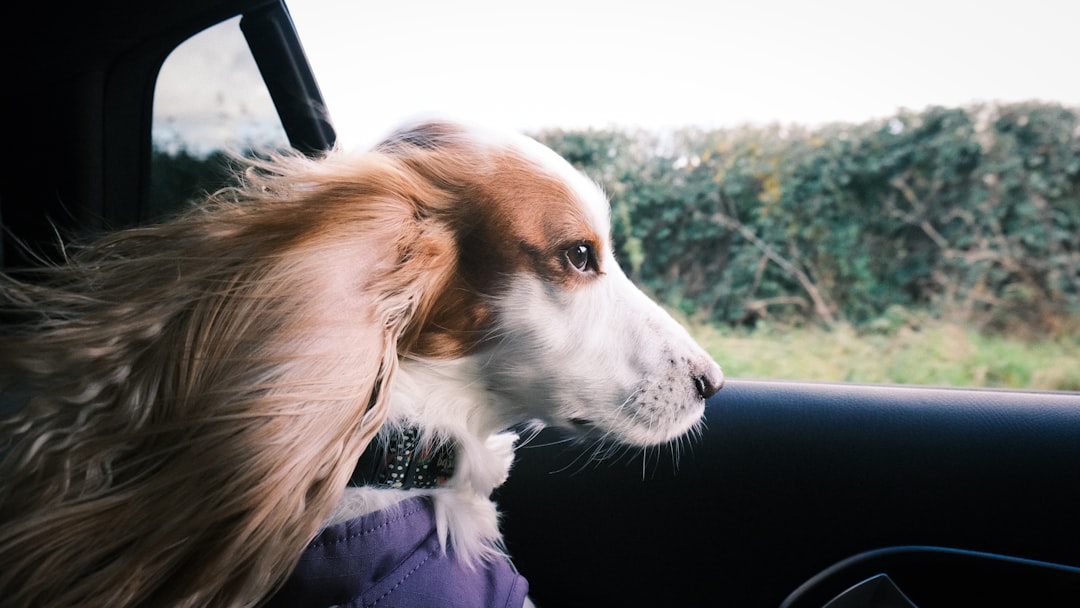
The build took longer than the first one. It cost more than the spreadsheet says, the way builds do. But there’s a specific quiet that settles over a van at dusk when everybody in it is comfortable — the fan turning, the water bowl full, a tired dog asleep on a cool mat with dirt on his paws and boots drying by the door. I drew a lot of lines on that butcher paper. The ones that mattered most were the ones I drew around him.