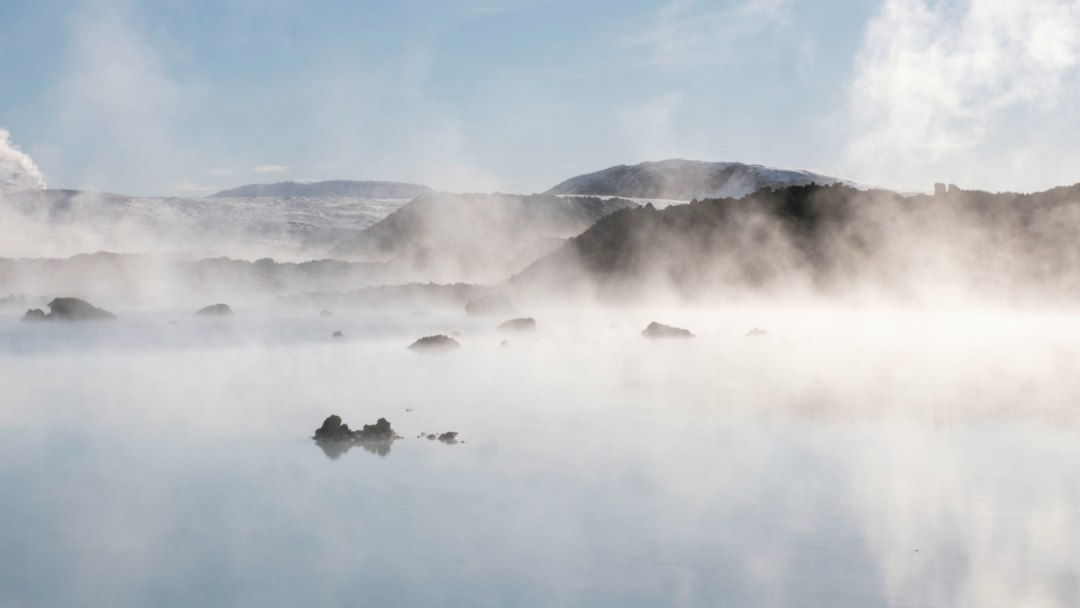
The radiator fog was so thick at the Kirkham pullout that I nearly stepped past the trailhead entirely. It was 7:40 on a late-October morning, the Payette River was running glassy and low, and the cliffside across the road was exhaling steam like a sleeping animal. My photographer had already scampered down the stairs — she claims hot springs are the only assignment where she gets paid to sit in a bathtub — and by the time I’d laced my boots she was neck-deep in a gravel pool grinning like she’d invented the place. That’s the moment steam season officially opens. Not on a calendar. On the first morning the river edges frost over while the water below the ground keeps pumping 106 degrees.
Here’s the thing nobody tells you about Idaho in late October: the state holds more soakable hot springs than anywhere else in the country, and almost nobody uses them until the snow flies. The summer crowds are gone. The mosquitoes died a month ago. The aspens have dropped their gold but the larches are still burning. And every forest road that turns into a snowmobile trail come November is still, for a few precious weeks, passable in a regular car with good tires. My team and I built a week around that window — a soaking circuit from Boise up the Salmon River headwaters and over to the McCall side — and I’m convinced it’s the single best-timed trip in the Rockies that nobody has booked yet.
Why 28 Degrees Is the Soaking Green Light
There is real physics behind the steam season. Soaking in 104-degree water feels pleasant at 85 degrees ambient and transcendent at 30. The bigger the gap between the pool and the air, the more your body leans into the heat — and the more dramatic the cloud pouring off the surface, which is honestly half the experience. Cold air also means cold rocks for drying off, so the whole ritual sharpens: you move deliberately, you keep a towel within arm’s reach, you learn to dry off and dress in under ninety seconds like a penguin changing a tire.
The practical math matters too. Primitive roadside springs that host twenty cars in July are down to two or three in the last week of October. Developed springs drop to walk-in crowds. Lodging in Stanley and McCall slides toward shoulder-season rates. The only compromise is daylight — you get about ten hours of it — so we planned soaks for dawn and dusk and let the middles of days handle the driving.
Boise to Lowman: The Warm-Up Soaks
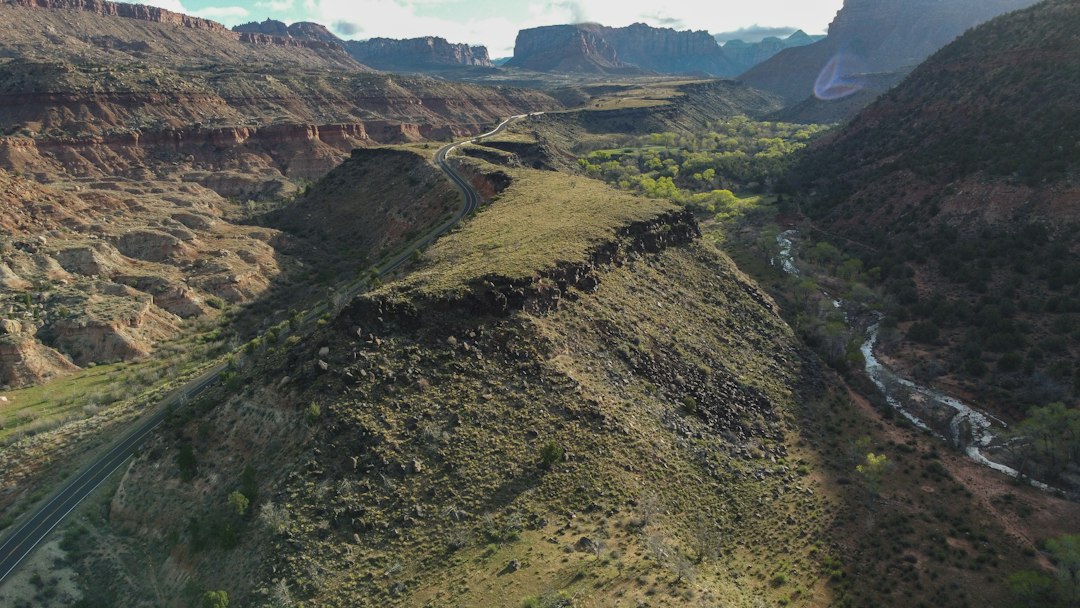
Start in Boise early enough to hit the Ponderosa Pine Scenic Byway — Highway 21 along the South Fork of the Payette — by mid-morning. This stretch is a hot spring corridor disguised as a commute. Fifty miles of river canyon, granite walls, and pullouts that range from roadside seeps to developed fee sites, and in late October the asphalt is usually dry and empty between Boise County’s last espresso stand and the town of Lowman.
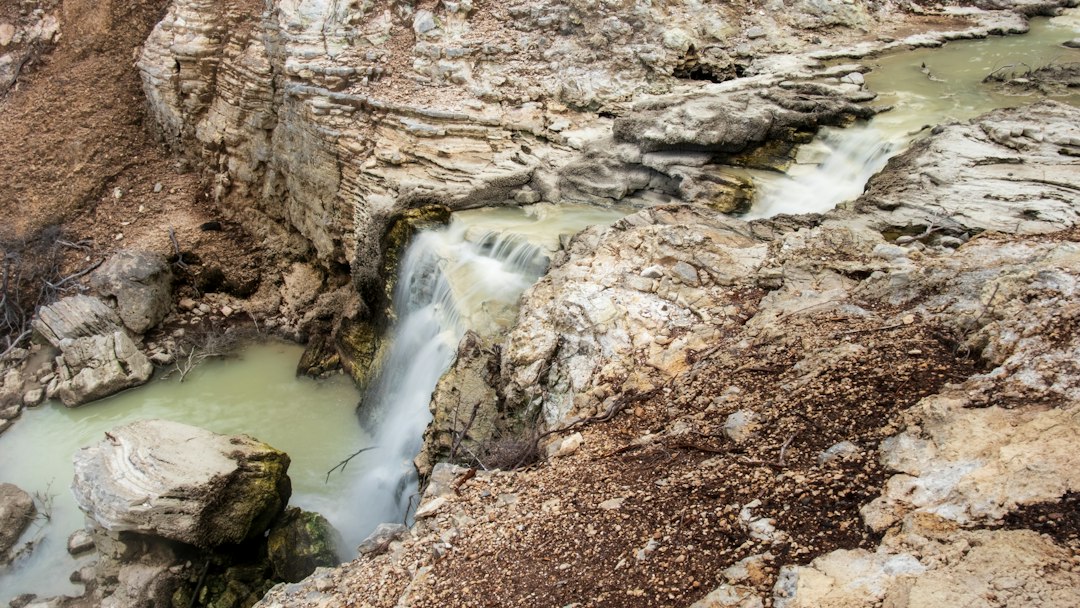
Kirkham Hot Springs is the headline stop, and it earns it: a staircase of pools trickling down a cliff below an actual waterfall, with the Payette sliding past twenty feet away. Because it sits inside a developed site, you get vault toilets, a boardwalk, and a fee box — bring exact cash or check. Our rule for Kirkham is the higher pool, the hotter the water; scout the terraces with a hand in the current before you commit. My producer, who runs cold, planted herself in the second-tier pool and refused all further instructions for forty minutes.
Eight miles up the road, Pine Flats offers the softer alternative — a broad riverside pool where hot water surfaces through the gravel, easy to temper by shuffling a foot toward or away from the vent. If Kirkham is a cathedral, Pine Flats is a front porch. Between the two of them you’ll be warm, waterlogged, and ready for the two-hour drive to Stanley, which is exactly the point.
Stanley: Base Camp at 6,200 Feet
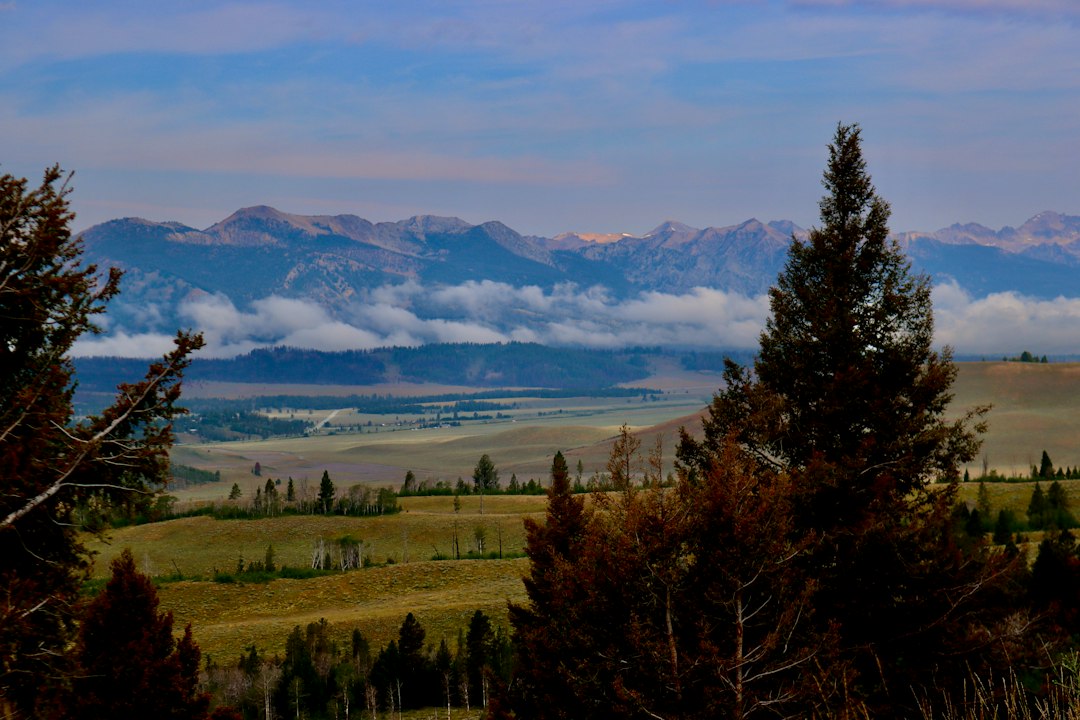
Stanley in late October is a town holding its breath. The raft companies have rolled up their rigs, the Salmon River runs quiet and gin-clear, and the Sawtooths wear the season’s first dusting like they’re trying on hats. If you’ve read our piece on Stanley, the 63-person town surrounded by America’s most underrated mountain range, you know the baseline: no traffic light, one legendary bakery, absurd scenery in every cardinal direction. What that story didn’t cover is that the town doubles as a soaking hub the moment nights freeze.
Head north on Highway 75 toward Challis and the springs come at you like highway rest stops, if rest stops were fed by 130-degree mineral water. Sunbeam is the classic: vents that would scald you in two steps, tamed by channels and river gravel into pools you temper yourself, all free and first-come. A few miles south, the famous metal soaking tub of Boat Box notoriety has a soap-opera history — it was hauled away in 2023, mourned publicly, and a tub has since returned to the spot — so check with locals in Stanley before you promise anyone the iconic sunrise silhouette. Riverside tubs at 30 degrees are spectacular precisely because they’re fickle.
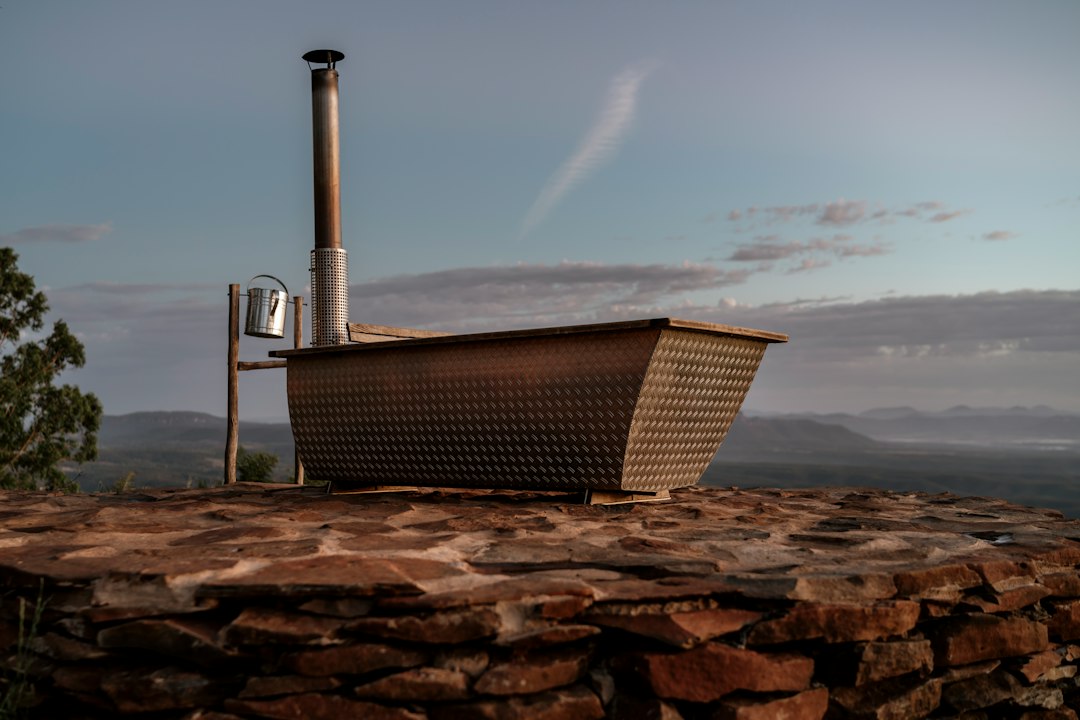
We soaked Sunbeam at 5 p.m. on a Tuesday and shared a pool wall with exactly one stranger, a retiree from Challis who graded every spring in the state on a spreadsheet. His verdict on late October: “the correct season.” Then he lent us his bucket for tempering, which is the hot springs equivalent of a Michelin star.
North to Challis, Then the Goldbug Climb
Twenty minutes past Sunbeam, Challis Hot Springs is the developed basecamp option — historic mineral pools beside the Salmon, with a campground and RV spots that stay open deep into fall. It’s where you send friends who love the idea of hot springs but not the idea of changing clothes behind a juniper. My editor calls places like this “training wheels,” but she also stayed in the pool for two hours, so grain of salt.
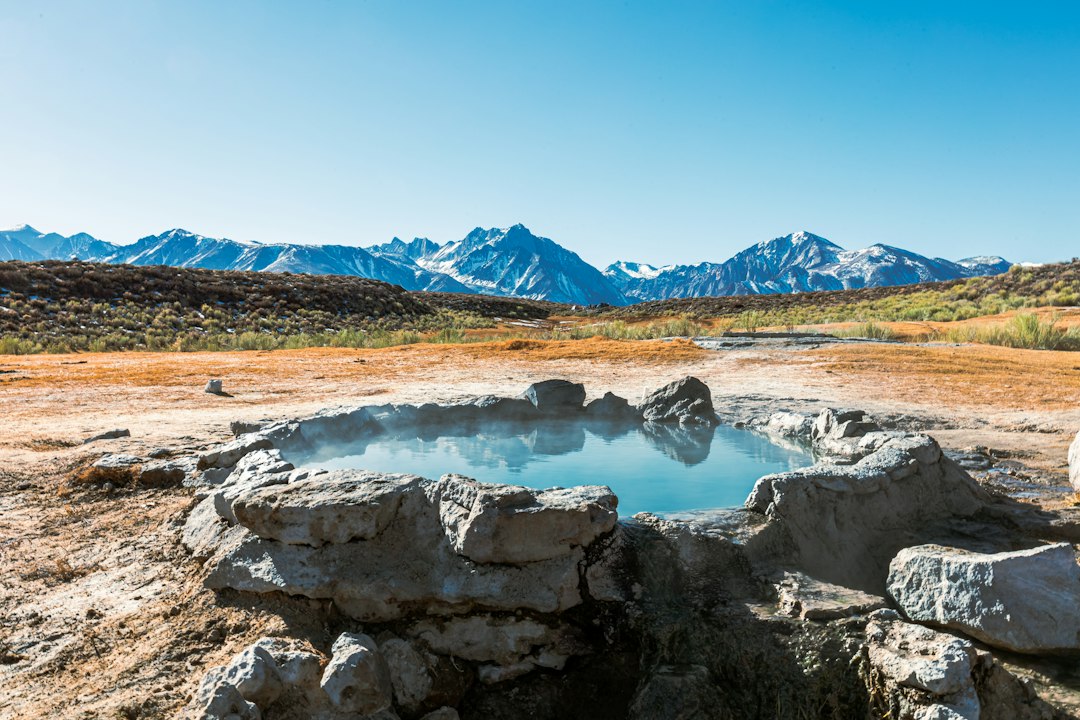
The showpiece of the whole corridor, though, is Goldbug, up a drainage above Elk Bend: a stiff three-mile climb that gains most of its elevation in a sandy, exposed final mile. Your reward is a series of terraced pools spilling one into another down a mountainside, hot at the top, bearable at the bottom, with the Salmon River valley unrolling fifteen hundred feet below. Go at midday in October — the trail is sluggish in shadow, and the pools themselves hold heat long after the air forgets it. This is the soak that justifies every item in the kit list below, especially the shoes you’re willing to hike wet in.
The McCall Loop: Burgdorf’s Closing Window
Swing west on the Salmon River route toward McCall and the character changes from roadside to relic. Gold Fork, outside Donnelly, is the family-friendly tier — a developed complex of a half-dozen pools at graduated temperatures, open afternoons, closed Tuesdays. Zims, north of New Meadows, keeps its soaking pool between 103 and 106 degrees, closes Mondays, and functions as the clean warm-up act for the headliner.
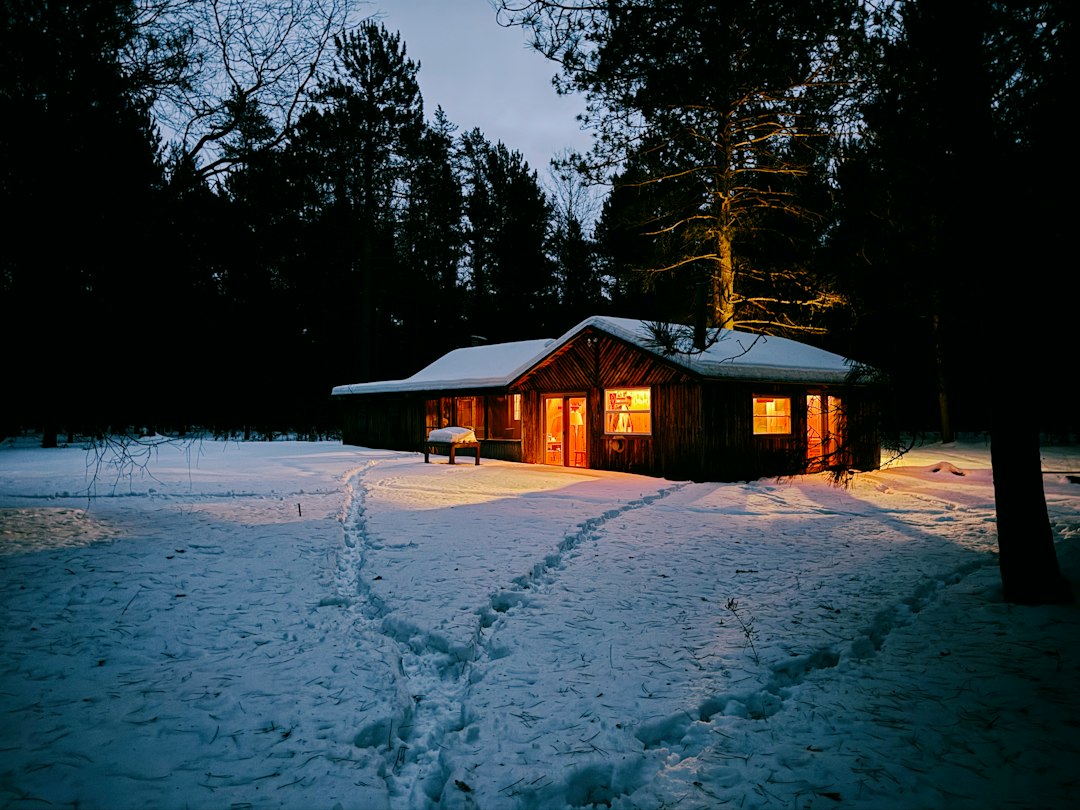
That headliner is Burgdorf, a hot springs resort that has been operating since the 1870s and looks it, in the best way: weathered cabins with wood stoves, a big rustic pool under the trees, no cell service, no vending machines, nothing to buy. You bring everything you plan to eat and drink. The catch — and the entire reason for this article’s timing — is Warren Wagon Road. When the snow starts sticking, the county grooms it for snowmobiles and skis only, and the drive-in era ends until spring. Late October is the last, best window: cabins in the trees, first frost on the rooftops, and a soak you earned with nothing more than a rental car and a calendar.
The Kit That Survives the Soak and the Walk Back
Cold-weather soaking gear is simple and unforgiving: everything that touches water must dry fast, and everything that touches you afterward must be warm immediately. After years of freezing my way back to the car in wet cotton, here’s the kit we now run on every steam-season trip.
Start with the towel problem — pack a genuine quick-dry pack towel, not the beach version, because a soggy towel in 28-degree air is a bag of ice by the time you’ve walked back to the trailhead. Footwear is the second failure point; wet boardwalk stairs and frozen gravel punish bare feet, so we keep slip-on water shoes clipped to every pack. The single biggest upgrade, though, was buying an insulated surf-style changing robe — you step out of the pool, pull it over your head, and change inside a cocoon of synthetic warmth while the steam rolls off you. It draws stares at Kirkham’s parking lot. It earns converts by the second soak.
Keep the electronics in a roll-top waterproof dry bag and the phone in a floating waterproof pouch — I watched a phone glide downstream at Sunbeam last fall and it remains the most expensive photograph our team never took. For dawn and dusk soaks, a rechargeable waterproof headlamp beats any flashlight because your hands stay free for balance on icy stairs. Post-soak, a 32-ounce insulated thermos of something hot is the difference between a leisurely change and a panicked one, and a merino wool base layer waiting in the car will feel like a heating blanket. Two luxuries that earn their space: a compact folding camp stool for changing without bare feet on frost, and a trail-ready first aid kit — primitive springs mean gravel, glass occasionally, and no help for miles.
Rules That Matter More in October
Etiquette in hot springs is not optional garnish; it’s the whole system keeping these places open. Never use soap or shampoo in or near a spring, even the biodegradable kind — the outflow is the ecosystem. Pack out everything, including the orange peel that “is basically natural.” At developed sites, pay the fee; at primitive ones, leave the buckets and piping exactly as found, because volunteers maintain them on faith. Cap soaks at twenty minutes, exit slowly, and hydrate like it’s summer — the cold tricks you into drinking nothing while the heat drains you. And in October, add two seasonal rules: never soak a primitive spring alone, and check Idaho 511 road conditions every morning, because a pass that was bare yesterday can chain up by lunch. Once the freeze is fully established we switch over to the traction-and-boot season — our ice traction guide covers that handoff.
When to Go, and Who This Trip Isn’t For
The window runs roughly from the first hard frost — usually mid-to-late October in the Boise and Sawtooth country — until sustained snow closes the forest roads, anywhere from mid-November to December depending on the year. It reopens differently in deep winter: Burgdorf by snowmobile, some Sawtooth springs by ski, all of it harder and colder and its own kind of beautiful. If you want luxury plumbing, skip this itinerary entirely and read our Hot Springs, Arkansas story instead — bathhouse row beats a gravel vent every time. But if your idea of a good time is steam at dawn, empty highways, and a town of sixty-three people at the foot of mountains that don’t care whether you showed up, Idaho in the last weeks of October is not a compromise season. It’s the whole point.
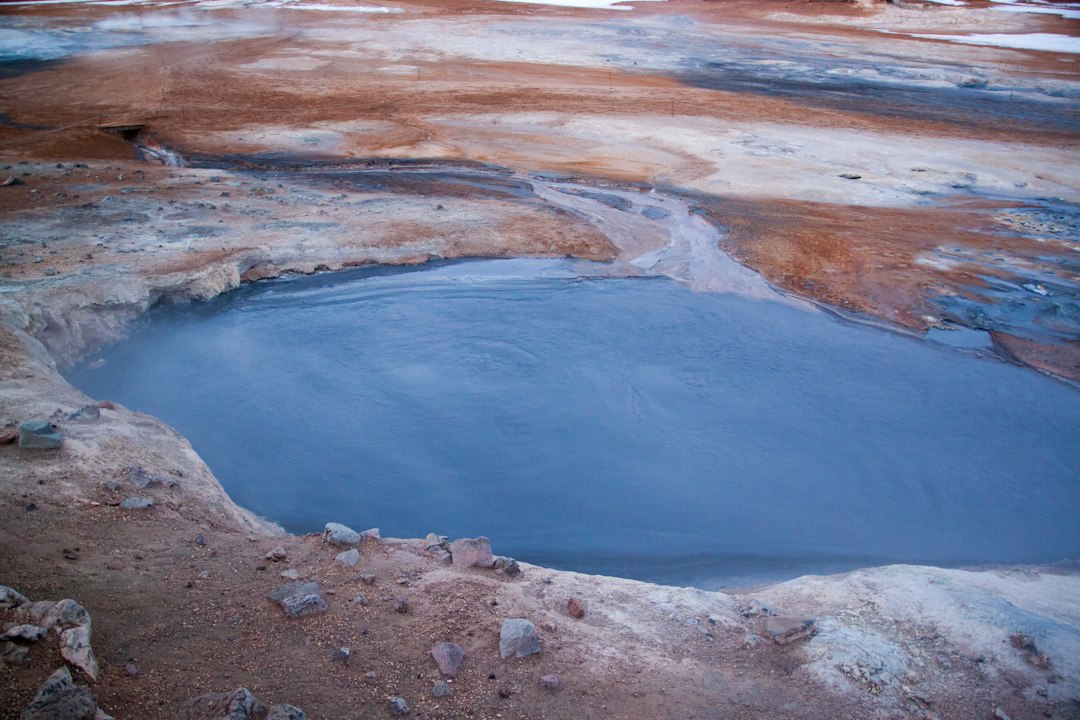
One last image from the trip, because it’s the one I keep coming back to. Our last night at Sunbeam, the temperature gauge read 26, the steam stood up off the water like a curtain, and the Milky Way was so loud over the Salmon River headwaters that nobody in the pool said anything for a solid ten minutes. My photographer finally broke the silence: “Same time next October?” I already had the cabin flagged in Burgdorf. Just as soon as the road opens — and before it closes.
And if you’d rather pair Idaho’s waters with America’s other great drive-to-wonder circuit, we mapped Colorado’s Million Dollar Highway and the San Juan Skyway earlier this season. Between the two of them, your shoulder-season calendar is spoken for.