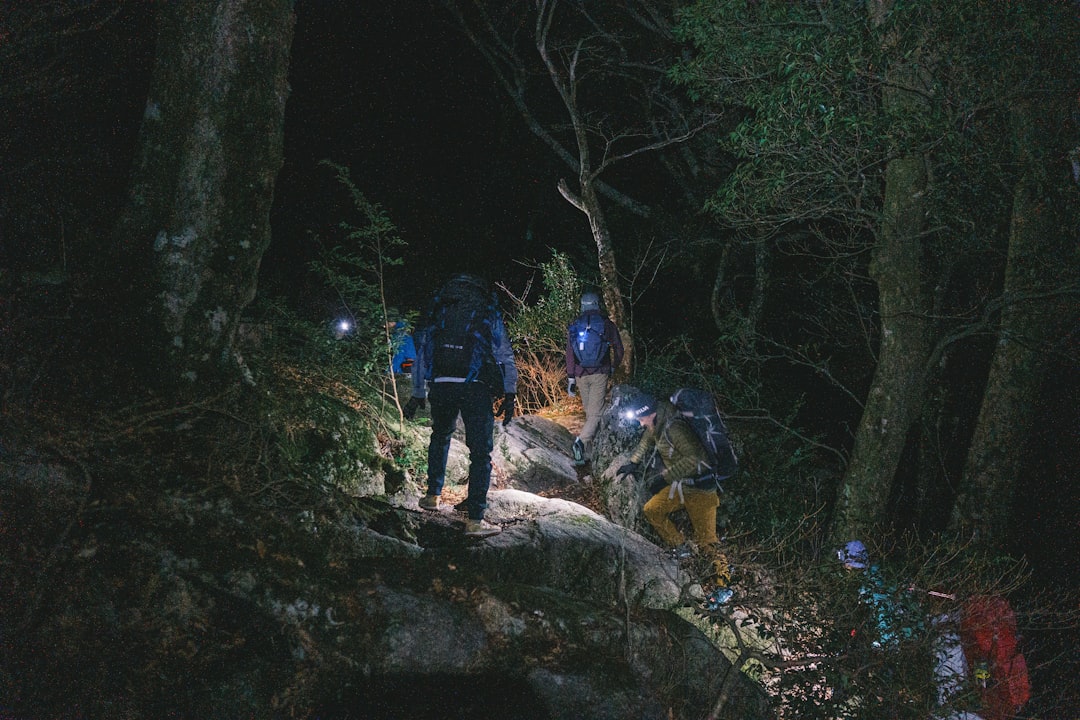
The first time fall genuinely ambushed me, I was a mile below a Blue Ridge overlook with twenty minutes of usable light left and a headlamp that had been in my pack, untouched, since spring. It clicked on at quarter power, blinked its little death pulse twice, and quit somewhere around the second switchback. I finished that descent holding a phone flashlight between my teeth like a pirate, and by the time I reached the trailhead, the whole evening had gone from amber to ink. My crew still brings it up. That was the night I stopped treating lights as an afterthought and started treating them as the most important ounce-and-a-half in the bag.
Here’s the thing about autumn that the calendars don’t advertise: it isn’t the cold that shortens your days, it’s the arithmetic. Between mid-September and the end of October, the sun clock-out time in the northern US slides from a reasonable 7:15 to a punishing 6:00 or earlier. That’s ninety minutes of trail time vanishing in six weeks, and most people don’t notice until they’re the one walking the last half mile by phone glow. My researchers and I spend every September watching the same pattern repeat in comment sections and trip reports across the country: someone plans a “quick afternoon hike,” and the season eats their margin.
The fix isn’t hibernation. It’s a lighting kit that’s actually been thought through, packed once, and left ready. Over the past few falls, my field team has run headlamps, lanterns, and every string light gimmick on the market through cold mornings, fog, drizzle, and one memorable night of sideways sleet in the Catskills. What follows is the kit that earned its permanent spot, organized by the job each piece actually does. None of it is exotic. All of it works.
The Daylight Math Nobody Budgets For
Let’s do the numbers once, so the rest of this makes sense. The equinox lands around September 22, and after it, every degree of latitude north of you steals a little more evening. Lose two to three minutes of daylight per day, and by Halloween you’ve surrendered nearly two hours compared to the summer solstice. Then the clock change lands on November 1 and yanks the sunset into the late afternoon entirely. If you chase color, that matters, because peak foliage windows in most northern states land squarely inside this shrinking-light zone.
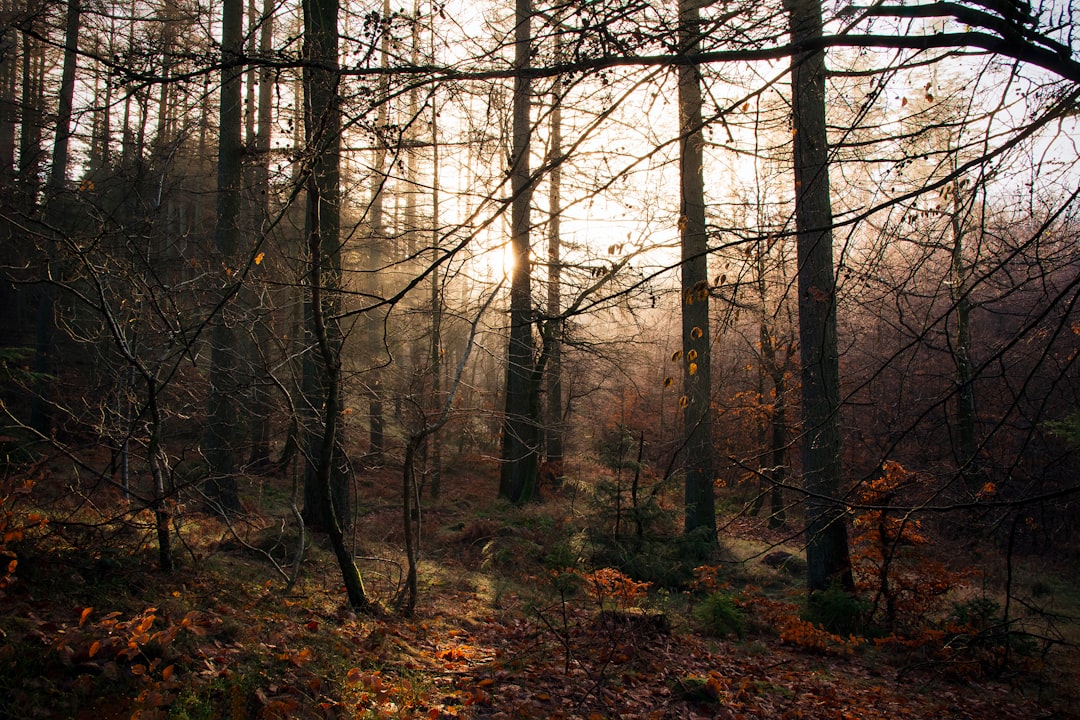
The flip side is the part I’ve come to love: fall mornings reward the willing. Dawn is when bull elk are actually bugling, when mist sits on the lakes, and when the first light hits a maple ridge and sets it on fire. The catch is that “dawn” in October means starting in full darkness, not civil twilight. Pre-dawn starts are exactly how I got the Kancamagus overlooks to myself last week, walking the first mile by headlamp while the paved pull-offs stayed empty. Light isn’t just safety gear in this season. It’s an access pass.
Headlamps: The Piece That Does the Heavy Lifting
If you buy one thing from this article, buy the headlamp, and buy a real one. A phone casts a sad, diffused puddle that dies fast and leaves one of your hands useless. A proper headlamp throws a shaped beam down the trail, reads the map without a third arm, and — the part people forget — marks you to others. Fall is hunting season in much of the country, and bike paths, road crossings, and parking-lot walks all end after dark now. Being visible is no longer optional.
So what separates a $18 drugstore light from a $70 one? After far too many nights of testing, the list comes down to five things, and only two of them are brightness. Lumens tell you the ceiling, but runtime at a usable level matters more — 400 lumens on a trail is plenty; 400 lumens for four minutes before the dimming circuit kicks in is a party trick. Beam shape matters: a wide flood lights your feet, a focused spot reaches the next switchback, and the best lights blend both. Then there’s red light mode (more on that below), water resistance (IPX4 minimum for drizzle, IPX7 if you ford streams), and a lockout or transport mode so the thing doesn’t arrive dead because it turned itself on in your duffel. USB-C charging is the final checkbox, because every cable in my kit bag is now the same shape, and I intend to keep it that way.
The Rechargeable All-Rounder
The one I reach for most often is the Black Diamond Spot 400-R, and I don’t say that out of brand loyalty so much as exhaustion — it’s the light I stop thinking about. Four hundred lumens is enough to move confidently down wet rock, the beam has a genuinely useful mix of flood and spot, the red mode is a single button away, and the whole thing recharges over a sealed port that has shrugged off two seasons of rain. It’s the headlamp equivalent of a good hatchet: boring in the best way, which is exactly what you want from a device whose failure mode is walking into a branch.
The Ounce-Counter
When the pack goes ultralight or the trip goes airborne, the Nitecore NU25 MCT UL is what’s on my head. It weighs about as much as two quarters, which sounds like marketing fluff until you carry it and realize you forget it’s clipped to your forehead strap. Despite the weight, it still pushes 400 lumens, charges over USB-C, and — the feature that won me over — offers three color temperatures. The warm setting is a quiet revelation in fall weather: fog and drizzle that blow white light back into your eyes turn nearly transparent under warm light. For dawn patrols and packed carry-ons alike, this is the one that goes everywhere.
When You Need to Torch the Treeline
Some jobs need more reach. Route-finding off-trail, spotting eyeshine on a wildlife drive, or scanning a ridgeline at 5:40 a.m. to see whether the color is worth the pull-off — for those, the Petzl ACTIK CORE and its 650-lumen output earn their spot in the door pocket. It runs on Petzl’s rechargeable CORE battery and takes regular AAAs as a backup, which is a quietly brilliant fail-safe: the light never becomes obsolete because one component died, and if you’re caught without a charging option, any gas station in America has your spares. My van kit runs exactly this system for that reason.
The AAA Backup and Its Battery Habit
That brings me to the unsung hero of the whole kit: a plain AAA-powered Spot 400 that lives in the emergency pouch and never gets fancy. Batteries are the entire religion here. I run Eneloops and nothing else — a set of Panasonic eneloop rechargeables is rated for around 2,100 charge cycles, holds its charge in the drawer for years, and turns “batteries died” from a trip-ender into a thirty-second pit stop. Cold is the saboteur: lithium chemistry and NiMH cells both fade in a hard freeze, so on genuinely cold nights the batteries ride in the jacket pocket, not the pack, and the headlamp gets spared from the trunk where it would spend the night at 20 degrees. This one habit has probably saved more evenings than any lumens I own.
Lanterns, Because a Headlamp Beam Ruins Dinner
A headlamp pointed at a person is a social weapon. Everyone at the picnic table has experienced the interrogation-beam dinner: you ask a question, turn your head, and blast your companion’s retinas. The fix costs almost nothing and weighs less than a can of soup. Camp lighting, done right, turns the hour after sunset from an endurance test into the best part of the day — and in fall, with the sun gone by six, that’s two or three extra hours you actually want to be outside.
The Tabletop Beacon
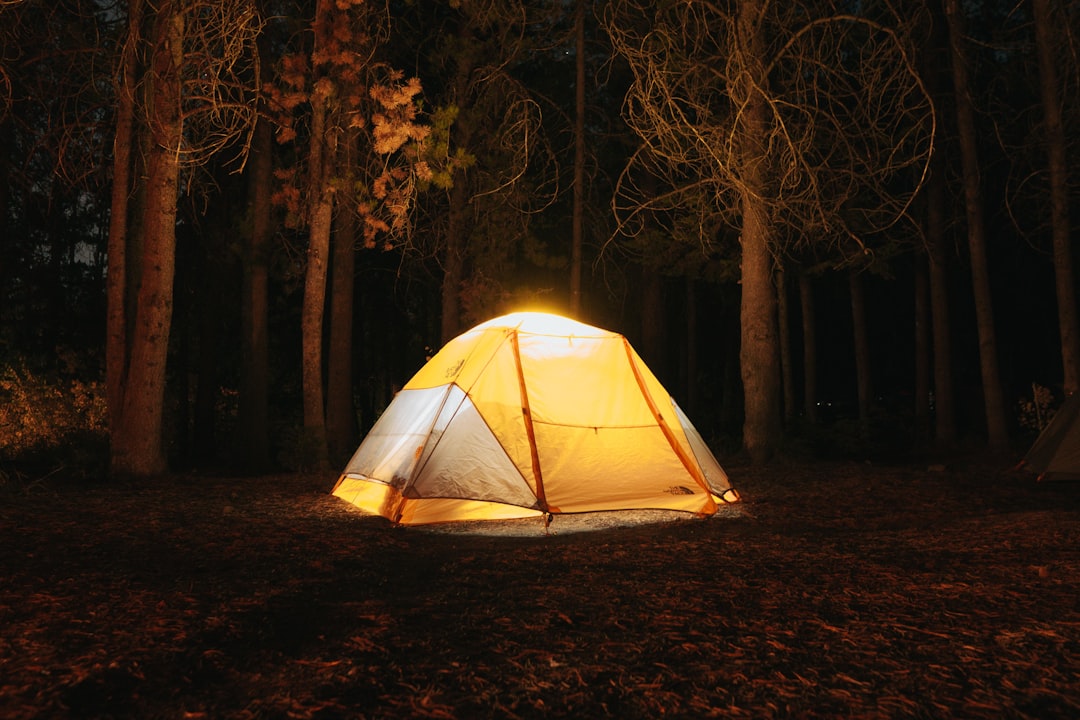
The lantern that permanently lives in my camp box is the BioLite Alpenglow 500. Two things set it apart from the sea of identical plastic pucks. First, it dims down to a genuine candle-level glow instead of jumping from “off” to “retina burn,” which matters when you’re up at 5 a.m. and don’t want to wake the whole loop. Second, it has a multicolor mode that throws a flickering amber wash across the picnic table — yes, it’s a gimmick, and yes, it’s a wonderful one that makes a cold October evening feel like a campfire even where fires aren’t allowed. It hangs from a tent ridge loop, stands on the table, and recharges over USB between trips.
The Site Flooder
For base camps, group trips, and any night where the job is “see the entire campsite,” the COAST EAL40R is the heavy artillery. It pushes out enough light to turn a whole clearing into daylight, has a folding handle and carabiner for hanging from an awning or a branch, includes both a diffuser and a low “moonglow” mode for the hours after dinner, and — the feature that earns its keep — doubles as a USB-C power bank. One lantern, hung from the van awning, ran our entire dinner-and-cards operation for a long weekend in the Adirondacks and still had enough charge to top off a headlamp. When the weather turns and you need to find a dropped tent stake in wet leaves at 9 p.m., this is the light you’re grateful you packed.
The Old Faithful Option
Not everything needs a charging cable. The Coleman 1000-lumen LED lantern is the lineal descendant of the green-tank lantern your grandfather kept in the shed, updated with LEDs that effectively never burn out and a battery-protection circuit that keeps cells from corroding in storage. It takes D batteries, runs forever on low, and costs less than a nice dinner. I keep one in the camper specifically because it’s the light I can hand to a confused neighbor, a kid, or a friend who “just needs to borrow something” without a moment’s worry. Sometimes the right tool is the one everyone already knows how to use.
Solar Pucks and String Lights
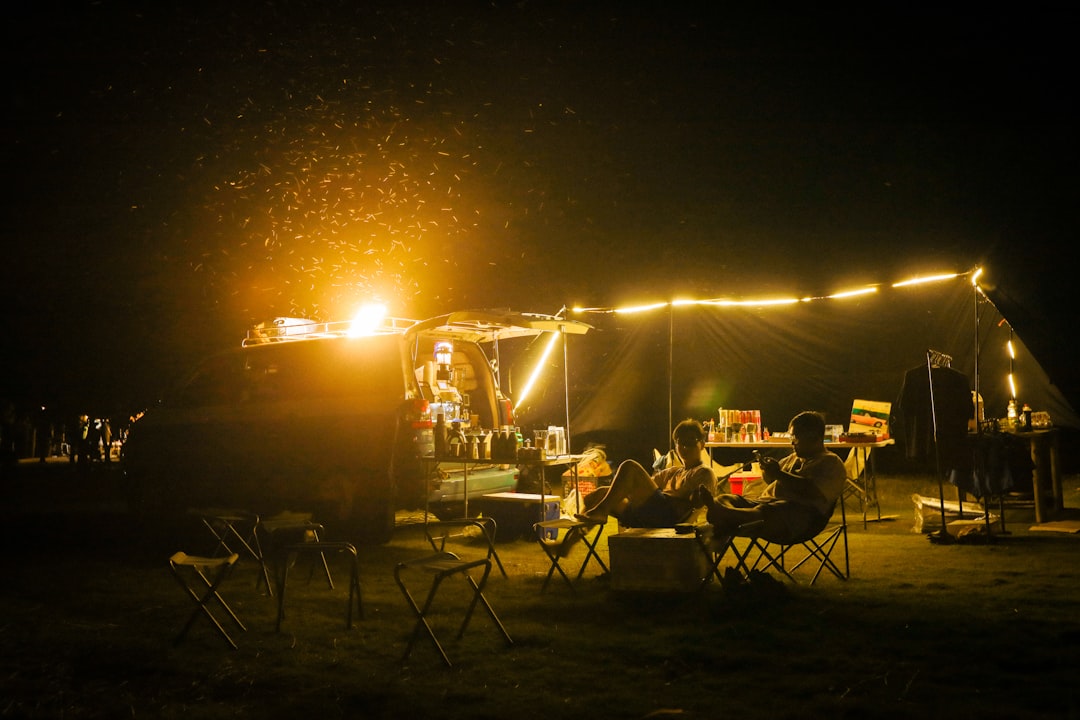
Then there’s the ambiance layer, which I once dismissed as glamping nonsense and now defend with uncomfortable passion. The BioLite Luci is a flat, inflatable solar lantern that weighs about as much as a greeting card, charges itself on the dashboard during the drive, floats in a cooler if that’s where it ends up, and produces a soft, even glow that makes a tent interior livable. And a set of rechargeable camping string lights — the modern ones wind onto their own storage reel and run eight modes off a USB charge — turns an awning, a tarp ridge, or a picnic shelter into an actual place you want to spend the evening. My team mocked the string lights for exactly one trip. Now they’re item one on the pack list, and nobody has admitted why.
Red Light Mode Is Not a Gimmick
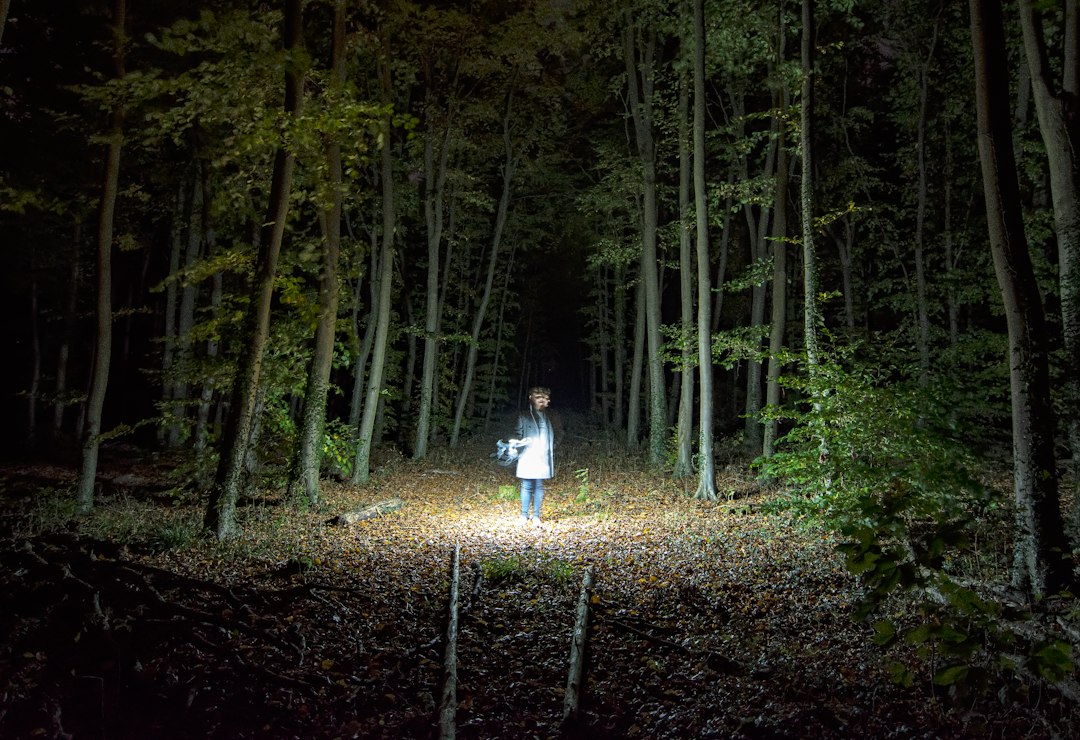
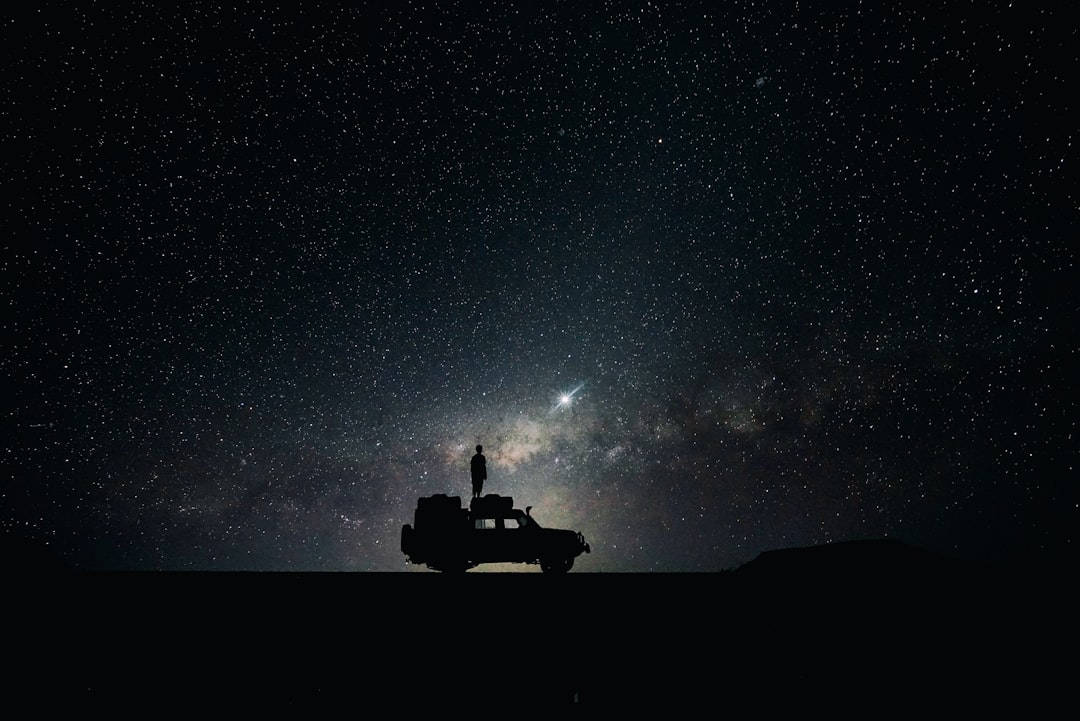
Every serious headlamp has a red mode, and most people never press it, which is a small tragedy. Your eyes take roughly half an hour to reach full night vision and about one second of white light to destroy it. Red preserves most of that adaptation, which is why astronomers, deer hunters, and every campground host on the planet communicate in red after dark. If you have any interest in night skies — and fall is arguably the best stargazing season of the year, with early sunsets and dry transparent air — red light is the difference between seeing the Milky Way and seeing a purple afterimage. We put together a full dark-sky field guide over the summer, and the number-one rule in it is simply turn your light red before the stars come out.
Red mode is also basic camp courtesy and better wildlife practice. A beam of white light down a lakeshore spooks every deer in it; a dim red sweep barely registers. Use it for finding the cooler, the trail register, the way to the bathroom at midnight. Save the high-lumen white stuff for when you actually need to see — cliff edges, downed trees, the interior of a fuel pump at 10 p.m. — and your neighbors’ retinas will thank you.
How the Kit Actually Packs Out
Three configurations cover ninety percent of my fall. The day-hike kit is one headlamp — usually the Spot 400-R — plus the eneloop spares, riding in the lid pocket of the pack from September onward without exception, paired with the trekking poles that handle the descents. The rule is that the light never comes out of the bag between trips; it gets charged at home, checked monthly, and forgotten until the moment it saves the day. The van kit adds the Alpenglow and the Luci to the galley drawer, the COAST to the awning pocket, and the Coleman to the emergency bin, so camp gets lit in layers the moment we roll in. And the flight kit is deliberately minimal: the NU25 on the head, the Luci flat in a laptop sleeve, string lights coiled in a shoe. That trio has survived carry-on-only trips to three countries without a single dead-battery evening.
Whichever configuration you build, the principle is the same: decide once, pack it early, and stop negotiating with the sunset. If you’re building a fall trip around a specific dawn — a balloon launch, a summit start, a wildlife 5 a.m. — the lighting decision is already made for you, and honestly, the discipline is the gift. There’s a particular kind of quiet you only find on a trail at 5:45, headlamp-lit, frost on the grass, with the first color coming up over the trees. I wrote about exactly that feeling standing in the dark at the Albuquerque balloon field, and I’d trade a hundred well-lit evenings for one more of those dawns.
The Short Version
If the whole category exhausts you, here’s the floor I’d set for any fall traveler. One rechargeable 400-lumen headlamp with red mode and USB-C charging, carried always. One lantern that dims low for the table. One pouch of rechargeable batteries that lives with the gear. Everything else — the site flooder, the solar pucks, the string lights — is gravy, and pleasant gravy at that. The sun is going to keep clocking out early whether you’re ready or not. The difference between ending the day at 5:45 and extending it to 9:30 is about a pound of gear, and it’s the pound that turns the best season of the year into the longest one.