
I have a ritual now, and it starts before my suitcase hits the floor. Door closes behind me, and instead of heading straight for the fridge or the balcony view, I stand in the entryway and take one long, slow look around the place. Then the detector comes out of my backpack, and for the next ten minutes, I treat every vacation rental like it belongs to a stranger — because it does. Five rentals into this experiment across Tennessee, North Carolina, and two stretches of the Gulf Coast, the ritual has already paid for itself once in ways I didn’t expect.
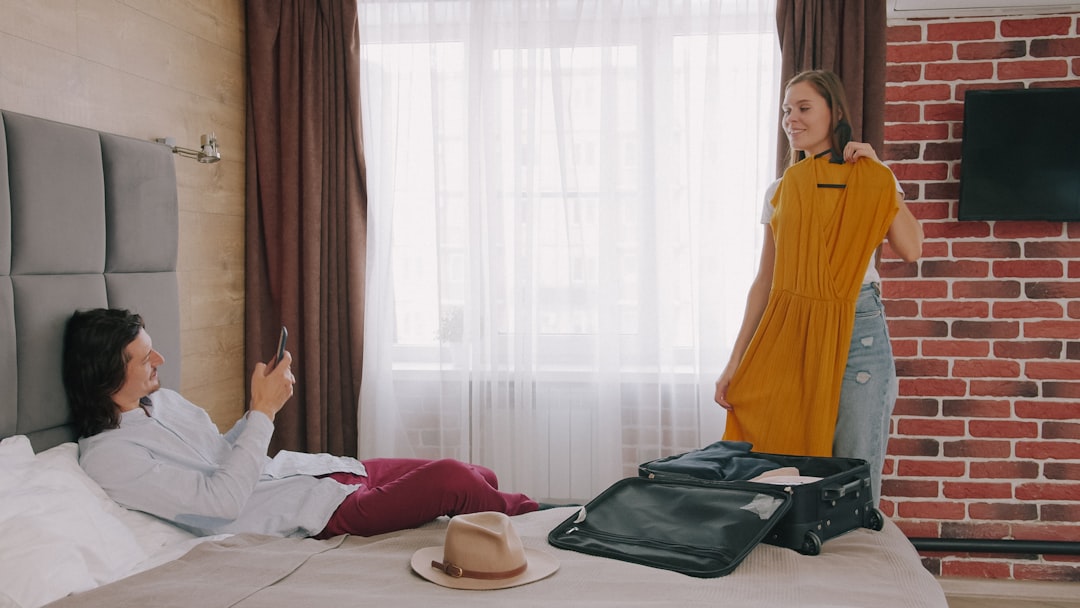
It sounds paranoid written down like that. I get it. Two years ago I would have laughed at anyone who swept an Airbnb for hidden cameras the way my dad used to circle the car checking tire pressure at every gas stop. But hidden cameras in rentals stopped being a creepy headline every eighteen months and became a steady drip of local news stories, court filings, and platform policy updates. My team keeps a running folder of these incidents for the site, and the folder got thick enough that I couldn’t keep pretending it was somebody else’s problem.
Why I Stopped Rolling the Dice
The math is not alarming in the way TikTok wants you to believe. The overwhelming majority of hosts are decent people who never think about any of this. But the incidents that do surface follow a pattern worth knowing: a camera disguised as a phone charger in the bedroom, a smoke detector that never went off because it was stuffed with electronics, a “decorative” clock angled at the bed instead of the door. The devices are cheap, the disguises are convincing, and the discovery almost always comes from a guest who noticed something slightly off rather than someone with professional equipment.
That last part is what got me. I don’t want to live like a countersurveillance operative. I want to walk into a rental, spend ten calm minutes confirming the obvious — nobody wired the place — and then enjoy my vacation without a background hum of unease. A full anti-theft bag got me through Barcelona pickpocket country without losing a wallet. This felt like the same instinct applied to a different threat: cheap insurance, minutes of effort, real peace of mind.
The Thirty-Dollar Tool That Changed My Arrivals
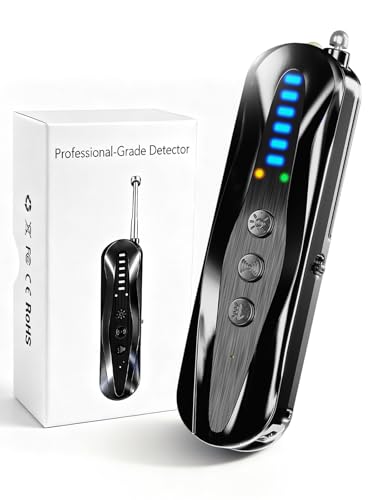
Hidden camera detectors are not magic wands, and understanding what they actually do matters more than which one you buy. Nearly every travel-sized unit combines three functions. An RF scanner listens for wireless transmissions across a wide frequency band — if a camera is streaming to Wi-Fi or a cellular connection, the scanner picks up the signal strength as you physically move closer to the source. A lens finder uses a ring of red LEDs and a viewfinder: hold it to your eye, sweep the room, and any camera lens reflects back as a bright pinprick of light, whether the camera is recording, dormant, or fully wired with no wireless signal at all. And a magnetic-field mode exists mainly for ferreting out GPS trackers stuck under cars, which matters more for rental vehicles than rental condos.
I carried a combination infrared pin-hole finder and RF detector through all five rentals, backed up by an older JMDHKK unit my editor swears by for a second opinion. The two agreed with each other everywhere except one spot, which I’ll get to. A decent detector runs twenty to forty dollars, charges over USB-C, and fits in a sunglasses case. There is no scenario where the size justifies leaving it home.
My Ten-Minute Sweep, Room by Room
The method matters more than the machine. Early on I made the rookie mistake of waving the detector around like a metal detector at a beach, chirping at every router in the building. Now the team and I run the same sequence every time, and it settles into something almost meditative.
The Living Room: First Two Minutes
I start standing in the center of the main room and just look. Cameras need two things: a view of something worth watching and usually a power source. So I check everything that faces the sofa or the dining table — the TV and its soundbar, shelves of “decorative” objects, wall art with odd little pinholes, and any device with an unexplained indicator light. The living room is also the most common place for hosts to legitimately place disclosed security cameras, so this is where I find out what I’m dealing with.

Smart TVs deserve their own ten seconds. A TV that’s off but still warm, or a camera bar sitting on the console that the listing never mentioned, gets unplugged for the duration of my stay. It takes no effort, and the worst case is I re-plugged something innocent.

The Bedroom: Where the Trouble Actually Lives
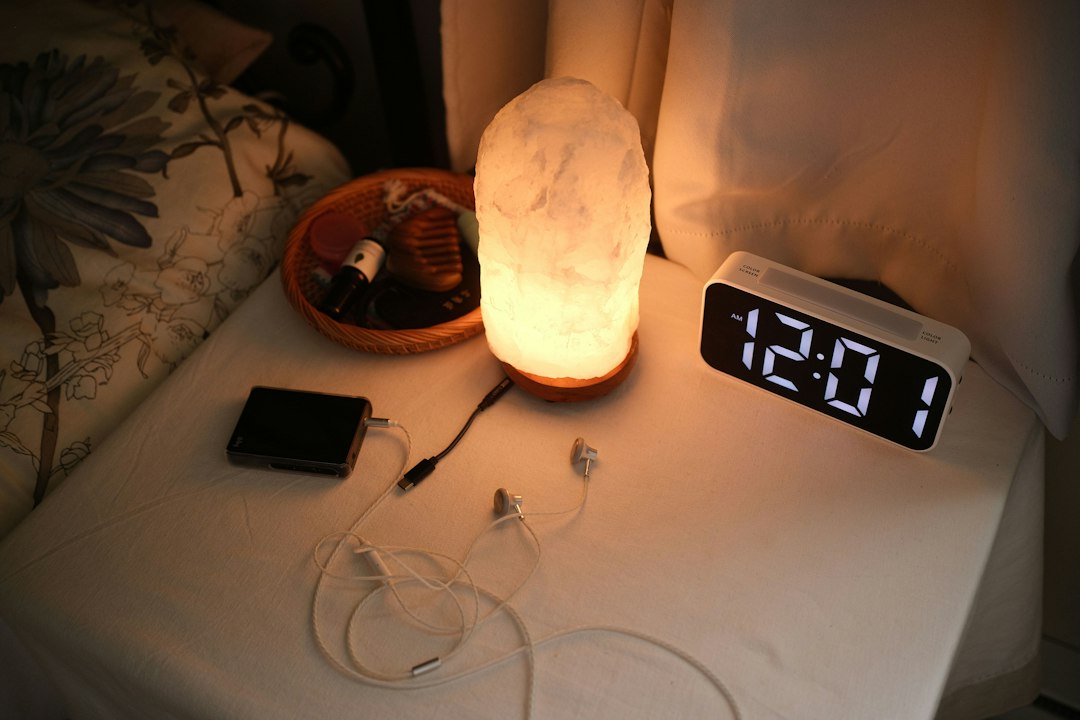
The bedroom is the room with the legal weight. Every major rental platform prohibits cameras in bedrooms and bathrooms outright, full stop, no disclosure loopholes. So this is where I slow down. Anything with a lens gets picked up and examined: alarm clocks, air purifiers, phone chargers, USB hubs, the smoke detector on the ceiling, picture frames at pillow height. The lens finder earns its keep here — in a dimmed bedroom, a genuine camera lens lights up like a firefly against the wall of ordinary plastic and fabric.
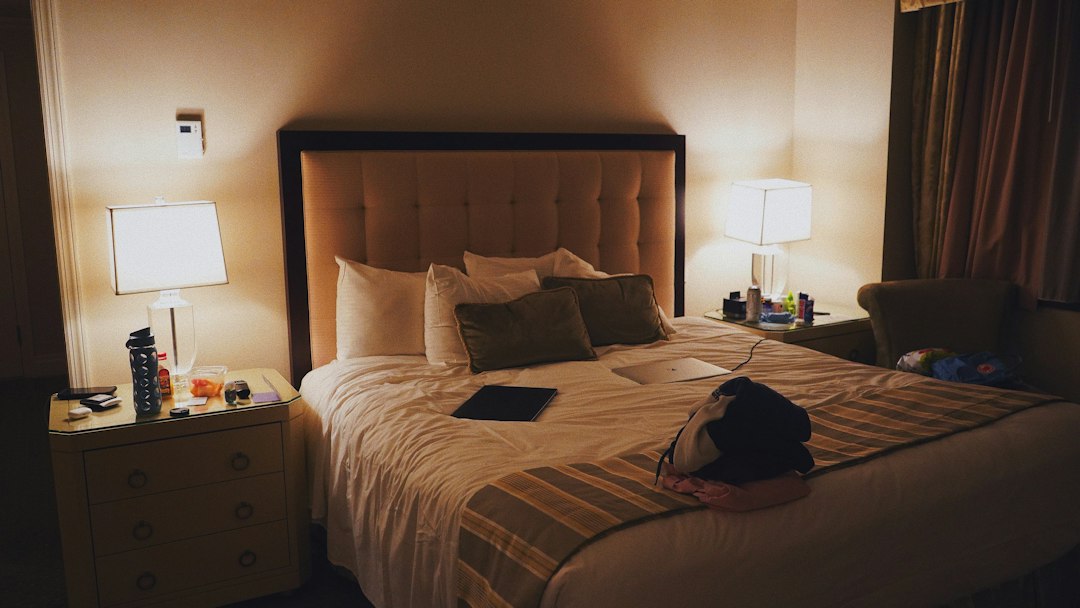
Chargers are my particular fixation. A USB wall plug with a slightly thick body or a lens-sized dot is the single most common disguise in the incident reports my team tracks. If a charger is already plugged in and waiting for me, I swap it out for the charging cube that travels with me everywhere anyway and toss the mystery plug in a drawer. Thirty seconds, zero risk.
The Bathroom and the Windows
Bathrooms get a fast, honest pass. Mirrors — the two-way-glass worry — are actually the least likely culprit; a fingertip pressed against a real mirror shows a gap between your finger and its reflection, and I’ve never once found a mirror that failed the test. The realistic risks here are tiny lens devices in vents, outlets, or decorative items, so the lens finder does one slow lap of the walls at arm’s length while I run the fan to calm my nerves.

Then the windows. I pull the blinds and check the top rail and the cornice — outdoor-facing cameras pointed at a pool or patio are common, legal in many places when disclosed, and usually irrelevant. What I’m actually screening for is anything angled inward, toward the living space. Window sensors and those little magnetic contact switches are normal security hardware; anything with a visible lens is not.
The Final Pass: Network and Flashlight
The last two minutes happen from the couch. I open the rental’s Wi-Fi on my phone and look at the list of connected devices, which any router admin page or a free network-scanner app will show. A property with two smart TVs, a thermostat, and a lock might legitimately have eight or ten devices. A device list that includes names like “CAM-02” is not ambiguous, and an unnamed gadget that wakes up every time I walk past the bookshelf earns itself an inspection. RF mode comes back out for a final sweep with the lights off — transmitting devices chirp louder in the dark, and the lens finder catches anything the Wi-Fi pass missed.
What the Five Sweeps Actually Turned Up
Here is the honest scorecard, because a ritual you oversell is a ritual you abandon. Four of the five rentals were completely clean. One had a disclosed outdoor camera over the patio, exactly where the listing said it would be, and I waved at it. One — a lakeside cabin outside Asheville — had an undisclosed indoor camera in the living room, disguised as an air freshener, aimed across the sofa. Not at a bedroom. Not at a bathroom. Legally murkier, personally unsettling, and discovered at minute six of a ten-minute sweep because my primary detector chirped and the lens finder confirmed a reflection the air freshener had no business producing.
I unplugged it, photographed it in place, messaged the host, and reported it to the platform from the driveway before dinner. The host claimed a previous guest had left it. Maybe. The refund offer suggested the platform found the explanation as thin as I did. Either way, the detector had done its job: I found the device on my schedule, not months later in a strangers’ video archive.
Which Detector Deserves Your Counter Space
After five rentals and a lot of desk testing, the differences between models come down to ergonomics and false-positive tolerance rather than raw detection power. The 7-in-1 unit with the built-in flashlight is the one I’d hand a first-time buyer — the adjustable sensitivity keeps it usable in apartment buildings where neighboring routers would drive a cheaper unit crazy, and the rechargeable battery means no coin-cell scavenger hunts in a strange town. If your packing style is minimalist, the pen-style privacy finder disappears into a toiletry kit and works as a pure lens scanner, though you give up the RF functions.
For travelers who want the full checklist in one device, a 6-in-1 detector covering RF, magnetic fields, and infrared costs about the same as an airport sandwich and covers rental cars along with rental rooms. The newer AI-assisted 7-in-1 models filter noise better in dense urban buildings — noticeable in a high-rise, overkill in a cabin. And if your travels lean toward road trips, the travel-size RF and GPS tracker detector is the one that lives in my glovebox now, because sweeping a rental car’s wheel wells takes four minutes and zero talent.
The Rest of the Arrival Kit
The camera sweep is the headline, but the same ten-minute window covers the rest of my arrival routine. A door-stop alarm with a 120-decibel siren wedges under the entry door at night — it costs less than lunch and turns a flimsy rental deadbolt into something that will wake the whole building. For hotel-style doors that swing inward, a portable door jammer does the same job from inside. And since I already have my phone out: keys and fobs go into a faraday pouch in the entry bowl, which defeats relay attacks on push-button car locks and keeps me from playing “did I lock the car” at midnight. None of this is spy-craft. It’s the same arrival-kit philosophy that made a cruise cabin feel like a suite — a few cheap tools, applied in the same order every time, until the routine is muscle memory instead of anxiety.
If You Actually Find Something
Know the sequence before you need it. Don’t touch or move the device beyond unplugging it if you can do so safely. Photograph it in place with your phone, capture the room and the device’s angle, and screenshot the listing’s camera disclosure section — the gap between disclosure and reality is your entire case. Then message the host through the platform, never by text, and file the platform report the same day. Every major rental service treats an undisclosed indoor camera as a serious violation, and documented reports move fast. If the device is in a bedroom or bathroom, leave. No destination is worth the wait-and-see.
The local police non-emergency line is a reasonable next call if the device was pointed at a private space, and frankly the platform will suggest it anyway. You are not overreacting. A person who hid a camera counted on you deciding it wasn’t worth the fuss.
Packing It All Back Up
Ten minutes on arrival, five on departure. That’s the entire cost of the habit, and after five rentals it feels less like suspicion and more like checking the stove before you leave home. The detector rides in the same backpack pocket as my charging cube and sunglasses, the door alarm lives in the shoe side of my duffel, and the ritual has quietly made me a better guest — because you notice everything about a place in ten minutes of deliberate looking, including where the good coffee mugs are hidden.
The odds remain overwhelmingly in your favor. Most rentals will give you nothing but a clean sweep and a story about how thorough you’ve become. But the one time the air freshener by the sofa turns out to be something else, you’ll be the person who found it on day one — and not the person who finds out later, from someone else.