
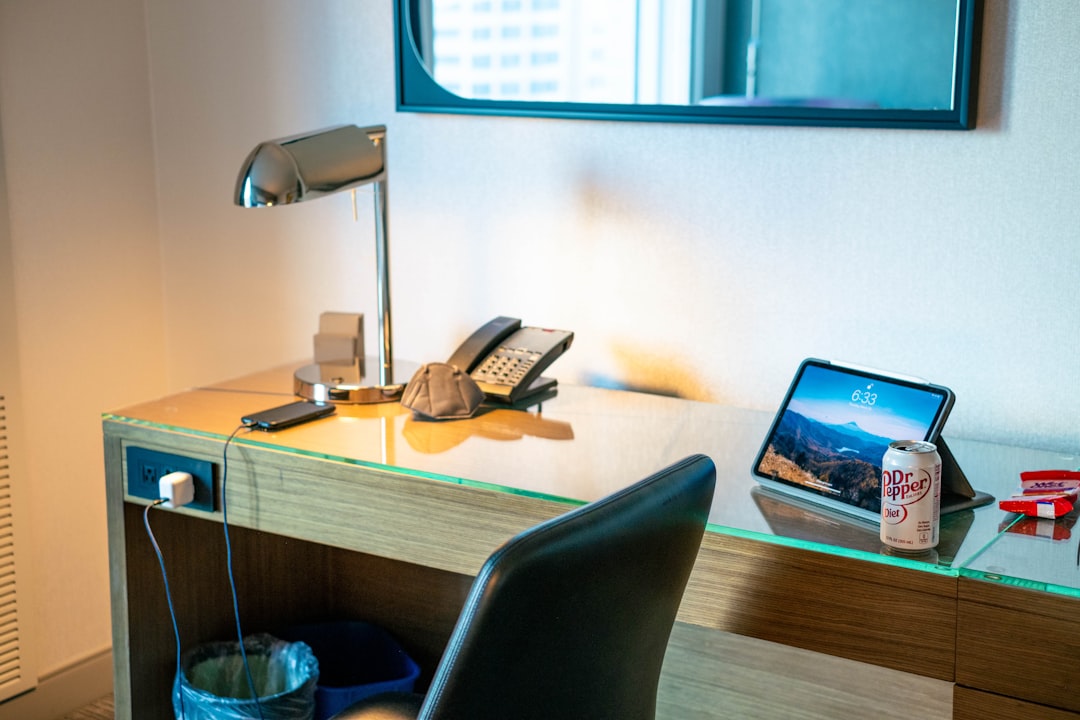
There’s a particular moment every traveler knows. You walk into your hotel room after fourteen hours of transit, drop your bag, scan the walls, and count the outlets. Two. Maybe three if you’re lucky, and one of them is behind the nightstand in a gap so narrow you’d need a child’s hand to reach it. Meanwhile, your phone is at 11%, your laptop is gasping, your wireless earbuds case is blinking red, your smartwatch is dead, and your travel companion is already calling dibs on the one outlet near the bed.
I spent years solving this problem badly. I’d charge my phone in the bathroom because that was the only reliable outlet. I’d wake up at 3 AM to swap devices. I’d unplug the hotel lamp to steal its socket. My team and I once took turns charging gear on a power bank we passed around like a canteen in the desert. It was ridiculous, and it took me far too long to realize that the solution was a $40 cube that weighs less than a pair of socks.
The Hotel Outlet Problem Is Universal
I started paying attention to this on a press trip to Lisbon last spring. There were four of us sharing a boutique hotel in Alfama, and between the group we carried two laptops, four phones, two tablets, a drone battery charger, two sets of wireless earbuds, three camera batteries, and an electric toothbrush. The room had three outlets. One didn’t work. The math wasn’t mathing.
We improvised with a daisy chain of chargers plugged into the single working outlet behind the TV, and someone on the trip pulled out a compact power strip that changed the entire dynamic of the room. Suddenly we had six charging ports in one location. Devices got topped up overnight. Nobody had to set a 3 AM alarm to rotate. It was the kind of small intervention that makes you wonder why you ever traveled without it.
When I got home, I went deep on travel charging. I talked to frequent flier friends, tested setups on three subsequent trips across different countries, and built a kit that has since become the most essential non-clothing item in my luggage. Here’s what I landed on after about six months of real-world testing.
The Foundation: A Travel Power Strip
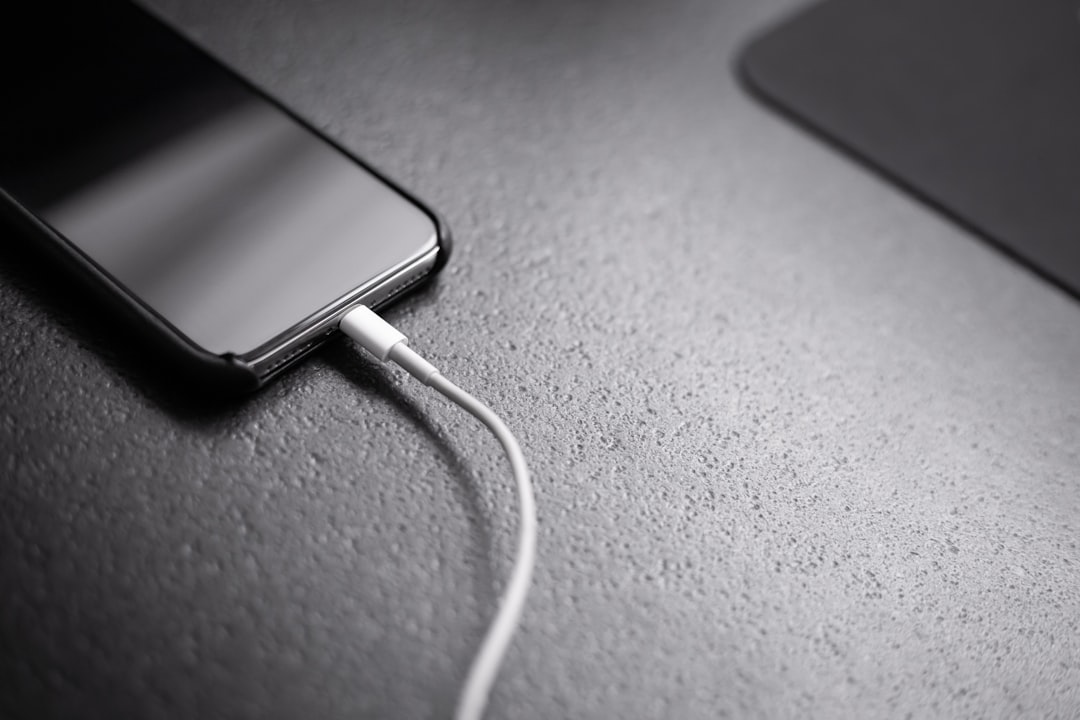
The single most impactful upgrade you can make is adding a compact power strip to your bag. Not a full-size surge protector from your desk — those are too bulky and the stiff cord takes up half your personal item. What you want is something designed specifically for travel: short cord, flat plug, multiple AC outlets, and ideally some USB ports built in.
My top pick after testing five different models is the Anker Prime 6-in-1 Charging Station. It gives you two AC outlets, two USB-C ports, and two USB-A ports in a package roughly the size of a wallet. The 140W total output means it can fast-charge a MacBook Pro while simultaneously powering your phone and earbuds. The plug folds flat, the cable is detachable, and the whole thing disappears into a corner of your bag.
For budget-conscious travelers, the One Beat Surge Protector Power Strip delivers five AC outlets and four USB ports for under $25. It’s larger than the Anker, and the cord doesn’t detach, but if you’re traveling with a family or sharing a room with colleagues, the sheer number of ports makes it a lifesaver. The five-foot cord also reaches outlets hidden behind furniture, which in my experience describes about 60% of hotel outlets in Europe.
One important note for cruise travelers: most cruise lines ban standard power strips for fire safety reasons. The ORICO Cruise Approved Travel Power Strip is specifically designed to meet cruise line requirements — no surge protection, which is the feature that gets standard strips confiscated at boarding. If you’re planning a cruise, this is the one to pack.

The Modern Upgrade: GaN Chargers and USB-C
A power strip solves the outlet problem, but the chargers you plug into it matter just as much. The old brick-style USB chargers that came with your phone are wasteful, slow, and they take up too much space. The current standard is GaN — gallium nitride — which allows chargers to be dramatically smaller and more powerful than the old silicon-based bricks.
I carry the Anker Nano 70W 3-Port Charger as my primary wall charger. It has two USB-C ports and one USB-A port, and at 70 watts it can charge a laptop at full speed or split power across three devices simultaneously. It’s barely larger than the 5W charger that used to come in the box with an iPhone, which still blows my mind every time I pick it up. This thing lives in my personal item and handles charging duties in airports, cafes, and anywhere I can find a single outlet.
For heavier power needs — usually when I’m editing video or running a mobile workstation — the MINIX 100W Turbo 4-Port GaN Charger is the nuclear option. Four ports, 100 watts total output, and it can fast-charge two laptops simultaneously. It’s overkill for most trips, but if you travel with a creative team or you’re the designated tech person in your group, this is what you want.
If you want an all-in-one solution that combines a charger and power strip, the Anker Zolo 4-Port 50W Wall Charger is worth a look. Four USB ports — two USB-C and two USB-A — directly from a wall adapter, no cord needed. I used this as my only charger for a two-week trip through Portugal and Spain, and it handled my phone, earbuds, kindle, and camera batteries without breaking a sweat.
The Cable-Free Future: Qi2 and MagSafe
The newest evolution in travel charging eliminates cables entirely. If you’re in the Apple ecosystem, a MagSafe charging dock means you set your phone, watch, and earbuds on a single pad and walk away. No fumbling for cables in the dark, no wearing out charging ports, no untangling a nest of Lightning and USB-C cords at midnight.
The Anker Prime Qi2 3-in-1 Foldable MagSafe Charger is what I pack when I want to travel light. It folds flat, charges three devices at once, and the Qi2 standard delivers 25W to compatible phones — notably faster than older wireless chargers. It has become my go-to for short trips where I don’t need my laptop. Phone, watch, earbuds, done.
The real advantage isn’t speed, though. It’s the ritual. Set your devices on the pad when you walk in, pick them up when you leave. No hunting for the right cable, no wondering if the connection is secure, no discovering at 7 AM that your phone was resting slightly off-center on the pad and charged to 14%. The magnetic alignment solves the positioning problem that plagued wireless charging for years.
Cable Management: The Unsung Hero
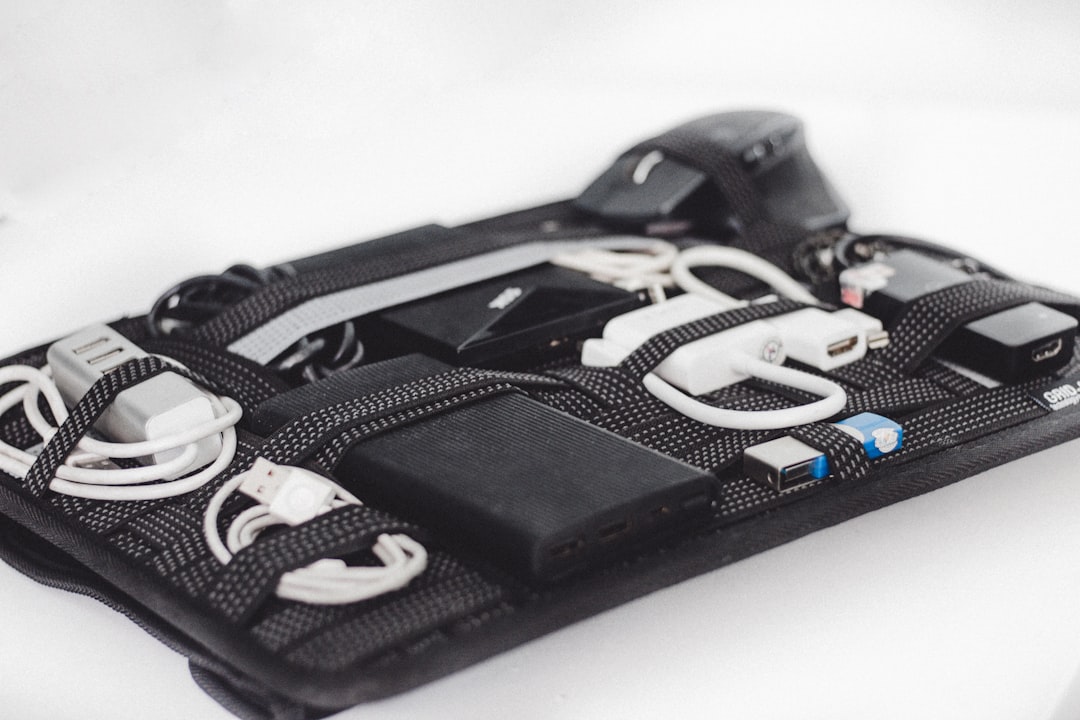
None of this matters if your charging gear is a tangled mess at the bottom of your bag. I used to waste five minutes every time I opened my backpack, digging through a bird’s nest of USB-C cables, charging bricks, and adapters. The fix is embarrassingly simple: a dedicated tech pouch.
I use the FYY Electronic Organizer pouch, which costs about $15 and has dedicated compartments for chargers, cables, and adapters. Everything has a slot. I can see at a glance whether my USB-C cable is packed because the slot is either full or empty. This sounds trivial until you’ve spent twenty minutes unpacking your entire carry-on in a hotel lobby looking for a missing charging brick.
For longer trips or if you carry more gear, the Bagsmart Electronic Organizer offers more space and a hanging hook that turns any hotel closet into a charging station shelf. My team started using these on group trips, and they’ve become standard issue. The hanging feature is especially useful in rooms with zero counter space.
This is also where good habits matter. I wrote about this in my rules I travel by piece, but it bears repeating: pack your chargers the same way every time. Same pouch, same slots, same cable routing. When you’re exhausted and jet-lagged, muscle memory is your friend. You should be able to find your charger in the dark.
The Bridge: Portable Power for Transit
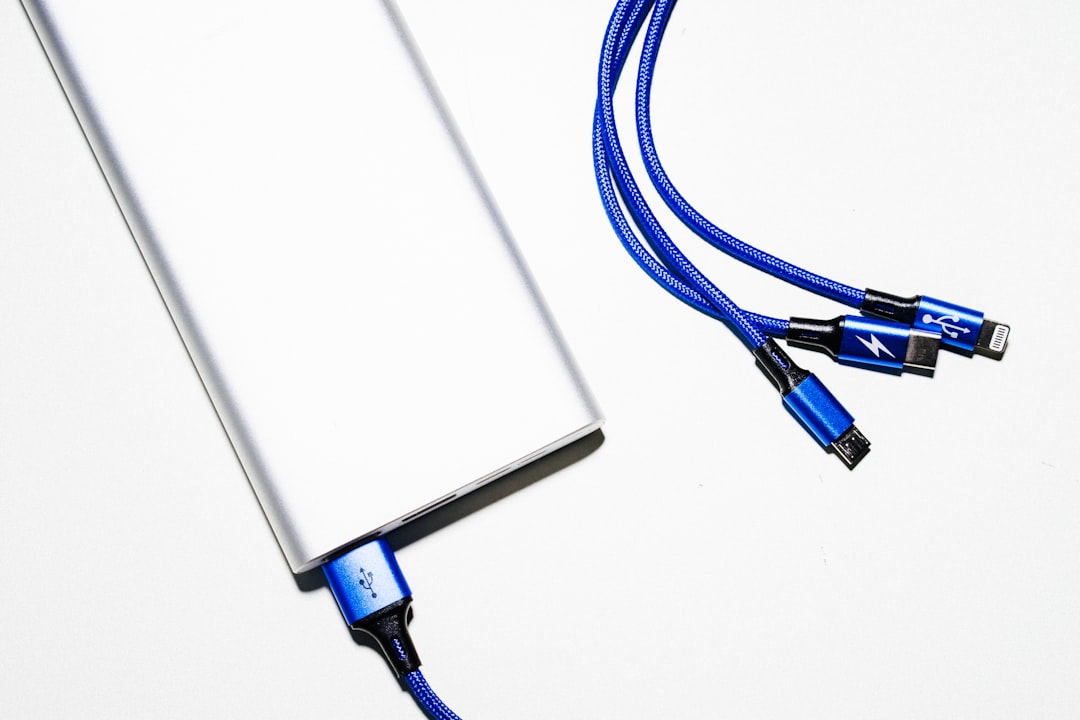
A hotel charging station solves the overnight problem. But what about the hours between checking out and arriving at your next destination? Long layovers, train rides, and the interminable gap between landing and actually getting to your hotel room — these are the moments when your devices die, and no wall outlet is in sight.
I’ve written extensively about portable power banks I actually trust, so I won’t rehash the full breakdown here. The short version: the INIU 45W 10,000mAh Portable Charger is my daily carry. It’s small enough for a jacket pocket, delivers enough juice to fully charge a phone twice, and the 45W output means it can actually charge a laptop in a pinch. It bridges the gap between hotel charging sessions perfectly.
The Complete Travel Charging Kit
After six months of refining this system across trips to Europe, Mexico, and cross-country domestic travel, here’s what I pack:
- One travel power strip (the Anker Prime for solo trips, One Beat for group travel)
- One GaN wall charger (Anker Nano 70W for most trips)
- One Qi2/MagSafe 3-in-1 charger (for Apple ecosystem trips)
- One 10,000mAh portable power bank
- Two USB-C cables (one short, one six-foot)
- One USB-C to Lightning cable (if traveling with older Apple devices)
- One tech organizer pouch
The entire kit weighs under two pounds and fits in a single pouch. It has handled every charging scenario I’ve encountered, from a medieval hotel in Toledo with one outlet to a modern Tokyo business hotel with USB ports built into the headboard. The system scales.
The best part isn’t the gear itself. It’s the peace of mind. I no longer think about charging. I don’t scope out outlets when I check in. I don’t wake up in the middle of the night to rotate devices. I plug in, go to sleep, and everything is at 100% in the morning. For roughly $150 total invested across the kit, it’s one of the highest-impact travel upgrades I’ve made.
If you’re flying internationally, pair this kit with a good Bluetooth audio transmitter for the flight and you’ve solved two of the most common tech frustrations travelers face. Both items together cost less than a single airport meal and will outlast a dozen trips.
Travel will always have its friction points — delayed flights, lost luggage, language barriers. But the charging problem? That one’s solved. You just need the right $40 cube in your bag.
3 thoughts on “The $40 Cube That Turned Every Hotel Room Into a Charging Station”