Most observation towers make you earn the view the same way: a narrow metal staircase, a hundred steps of huffing, and a cattle-line at the top. Eagle Tower in Door County, Wisconsin, took one look at that tradition and built something else entirely. The centerpiece of the climb here isn’t a staircase at all. It’s an 850-foot wooden ramp that corkscrews gently through the forest canopy until it hands you off to a 60-foot tower standing 253 feet above the waters of Green Bay.
That single design decision changed who gets to stand at the top. Wheelchairs, strollers, replaced knees, tired toddlers, grandparents who stopped trusting stairs a decade ago — on the ramp at Peninsula State Park, they all arrive at the same overlook at the same altitude as the stair-climbers. In a travel world that quietly filters people out, that matters more than any one vista.
And the vista is genuinely worth the trip. Here’s how Eagle Tower works, what you’ll see from the deck, and how to fold it into the kind of Door County day that doesn’t fall apart by 2 p.m.
The Tower That Chose a Ramp Over a Staircase
Eagle Tower stands on Eagle Bluff, on the Fish Creek side of Peninsula State Park — Door County’s most popular state park and, arguably, its most complete one. The current tower opened in 2021 after a full rebuild, funded through a partnership between the Wisconsin Department of Natural Resources and the Friends of Peninsula State Park. The structure itself is 60 feet tall, but because it’s perched on the bluff, the top observation deck sits 253 feet above Green Bay. That’s lighthouse-keeper altitude without the lighthouse ladder.
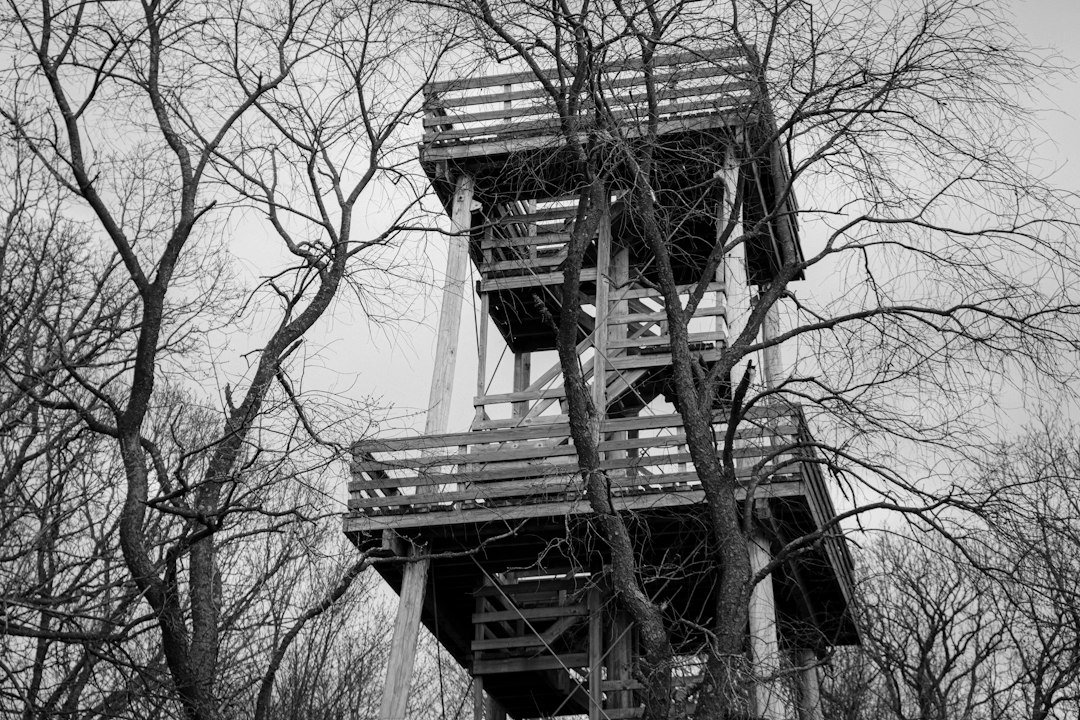
There are technically two ways up. Traditionalists can take the 100 steps. Everyone else — and on most days, that’s the majority — takes the accessible canopy walk: just over 850 feet of gently climbing timber ramp that loops through the trees. It’s not a bolted-on accessibility afterthought stuck behind the tower. The ramp is the experience, and it was designed that way from the first drawing.
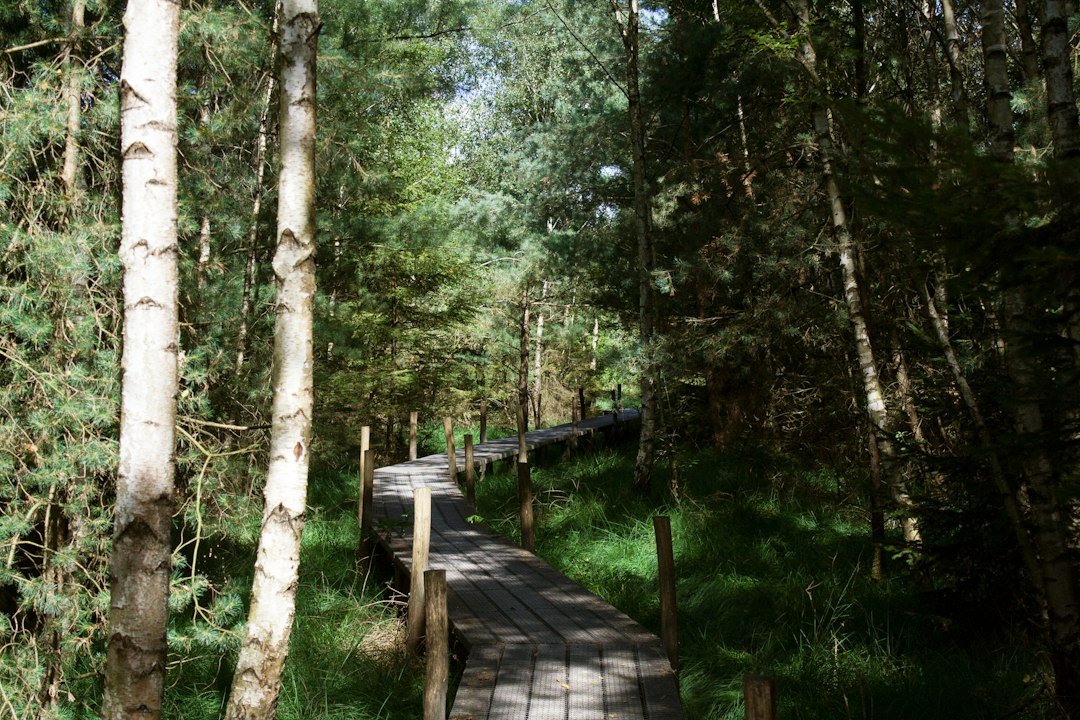
Because the walkway rises through the tree line rather than around it, you get a moving show the whole way up: mid-canopy branches passing at eye level, sun filtering through the leaves, the lake revealing itself in slices between trunks. A staircase promises a view at the end. The ramp starts paying out views about thirty seconds in.
What the Climb Actually Feels Like
The grade is gentle enough that you’ll likely never notice you’re climbing — this is a stroll, not a workout. The ramp switchbacks on itself in lazy loops, and along the way there are flat resting landings and benches placed where the views are best, so nobody has to choose between catching a breath and missing something. Cutout windows in the railing frame the canopy like a series of rotating postcards, at heights that work for adults and kids in equal measure.
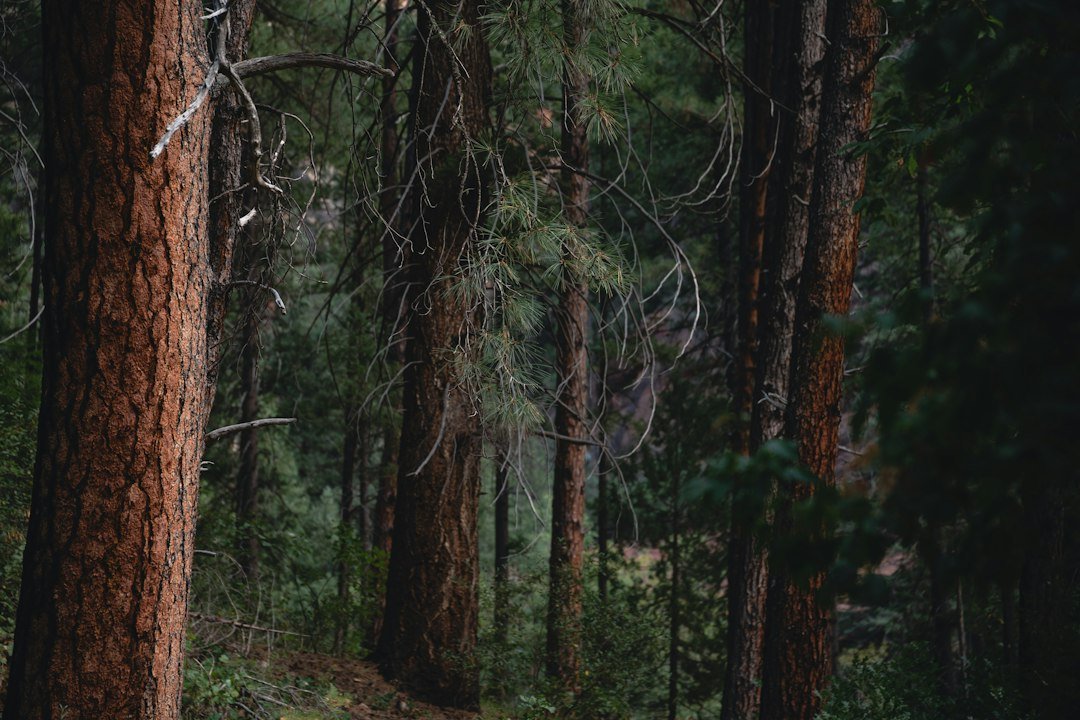
Take the climb slowly, because the forest rewards it. The ramp passes through mature hardwoods and hemlock, and the birdlife in Peninsula State Park is serious business — the park sits on a migration funnel where warblers pile through in spring in numbers that draw binocular-toting pilgrims from three states. Deer are common enough on the trails below that spotting one mid-ramp barely counts as news, though it still stops traffic every time.
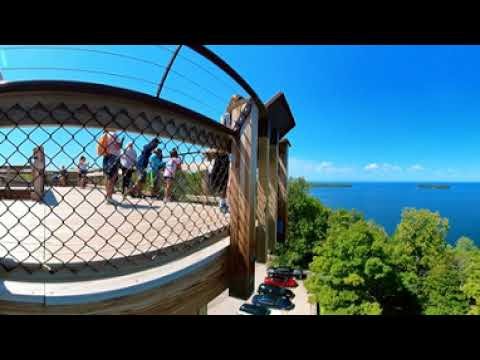
One traveler documented the entire ramp-and-tower climb in immersive 360-degree video, so you can preview every loop, bench, and reveal before you ever leave home:
The Payoff at the Top: Green Bay and the Strawberry Chain
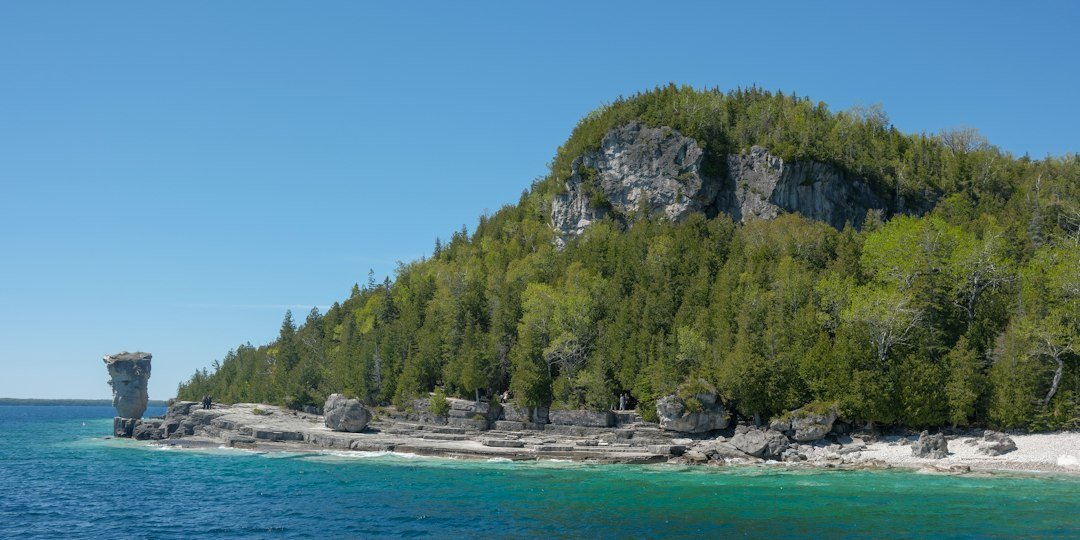
Stand at the railing and the geography of northern Door County arranges itself beneath you. Horseshoe Island sits anchored in the middle distance, the tree-capped centerpiece of the view and a protected piece of the park reachable only by water. Beyond it, the Strawberry Islands and the shifting shoals of the Strawberry Channel stitch the horizon together, with the bluffs of the eastern peninsula rising on the far side of the water.
Closer in, the white steeples and harbor of Ephraim line up along the shoreline like they were staged for the tower’s benefit, and Nicolet Bay’s curve of beach sits just south of it all. On clear days the blue just keeps going. This is a panorama that rewards real glass — a decent pair of compact binoculars will pull herons out of the shallows, track sailboats tacking up the channel, and turn the far bluffs from a suggestion into a landscape.
Plan to spend real time up here, not the token three minutes. The light changes, the boats change, and the wind coming off Green Bay at 250 feet of elevation is the kind that resets a whole trip. On weekday mornings you may have the deck nearly to yourself; on October afternoons you’ll share it with a rotating crowd of leaf-peepers who are all, for once, taking the same route up.
Why a Ramp Changes Who Gets to Travel Up
Stairs are a filter, and most scenic infrastructure uses them without a second thought. If your knees are done, if you use a wheelchair, if you’re pushing a stroller or hauling a toddler who has opinions about stairs, the typical observation tower simply isn’t for you. The message is usually delivered politely, by architecture: the view is up there; you are down here.
The ramp at Eagle Tower deletes that sentence. A wheelchair user can self-propel or be pushed the whole way to the top deck. A grandparent who hasn’t trusted a staircase in years stands at the railing with the rest of the family instead of waiting in the parking lot. Nobody’s trip report has to include the phrase “I stayed behind.” For multigenerational travel — the hardest kind of trip to plan well — that’s not a minor amenity. It’s the difference between an attraction that works for your group and one that quietly doesn’t.
There’s a broader lesson in it, too. Accessible design has a way of helping nearly everybody eventually: the ramp that serves a wheelchair today serves a twisted ankle, a rolling walker, or a five-year-old on a balance bike trip tomorrow. Travel infrastructure built for the widest range of bodies tends to simply be better infrastructure, and Eagle Tower is now the exhibit A for that argument in the Midwest. Bring an insulated water bottle — the leisurely ramp pace invites lingering, and the deck is fully exposed to whatever the lake breeze is doing.
Planning the Climb: Passes, Timing, and Hours
Peninsula State Park requires a Wisconsin state park vehicle admission sticker, available at the entrance station or online, and it’s worth buying the annual if Door County will see you more than once — the same pass covers the park’s lighthouse, beaches, and miles of shoreline trail. The tower sits a short walk from the parking area, with the ramp entrance hard to miss. Hours shift seasonally and the walkway is occasionally closed in icy weather, so a quick check of the park’s current conditions before you drive out is cheap insurance.
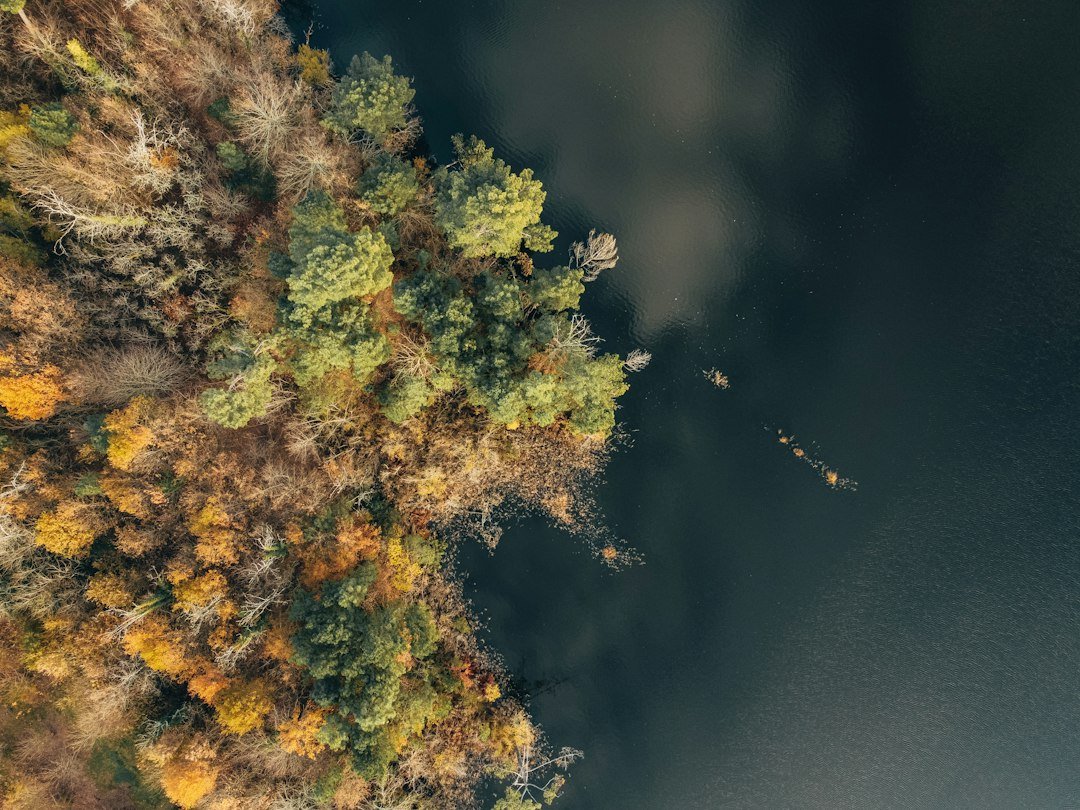
Timing shapes the whole experience. Mid-September through mid-October is the marquee window, when Door County’s maples and tamaracks catch fire and the view from the deck turns into one of the best free color shows in the Midwest — though “free” comes with crowds, so aim for a weekday morning. Spring flips the script: the park’s reputation as a migration hotspot means May delivers warblers and orioles moving through the very canopy the ramp threads. And if you like your Door County quieter in general, the shoulder season after cherry season is when the county exhales and deals honestly with visitors.
Gear-wise, this is a forgiving outing: a lightweight daypack for layers, and a wide-brim sun hat for the exposed deck — the deck’s railing is great, its shade is nonexistent. If you want depth beyond the overlook, a good Door County guidebook will keep finding you trails and towns long after the tower is behind you.
Capturing the Panorama Without the Wide-Angle Lie
No phone camera is honest about a 360-degree view — something always falls outside the frame, usually the best part. That’s why immersive cameras have quietly become the tool of choice for people who visit lookouts like this one. A 360 camera like the Insta360 One X2 or its newer sibling the Insta360 One X3 captures the entire deck view in one shot, then lets you re-frame the best direction later. Pair it with a selfie stick with a built-in tripod to make the stick disappear from the shot, and toss a protective lens cap in the bag, because the lenses on these things scratch if you look at them wrong — and the replacement cost stings more than the ticket price of this entire trip.
Turning One Tower Into a Full Door County Day
Eagle Tower earns its slot on any Door County itinerary, but it shouldn’t be the whole day. The tower pairs naturally with a slow coastal drive up the peninsula, and the park itself sits minutes from Fish Creek and Ephraim, two towns built for wandering between meals. South of the park, Cave Point’s limestone ledges deliver the county’s most dramatic shoreline, and a little farther up the coast you can time a visit to the lighthouse you have to wade to at Cana Island around the tide tables. Do the tower in the morning light, spend the afternoon on the water, finish with fish boil — that’s a day with no dead spots in it.
What stays with you, though, won’t be the checklist. It’ll be standing on a wooden deck 253 feet over Green Bay next to someone who couldn’t have gotten there a decade ago — and realizing the ramp didn’t just change the climb. It changed who the view belongs to. At Eagle Tower, the answer is: everyone.