
Mid-November is when the Christmas calendar stops being a mood board and starts being a spreadsheet. Snow weekends are still on the table. So are warm ones. Hopper’s holiday index puts the average round-trip to the Caribbean for Christmas near $881 — up about 29% from last year — and Mexico/Central America isn’t far behind at roughly $936. Domestic Christmas seats average around $452. None of those numbers are “cheap.” Some of them still make sense if you run the full trip math instead of staring at the fare alone.
My team and I have been comparing warm Christmas options the way we compare ski weeks: total cost, booking window, bag fees, and how much of the holiday you actually get to spend outside a terminal. The short version is that a Caribbean Christmas can still pencil if you treat mid-November as a decision week, not a browsing week — and that a Florida drive is the honest backup when the island fare refuses to behave. Here’s how I’d price it before the window narrows.
If you already locked domestic Christmas seats in the late-October booking window, my earlier 2026 holiday flight booking playbook covers that play. This piece is the warm-weather fork of the same season.
What $881 Actually Buys You
Hopper’s regional averages are a starting line, not a quote. Caribbean Christmas at $881 means some routes are cheaper and some are worse. San Juan often behaves more like a domestic market than a Caribbean one because so many U.S. carriers fly it. Aruba and the Bahamas can spike hard the week of Christmas. Cancún and the Riviera Maya sit in the Mexico/Central America bucket near $936 on average — close enough that I price them in the same conversation even though the spreadsheet labels them differently.
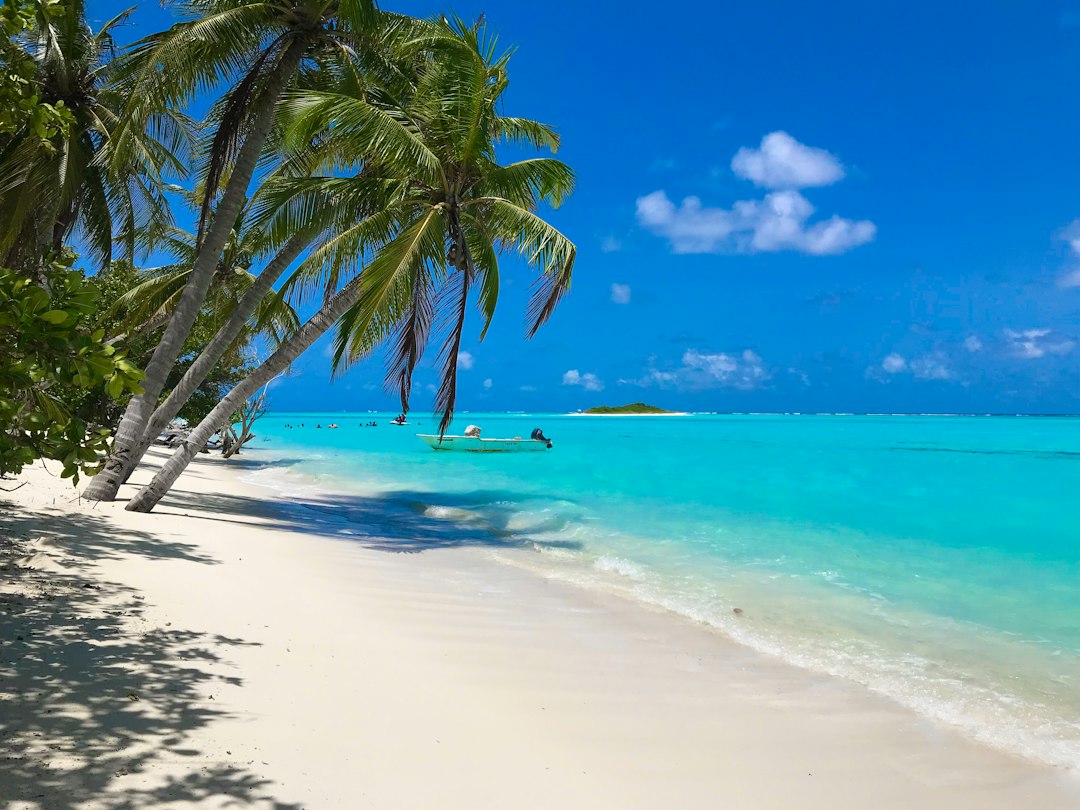
Compare that to domestic Christmas at about $452 round-trip on average. The gap looks huge until you add what a cold holiday costs once you land: rental car for mountain roads, ski passes if that’s the plan, heavier packing, and the days you lose to weather delays. A warm trip swaps those for sunscreen, a lighter bag, and a different kind of crowd. Neither is free. One just fails differently.
Europe at roughly $1,000 average for Christmas and South America north of $1,300 are usually the wrong race if your goal is beach days between December 22 and 28. Asia and Oceania look “down” year over year in Hopper’s index, but the absolute numbers are still long-haul money. For a short Christmas break, I keep the shortlist to Caribbean, Mexico, and drive-to Florida.
The Booking Window That Still Matters in Mid-November
Google Flights’ holiday analysis puts general Christmas fares at their cheapest around 56 days out, with a useful range roughly 33 to 67 days before departure. That sweet spot sits in late October through mid-November. Today is November 7. If your Christmas travel dates are December 22–28, you are still inside that band — barely on the early side for a December 25 departure, and right on top of it for a December 22 leave.

Mexico and Caribbean routes have a different center of gravity. Google’s data says those fares often bottom nearer 43 days before departure, inside a wider 24-to-69-day window. For a December 24 arrival, 43 days back lands around November 11. That is this coming week. I do not treat that as a promise the fare will drop on Tuesday. I treat it as the week I stop “watching” and start buying any fare I would be happy to keep.
KAYAK’s two one-way tickets trick still earns its keep on warm routes. Search the outbound and return separately, then compare the sum to the round-trip. On Caribbean and Florida routes I have seen the split save enough to cover a checked bag — or expose that the round-trip was already the winner. Either way, you learn something useful in five minutes.
Flexible dates beat flexible destinations once you know you want warm water. A Tuesday outbound and a Sunday return can undercut the Friday-to-Friday Christmas crush even when the destination stays fixed. If school calendars lock you to peak days, price the island against a Florida drive before you stretch for a “deal” that isn’t one.
The Island Shortlist I’d Still Price
I don’t chase every island with a palm-tree Instagram grid. I chase airports with enough U.S. nonstops that a weather delay or a fare spike on one carrier still leaves an exit.
San Juan, Puerto Rico
San Juan is my default warm Christmas when the calendar is tight. No passport for U.S. citizens, lots of nonstops, and Old San Juan gives you something to do when the beach day ends early. The fort walls at Castillo San Felipe del Morro are windy in December, so pack a light layer even when the daytime high is beach weather.

Airfare into SJU often undercuts the broader Caribbean average. Hotels near Condado or Isla Verde keep you close to the water without a long transfer. If you’re coming from the Northeast or Florida, this is usually the cleanest “warm Christmas that still feels like a short trip.”
Aruba
Aruba wins on weather reliability more than on fare. The trade winds keep Eagle Beach usable when other islands are catching a squall line. Christmas week lodging books early, and the flight from many U.S. hubs is longer than San Juan, so I only push Aruba when the total package — flight plus hotel — beats Puerto Rico by enough to justify the extra air time.
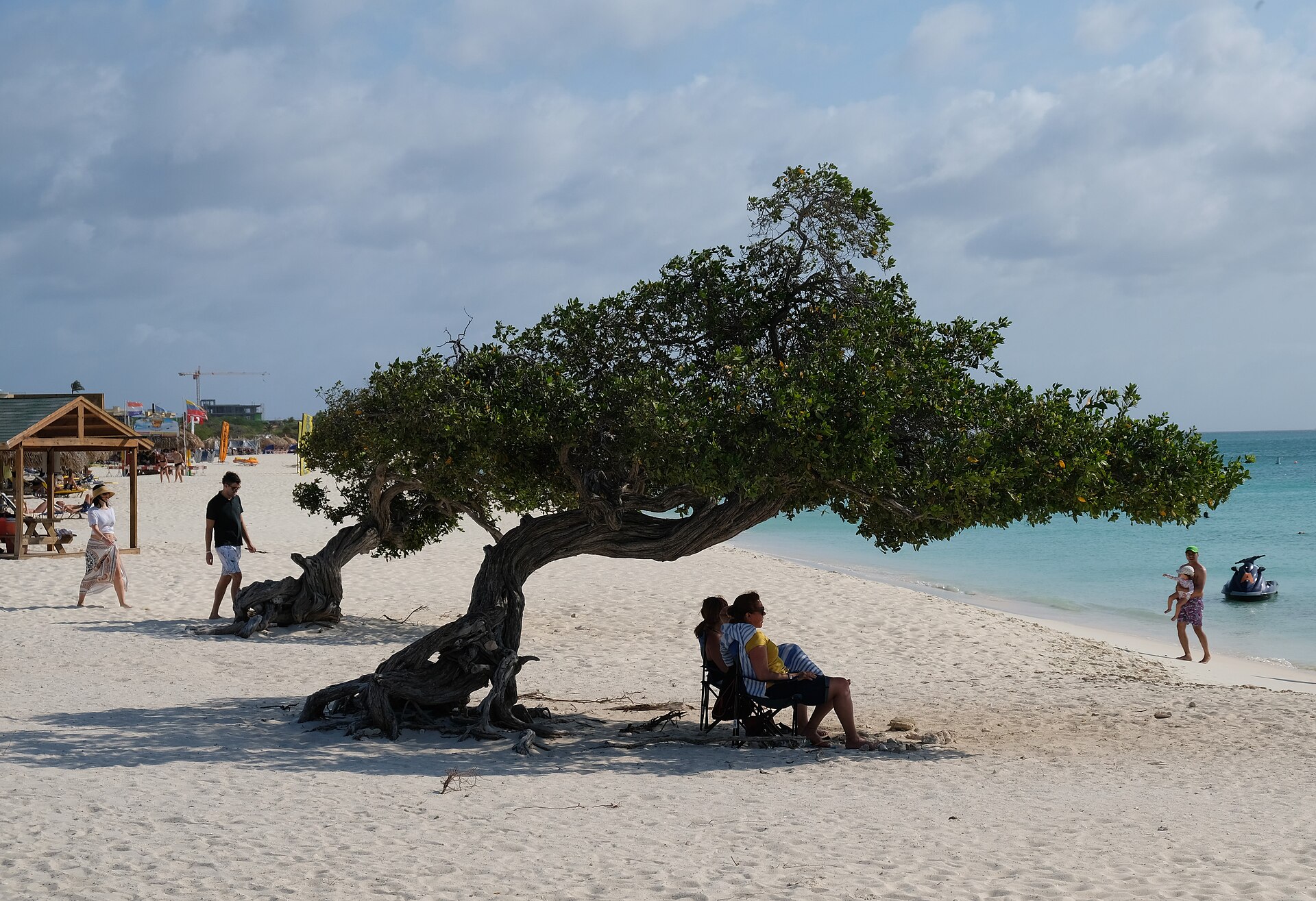
If you go, plan beach days around the wind. A Sand-Free Beach Blanket that shakes clean and a Packable Beach Tote Bag that collapses into the suitcase matter more here than a hard cooler you can’t fit in a carry-on.
Nassau and the Nearby Bahamas
Nassau is the short-hop Caribbean option for a lot of East Coast and Florida travelers. The harbor views sell themselves; the Christmas week crowds do not. I price Nassau when a nonstop exists from my home airport and the hotel stay is under four nights. Longer than that, I usually want a quieter island or a Florida drive.
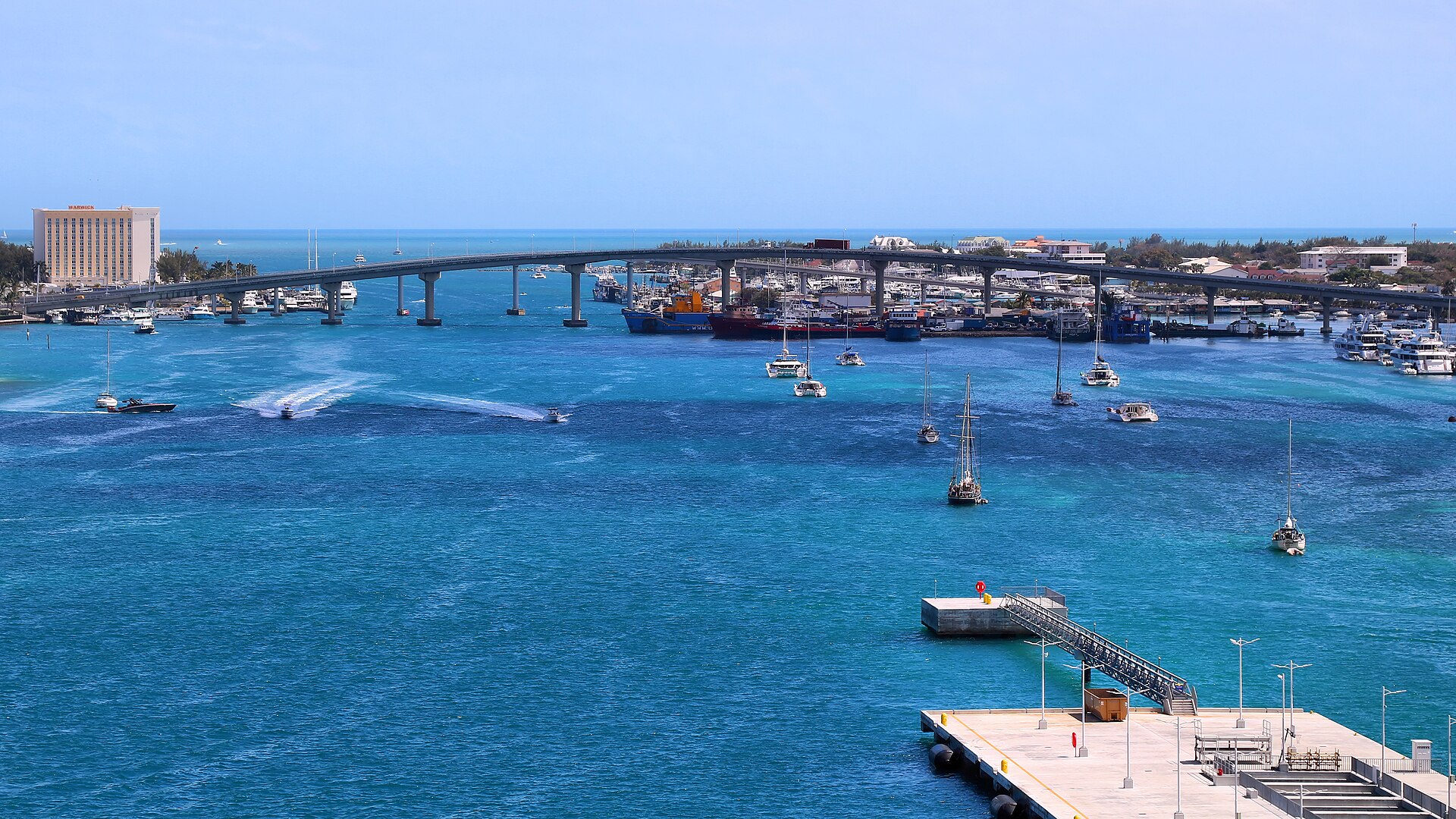
Passport required. Budget an hour of buffer on both ends for the immigration lines that show up exactly when your return connection is tight.
Cancún and the Riviera Maya
Cancún sits in Hopper’s Mexico/Central America average near $936 for Christmas, which is close enough to the Caribbean number that I run the same spreadsheet. Direct flights are plentiful. All-inclusive math can look better than à la carte Caribbean lodging once you add meals. It can also lock you into a resort rhythm that doesn’t feel like a holiday if your crew wants town time.
I only book Cancún for Christmas when the resort or rental has a real kitchen option or we’re fine eating on property. The beach is the product. Everything else is logistics.
When Driving South Beats Flying Warm
A Florida Christmas is not a consolation prize. For anyone inside a one-day drive of the Gulf or the Atlantic coast, it is often the better total deal once you stop pretending airfare is the whole bill.
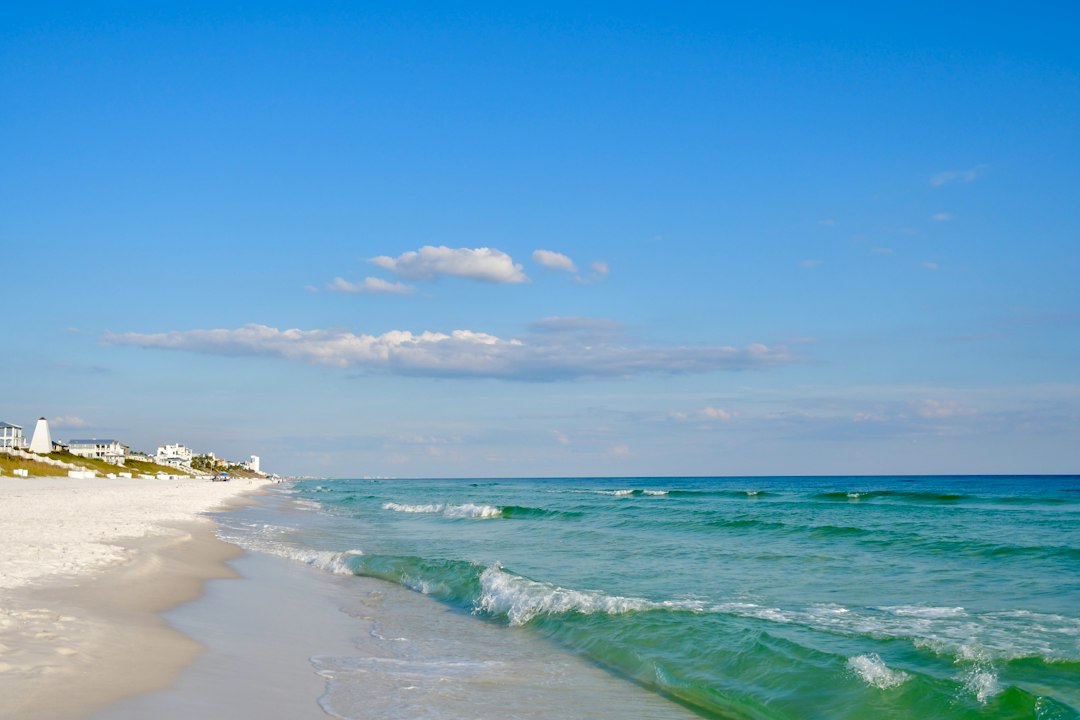
Run it like this. Take the best Caribbean or Cancún round-trip you can find for your dates. Add bags, airport parking or rideshares, and the hotel nights. Then price the same dates as a Florida drive: gas, one night each way if the drive is long, and a beach rental or hotel. If the drive total lands within a few hundred dollars of the fly-away total — or beats it — and you gain a flexible departure morning, I take the drive.
I already mapped quieter Gulf sand in the small Gulf Coast beach towns guide; those same towns still work as a Christmas skeleton if you swap summer heat for cooler evenings and earlier sunsets. Christmas week in Florida is busy. It is rarely as binary as “sold out island” versus “empty mainland.”
Drive math also protects you from the Christmas bag-fee trap. If you’re tempted to check a suitcase of gifts, gifts, and “just in case” layers, re-read the bag-fee math for the 2026 holidays before you lock an island itinerary that punishes every extra pound.
Pack for Warm Christmas, Not Summer Vacation
December beach weather is not July. Mornings can be breezy. Hotel AC can be arctic. Afternoon squalls show up with five minutes of warning. Pack like you respect all three.
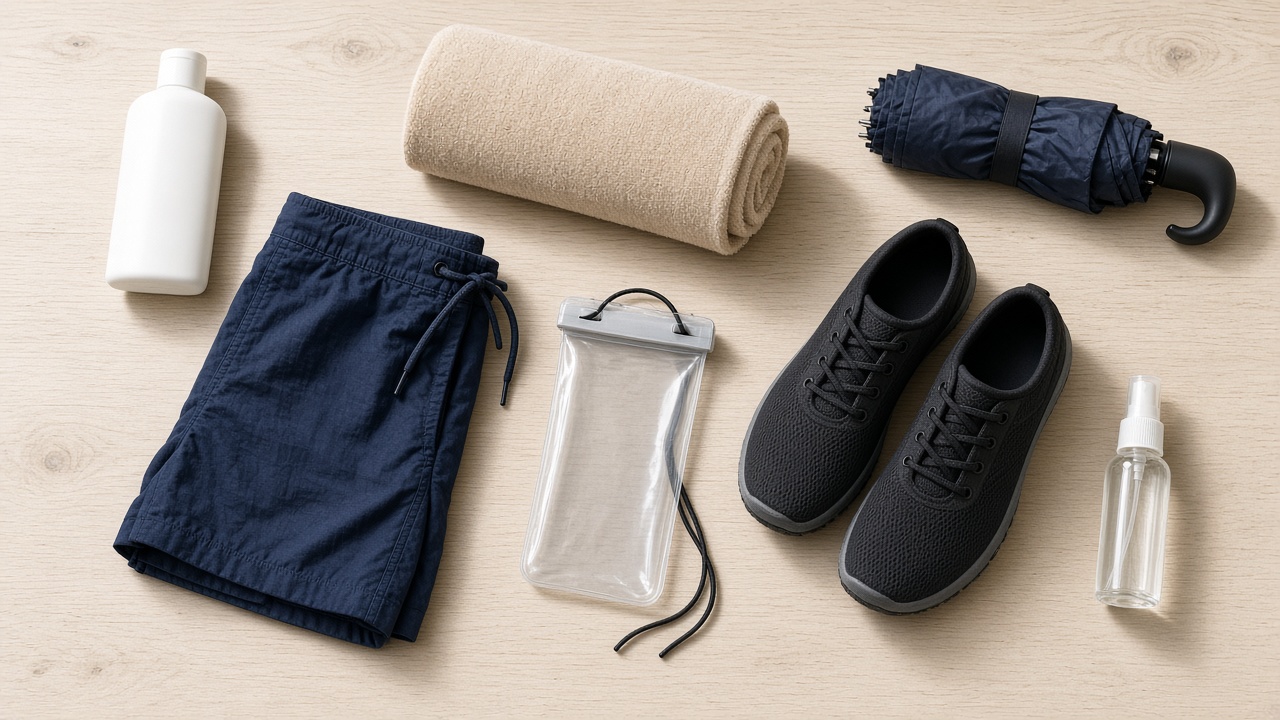
The kit I actually bring on a warm Christmas is short on purpose:
- A Reef-Safe Mineral Sunscreen SPF 50 that survives a full beach morning without a second drugstore run.
- A Quick-Dry Microfiber Travel Towel that packs smaller than hotel towels and dries before the next swim.
- A floating Waterproof Floating Phone Pouch so the boarding pass and maps survive a wet bag.
- Closed-toe Water Shoes for Beach and Reef for rocky entries and hotel pool decks that roast bare feet.
- A slim RFID-Blocking Passport Travel Wallet that keeps the passport, cards, and return confirmation in one grab.
- A wind-capable Compact Windproof Travel Umbrella and a Packable Ultralight Rain Jacket for the squall that arrives while you’re halfway back from lunch.
- A travel-size Travel-Size Insect Repellent Spray for dusk on the balcony.
- A soft Soft-Sided Beach Cooler Bag if the rental has a kitchen and you want beach snacks without a resort markup.
Clothes stay in two or three Compression Packing Cubes so the damp towel never shares a zipper with clean shirts. If you’re already flying carry-on for Thanksgiving and Christmas, the one-bag airplane-hoodie system still applies — just swap the heavy hoodie for the rain shell and leave the parkas at home.
Sun load in December surprises people who think “winter” means weak UV. Midday on white sand is still a burn if you skip reapplication. If heat itself is the worry more than the calendar, the health desk’s note on heat acclimation is a better primer than me guessing about your first beach afternoon after three months indoors.
How I’d Decide This Week
Here is the decision tree I am running for readers on my desk right now.
- Lock the dates. Christmas week or the quieter days after? Peak dates favor Florida drives and San Juan nonstops. Shoulder days open more islands.
- Price three air options and one drive. San Juan, one other Caribbean or Cancún route, and a Florida drive with gas and lodging. Write the totals on one page. Do not compare fares in isolation.
- Apply the bag-fee filter. If the warm trip only works with two checked bags of gifts, it does not work. Ship gifts or go carry-on.
- Buy inside the window. Mid-November is not early anymore for Christmas. If a fare sits inside a number you already said yes to, take it. Waiting for a mythical Tuesday drop is how $881 becomes $1,100.
- Build the soft kit before you leave. Sunscreen, dry towel, phone pouch, water shoes, passport wallet, rain shell. The beach day fails on small gear more often than on the hotel star rating.
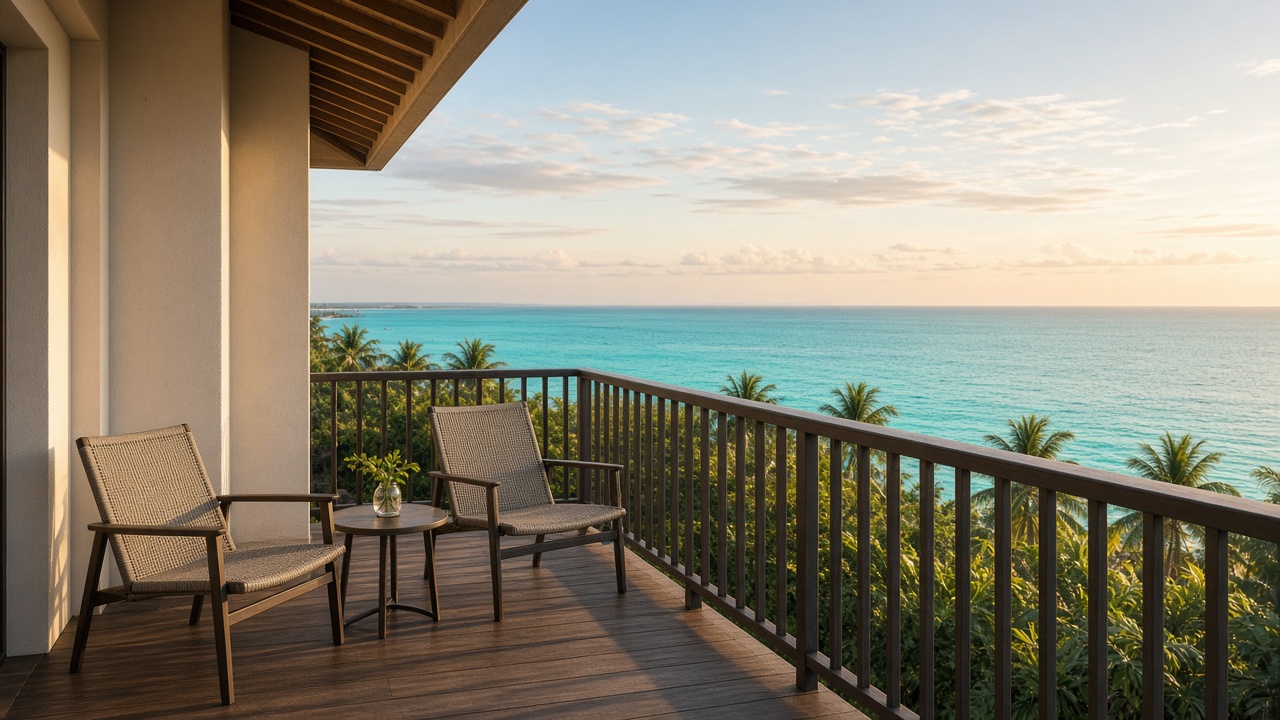
Christmas markets and ski opening weeks have already eaten plenty of November ink on this site. Warm water is the other half of the same holiday pie. The math is uglier than last year. It is not impossible. Treat $881 as a warning light and a planning number, not a reason to cancel the idea of sand in December.
Short Answer: What I’d Buy for a Warm Christmas
- Sun: Reef-Safe Mineral Sunscreen SPF 50
- Dry off: Quick-Dry Microfiber Travel Towel plus a Sand-Free Beach Blanket
- Carry: Packable Beach Tote Bag and a Soft-Sided Beach Cooler Bag
- Wet phone insurance: Waterproof Floating Phone Pouch
- Feet: Water Shoes for Beach and Reef
- Documents: RFID-Blocking Passport Travel Wallet
- Squalls: Compact Windproof Travel Umbrella and a Packable Ultralight Rain Jacket
- Dusk: Travel-Size Insect Repellent Spray
- Bag: Compression Packing Cubes
Pick the warm destination that survives the full spreadsheet. Then pack like the weather can change twice before dinner. That combination beats a cheap-looking fare that falls apart the week you need it most.