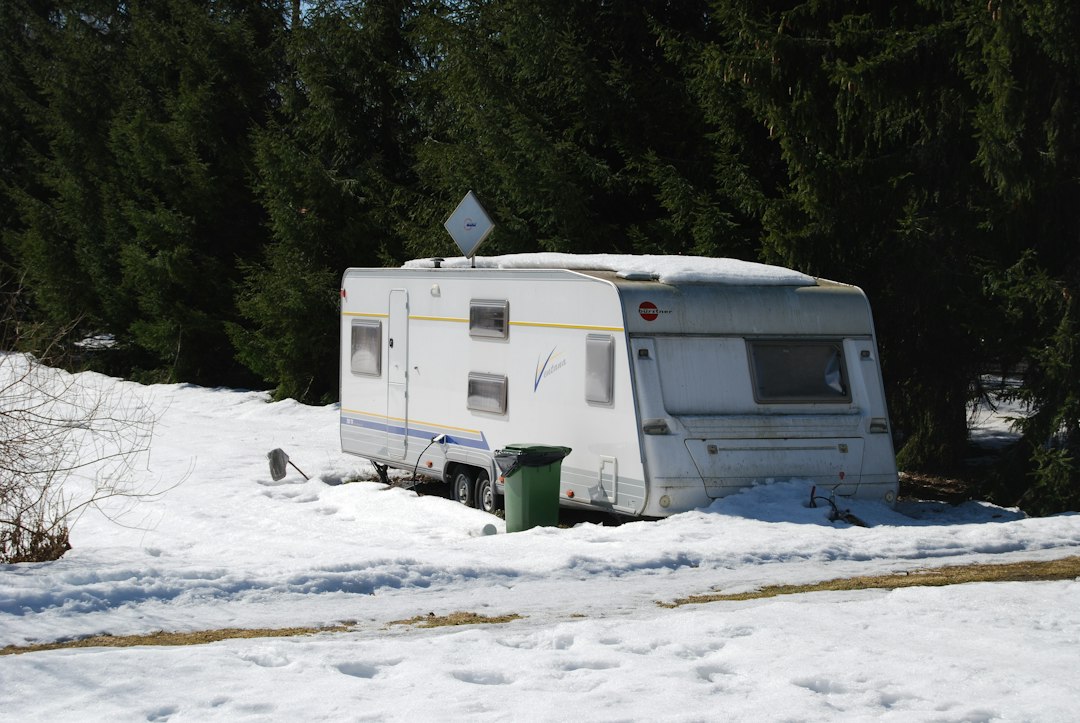
There’s a specific week in late September when I stop pretending summer is coming back. The forecast app on my phone starts showing overnight lows in the thirties for the mountain towns I like to camp in, and I pull up the average first-frost date for my zip code the way other people check football schedules. Last year I ignored it. I woke up in the Colorado high country to a water bottle that had frozen solid overnight — the same trip that pushed me into installing my diesel heater — and I swore I’d never let the season sneak up on the van again.
So this year, winterizing isn’t a someday project. It’s two weekends in early October, a shopping list I’ve refined over three winters of full-timing, and a checklist the whole crew knows by heart. My partner handles the water system because she has the patience for it, I take the battery bay and the engine, and Moose supervises from the bed platform with the air of a dog who has never once helped. Here’s the full playbook, section by section, so you can steal whatever applies to your build.
Water Sets the Deadline
Everything else on this list can slip a week without consequence. Water cannot. It’s the only thing in your van that expands when it freezes, which means every fitting, pump housing, and P-trap full of liquid is a tiny time bomb waiting for one cold night. Water finds the lowest point and the weakest joint, and ice is happy to test both.
We start by draining the fresh tank completely, then pulling the low-point drains and opening every faucet until the lines sputter dry. The water heater gets bypassed at the three-valve manifold so we’re not filling six gallons of tank with antifreeze we don’t need. Then comes the part that feels ceremonial: the pink stuff. Non-toxic RV and marine antifreeze goes into the P-traps, the toilet valve, and any low spots in the lines that can’t fully drain. We run maybe two gallons through the system until pink comes out of each tap, and I keep a case of Splash RV & Marine antifreeze on the shelf because running out mid-job means a second trip to the store and a second weekend. If you’re designing a system from scratch, my earlier walkthrough on building a campervan water system explains why we plumbed drains at the lowest points specifically to make this job a thirty-minute affair instead of an afternoon.

The Battery Bank Hates October More Than Any Other Month
Lead-acid batteries merely sulk in the cold. Lithium has a hard rule: charging below freezing permanently damages the cells, and most budget BMS units won’t tell you they’re doing it. That means my winterization checklist starts with checking whether my charge controller’s low-temp cutoff is actually enabled — I’ve seen two units arrive from the factory with the protection switched off — and ends with a plan for keeping the bank warm enough to accept charge.
Chemistry also slows down in the cold. A battery that happily delivered 200 amp-hours in July might give you 150 in December, so I recalculate my power budget for winter sun angles and shorter days while I’m at it. The cheap insurance is heat: a thermostatically controlled battery pad heater under the bank keeps the cells in the charging zone and costs almost nothing to run off shore power or a sunny solar day. And if the van is parked anywhere near freezing while I’m gone, the bank gets topped to at least eighty percent first — cold-soaked and half-empty is how batteries die quietly over a winter.
Test the Heater While It’s Still T-Shirt Weather
Diesel heaters fail in October because they sat idle since April. Fuel gels slightly in the lines, the combustion chamber collects soot, and the glow plug that has to light all of it gets lazy. The fix is a full test burn now, on a seventy-degree afternoon, when discovering a problem means ordering a part instead of shivering through the night.
I run ours for a full hour at high setting, watching the exhaust for clean flow and listening to the fuel pump tick steady. Fuel filter gets swapped on a calendar schedule whether it looks dirty or not, and I keep the tank above half all winter — a mostly-empty steel tank breathes moisture with every temperature swing, and water in your diesel is misery in January. If you haven’t taken the plunge on a heater yet, my full install write-up covers the sizing and fuel-routing decisions I’d make again without changes.
Humidity Is the Quiet Opponent
Cold air holds almost no moisture, so the moment you seal a warm, breathing, dog-owning, pasta-cooking human habitat against the cold, every cold surface inside becomes a condensation magnet. I learned this the hard way two winters ago — the condensation nightmare that forced me to rethink my whole insulation approach started as a few drops under the bed platform and ended with a mold remediation weekend I refuse to repeat.
The counterattack is data plus desiccant plus airflow. A cheap digital hygrometer lives on the bulkhead where I can see it from the bed; anything over about sixty percent relative humidity and I know to change behavior before the walls tell me. Renewable silica gel units do the passive work — the Eva-Dry E-500 two-pack lives under the bed and in the closet, recharging in an outlet every few weeks — and the roof fan stays cracked even when it’s ten degrees out, because trading a little heat for dry air is always the right deal. Cooking with the fan on high is non-negotiable. Every pot of boiling water is a gallon of vapor looking for a cold window to ruin.

Under the Hood Gets Its Own Checklist
The house side of the van gets all the romance, but the drivetrain is what actually gets me home. Coolant comes first: I test it with a $10 hydrometer — the ATD coolant tester has survived four winters in my glovebox — because coolant that protected fine last year can be diluted by a summer of top-offs with plain water. It needs to read protection to at least the coldest temp I plan to sleep through.
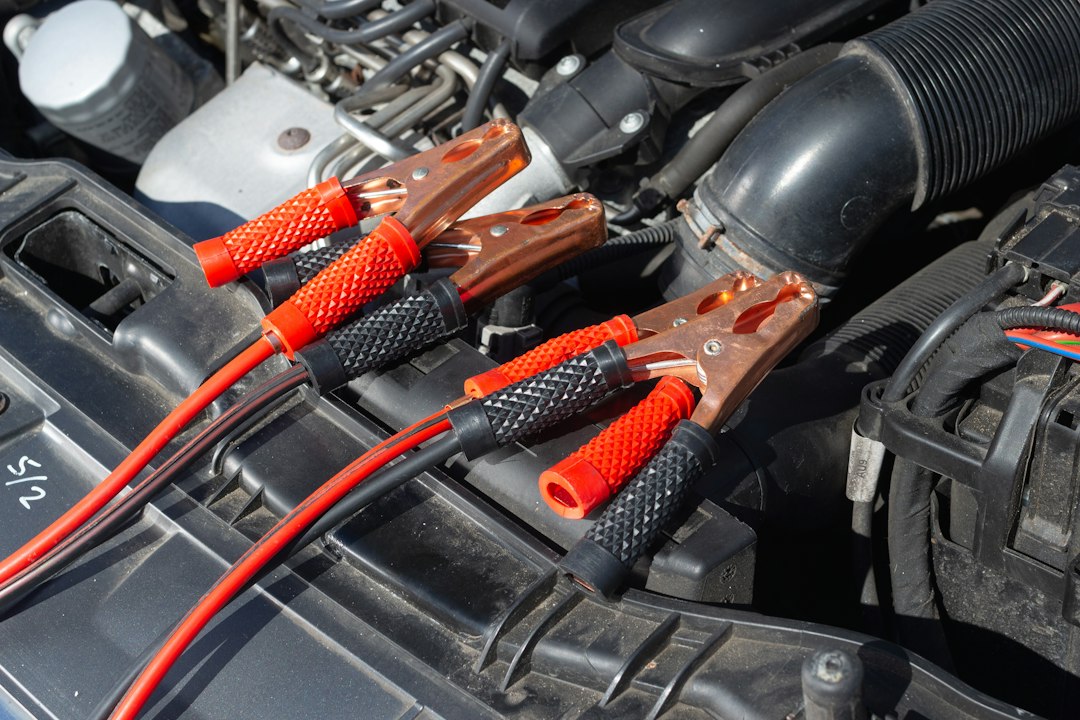
Washer fluid gets swapped for the minus-25-degree stuff, wiper blades get inspected, and belt condition gets a look while the engine’s cold. The starting battery gets its terminals cleaned and coated with dielectric grease, because corrosion plus cold cranking is a classic no-start combo. And riding under the passenger seat, wrapped in its own bag, is the piece of gear I hope to never need: a NOCO Boost GBX75 jump starter. A frozen morning in a trailhead parking lot forty minutes from cell service is exactly the scenario it exists for.
Tires Lose a Pound for Every Ten Degrees
This is the one that sneaks up on everybody. Air pressure drops roughly one PSI for every ten-degree temperature fall, so tires that were perfect at seventy degrees in September are running five to eight pounds low by the first hard frost. On a heavy van — mine rolls close to its GVWR — underinflation means squishy handling, overheated sidewalls, and worse fuel economy on the long winter runs.
My rule is simple: check pressures cold on the first of every month from October through March, and set them to the door placard, not the tire’s max rating. What changed the habit from aspiration to reality was a Tymate TM7 tire pressure monitoring system — four screw-on sensors and a dash display that shows pressure and temperature live, so a slow leak announces itself at seventy miles an hour instead of at the next fuel stop.
The Cold Kit That Lives Behind the Driver’s Seat
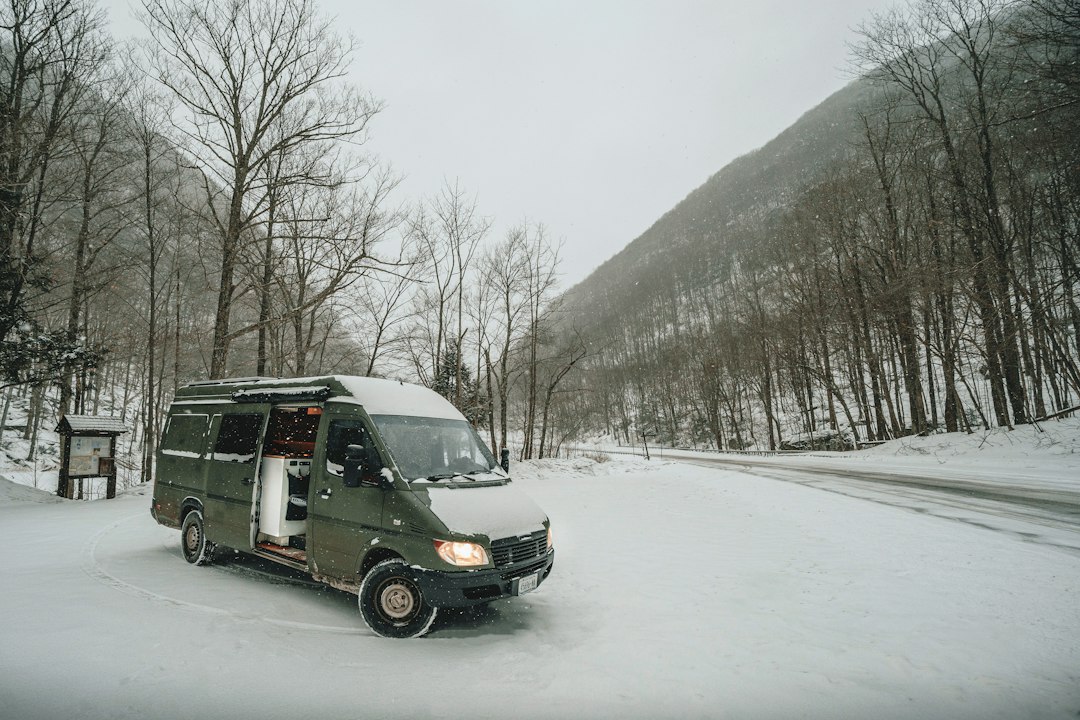
Some gear only exists for winter, and it lives in a single bin so I always know where it is. The list has been refined by experience. An extendable snow broom with a foam head — pushing snow off a high-roof van with a short scraper from a sedan is a genuinely miserable way to start a morning. A magnetic windshield snow cover, because scraping frost at 6 a.m. in the dark is for people with more patience than me. And the single most-loved item in the bin: a Westinghouse 12-volt heated blanket that turns the last hour of a cold drive into something Moose and I both fight over.

The bin gets an audit every fall. Ice scrapers crack, batteries in headlamps die, hand warmers expire. Five minutes with a checklist in September beats discovering the failures in a snowbank.
If You’re Parking the Van Instead of Driving It
Plenty of van owners park for the season, and the checklist shifts. The water system gets the full pink treatment with no half measures — every trap, every line. The house batteries get disconnected from loads and either removed somewhere above freezing or left topped up with a maintenance plan. Fuel tank goes full to minimize condensation, stabilizer goes in, and the van gets one more run to circulate it. Tires get parked on boards to keep them off frozen ground, and a cracked vent plus a couple of desiccant units keep the interior from growing anything biological over the winter.
Start it monthly if you can. If you can’t, don’t kid yourself — just disconnect everything and let it sleep.
The Whole Thing Is Two Days
Add it up and this sounds like a lot, but it never is. The water system is an hour. The battery bay and heater test are an afternoon together. The engine checklist and cold kit audit fill one more morning, coffee in hand. Two weekends, maybe, and the van goes from summer mode to something that shrugs off a twenty-degree night in a trailhead lot.

The alternative is what I did two winters ago — wing it, wake up to a frozen bottle and a 31-degree interior, and spend October improvising in panic mode. Winter doesn’t negotiate and it doesn’t send a reminder. The pink stuff is on the shelf, the checklist is on the fridge, and this year the van will be ready before the first hard frost gets a vote. If you’re gearing up too, the cold-weather sleep system I built last fall is the other half of the equation — winterizing the machinery is only worth it if the bed is ready for what comes next.