
The first time I fried a device overseas, I was twenty-three and sitting in a hostel in Florence with a hair dryer that had just made a sound like a bug zapper hitting a moth. The adapter I’d bought at an airport kiosk for twelve euros hadn’t converted the voltage — it had just changed the plug shape. There’s a critical difference between those two things, and I learned it the expensive way, standing in a bathroom that now smelled like burnt copper while my travel companion laughed so hard she couldn’t breathe.
That was fifteen years and roughly forty countries ago. Since then, I’ve been obsessive about travel power solutions. I’ve tested dozens of adapters, chargers, power strips, and cables across Europe, Asia, South America, and Africa. Some have been genuinely excellent. Others have been fire hazards with marketing budgets. So when I started planning a three-country trip this spring — Portugal, Japan, and the UK, each with different plug standards — I decided to run a proper shootout. Five universal travel adapters, three countries, one carry-on bag, and a phone that never stops dying.
Here’s what I found, and more importantly, what I now pack on every international trip.
The Problem Nobody Warns You About
There are two separate issues that get conflated under “travel adapter,” and understanding the distinction is the difference between a functioning phone and a paperweight that used to be a laptop charger.
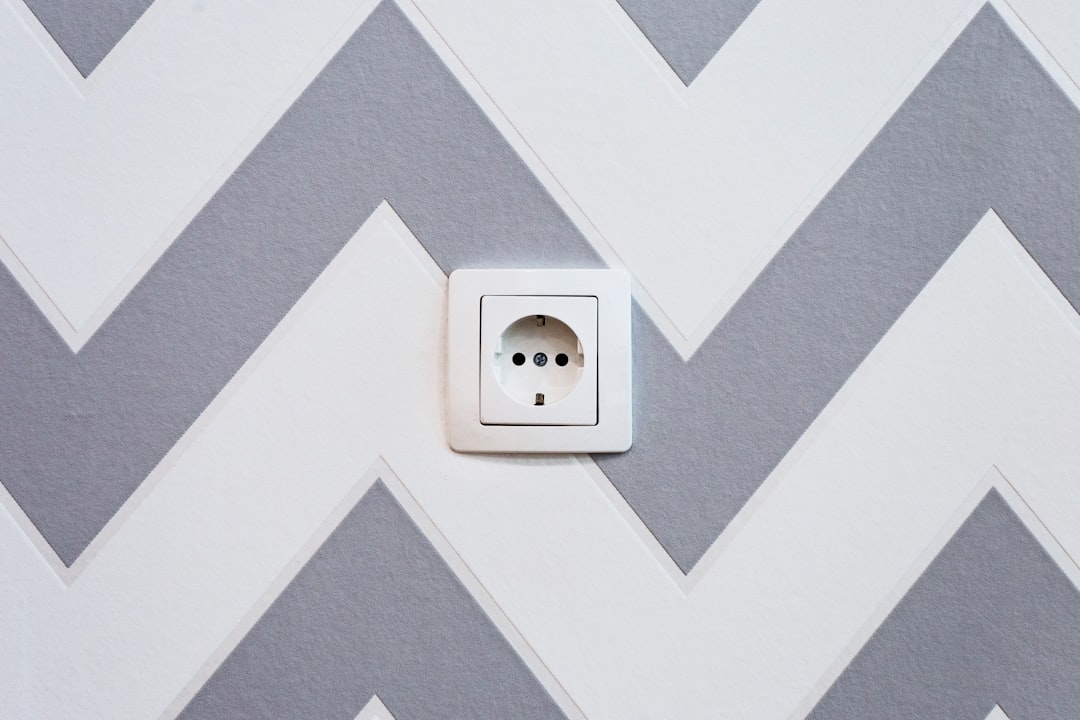
The first issue is plug shape. The physical prongs that come out of your wall charger are designed for one country’s standard. American plugs have two flat parallel blades (sometimes with a round ground pin). The UK uses three rectangular prongs in a specific triangular arrangement. Most of continental Europe uses two round pins. Japan uses two flat pins that look almost — but not quite — like American ones. An adapter that changes plug shape lets you physically connect your device to a foreign wall. That’s it. It doesn’t change the electricity flowing through it.
The second issue is voltage. American power runs at 110-120 volts. Most of the rest of the world runs at 220-240 volts. If your device is rated for 110V only and you plug it into a 240V outlet — even with the correct adapter — you’ll send twice the voltage it can handle straight into its circuitry. That’s what happened to my hair dryer in Florence. The adapter changed the plug shape. It did nothing about the 230 volts that came roaring through.
The good news? Most modern electronics — phone chargers, laptop chargers, camera batteries, power banks — are dual-voltage (110-240V) and will happily work anywhere in the world. Check the small print on your charger brick. If it says “Input: 100-240V,” you’re golden. You only need a plug adapter, not a converter. Things that generate heat (hair dryers, straighteners, kettles) are often single-voltage and require a proper voltage converter, which is a different, heavier, more expensive piece of equipment.
The Five Adapters I Tested
For this trip, I packed five popular universal travel adapters, each representing a different design philosophy and price point. My testing criteria was simple: could it reliably charge my phone, laptop, and power bank in all three countries without any drama? Did the USB ports deliver the rated speeds? Did it feel like it would survive a year of being shoved into a backpack pocket?
The Crowd Favorite: Newvanga Universal Adapter
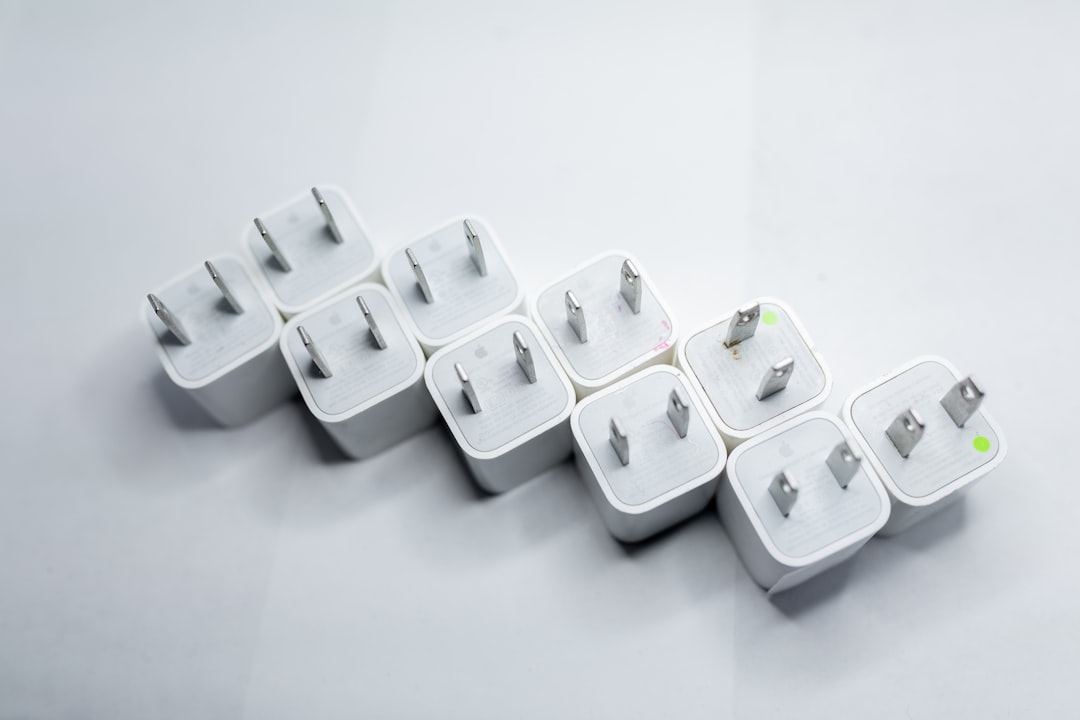
The Newvanga Universal Travel Adapter is the one you’ve probably seen recommended on every travel blog and YouTube channel, and there’s a reason for that. At under fifteen dollars, it covers over 150 countries with a simple slider mechanism that pushes out the appropriate plug prongs. It has four USB-A ports and one USB-C port, which means you can charge five devices simultaneously from a single wall outlet — genuinely useful in older European hotels where you might have exactly one available socket in the entire room.
In practice, the Newvanga worked flawlessly across all three countries. The plug mechanism feels slightly plasticky, but it seated firmly in every outlet I tried, including the notoriously grippy UK sockets. The USB-C port delivered enough power to charge my phone at a reasonable speed, though not at full fast-charging rates. At this price point, it’s almost disposable — if it breaks or gets lost, you replace it without wincing.
The Power Player: Ceptics 45W GaN Adapter
The Ceptics Universal Travel Adapter costs about three times as much as the Newvanga, and it earns every penny of the difference. It’s built around GaN (gallium nitride) technology, which means it runs cooler, charges faster, and handles more wattage than the cheap adapters. The 45W USB-C port charged my MacBook Air at near-full speed — something none of the other adapters could manage. It also has two additional USB-C ports and three USB-A ports, making it the most port-rich adapter I tested.
The trade-off is size. The Ceptics is noticeably chunkier than the Newvanga, and the plug mechanism requires you to twist a dial rather than slide a button, which takes some getting used to. But if you travel with a laptop and care about charge speeds, this is the one I’d recommend without hesitation.

The Mid-Range Workhorse: TESSAN 28W Adapter
The TESSAN Universal Travel Adapter sits squarely between the Newvanga and the Ceptics in both price and capability. It has three USB-C ports and two USB-A ports, covering 28W total output. It won’t fast-charge a laptop, but it’ll keep a phone, tablet, and power bank happy simultaneously. The build quality is better than the Newvanga — the slider has a more positive click, and the body feels like it would survive being sat on in a packed suitcase.
My one complaint: the TESSAN is a bit wide, which means it can block adjacent outlets in tight European power strips. In one Lisbon café, I had to unplug their espresso machine to use the only free socket. The barista was not amused.
The Wildcard: Acer 5-Port Adapter
I hadn’t seen the Acer Universal Travel Plug Adapter before this trip, but it caught my eye because of the brand reputation. Acer makes laptops — they should know something about power delivery. The adapter has five USB ports (three USB-C, two USB-A) and uses a color-coded plug system that’s actually quite intuitive once you figure it out.
Performance was solid across all three countries, with one caveat: the maximum output is 5.8A shared across all ports, which means fast charging takes a hit when you plug in multiple devices. On its own, it charged my phone quickly. With three devices connected, everything slowed to a crawl. Still, for the price, it’s a reasonable choice if you prioritize port count over raw speed.
The One I’d Forget
The fifth adapter — a no-name brand I picked up on Amazon for eight dollars — started making a faint buzzing sound in a Tokyo hotel room on day four. I unplugged it, noticed the plastic was slightly warm and warped near the prongs, and retired it from the test immediately. I’m not going to name it because I don’t want to single out one budget brand, but here’s the lesson: if your adapter buzzes, gets hot, or smells like warm plastic, stop using it. Electronics fires in hotel rooms are no joke. Spend the extra ten dollars on something from a reputable brand.
The Supporting Cast: What Else Lives in My Power Kit
An adapter is the star of the show, but it can’t work alone. Over the years, I’ve built a compact power kit that fits in a small pouch and handles every charging scenario I’ve encountered. These are the items that travel alongside my adapter of choice.
A Proper Cable Organizer
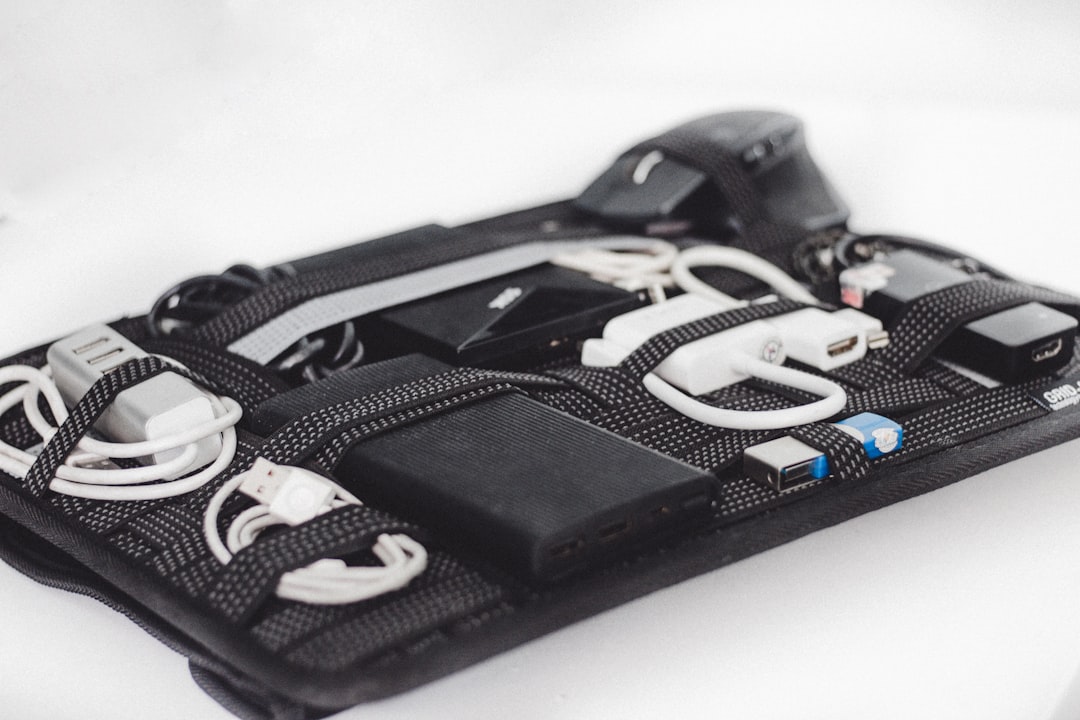
I used to just throw cables into my backpack and spend the first twenty minutes of every hotel stay untangling them. Then I bought a FYY Travel Cable Organizer Pouch for twelve dollars, and it genuinely changed my travel life. It’s a double-layered waterproof case with elastic loops and mesh pockets that holds my cables, a small power bank, spare adapters, and a USB-C cable without anything shifting. I open it, everything is exactly where I left it, and I close it. Fifteen seconds, in and out.
Cables That Won’t Quit
The cable that came with your phone is fine for home. For travel, you want something braided, reinforced, and long enough to reach from a poorly placed wall outlet to your nightstand. I carry two Anker USB-C to USB-C cables (6ft) — one for the phone, one for the laptop — and they’ve survived being yanked, stepped on, and crushed in overhead bins across four continents. At this point, I trust them more than I trust most people.
A Power Bank for the In-Between
There’s always a gap — the long layover, the train with no outlets, the hike where you’re using your phone as a camera and GPS simultaneously. I’ve written about the portable power banks I trust in the wild, but for international travel specifically, I now carry the Anker 25,000mAh Laptop Power Bank. It has three USB-C ports, delivers 100W per port (enough to fast-charge a MacBook), and has built-in retractable cables so you don’t need to carry extras. It’s flight-approved, which is the critical spec for air travel.
For something lighter and cheaper, the INIU 20,000mAh Power Bank is a stellar budget option. It won’t charge a laptop at full speed, but it’ll keep your phone alive for two full days of heavy use and costs less than a single dinner in London.
The Hotel Lifesaver: A Travel Power Strip
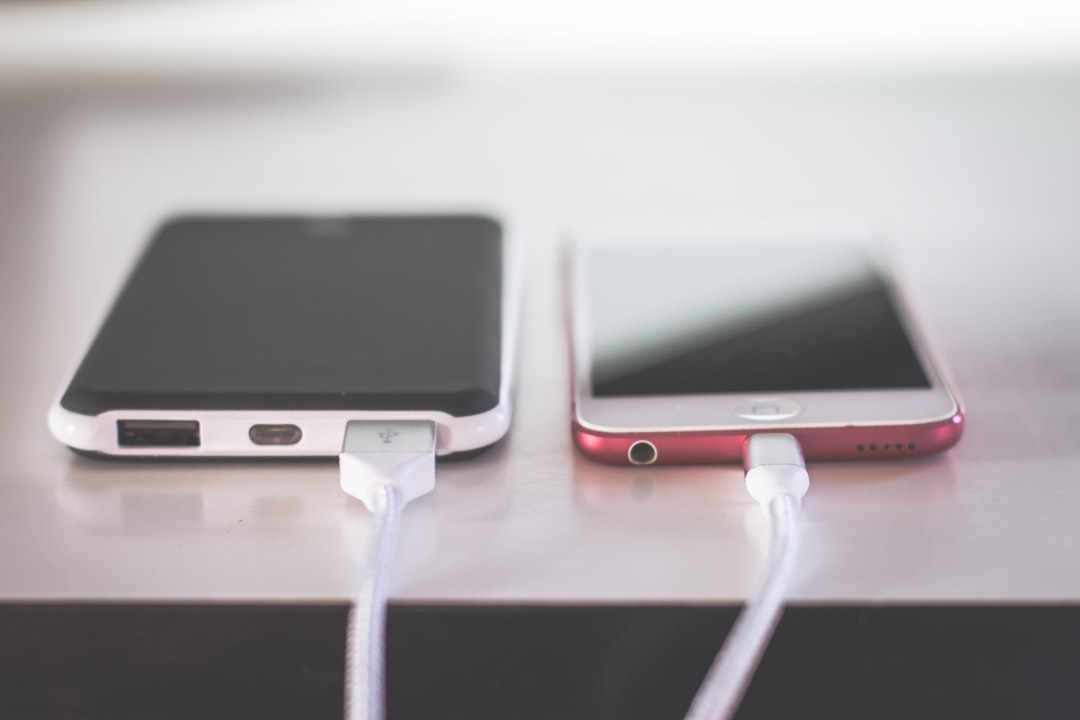
Here’s the scenario: you arrive at your hotel after twelve hours of travel. Your phone is at 8%, your laptop is at 15%, your power bank is depleted, and your e-reader needs juice for tomorrow’s train ride. The room has exactly one outlet, and it’s behind the bedside table. This is where a compact travel power strip saves the evening.
I carry the Anker 6-in-1 Travel Power Strip, which has two AC outlets, two USB-C ports, and two USB-A ports in a package about the size of a wallet. It means I can plug in the adapter, the power strip, and suddenly I have six charging ports from a single wall socket. If you’re staying in older European hotels — where outlets are genuinely scarce — this is non-negotiable.
One important note: if you’re going on a cruise, most cruise lines ban power strips with surge protection. The ORICO Cruise-Approved Travel Power Strip is specifically designed without surge protection, making it compliant with cruise line policies while still giving you four AC outlets and three USB ports.
Luggage Tracking: Because Lost Bags Don’t Charge Themselves
On my last trip to London, my checked bag spent four days in a different city than I did. The only reason I didn’t lose my mind was that I’d tucked an AirTag inside. I could see exactly where it was, when it moved, and when it finally arrived at my hotel. If you’re checking a bag with charging gear inside — and you probably are, since power banks can’t go in cargo — wait, actually, power banks MUST stay in carry-on. But chargers, cables, and adapters in a checked bag? Track them.
The Apple AirTag 4-Pack (2nd Gen) is what I use. The second-generation models have extended range for precision finding, and you can split the four-pack across your checked bag, carry-on, laptop case, and whatever else tends to wander off.
My Final Verdict (And What Actually Lives in My Bag)

After three countries and a month of testing, here’s what I actually carry on every international trip now. The Ceptics 45W adapter is my primary — the laptop fast-charging capability is worth the extra cost and bulk. The Newvanga adapter goes in as a backup, because for fifteen dollars, there’s no reason not to have a spare. My FYY cable organizer holds two Anker USB-C cables, the Anker 25,000mAh power bank, and the Anker travel power strip. Total weight: about 1.8 pounds. Total cost: under $200 for a kit that has never left me powerless.
If I had to pare it down to the absolute essentials — say, a weekend trip with a carry-on only — I’d take the Ceptics adapter, one cable, and the INIU power bank. That trio fits in a jacket pocket and handles 90% of what you’ll encounter.
The truth is, the rules I travel by now are simple: never trust a single charging solution, always carry a backup cable, and spend real money on the things that connect you to power. I learned that lesson the hard way in a smoky Florence bathroom. You don’t have to.
Quick Reference: Plug Types by Region
Before you travel, look up your destination’s plug type and voltage. Here’s a quick overview of the most common standards:
- Type A/B (110-120V): USA, Canada, Mexico, Japan
- Type C (220-240V): Most of Europe, including France, Germany, Spain, Italy, Portugal
- Type G (220-240V): UK, Ireland, Hong Kong, Singapore, Malaysia
- Type I (220-240V): Australia, New Zealand, Argentina
- Type A/C (100V): Japan (unique lower voltage — most dual-voltage devices handle this fine)

Every adapter I tested above covers all of these plug types. That’s the beauty of a universal adapter — you buy one device, and it works everywhere. Just remember: adapter changes the shape, not the voltage. Always check your device’s input rating before plugging in overseas, and when in doubt, leave the hair dryer at home.
Safe travels, and may your devices never dip below 20%.
1 thought on “Five Travel Adapters, Three Countries, One Dead Phone: My International Power Shootout”