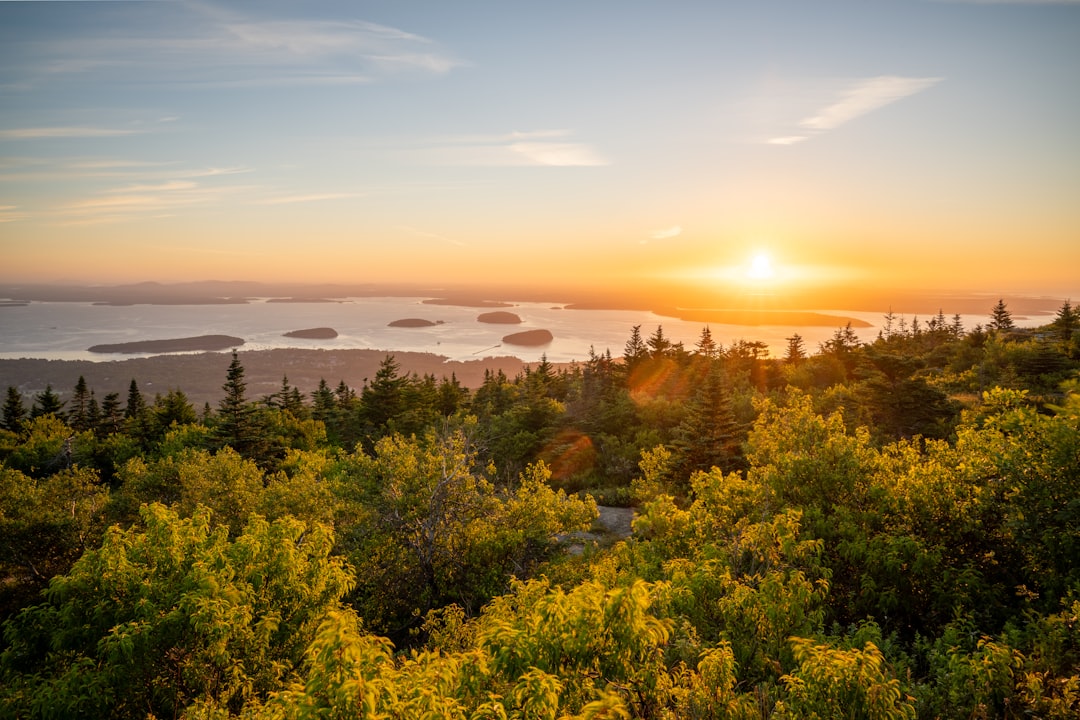
5:41 a.m. on Cadillac Mountain, and my hands are too cold to feel the coffee cup I’m gripping like a lifeline. The wind coming off the Gulf of Maine has teeth in early October, even when the valleys below are still sleeping in fifty-degree air. My photographer had scouted the Blue Hill Overlot two evenings earlier and declared it the spot, so we stood there in the dark with maybe forty strangers, all of us waiting for the same thing: first light in the continental United States, painting a coastline that was about to catch fire with maples.
That trip rewired how I think about Acadia in fall. Not because of the sunrise itself, though it earned every shiver. Because of what one of my researchers explained on the drive down — that the mountain I’d just watched dawn break from would turn color weeks before the ponds at its base. The foliage clock here doesn’t tick sideways across a map. It runs downhill.
Once you understand that, the whole trip plan changes. Here’s the field guide I wish someone had handed me before my first October on Mount Desert Island.
The Clock Runs Downhill
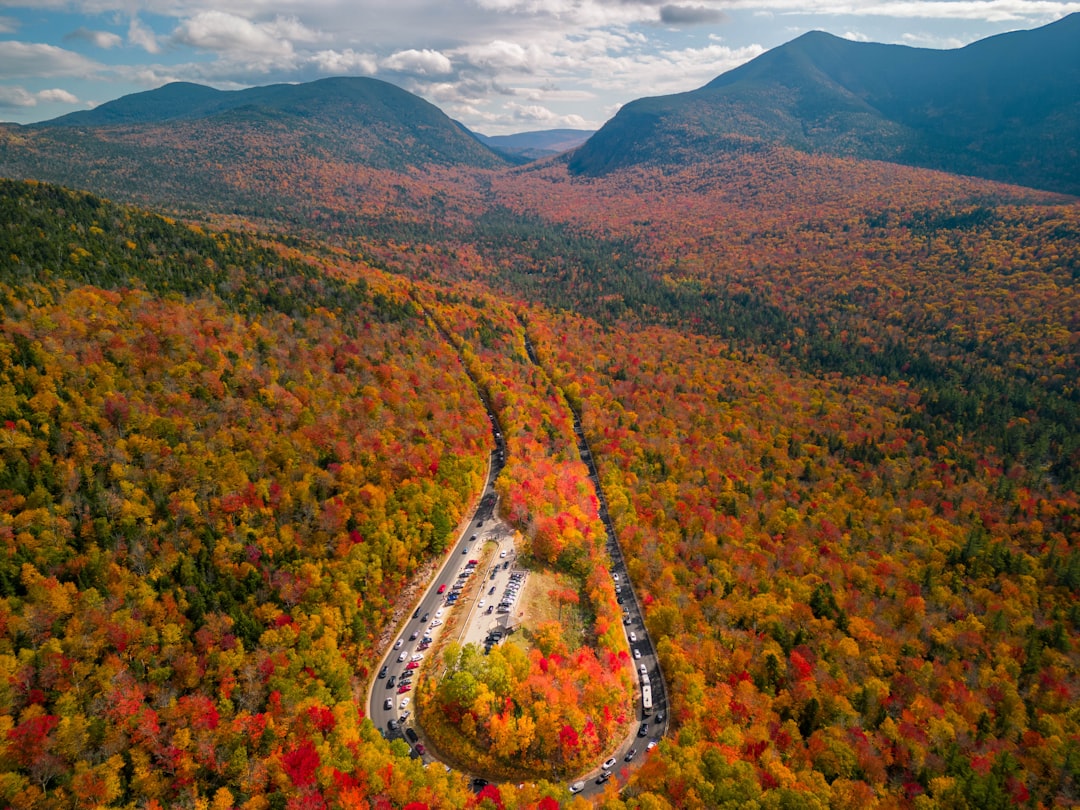
Acadia’s autumn is a two-week fireworks show that starts at the top. Cadillac Mountain, crowning out at 1,530 feet, gets cold first and turns first — its stunted maples and birches can flame up in late September while Bar Harbor is still serving lobster rolls on the dock in shirtsleeve weather. The lowlands around Jordan Pond and Eagle Lake lag behind, typically peaking in the first two weeks of October. Some years, when a warm fall stretches things out, the shore-side color holds into mid-October or gets nudged later entirely.
That elevation spread is a gift if you know how to use it. Show up the last few days of September and you can watch the summit blazing while the valleys are still green, then catch the lowlands igniting days later. My team timed one trip across nine days in early October and rode the color the whole way down the mountain, which felt a little like cheating.
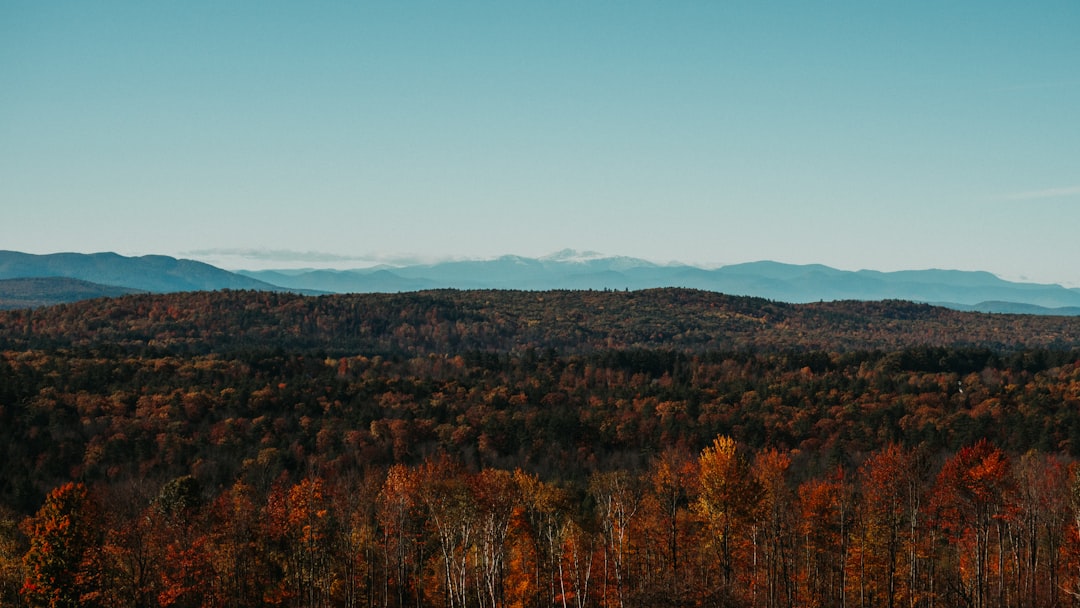
The other thing to know: this isn’t a Vermont-style wall of soft sugar maple glow. Acadia’s color plays against granite ledges, dark spruce, and slate-blue ocean, and the contrast is what makes it hit so hard. A single red maple leaning over a boulder field at Sieur de Monts does more with one tree than most forests do with a thousand. For the bigger meteorological picture, I cross-check the regional outlooks in our 2026 fall foliage forecast before locking any dates.
Winning the Cadillac Sunrise Reservation
Here’s the part nobody warns you about: you can’t just drive up Cadillac for sunrise anymore. From May 20 through October 25, 2026, the summit road requires a vehicle reservation — six bucks through Recreation.gov, on top of your park pass. It’s a reasonable system for a mountain road that would otherwise gridlock, but sunrise slots are the ones everyone wants, and they evaporate.
The trick my team now runs like a play: 70 percent of reservations release at 10 a.m. Eastern two days before your visit date. Set an alarm two mornings out, have your account logged in, and treat it like a concert onsale. The remaining tickets drop 90 days ahead, so if you’re reading this in mid-September with October dates in mind, check the 90-day window first — you might already be too late for the prime slots, which makes the two-day release your best friend.
And if you strike out entirely? The loophole is beautiful. No reservation is needed to hike or bike up Cadillac. We once left the trailhead at 4:15 a.m. under headlamps — a rechargeable headlamp with a red-light mode is the difference between a pleasant climb and tripping over granite roots for two hours — and reached the summit road just as the first reservation-holders rolled past us smugly in their heated seats. Joke’s on them; we were already warm. My editor swears by rechargeable hand warmers that double as power banks, though I run hot enough that a thermos does the job for me.
Park Loop Road Before the Parade Wakes Up
Park Loop Road is the park’s greatest hit and its biggest traffic problem, and both facts trace to the same 27 miles of pavement. Our rule after three trips: be through the Sand Beach lot by 8 a.m. or don’t bother until after 4 p.m. In October the mornings are cold enough that the parade of rental cars mostly sleeps in — go early and you’ll share Thunder Hole with a dozen people instead of three hundred.
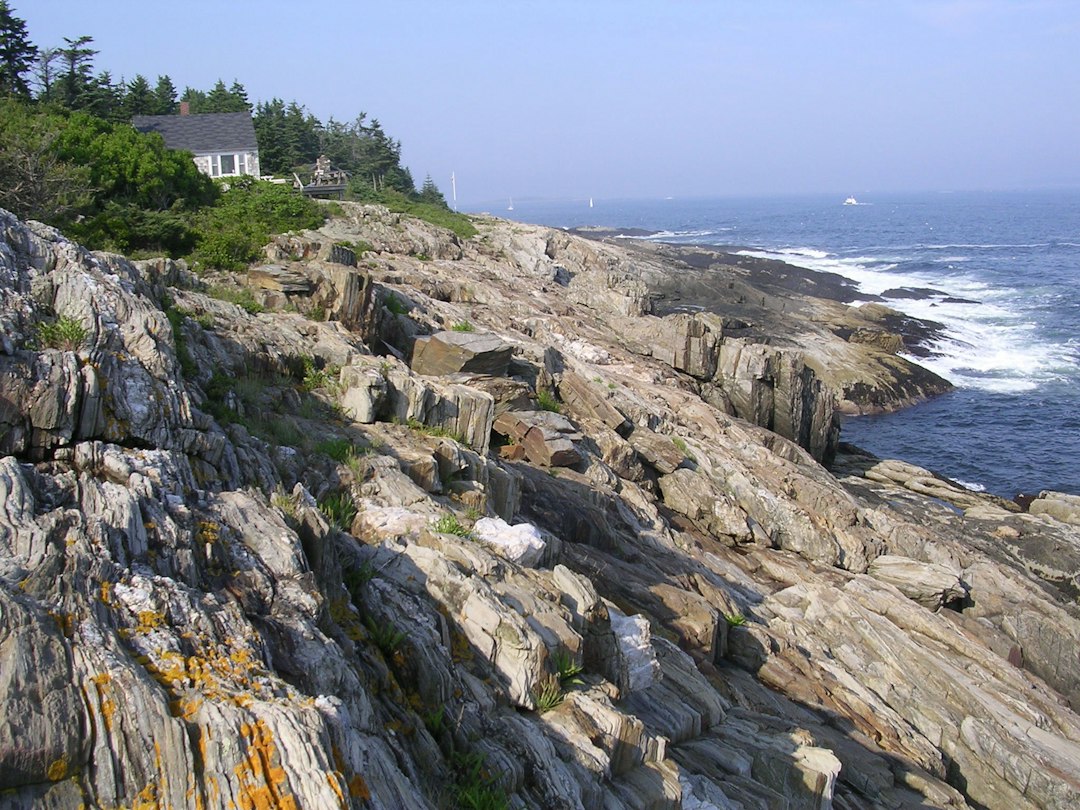
Timing matters at Thunder Hole specifically. The famous boom happens when waves compress into the inlet slot, and it’s loudest in the hours around high tide rolling in — check the tide chart the night before and work backward from it. Then continue down to Otter Cliff, which in my opinion is the single best foliage-and-ocean composition on the island: 110 feet of pink granite dropping into the Atlantic, maples burning orange above the wave line.
If you’d rather not drive the loop at all, the free Island Explorer shuttle runs through mid-October and opens up a move the car-bound can’t make: one-way hikes. My researcher dropped us at one stop and picked us up three trail junctions later, so we walked the coastline south instead of retracing steps. For the drivers, one small upgrade changed our foliage trips forever — a solid dash-mounted phone holder keeps the navigation visible on the loop’s narrow, shoulder-less stretches where you absolutely should not be hunting for your phone.
Forty-Five Miles of Carriage Roads and a Popover Debt
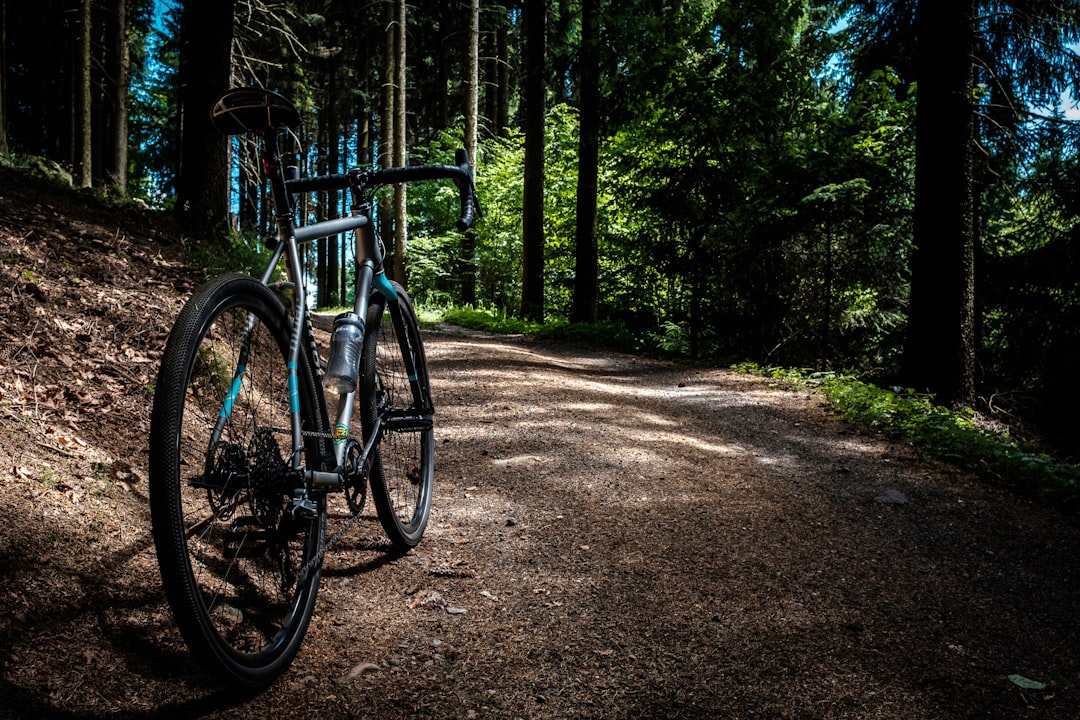
The quiet heart of Acadia, at least for me, is the carriage road network — 45 miles of hand-built crushed-stone lanes that John D. Rockefeller Jr. threaded through the island’s forests a century ago. Cars are banned. In October the stone surfaces crunch under tires of a different kind, and biking them under a canopy of turned maples is the closest thing New England has to a forest cathedral with a bike lane.
Rent bikes in Bar Harbor or bring your own; the Around-Mountain and Eagle Lake loops make a half-day of it with almost no climbing that a reasonably fit person can’t laugh at. Finish at Jordan Pond, the glacial lake sitting pretty under the twin North and South Bubble humps. The lawns here are where the lowland color concentrates in that early-to-mid-October window, all reflected in water so still it looks retouched.
Then pay your respects at Jordan Pond House, serving tea and popovers on this lawn since the 1890s. The popover is non-negotiable — order two, trust me — and eat them on the terrace looking north at the Bubbles while the tea does its work on your cold hands. I’ve watched people skip it to save time and I have never once respected that decision. For the ride itself I carry a lightweight 20-liter daypack that swallows a layer shed mid-loop and a water bottle without turning into a back-sweat situation.
The Sky Over Cadillac Belongs to Hawks
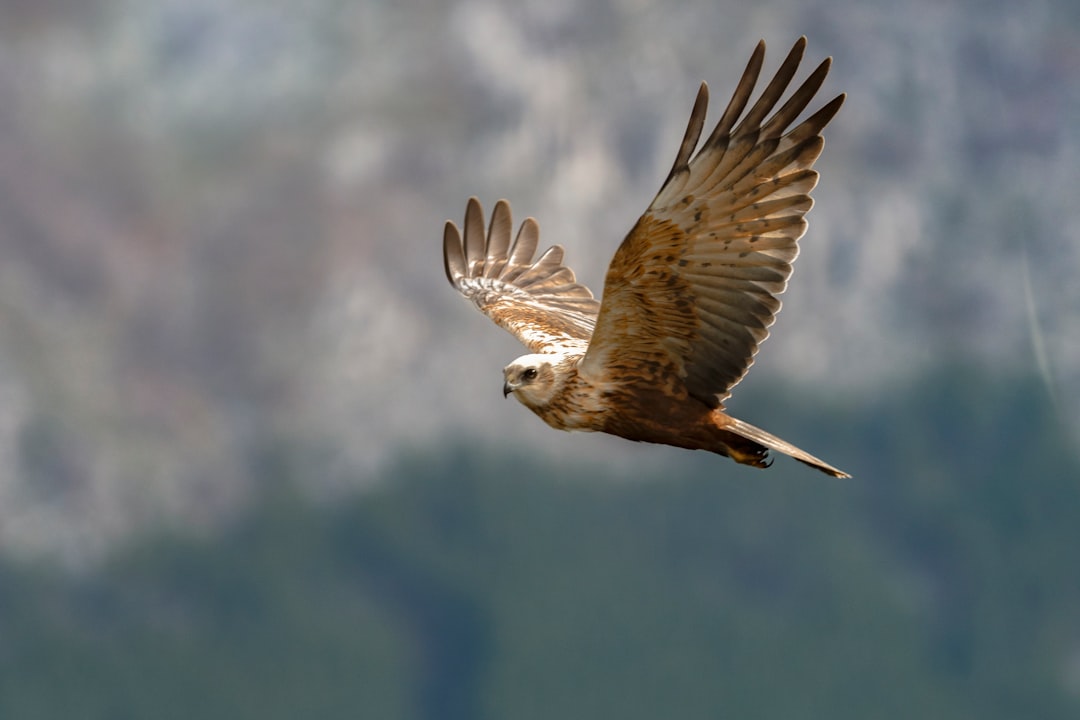
Here’s the show under the show. Every fall, thousands of migrating raptors ride the southwest winds up Cadillac’s slopes and kettle over the summit in slow, rising spirals before streaming south along the coast. Mid-September through mid-October is the window, and broad-winged hawks move through in the biggest visible numbers, sometimes in groups that look like smoke until your brain resolves the individual birds.
The hawk watch happens right up top near the summit lot, and on a good northwest-wind day in late September you don’t need luck — you need optics. I pack compact 12×25 binoculars for exactly this kind of watching; they weigh almost nothing in a jacket pocket and the 12x magnification is enough to pick eagles out of a kettle. My colleague who takes this far more seriously than I do wrote a whole piece on the compact binoculars that own September’s wildlife show — worth a read before you buy anything. Bring the binoculars even if the hawks aren’t flying; October is also when harbor seals haul out on the exposed ledges below Otter Cliff.
Take the Quiet Side — and the Schoodic Gambit
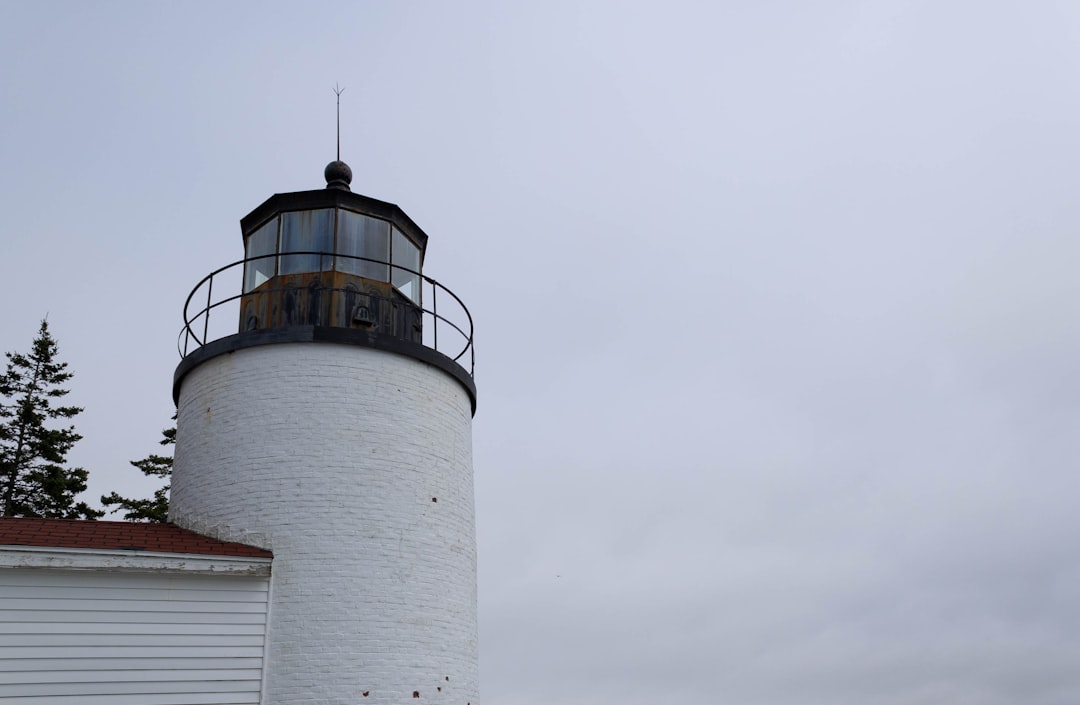
Mount Desert Island has a west side that most leaf-peepers never see, locals call it the Quiet Side, and it earns the name even in peak week. Route 102A loops past Working Harbor fishing villages and ends at Bass Harbor Head, where a stubby 1858 lighthouse sits on granite at the base of a cliff you view from a wooden stairway. Sunset is the classic shot here — the light comes in over the water and lights the tower’s white face gold — but October’s early sunsets mean you can catch it and still be back in Bar Harbor for a 7:30 dinner.
The bolder move is Schoodic Peninsula, the park’s only mainland section, about an hour’s drive around Frenchman Bay. Same pink granite, same spruce, same surf — roughly a tenth of the crowd, and no reservation required anywhere. My photographer calls Schoodic “Acadia for people who read,” which is snobbery I’ve chosen to forgive because the loop drive there delivered one of the five best color-over-rock compositions of our whole trip. If Cadillac’s summit sunrise was the headliner, Schoodic at golden hour was the set nobody expected.
What’s in My Pack at 6 a.m. in October
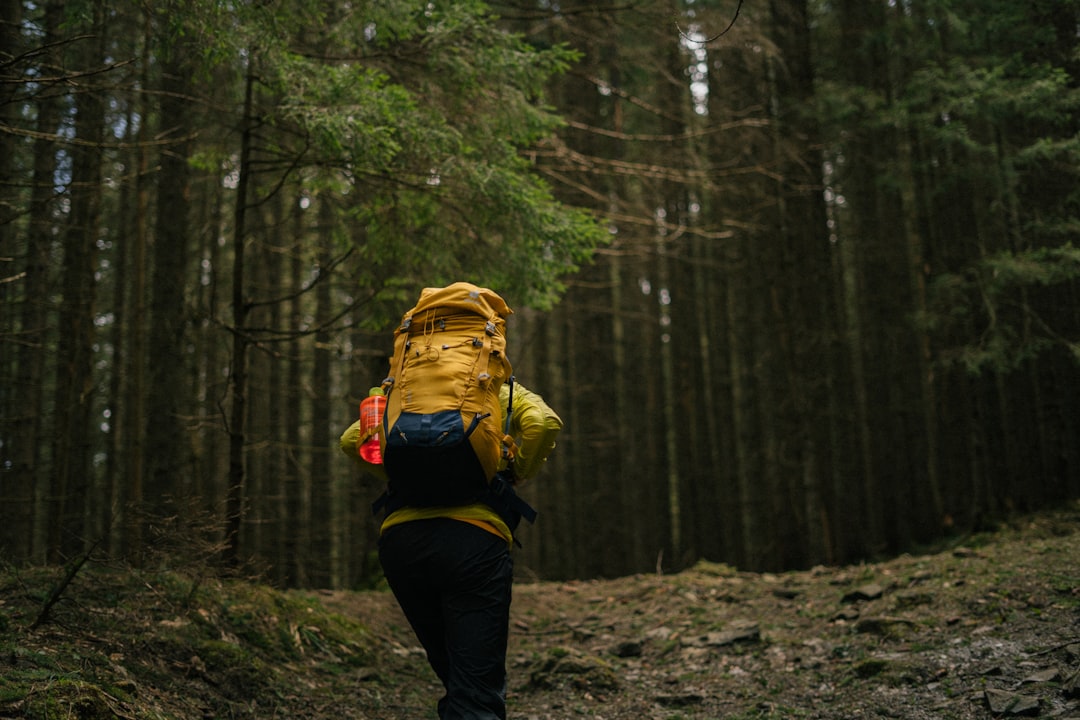
October on this coast is a two-season day. Dawn on Cadillac can sit in the low forties with a wind that makes it feel colder; by two in the afternoon, tucked out of the wind on a granite ledge, you can be in shirt sleeves. The locals have a saying about dressing for it that’s not printable, but the gear answer is a layering system:
- Base layer: a merino wool base layer set — my October uniform, warm when the wind finds you, not swampy when the climb does.
- Mid and shell: a fleece or light puffy, then a packable rain shell that stuffs into its own pocket. Coastal weather turns on a text message; the shell is for the reply.
- Socks: cushioned merino hiking socks, because wet granite trails and cotton socks deserve each other.
- Warmth insurance: a 16-ounce vacuum mug that still pours hot at 9 a.m. after filling at 5. Non-negotiable on the sunrise runs.
That kit plus the binoculars fits in the daypack with room for the popover you’re going to smuggle out of Jordan Pond House. Ask me how I know.
Where to Sleep When Bar Harbor Fills Up
Columbus Day weekend is Acadia’s perfect storm — peak foliage plus a three-day weekend — and rooms inside Bar Harbor go absurdly fast. If you’re reading this in mid-September, that weekend is likely already brutal, but the surrounding weekdays are still very winnable. Our fallback plays, in order: Trenton and Ellsworth on the mainland side (twenty to thirty minutes out, dramatically cheaper), then the Quiet Side around Southwest Harbor, which keeps you close to the Bass Harbor light and the ferry-side villages.
The other honest option is to split the trip: pair Acadia with a night or two down the coast. We tacked on Ogunquit one year and the southern leg of the drive home turned into its own foliage tour. For planning beyond this article, Moon Coastal Maine — which includes a full Acadia chapter — is the guidebook that rides in my door pocket, and our summer guide to Acadia covers the trail intel and logistics that don’t change with the season.
The Clock Is Already Running
That’s the whole system: watch the summit first, let the color chase you downhill, book Cadillac’s sunrise slot like it’s a concert, do the loop road before the parade wakes, bike the carriage roads, look up for hawks, and take the Quiet Side when the crowds get loud. None of it is complicated, but almost nobody does it, because almost everybody shows up on the same two weekends and drives the same eleven miles.
The mountain turns first. If you time it right, you’ll be standing on that mountain when it does, hot coffee in hand, watching the whole thing start.