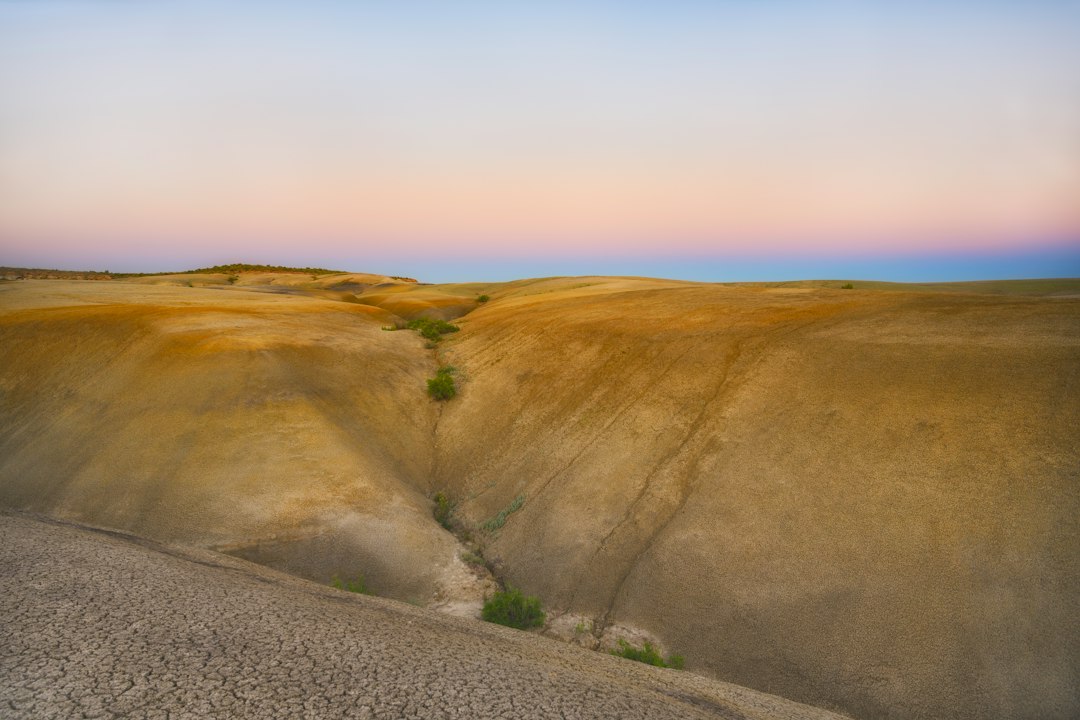
The bugle came out of the dark at twenty to seven, while I stood in a North Unit turnout with coffee going cold in both hands. It doesn’t sound like an animal, that call. It sounds like a whistle, a scream, and a cello arguing over the same bar of music, rolling up the Little Missouri valley and echoing off the buttes until I couldn’t say where it began. One of my researchers, who had driven out from Bismarck with a folder of rut-timing notes, just nodded. Bull elk, she said. Give it a week or two and they go quiet for the year, which meant we had landed, without entirely meaning to, inside the last good window.
That single sound is the whole argument for this park in October. Theodore Roosevelt National Park sits just off Interstate 94 in western North Dakota, and most cross-country traffic streams past it at 80 miles an hour. The ones who stop in mid-October get the elk rut’s final act, cottonwoods at full gold along the river bottoms, bison wearing frost on their humps at dawn, and overlooks that belong to whoever shows up. No shuttles, no timed-entry permits, no circling for a sunrise parking spot — a quiet luxury after a summer of reservation gymnastics at Glacier.
Why These Badlands Feel Different
The word badlands undersells what registers first here, because the opening impression isn’t desolation — it’s color. Buttes banded in pink, tan, gray, and near-black lignite stack up like a layer cake somebody cut with a spoon, and the Little Missouri River keeps carving new servings every flood season. My photographer, who has shot desert parks from Big Bend to Death Valley, kept calling this one “vertical” — the erosion here moves in walls and spires rather than dunes, so the light changes the terrain every hour you watch it.
The other difference is sound, or the absence of it. On an October afternoon at River Bend Overlook in the North Unit, the silence has a texture: wind in the cured grass, a nuthatch somewhere below the rim, nothing else. There is no crowd noise here to filter out. The park sees a fraction of the traffic of the marquee western parks, and mid-October weekdays can feel like the whole drainage was reserved for you.
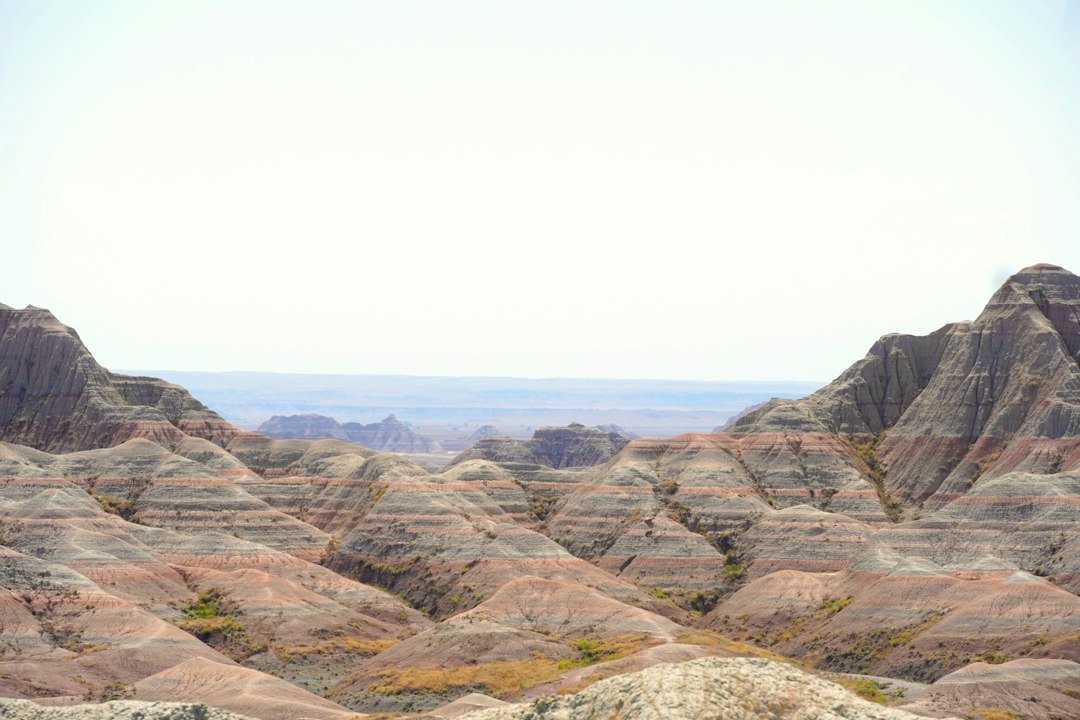
The scale rewards slowness. This is a park where the correct speed is the Scenic Loop’s leisurely 36 miles, windows down, stopping whenever a bison decides the road belongs to him — because in October, it does.
The Man the Badlands Made
You cannot separate this park from its name, and the story is better than any guidebook makes it. Theodore Roosevelt first arrived in September 1883, a 24-year-old New York politician who came to shoot a bison and walked away the owner of a cattle ranch, having plunked down $14,000 for a stake in the Maltese Cross operation south of what is now Medora. He came back East a rising man. Then, on Valentine’s Day 1884, his mother and his wife died in the same house, hours apart.
What he did next is the reason the park exists. Roosevelt went west to grieve, built the Elkhorn Ranch 35 miles upriver, and spent years living half-wild in these breaks — ranching, hunting, writing three books, and restructuring his body and his politics around hard land. He later admitted he might never have reached the White House without his North Dakota years, and the ledger backs him up: as president he signed off on five national parks, 150 national forests, and roughly 230 million acres of public land. The conservation presidency was drafted in this river valley.
You can stand in the restored Maltese Cross Cabin behind the South Unit visitor center and feel the whole arc — a rented wilderness retreat that ended up reorganizing the American map. My researcher finished the museum loop and bought a proper Roosevelt biography in the bookstore before I could object; I’ve since stolen it back twice. If you want the full origin story before your trip, Edmund Morris’s The Rise of Theodore Roosevelt is the one that reads like a novel.
Three Units, Two Time Zones, One Slow Week
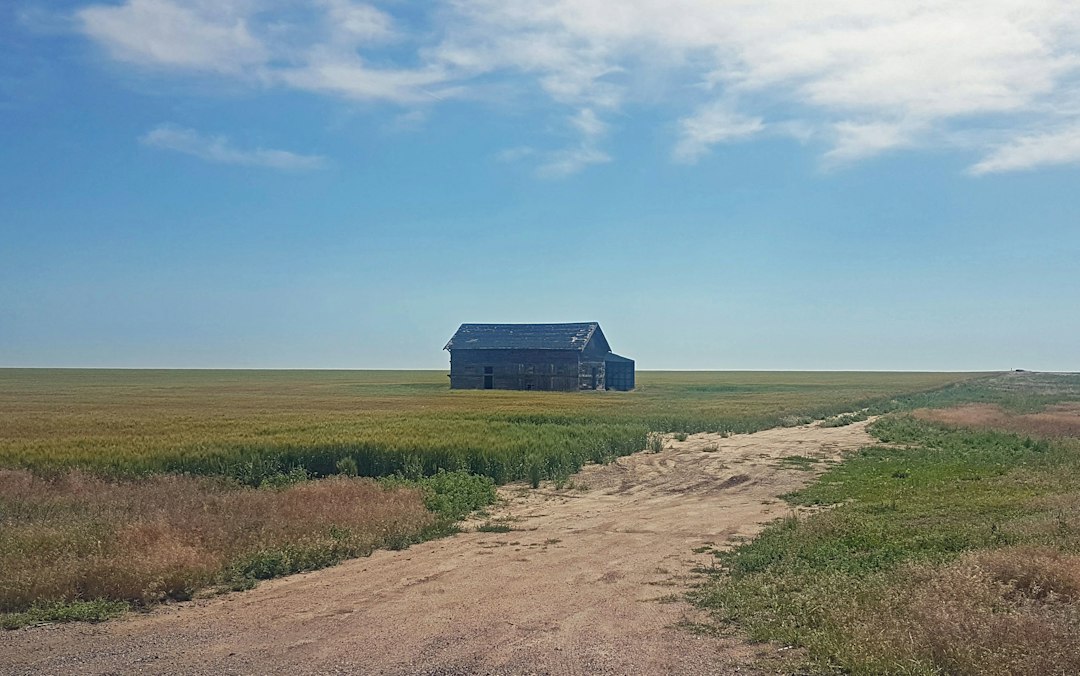
Here’s the logistical wrinkle nobody warns you about: the park is three units strung along roughly 70 miles of the Little Missouri, and they don’t even share a clock. The South Unit, anchored by Medora, runs on Mountain time. The North Unit, the quietest and in my opinion the most dramatic, runs on Central. The Elkhorn Ranch unit sits between them, roadless and unstaffed, reachable by dirt roads and a river ford that only behaves in dry weather. Set your watch wrong and you’ll miss a sunset by an hour, which our driver learned the embarrassing way.
The South Unit is the crowd-pleaser: the 36-mile Scenic Loop Drive, Painted Canyon’s overlooks just off the interstate, prairie dog towns chirping beside the road, and the best odds for the park’s wild horses. The North Unit is the connoisseur’s pick — the River Bend Overlook frame of the river breaking around a butte, the Caprock Coulee Trail threading canyon rims, and in October, the elk. A sensible week splits three or four nights south and two or three north, with at least one afternoon budgeted for doing absolutely nothing but watching the light move.
Two practical notes from this trip. First, 2026 brought prescribed burn projects in both major units, and trail closures shuffled our plans twice — check the NPS alerts page the morning you drive in, not the week before. Second, a compact daypack earns its slot on every trailhead here; water is scarce away from the river, and the dry air will lie to you about how much you’re sweating. A good national parks guidebook with unit maps is worth packing for the cell-dead stretches between units.
The October Wildlife Script
Mid-October is the last reel of the rut. The bulls that screamed all night in September are battered, run-down, and still stubborn, and the bugling thins out over a couple of weeks — the North Unit is the place to catch the finale, particularly at first light when sound carries up the valleys. Yellowstone in September taught me what a park sounds like during full rut; this is the quieter coda, and the intimacy makes up for the smaller cast.
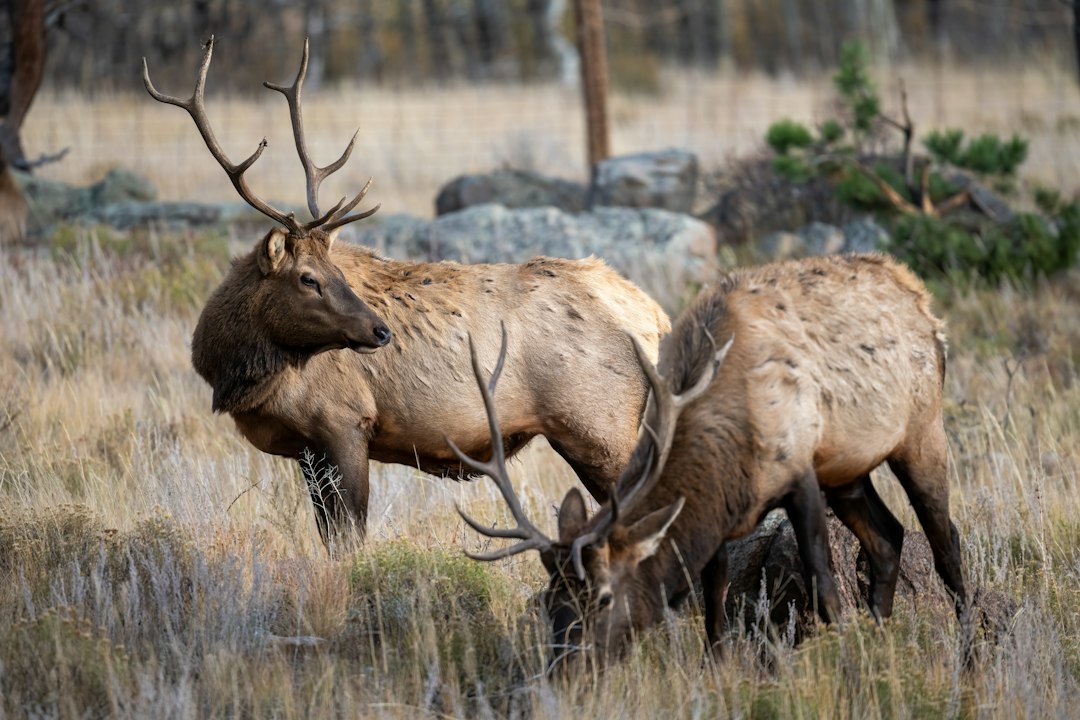
The bison don’t follow a schedule, which is precisely the problem. Herds drift across both units’ roads with total indifference to your itinerary, and a October traffic jam here means engines off, cameras up, and a respectful 25 yards between you and a ton of bad mood. The same distance rule applies to elk — rutting bulls are the most dangerous animals in the park precisely because they’re distracted.
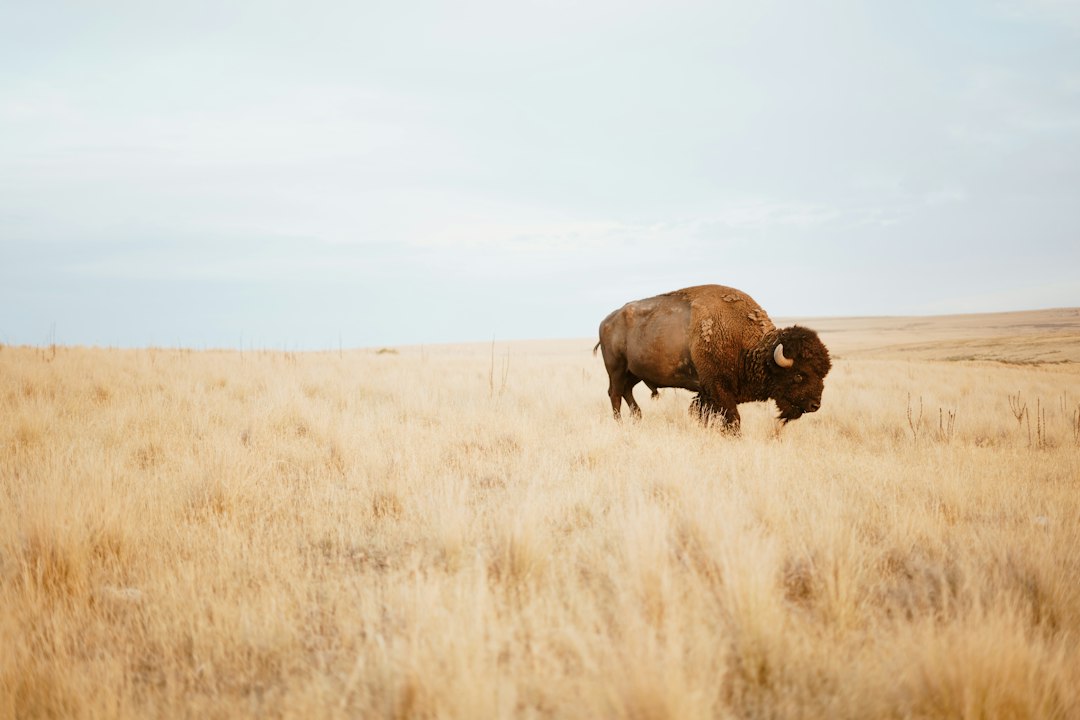
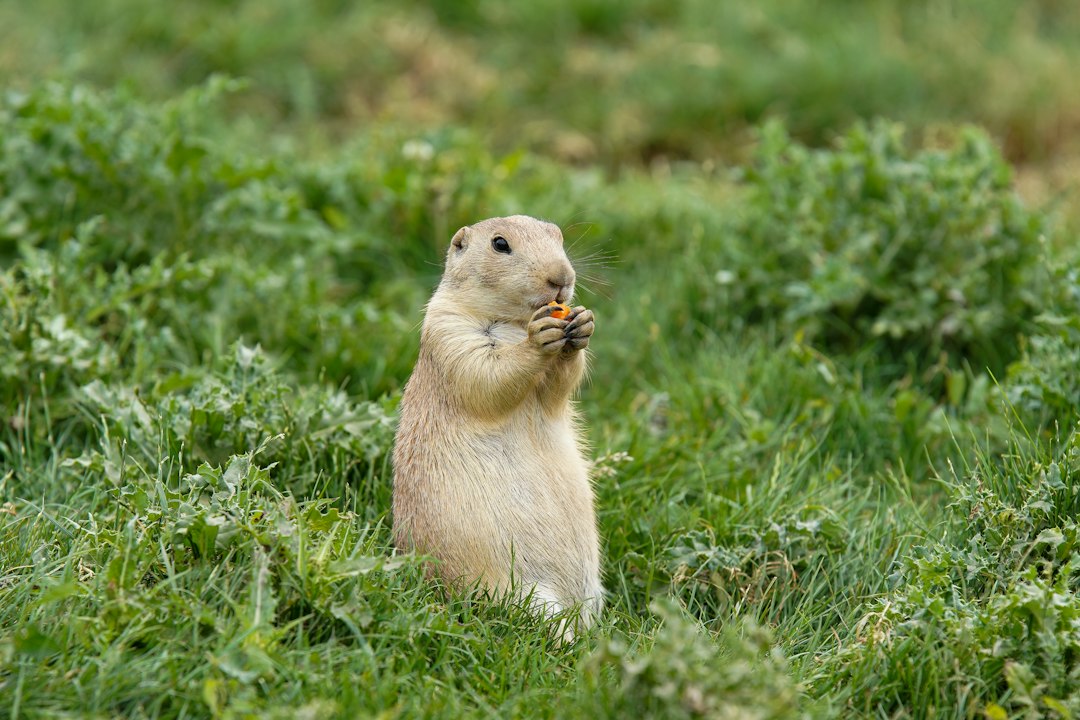
The supporting cast is everywhere. Prairie dog towns along the South Unit loop run like little stock exchanges, all chirps and jumping-cutouts. Wild horses — descendants of ranch stock, managed at a level that’s been the subject of genuine local debate — graze the high benches in bands. And for all of it, a decent pair of binoculars for wildlife watching beats a long lens you’ll never unpack; the wildlife here is close enough that optics are about detail, not reach.
Cottonwood Gold Along the Little Missouri
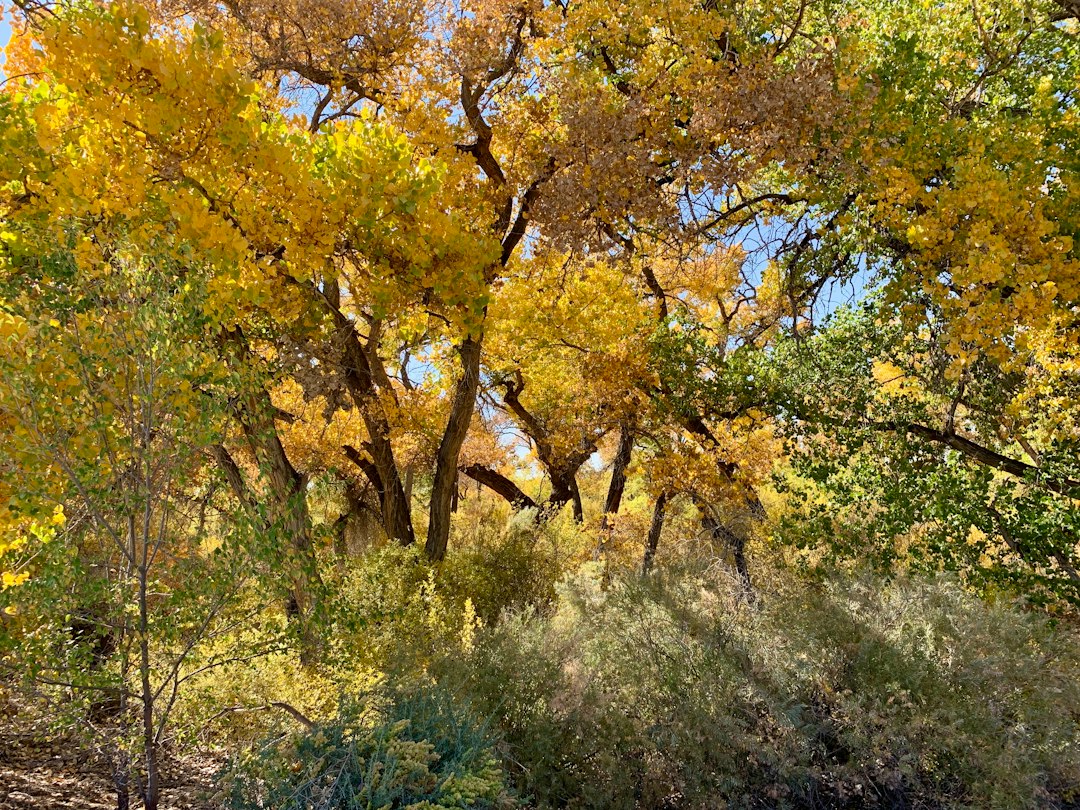
North Dakota is not on anyone’s foliage map, which is the joke that works in your favor. The park’s trees are overwhelmingly plains cottonwoods, and they run green to gold through the first two weeks of October, lighting up the river bottoms like the corridor was wired for it. Because the color pools in the low country, the play is to combine it with elevation — stand on a rim trail at Wind Canyon or River Bend in late afternoon and the gold threads through the bronze buttes while the river glitters between them.
The window is short and honest. A hard wind or an early cold snap can strip the bottoms in 48 hours, so treat peak gold as a gift rather than a guarantee. We caught it a few days shy of full turnover and lost nothing; the half-gold stage, against those banded cliffs, photographs like nowhere else on the continent.
A Gold-Tier Sky and Nobody Under It
Here is the October perk nobody prices in: darkness arrives early. By seven in the evening you’re standing under one of the darkest measured skies in the entire park system — Theodore Roosevelt has been a certified International Dark Sky Park since 2019, gold-tier, with horizons that hold the Milky Way from edge to edge. On our second night we pulled into an empty South Unit overlook, killed the headlights, and watched the core of the galaxy stand over the buttes like smoke. We counted four other cars. All evening. Total.
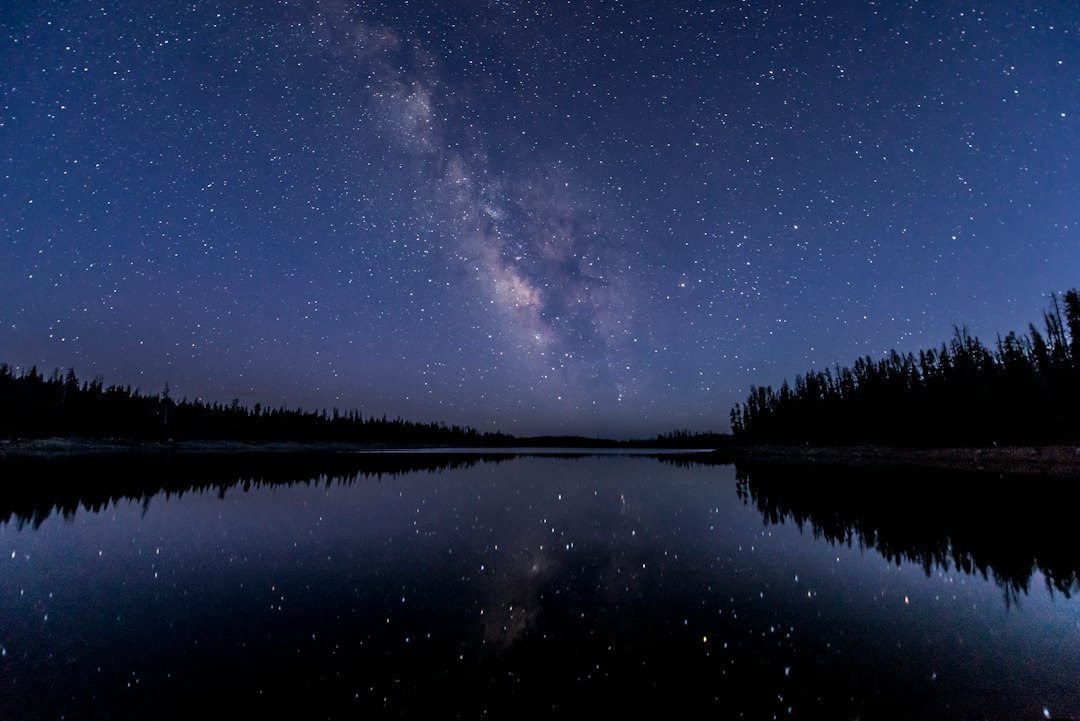
Cold, dry October air is the best seeing this latitude offers — stars snap into focus in a way humid summer never manages. Two pieces of kit make the night: a headlamp with a red-light mode so your group keeps its night vision on the walk back, and a sturdy tripod if you want the sky over the buttes in a frame. If chasing the Perseids got you hooked on dark-sky parks, this is the logical October sequel.
Packing for Forty Degrees of Swing
The October forecast in western North Dakota is a mood ring. Afternoons can touch the 70s; the same night can drop below freezing, and the wind on an exposed rim will find every seam in your kit. The locals’ system is layers with nothing clever about it, and it works:
- A merino wool base layer for mornings that start at 25 degrees and afternoons that don’t care
- A windproof fleece jacket, because the prairie wind is the park’s true fifth unit
- Broken-in waterproof hiking boots for caprock clay that turns slick after the first rain
- A soft cooler stocked before you arrive — Medora’s summer machinery, from the musical to the pitchfork steak fondue, largely packs up after Labor Day, and off-season dinner options get thin fast
If You Go
Fly into Bismarock — Bismarck, corrected by my navigator mid-sentence — or Dickinson, and let I-94 do the approach work; the South Unit’s Painted Canyon overlook sits practically on the interstate, which makes the “drive-by park” label doubly unfair. Entry runs $30 per vehicle for seven days, or the annual America the Beautiful pass covers it — if you’re stringing together multiple parks this year, my budget-parks playbook shows how fast that pass pays for itself. Give the park five to seven days to do all three units without rushing, reserve campgrounds or Medora lodging early even in shoulder season, and check the NPS alerts page the day you arrive for burn-project closures.
Go for the last bugle of the season. Stay for the gold bottoms, the bison jams, and the sky that made a grieving rancher into the president who saved a quarter-billion acres of everyone’s backyard. Very few parks hand you their best week in October. This one does it every single year, and it never runs out of room for you.
1 thought on “The Last Bugle: An October Week in the Badlands That Made a President”