It’s 11:47 p.m. somewhere over Indiana, and the man in 23C has been asleep since the cabin doors closed. Meanwhile, you’ve counted the ceiling panels twice, eaten your pretzels with philosophical resignation, and watched the seat map on the screen in front of you like it owes you money. If that sounds familiar, this one’s for you.
Red-eyes are the bargain bin of air travel — cheaper fares, fewer crowds at security, and a full day waiting for you on the other end. But they extract payment in a currency you can’t expense: sleep. I’ve flown enough of these overnight hauls to fill a small notebook with failures, and the strategies below are the ones that survived. My team and I have stress-tested just about every trick and gadget promising to make a middle seat feel like a bedroom, and I’m going to save you the years of trial and error.
Here’s the honest truth nobody puts in the booking confirmation: sleeping on a plane is a skill, not a lottery. There are choices you make in the week before departure, at the gate, and at 2 a.m. over the Great Plains that decide whether you land human or zombie. So let’s build the playbook, step by step.
Start Shifting Your Body Clock Before You Fly
Most people treat a red-eye like a switch they’ll flip at boarding. Your circadian rhythm disagrees. That internal clock shifts roughly one hour per day under the best conditions, and it responds to light, food, and caffeine cues far more than willpower. The fix starts days out: nudge your bedtime 30 to 45 minutes earlier each night for three or four days before the flight. It sounds trivial, but stacked up, you’ve banked two to three hours of adjustment before you even show your boarding pass.
Caffeine curfew matters here too. Cut it off by early afternoon on departure day — that half-life lingers longer than you think, and a 3 p.m. iced coffee is still whispering to your adrenal receptors at midnight over Ohio. If you’re flying east and really want to do this right, our full science-backed jet lag strategy goes deep on light exposure timing, because getting sunlight into your eyes at the correct hours is the single most powerful lever you have.
One more pre-flight move that pays compound interest: don’t “save up” sleep deprivation. The old advice was to exhaust yourself so you’d crash on the plane. In practice, boarding a red-eye already wrecked means you sleep badly in a bad sleeping environment and land doubly depleted. Go in rested. Even two mediocre hours of airplane sleep feel survivable when you’re not starting from zero.
Choose Your Seat Like You Mean It
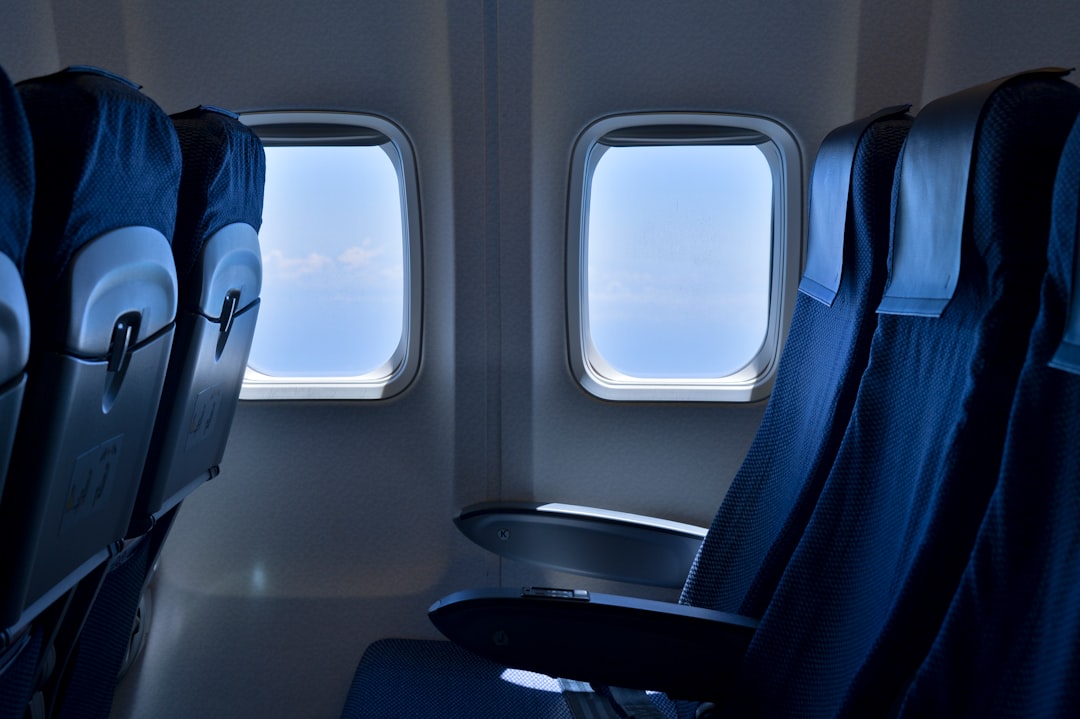
Not all seats are created equal, and on a red-eye the difference is a cliff, not a curb. The window seat is king: you get a wall to lean against, control of the shade, and nobody climbing over you at 3 a.m. for the lavatory. The aisle trades a shoulder wall for stretch room and easy exits. The middle seat is where optimism goes to die — if you’re stuck there, a pair of graduated compression socks and extra attention to the gear list below become non-negotiable.
Avoid the last rows outright. They don’t recline or barely do, they’re pressed against the lavatories, and they collect the standing-and-chatting crowd. Bulkhead rows sound appealing until you realize there’s nowhere to stow a bag at your feet during takeoff, and galley lights bleed in all night. Exit rows give legroom but run colder and expose you to crew movement. My standing rule after years of this: window, forward of the engines, behind first class if the fare allows. Set the seat alarm in your airline’s app and check daily — good seats shake loose constantly from cancellations.
The Kit: What Actually Earns Its Space in Your Bag
I’ve watched a lot of gear come and go over the years, and the overnight-flight survivors share two traits: small and dual-purpose. Here’s the core kit that earned permanence.
The mask is non-negotiable. Cabin lighting is erratic — reading lights clicking on, galley glow, the neighbor’s screen playing an action movie at full brightness. A contoured blackout model like the MZOO sleep mask blocks light completely without pressing on your eyelids, which matters more than you’d guess when you’re fighting for every minute of shallow sleep. The contoured design also plays nicer with lash extensions, if that’s part of your life.
Warmth is a sleeping pill you can pack. Cabin temperatures drift cold at cruising altitude, and shivering quietly is a terrible lullaby. A packable fleece like the PAVILIA travel blanket that folds into its own carry pouch takes minimal bag space and doubles as a lumbar cushion when you’re not under it. Add a pair of grippy fuzzy slipper socks and shoes off stops being a negotiation with your circulation.
Block the sound floor. Engine drone isn’t loud so much as constant, and your brain treats unpredictability as the real threat. Anything that smooths the spikes — a snoring seatmate, a crying child three rows back — helps. Active noise canceling is the premium answer, but a compact unit like the Yogasleep Hushh portable sound machine masks cabin chaos with steady sound and clips right onto your bag. We compared the big headphone options in our 2026 noise-canceling comparison if you’d rather go that route.
Support the neck you have. The free-flopping-head problem has ended more airplane naps than turbulence ever will. If you want the long version of what works, my team ran seven neck pillows across 12,000 miles in our in-flight sleep showdown — the short version is that anything is better than the pterodactyl-neck posture, but the winners share a common thread of real chin support.
Hydration: The Unglamorous Multiplier
Cabin air runs drier than most deserts — humidity regularly sits under 20 percent — and dehydration amplifies every red-eye misery: headaches, scratchy eyes, that cotton-mouthed 3 a.m. fog. The strategy is boringly consistent. Bring an empty bottle through security and fill it before boarding; sip steadily rather than chugging once. On longer flights, an electrolyte packet stirred into that bottle does more for how you feel on landing than any pill marketed to travelers.
Your eyes take the worst of it because they’re exposed all night. A tiny vial of lubricating eye drops handles the gritty, sandpaper feeling that makes you look like you lost a bar fight when the seatbelt sign dings off. And go easy on the alcohol — the nightcap that knocks you out dehydrates you and shreds the sleep architecture you’re fighting for. One drink with dinner, water after, is the ceiling if sleep is the actual goal.

The First 90 Minutes Onboard
How the flight starts determines how the night goes. Once you’re settled, move with purpose: shoes off into those slipper socks, mask and blanket staged, water in the seatback pocket. Decide your food position early. The meal service is a lighting and noise event that lasts 45 minutes — some travelers eat at the gate before boarding and skip it entirely, letting sleep start the moment the wheels go up. If the airline serves dinner first and you’re hungry, take it, but order your body into wind-down mode the moment the tray clears.
If you use melatonin, timing beats dosage. A modest dose taken as you settle in signals the shift; the OLLY sleep gummies pair a small amount of melatonin with L-theanine, which takes the edge off without the groggy overshoot of the heavy-dose pills. I’m deliberately not your doctor — test anything new at home first, because discovering at 35,000 feet that a supplement wired instead of drowsy you is a long night of your own making.

Making It Through the 2 a.m. Wall
Every red-eye has a wall — usually somewhere over the middle of the continent — where sleep stalls and your brain decides it’s a great time to replay embarrassing moments from 2019. Have a plan for it. First, don’t check the clock. Time-checking is a stimulant; every glance restarts the mental math about how few hours remain. Pull the mask down, re-settle the blanket, and treat wakefulness like a layover, not a failure.
Legs are the other quiet crisis. Circulation slows when you’re motionless for hours in a cramped seat, which is why the compression socks come up in every conversation about long flights — my own history with them is documented in eight long-haul flights of field testing. Beyond the socks, do the seat-quiet exercises: ankle circles, calf flexes, a slow press of your feet into the floor. Nobody notices, and your ankles will thank you at arrival.
If you’re the type whose legs just get restless no matter what, a hanging airplane footrest straps to the tray table arms and lets your legs stretch out nearly flat. It looks ridiculous. It works anyway. I’ve stopped caring what it looks like somewhere over Wyoming on flight six of a bad month.
Landing Like You Planned It
The descent is where the whole strategy gets cashed out. Fifteen minutes before landing, hydrate again, use those eye drops, and give your face a quick reset — our 10-minute airport reset routine covers the full trick set for going from rumpled to functional without a lounge pass. Sunlight is your next move: get outside within an hour of landing, because outdoor light is the strongest signal your body clock accepts, and it sets the day’s trajectory more than any nap timing decision.
Then the nap question: take one, but cap it. Twenty to thirty minutes, before 2 p.m. local time, alarm set. The full-day crash feels righteous and costs you a fortune — it locks your body onto home time and drags the adjustment out for days. Fight through to a normal local bedtime and you’ll wake up tomorrow nearly whole.
The Short List
Years of overnight flights distill down to a handful of rules that carry nearly all the value: shift your clock early, claim a window seat, block all light, buy real warmth, hydrate like it’s your job, never check the clock, and land in the sunlight with a short nap and an early bedtime. None of it is magic. All of it compounds.
The red-eye remains the best deal in travel — you trade one strange night for a whole extra day wherever you’re going. Treat that night like a project instead of a gamble, and you’ll land rested enough to enjoy it. The guy in 23C who’s been asleep since pushback? He isn’t lucky. He just read the instructions.
4 thoughts on “The Red-Eye Survival Guide: How I Actually Sleep on Overnight Flights Now”