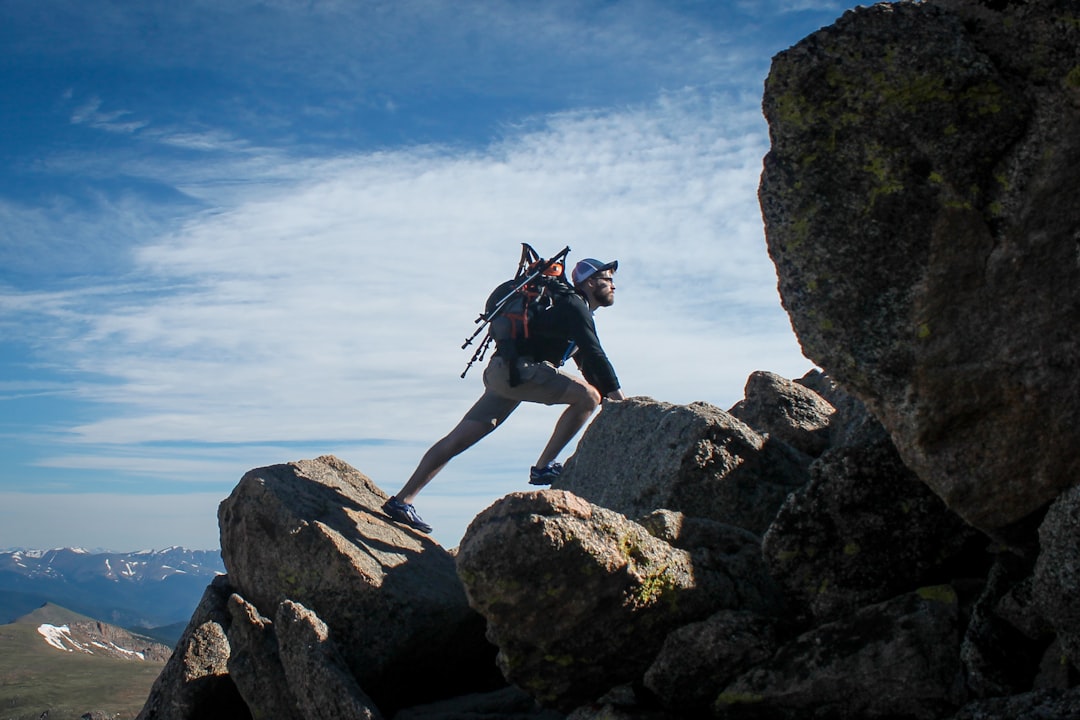
There is a specific sound a knee makes when it decides it is done cooperating, and I heard mine make it last October, about 400 vertical feet above the parking lot at the bottom of a gorge trail. Wet maple leaves had glued themselves to granite slabs. My shoes were fine. My balance was fine. My knee, meanwhile, had filed its resignation letter somewhere around the third switchback. I got down by lowering myself from tree to tree like a man who’d never seen a trail before, and on the drive home I did something I’d refused to do for fifteen years of hiking: I ordered trekking poles.
For the record, I was against them for all the classic reasons. They looked like equipment for other people — older people, injured people, people who hadn’t yet learned to trust their ankles. Then a friend on the same trip floated down the same slabs with two aluminum poles clicking along like it was nothing, and my pride quietly renegotiated its terms. This fall, with an entire foliage season on the calendar, my crew and I decided to do it properly: five pole sets, a few hundred miles of trails across three states, and one very willing group of testers whose knees are all older than they’d like to admit.
Here’s what actually mattered after all those miles — and what didn’t.
Fall Is Pole Season, Whether You Admit It or Not
Most people file trekking poles under “snow gear,” which is exactly backwards. Autumn might be the single best argument for poles in North America, and it comes down to three things. First, wet leaves. That postcard blanket of red and gold is a friction disaster on hardpack, rock, and especially pitched wooden stairs, and it hides root knobs with real enthusiasm. Second, the light. Fall sun sits low and throws long shadows across the trail all afternoon, which turns ordinary terrain into a strobe of glare and dark patches right when you’re tired and descending. Third, mileage. Foliage season is when otherwise reasonable people attempt eight-mile “quick out-and-backs” because the color window is two weeks wide and the Blue Ridge Parkway guide they’ve been planning since July finally comes due.
Poles cut the math on all three. Studies on downhill walking consistently show poles shifting a meaningful chunk of load off the knees — figures around 20 to 25 percent get cited regularly — and more importantly, they give you two extra points of contact when the trail turns to leaf-slicked pitch. My testers ranged from a marathon-running 29-year-old to my father, 71, and by the end of week two, none of them were hiking without poles. The debate wasn’t whether. It was which pair.

The Lineup: Five Pairs and a Few Hundred Miles
We deliberately stacked the test with the poles people actually buy, not just the ones that show up in glossy reviews. The budget anchor was the Cascade Mountain Tech aluminum pair with cork grips — the pole that long-distance hikers semi-famously buy in bulk and treat as semi-disposable. Against it: the TrailBuddy 7075 aluminum poles, which sit at the friendliest price point in the category, and the Trekology Trek-Z collapsible poles, which fold down small enough to disappear inside a daypack. On the carbon side we ran the Foxelli carbon fiber pair, and as the ringer, Black Diamond’s Alpine Carbon Cork — the pole that keeps winning “strongest carbon” mentions in serious gear roundups.
Testing wasn’t elegant. We carried all five pairs on alternating weekends through September — gorge trails in western New York, rolling ridgelines in Pennsylvania, and one genuinely silly day in the Catskills that involved 3,000 feet of elevation and a surprise hailstorm. Each pair got descents, stream crossings, scramble sections, and the most brutal test of all: being handed to a skeptical first-time pole user to see if they could adjust them without instructions.
Aluminum or Carbon: The Trade Nobody Explains Honestly
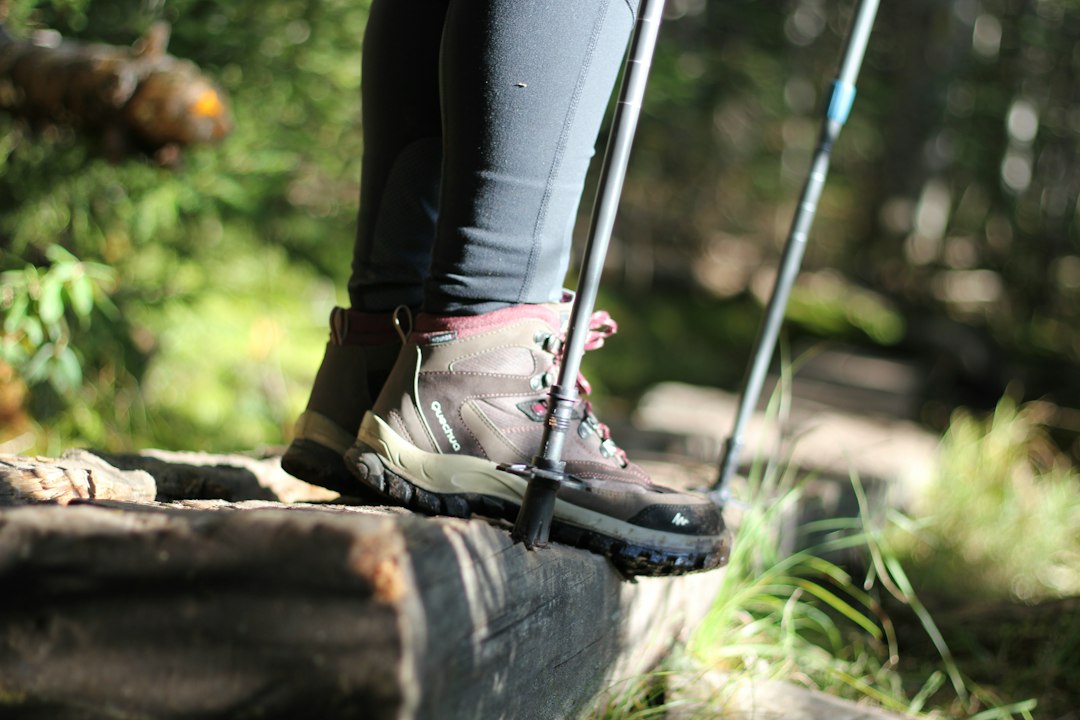
Every pole article eventually says “carbon is lighter, aluminum is cheaper,” which is true and useless. Here’s the version that matters after a fall of hard use. Aluminum — the 7075 aircraft-grade stuff in the Cascades and TrailBuddys of the world — bends when it fails. You feel it going, you baby it home, you replace a $14 section. Carbon is lighter by a few ounces per pair and dampens trail vibration beautifully, but when carbon fails, it fails like a dry twig: suddenly, and completely. One of our Foxelli sections developed a hairline crack after a rock strike, silent until we found it during a routine wipe-down.
The honest conclusion: carbon belongs on long mileage where every ounce compounds, and aluminum belongs everywhere else — which is most of us, most weekends. That’s why my personal trunk pair is still aluminum. If you want carbon’s weight savings with tougher construction, that’s precisely the niche the Black Diamond Alpine Carbon Cork occupies, and the price reflects it. Two solid aluminum alternates that didn’t make the main lineup but earned respect as loaners: the KINGGEAR 7075 pair (light for the price) and the USA-brand carbon poles with cork and EVA grips, which split the difference on weight and cost.
Flip Locks Over Twist Locks. Not Close.
If you learn one thing from this article, make it this: buy poles with external flip locks, not twist locks. Twist locks rely on an internal expander that loosens as temperatures swing and grit works its way inside — and a pole that quietly collapses mid-descent is a special kind of hazard. Flip locks are visible, adjustable with a gloved thumb, and field-tunable with a small turn of a screw when they wear loose. Every single pair in our lineup used flip locks, which tells you the market has mostly figured this out; the twist-lock poles still floating around at the bottom of the price range are a false economy.
Cold snaps add a wrinkle: locks get stiff when temperatures dive and sluggish after stream fordings. The fix is thirty seconds of maintenance, which we’ll get to. But in a month that starts at seventy degrees and ends with frost on the tent, flip locks never once left us guessing.
Cork Grips: The Feature That Silently Wins Fall
Grip material sounds like a footnote until you’ve hiked nine miles in a day that started frosty and ended warm. Plastic grips get slick with sweat and bitter in cold. EVA foam is soft but holds water and eventually chunks off. Cork — real cork, like on the Cascades, the Foxellis, and the Black Diamonds — stays neutral in temperature, wicks moisture, and molds slightly to your hand over a season. Every tester who switched from foam to cork mid-test refused to switch back. One described it, charitably, as “the difference between a handshake and grabbing a parking meter.”
The other grip lesson: pay attention to grip length below the handle. Those extended foam sections under the cork let you choke down for steep side-slopes without moving your wrist angle, and on fall trails — which tilt constantly thanks to leaf drift and water damage — we used them more than any of us expected.

Field Notes: Where Poles Actually Earned Their Keep
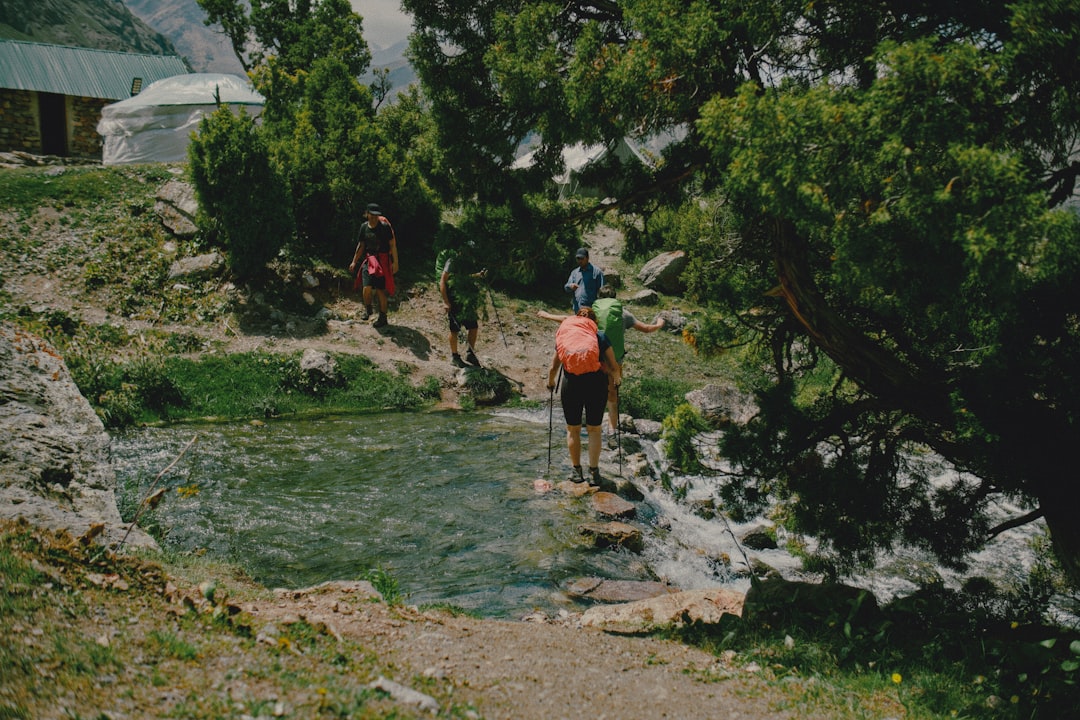
Three moments from the test log sum up the season. The first was a stream crossing in the Catskills after two days of rain — ankle-deep water over mossy rock, the exact setup that turns ankles. With poles planted wide, all four of us crossed like it was a parking lot. The second was the descent out of a western New York gorge — the same genre of trail that broke my resolve last year, now earmarked on our Letchworth in October shortlist. Poles turned it from a controlled fall into a walk. The third was a narrow, exposed ridgeline in Pennsylvania where wind gusts made me genuinely glad for three points of contact; my father, hiking behind me with his pair, said the poles did more for his confidence on the exposure than any gear he’d carried in a decade.
We also logged the failure modes, because there’s no honest gear piece without them. One tester caught a pole tip between rocks on a descent and torqued the lower section — aluminum, so it bent visibly instead of snapping, and that’s the whole argument for aluminum in one sentence. Another lost a carbide tip on bare rock, which brings us to the most underrated purchase in this entire category.
For the record, nobody ended up needing the first aid kit I actually carry this season — the first fall in a while I can say that, and I’m giving the poles some of the credit.

The Ten-Dollar Accessory That Doubles Pole Life
Carbide tips are the business end of a pole — brilliant on dirt, ice, and soft rock, and merciless on everything else. On pavement, boardwalks, and bare granite they chew themselves dull, and some trails (and plenty of national park surfaces) now ask for rubber tips outright. The fix costs less than lunch: a set of universal rubber tip protectors stretches over the carbide point in two seconds and turns your trail weapon into a pavement-safe walking pole. We ran a mixed set all fall — the Black Diamond non-marking TPU replacement tips for the premium pair, and a big multi-pack of generic rubber feet for everything else, because they wear out and get lost at a rate that deserves a spare drawer.
While we’re accessorizing: skip the snow baskets until winter, but do check that your poles accept standard-thread baskets if you plan to keep hiking into the white season. Not all budget poles do, and it’s an annoying discovery in December.
If You’re Buying Your First Pair
After a full season, the recommendation matrix got refreshingly simple. Buying your first poles, or buying for a casual-to-serious foliage hiker? The Cascade Mountain Tech cork-grip aluminum pair is the answer most people need, full stop — it’s the pair that made half our testers permanent converts, at a price that leaves money for gas. Want something that packs into a carry-on or a running vest? The Trekology Trek-Z folds smallest. Gifting to a parent or anyone whose knees have opinions? The TrailBuddy pair is the easiest adjust-and-go setup we handed to anyone over 60 — my father now refuses to return his. Counting ounces on long-mileage days and okay with babying your gear? Carbon, either the Foxelli pair on a budget or the Black Diamond Alpine Carbon Cork if this is a ten-year purchase.
The category’s open secret is that the expensive poles are lighter and nicer, but the cheap ones are genuinely good now. A $35 pair with flip locks and cork grips would have embarrassed the “nice” poles of fifteen years ago. What actually ruins pole experiences is buying the wrong mechanism (twist locks), the wrong grip in sweaty or cold conditions, or refusing to use them at all — which was, embarrassingly, my strategy for a decade and a half.

Care Notes From the Trunk
Poles ask almost nothing, which is why most people give them nothing, which is why most pole failures are preventable. Three habits from our test season. Dry them open after wet days — collapsed, wet poles grow grit inside the sections, and grit is what kills locks. Retighten flip-lock tension screws monthly; a quarter-turn takes a sloppy lock back to factory feel. And stash them tip-down in the car, rubber feet on, so the carbide doesn’t skewer a duffel or find your hand in a dark trunk. Pair that routine with a packable down layer for the summit stops, and you’ve covered the two pieces of fall gear that quietly change everything.
As for me, the resigned knee and I have an arrangement now. It does the scenery. The poles do the physics. Fifteen years of stubbornness cost me a lot of good descents — don’t let it cost you yours.