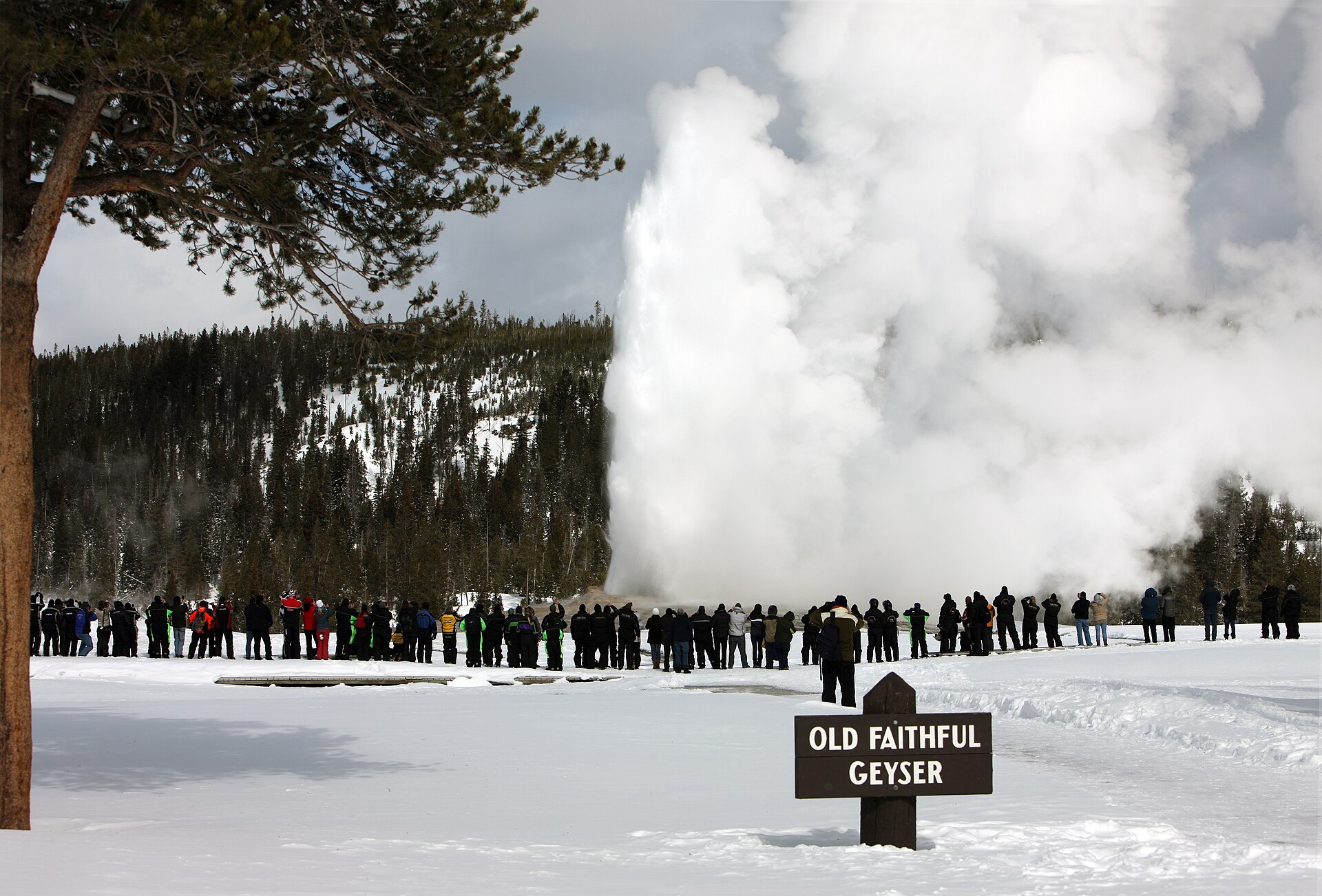
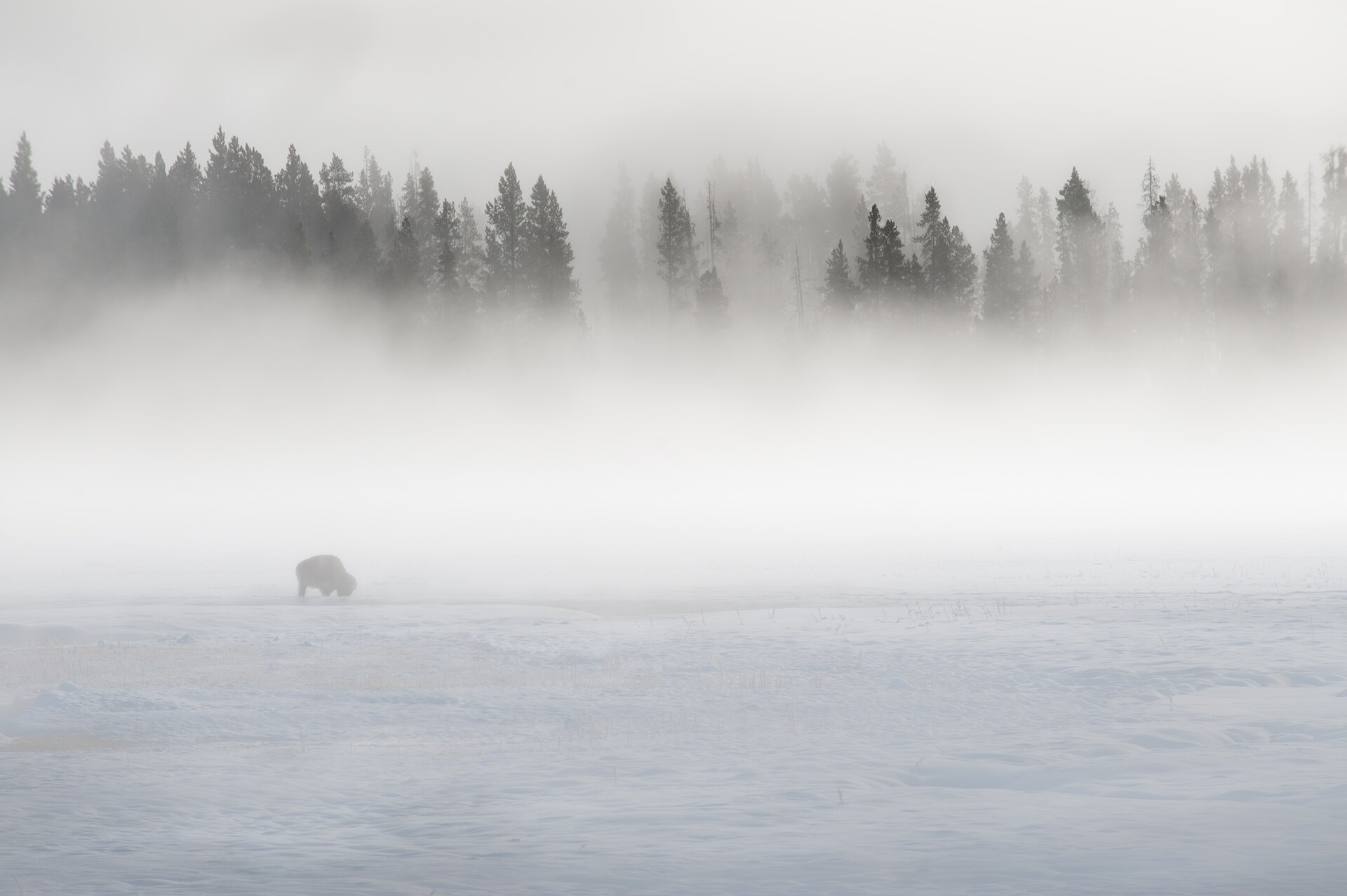
I’ve seen Yellowstone in September, when the elk are bugling and the boardwalks finally empty out after Labor Day. I made the case for fall as the park’s best-kept secret, and I still believe it. But there’s a version of the park I haven’t seen yet, and it’s the one I keep reading about this month: the one where the roads are buried, the geysers throw towering steam clouds into air that’s well below zero, and the only way to reach Old Faithful is a heated van on tracks.
That version opens in a month. On Oct. 31 most of Yellowstone’s roads closed to cars. On Tuesday, Dec. 15, the groomed roads open to snowcoaches and guided snowmobiles, and on Dec. 16 the Old Faithful Snow Lodge opens its doors for a season that runs to March 7, 2027. There are only two hotels open inside the park all winter, and that’s why I’m planning now and not in January. The snow will be there. The rooms might not.
The Short Answer, If You’re Booking This Week
- Book the beds before anything else. Mammoth Hot Springs Hotel and Old Faithful Snow Lodge are the only two lodges inside the park in winter. Everything else on the trip hangs off those reservations.
- Plan on a night at Mammoth before the snowcoach. The concessioner won’t book the Bozeman airport shuttle and the Old Faithful snowcoach on the same day.
- Budget about $588 per adult in shuttle and snowcoach fares for a Bozeman-Mammoth-Old Faithful loop, before tips, rooms and the park entrance fee.
- Dress for zero. Daytime highs of 0 to 20°F are normal, and nights below zero are common. A Smartwool Classic Thermal Merino Base Layer, Sorel Caribou Insulated Winter Boots and a pack of HotHands Hand Warmers do more for your trip than any upgrade on the room.
- Bring optics. Wolves in the Lamar Valley are often a mile away. A Celestron Ultima 80 Angled Spotting Scope turns a gray dot into an animal.
How Yellowstone Works After the Gates Close
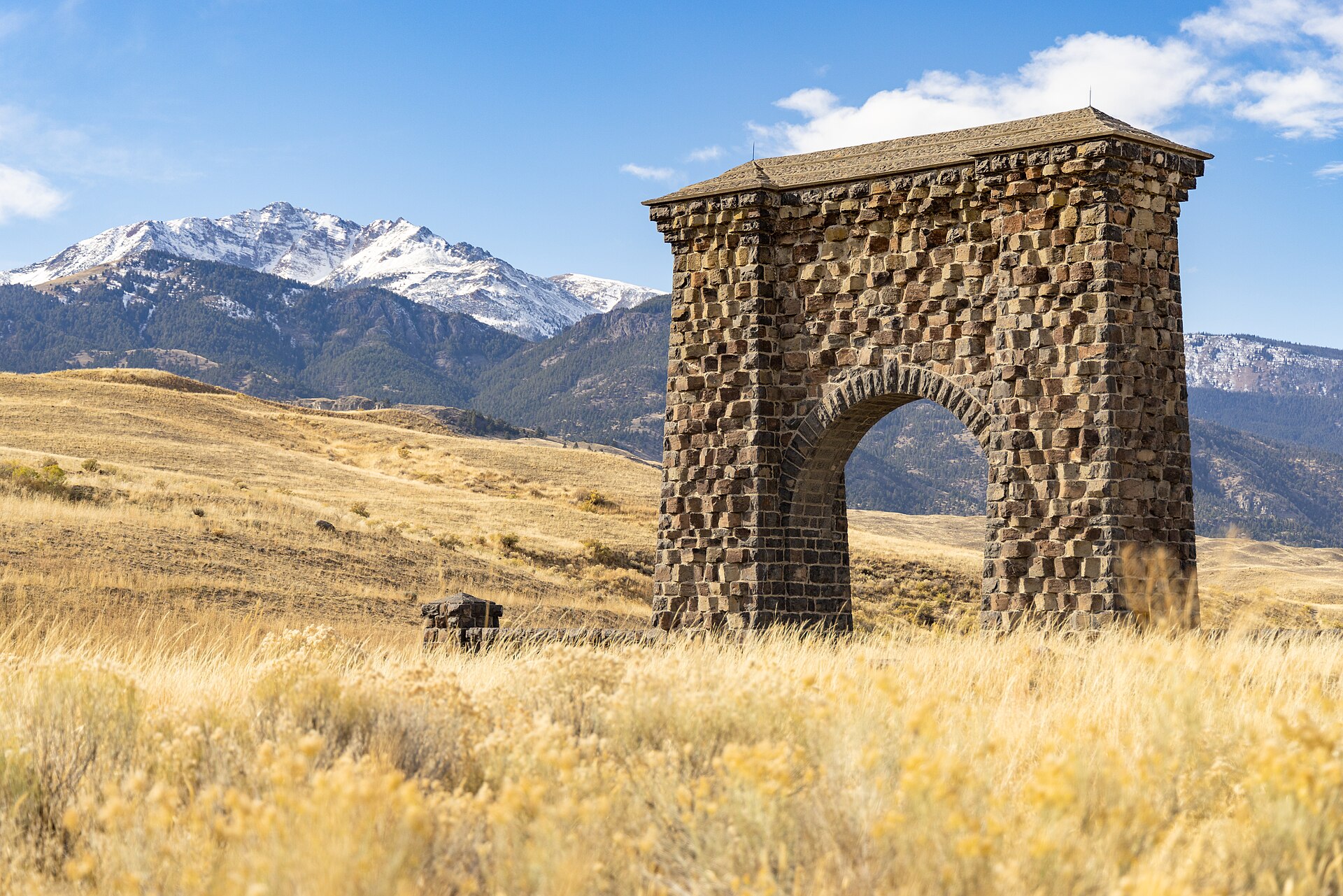
The first thing to understand about winter Yellowstone is that it’s really two parks. The northern strip stays open to regular cars all year, weather permitting: the road from the North Entrance at Gardiner, Montana, through Mammoth Hot Springs, Tower Junction and the Lamar Valley, out to the Northeast Entrance at Cooke City. You can drive it in a rental car in January the same way you’d drive it in July, just slower and with a lot more bison standing in the road.
Everything else, which means Old Faithful, the Grand Canyon of the Yellowstone, Norris and the west side, is groomed snow from mid-December to mid-March. You get there by commercially guided snowcoach or snowmobile, or through the park’s small non-commercial snowmobile permit program. That program admits one self-guided group of up to five sleds per oversnow entrance per day, at $40 a day.
The oversnow season isn’t one date, either. For 2026-27 the National Park Service lists the Mammoth-to-Norris road closing March 7, Norris to Madison and Canyon on March 9, Canyon to Fishing Bridge on March 14, and the West, South and East entrances on March 15. Recent mild winters have opened roads late or closed them early, so every date depends on the snow.
Getting In Through Gardiner
Most winter visitors fly into Bozeman Yellowstone International Airport. The first option from there is to skip the rental car. Yellowstone National Park Lodges runs a daily winter shuttle from the airport to Mammoth Hot Springs Hotel for its own lodging and tour guests. For 2026-27 it leaves the airport with a 1:30 p.m. check-in and gets to Mammoth around 4 p.m. for $110.81 per adult one way. The return leaves Mammoth at 8 a.m. and reaches the airport around 10:30 a.m. for $115.25. Kids 3 to 11 ride for half, and under 3 are free. Two rules matter: if your flight lands after 1:30 p.m., don’t book a same-day shuttle, and if your flight home leaves before noon, don’t book a same-day return. The park entrance fee isn’t included.
The second option is to drive. Gardiner is about 80 miles south of the airport through Paradise Valley, and it’s real winter driving. If you’re picking up a rental, read the contract for its chain and traction rules before you leave the counter. I covered that headache in detail in my piece on snow socks and rental-car traction rules, and every bit of it applies on US-89. The upside of a car is the Lamar Valley at dawn on your own schedule, which for wildlife people is the whole point.
Entrance fees are simple for most of us: $35 per private vehicle for seven days, or the $80 America the Beautiful annual pass. If you’re traveling with friends from abroad, warn them now. Since Jan. 1, 2026, every non-U.S. resident 16 and older pays an extra $100 per person at Yellowstone unless they come in on an annual or America the Beautiful pass. The nonresident America the Beautiful pass is $250.
Two Nights at Mammoth, Wolves at First Light
Mammoth Hot Springs Hotel is the only hotel in the park you can reach by car in winter, and it’s the right base for the northern range. It was renovated in 2019 and has a Map Room where people play board games at night. The standard cabins close for the winter, but the four hot tub cabins behind the hotel stay bookable. If one is still open for your dates, take it. A private hot tub at 10°F after a day of looking at wolves is the kind of thing you remember for twenty years.
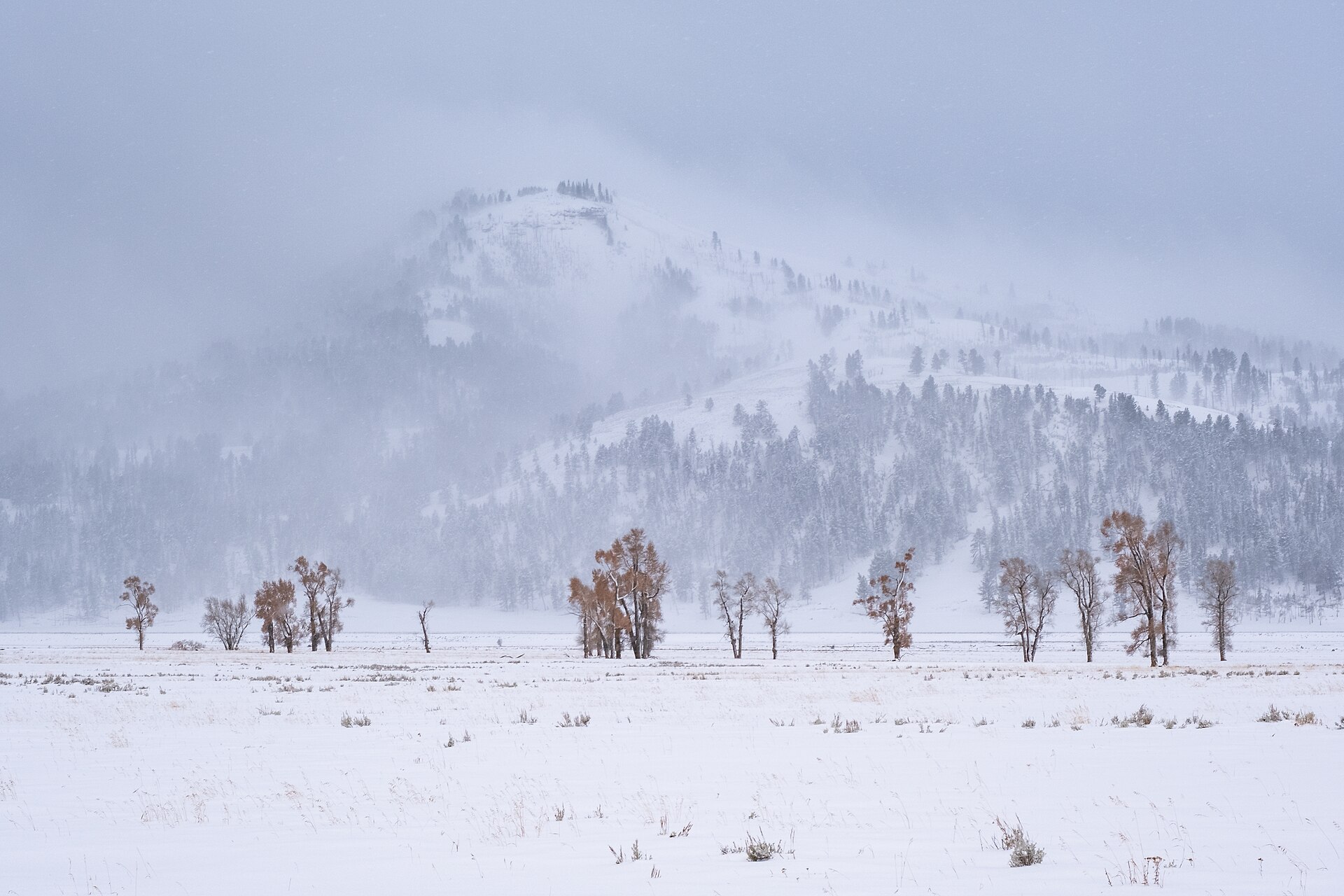
The Lamar Valley is the reason to be up here. It’s the park’s main winter wildlife range, and bison, elk, coyotes and wolves stand out against snow in a way they never do against summer grass. If you don’t have a car, the lodge runs a Lamar Valley Wildlife Tour on Thursdays, Saturdays and Mondays from Dec. 17 to March 6. It checks in at 7 a.m., returns at 2 p.m., includes a muffin and a deli lunch, and costs $236.28 per adult. Order your lunch at the front desk by 7 p.m. the night before. The tour page tells you to bring your own thermos if you want something hot.
That thermos should be a good one. A Thermos Stainless King 40-Ounce Beverage Bottle holds enough coffee for two people through a long morning at a pullout.
Glass for Animals a Mile Away
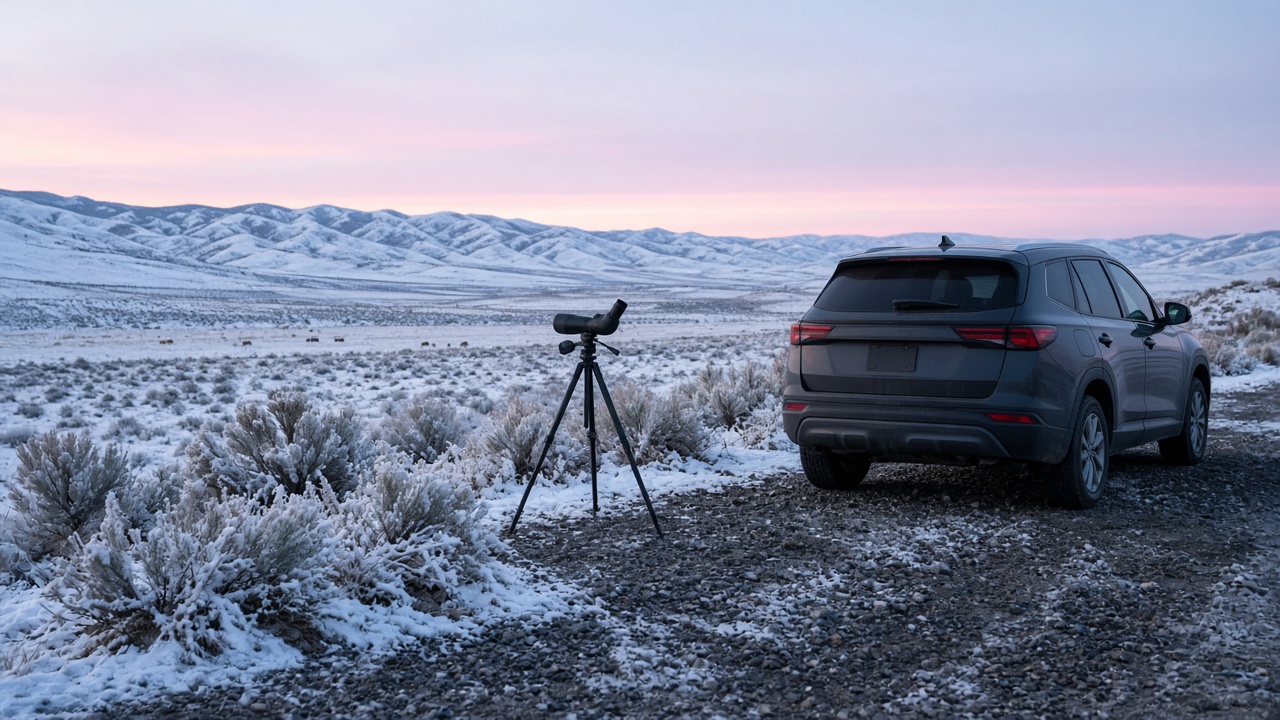
Here’s the part first-timers get wrong. The wolves you’ll see in the Lamar are usually on a far hillside, and the park requires you to stay at least 100 yards from wolves and bears and 25 yards from everything else, including the bison that walk the road like they own it, because they do. Regular wolf watchers line the pullouts with spotting scopes. Bring your own.
I’d pair a scope with a good binocular for scanning. My notes on the compact binoculars I carried through September’s wildlife season still hold up: find the animal with the binocular, then put the scope on it. The Celestron Ultima 80 is a reasonable middle-of-the-road scope. Its angled eyepiece lets two people of different heights share it without moving the tripod.
If you’re driving yourself, a Car Window Mount for Spotting Scopes is the cheapest piece of comfort you’ll buy for this trip. On a windy morning at 5°F, you can glass the hillsides from the driver’s seat with the heater running and only get out when something’s actually there.
Cold is hard on batteries, so keep your phone and camera batteries in an inside pocket and swap them as they fade. An Anker PowerCore 10000 Portable Charger riding against your body will bring a dead phone back on the snowcoach. Cell service is thin in the park in winter, so download the NPS app and its offline content before you leave Bozeman. For a backup, a paper National Geographic Yellowstone Trails Illustrated Map never runs out of battery.
The Snowcoach South to Old Faithful
The scheduled snowcoach between Mammoth and Old Faithful Snow Lodge runs daily, and it’s the most efficient guided tour in the park. Your driver is also your guide for every mile. From Mammoth, you check in at 7:45 a.m. and arrive at noon, or check in at 1:45 p.m. and arrive at 6 p.m. For 2026-27 the fare is $179.45 per adult and $89.72 for kids 3 to 11 going south, and $182.90 and $91.45 coming back, taxes included. The morning coach south starts Dec. 16; the morning coach north starts Dec. 17. Each guest can bring two bags plus a small carry-on, and skis or snowshoes. Tips aren’t included, and the guides earn them.
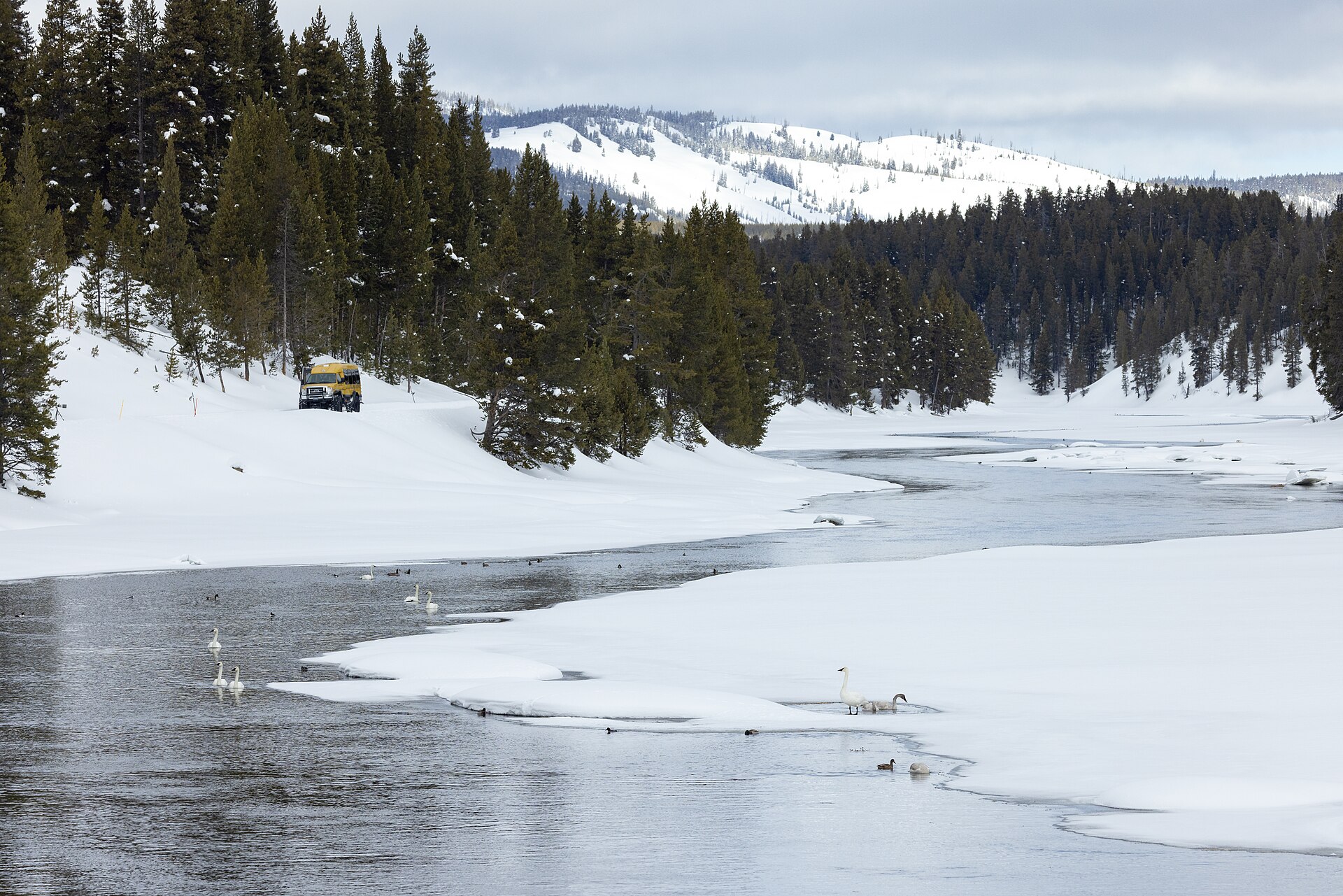
Take the morning coach. It’s more than four hours either way, and you want the daylight. The river stretches are where you’ll see swans on the open, thermally warmed water. Reservations are required in each direction, so book both legs together the day you book the Snow Lodge.
Pack light enough to hand your bag to a driver without apology. A small duffel, a daypack and your boots on your feet is the right size. Those Sorel Caribou boots are on the heavy side, but they have a removable felt liner you can dry overnight by the heater, and that matters more than weight on a trip where you’re outside all day.
Two Days in the Upper Geyser Basin
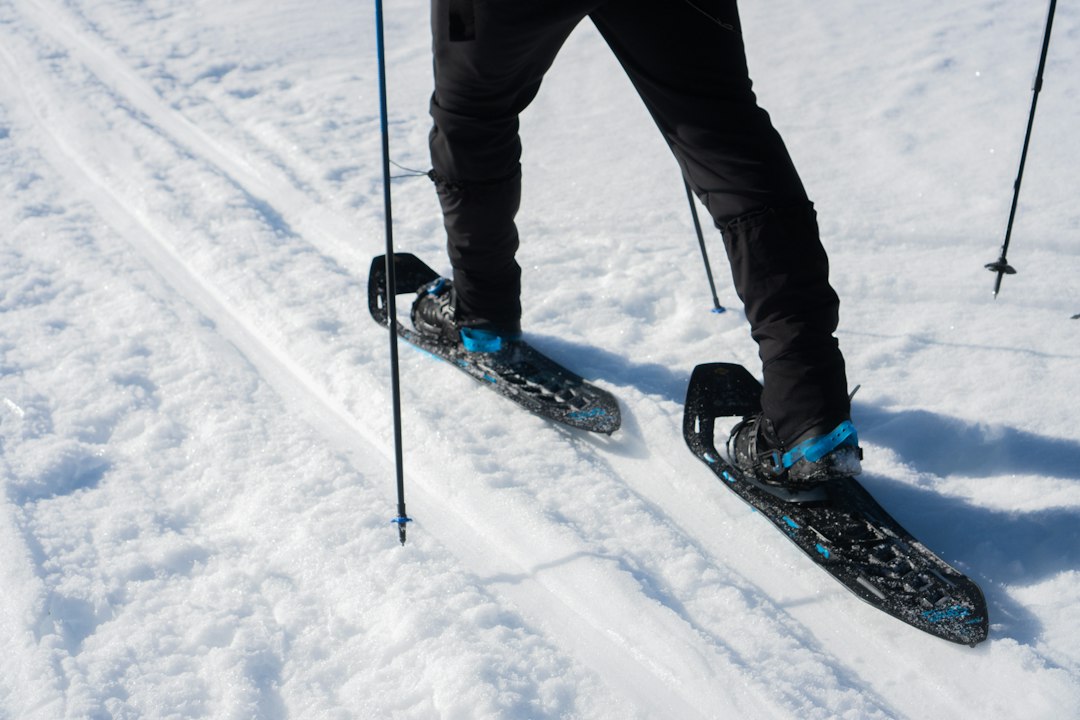
Old Faithful Snow Lodge is the only hotel in that village open in winter, a short walk from the geyser itself. It’s the newest hotel in the park, built in the classic parkitecture style, and won the Cody Award for Western Design in 1999. The lobby has fireplaces, a half-finished jigsaw puzzle at all hours, and the Bear Den Ski Shop, which rents cross-country skis and snowshoes and runs lessons and tours.
I’d give it two nights. That gets you one full day with nowhere to be: Old Faithful in the morning and at dusk, the boardwalks of the Upper Geyser Basin in between, and a snowshoe or ski loop right out the door. Shuttles from the lodge go to places like Firehole Canyon and the Lone Star Geyser trail if you want more distance.
Two warnings from the park. First, thermal boardwalks ice over, and the park recommends traction aids. A pair of Yaktrax Pro Traction Cleats weighs almost nothing and slips over your boots. Stay on the boardwalk no matter what; the ground beside it can be a thin crust over boiling water. Second, Yellowstone’s ravens have learned to unzip backpacks. Don’t leave a pack with snacks sitting on a bench while you take a photo.
Dressing for a Day That Tops Out at Twelve
The park’s own numbers are the ones to pack for: daytime temperatures from 0 to 20°F, and nights often below zero, especially at higher elevations. Old Faithful sits around 7,300 feet. And you’ll spend long stretches standing still, the coldest way to be outdoors.
Build it in layers. A Smartwool merino base layer top and bottom, a fleece midlayer, a puffy and a windproof shell. If you’re shopping for that puffy, my roundup of packable down jackets is a good start, but for Yellowstone in January I’d go a size up so it fits over everything else. On your face, a Fleece Balaclava keeps the wind off your cheeks and ears, and skin dries out fast in that cold, thin air. I’d also borrow a few ideas from this plan for keeping hands, lips and cheeks from cracking in winter. Throw a lip balm in every pocket.
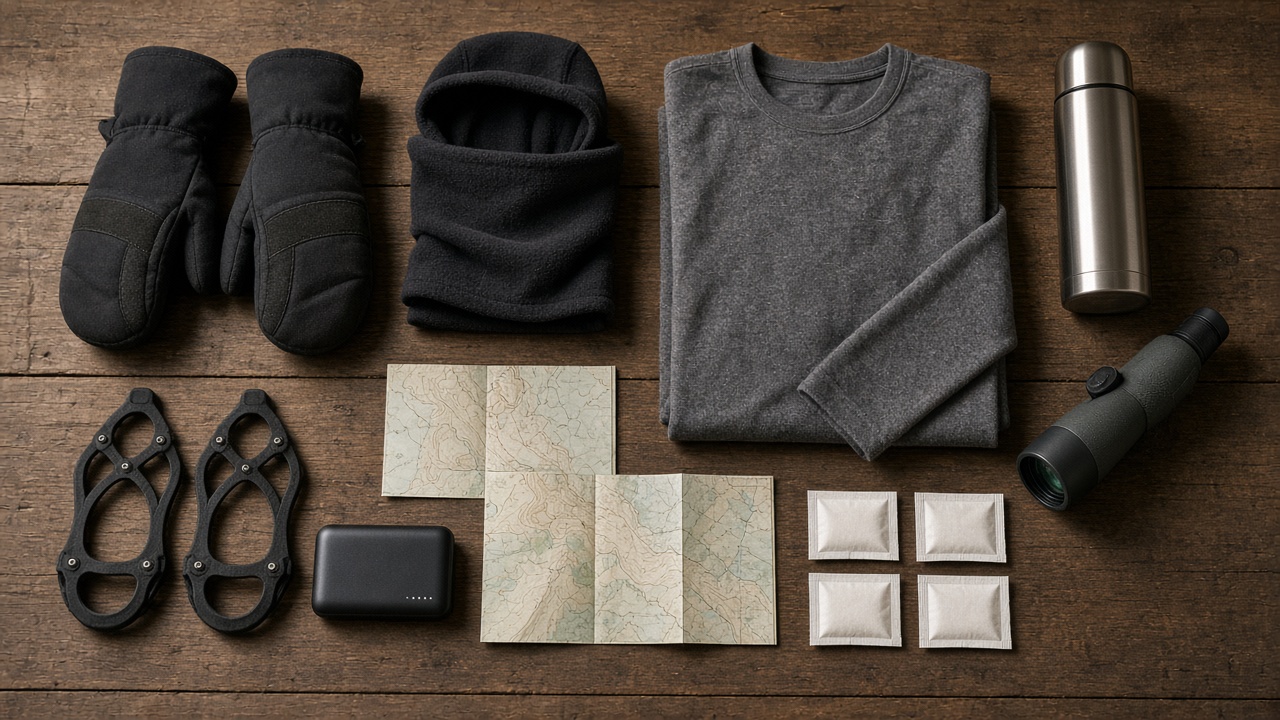
Hands quit first. Wear thin liner gloves for working a camera, and keep a pair of Black Diamond Mercury Mitts over them for standing around. Drop a HotHands hand warmer in each mitt, plus a toe-warmer version in each boot on the coldest days. A box of forty pairs costs less than a single lunch at the lodge.
What It Costs, and a Week That Works
Here’s the five-night loop I’d book, with no rental car:
- Day 1: Land in Bozeman by early afternoon, take the 1:30 p.m. shuttle and check in at Mammoth.
- Day 2: Lamar Valley Wildlife Tour (Thursday, Saturday or Monday), then the hot tub.
- Day 3: 7:45 a.m. snowcoach to Old Faithful, arriving at noon. Afternoon on the geyser boardwalks.
- Day 4: A full day at Old Faithful. Ski or snowshoe, and watch the evening eruption.
- Day 5: 7:45 a.m. snowcoach back to Mammoth, then a quiet evening in the Map Room.
- Day 6: 8 a.m. shuttle to the airport for a flight that leaves after noon.
The transportation alone comes to $110.81 + $179.45 + $182.90 + $115.25 = $588.41 per adult. With the Lamar tour, that’s $824.69, before rooms, meals, tips and the entrance fee. Kids 3 to 11 are roughly half on all of it. A rental car cuts out the shuttle and the Lamar tour but adds a car, gas and winter driving. The real question is whether you’d rather own the dawn schedule or let somebody else handle the ice.
As for timing, the opening week (Dec. 15 to 23) is quieter than Christmas week itself, though it’s also when a thin snow year can delay grooming. The concessioner’s own pitch, and most guides, say January and February are the best of the season, after the holiday rush and with the full oversnow network running. If your dates are flexible, look hard at mid-January. If not, Christmas week is still Yellowstone with a fraction of its summer crowds.
Either way, the order of operations is the same: rooms first, snowcoach seats second, everything else after that. There are only two lodges open inside the park, and that’s not changing before Dec. 15.