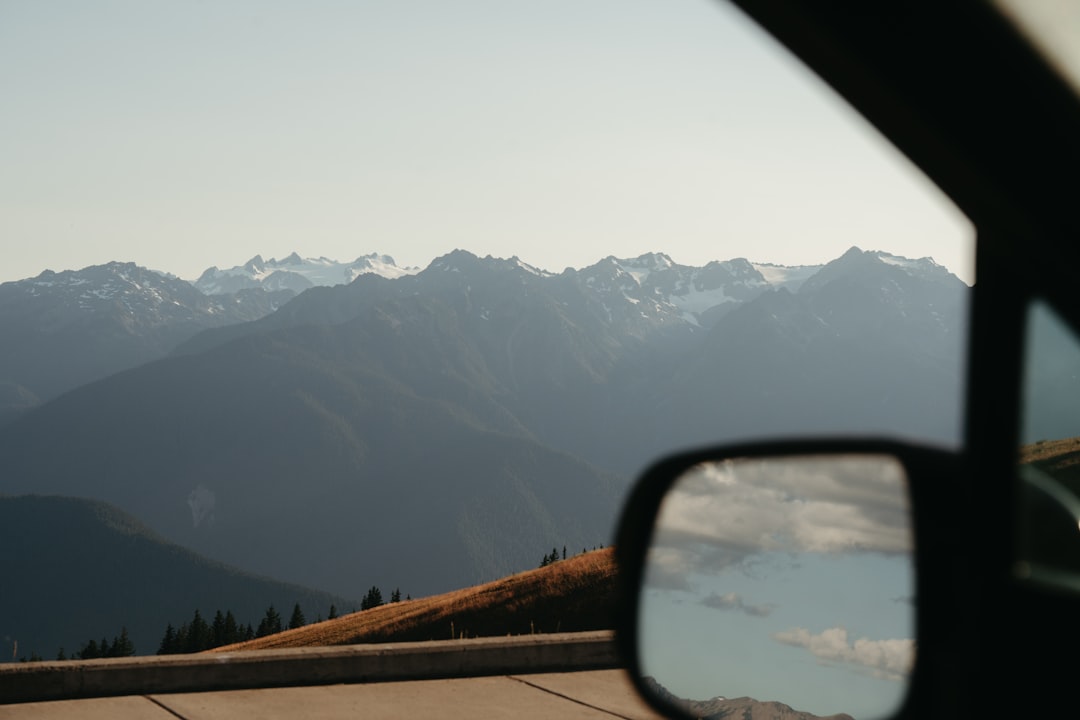
I’ve stood in a lot of places that claim to have it all. Most of them are lying. But Olympic National Park? It might be the only spot in North America where you can walk through a temperate rainforest in the morning, stand on a glacier-carved ridge after lunch, and watch the sun melt into the Pacific from a driftwood-strewn beach before dinner — all without leaving park boundaries.
My team and I spent a week mapping Olympic’s three distinct ecosystems last August, and I’m still processing how bizarre it is that nearly one million acres can contain this much ecological whiplash. The park occupies most of Washington’s Olympic Peninsula, and unlike most national parks that protect a single landscape type, Olympic was specifically designated to preserve three radically different worlds: moss-draped rainforest, subalpine meadows, and wild Pacific coastline.
August is the sweet spot. The snow has retreated from the high country, the trails are (mostly) dry, and the coastal fog rolls in just enough to keep things dramatic without shutting down your plans. Here’s how to experience all three faces of Olympic without spending your trip in a car.
Hurricane Ridge: The Mountain Face
We started in Port Angeles, the gateway town that serves as Olympic’s logistics hub. From downtown, it’s a 45-minute drive up to Hurricane Ridge, and the elevation gain — from sea level to nearly 5,300 feet — hits you like a wall of cold air. The road climbs through dense forest before bursting open into subalpine meadows that roll toward jagged, snow-flecked peaks.
The Hurricane Hill Trail is the obvious first hike, and for good reason. It’s a 3.2-mile round trip that gains about 700 feet, ending on a bald summit with 360-degree views that stretch from the Strait of Juan de Fuca to Mount Olympus. On a clear August day, you can see Vancouver Island. Marmots whistle from the rocks. Wildflowers — lupine, Indian paintbrush, avalanche lilies — carpet the slopes in a display that feels almost artificially beautiful.
One thing nobody tells you: Hurricane Ridge has a webcam, and checking it before you drive up is the difference between a stunning alpine experience and staring at a white wall of fog. I learned this the hard way on day two when marine layer swallowed the ridge whole. We killed time in Port Angeles, grabbed coffee, and tried again at 4 PM when the clouds retreated.
Temperatures at the ridge run 15-20 degrees cooler than sea level, even in August. I was grateful for the Columbia Watertight II rain jacket I’d packed — it handles Olympic’s unpredictable weather shifts without taking up half your daypack. The mountain is also where a good headlamp earns its keep; if you’re chasing sunset (which you should), the trail back to your car gets dark fast. I carry the LHKNL rechargeable LED headlamp on every trail now — it’s lightweight enough to forget about until you need it.
The Hoh Rainforest: The Green Face
Driving west from Port Angeles to the Hoh Rainforest takes about two hours, and the transition is surreal. You’ll watch the landscape shift from mountain pine to coastal lowland to something that looks like a movie set designer’s interpretation of a fairy tale. The Hoh receives 140 inches of rain annually — that’s more than some tropical rainforests — and in August, the dry season means you can actually walk the trails without wading through mud.
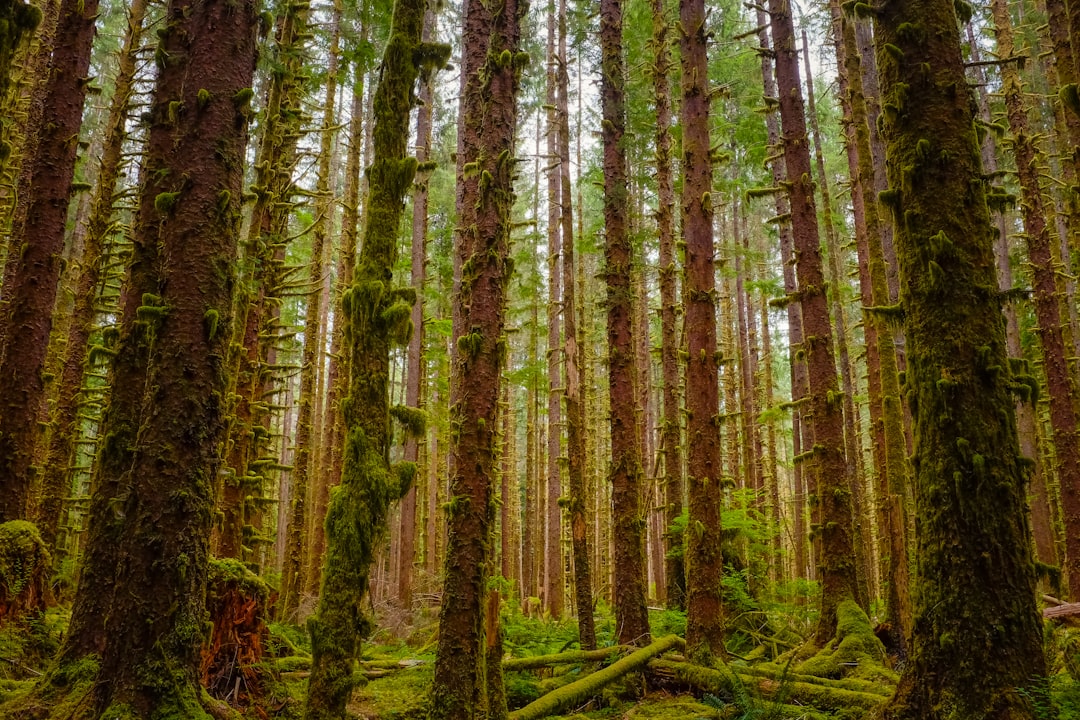
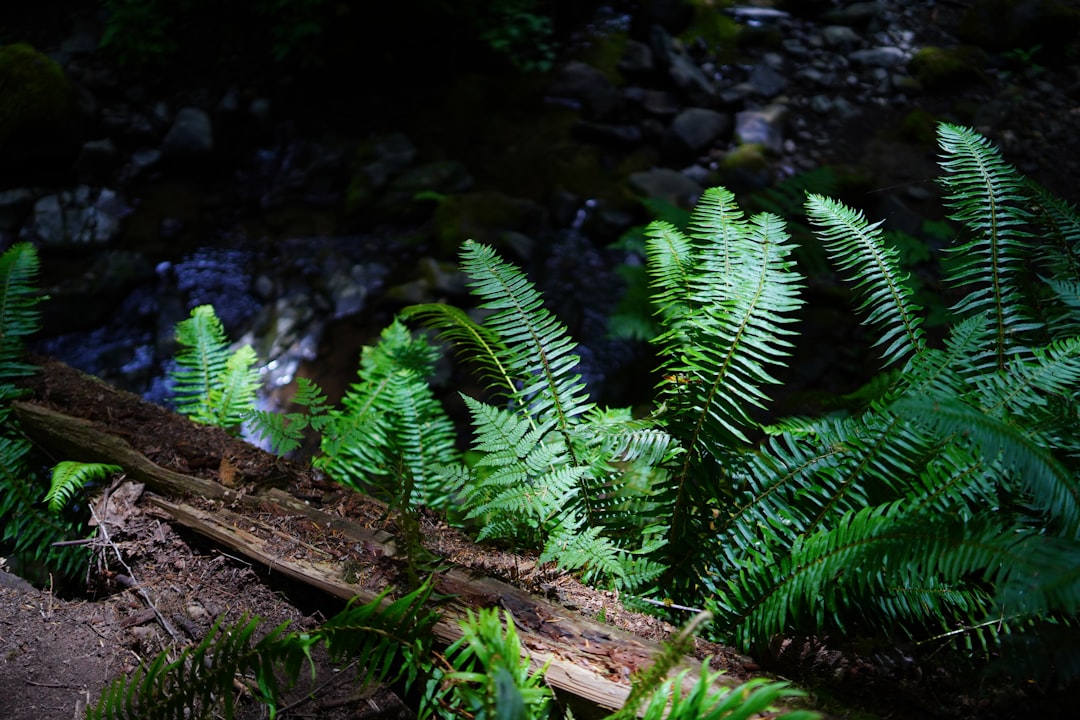
The Hall of Mosses Trail is the iconic loop — 0.8 miles through old-growth Sitka spruce and western hemlock draped in thick clubmoss. Some of these trees are 300 years old, 200 feet tall, and wider than a car. My photographer spent two hours on this short trail alone, and I couldn’t blame her. The light filtering through the canopy turns everything jade-green and gold, especially in late morning.
For a longer immersion, the Hoh River Trail extends 18.3 miles to the Blue Glacier moraine. You don’t need to do the whole thing — even going 3-4 miles in changes the character entirely, taking you past river gravel bars where elk graze in the early morning. Speaking of which: Roosevelt elk are everywhere in the Hoh. We counted 27 in a single meadow, including a massive bull still carrying velvet on his antlers in early August. Keep your distance — these animals weigh up to 1,100 pounds and do not appreciate selfie attempts.
Bug spray is non-negotiable here. The rainforest holds moisture and mosquitoes long after the coastal areas dry out. I use Repel 100 with DEET — it’s the only thing that consistently works in dense, wet environments like the Hoh. Pair it with a Sukeen cooling towel around your neck, because even in shade, August temperatures in the 70s feel hotter when the humidity sits at 90%.
Rialto Beach and the Wild Coast
Olympic’s 73 miles of coastline aren’t connected by a single road. You access them in segments, and Rialto Beach is the most dramatic entry point. It’s a 40-minute drive from Forks (yes, that Forks — the town has fully embraced its Twilight fame, for better or worse), and the beach hits you with a wall of salt air, stacked driftwood logs, and sea stacks that rise from the surf like broken teeth.
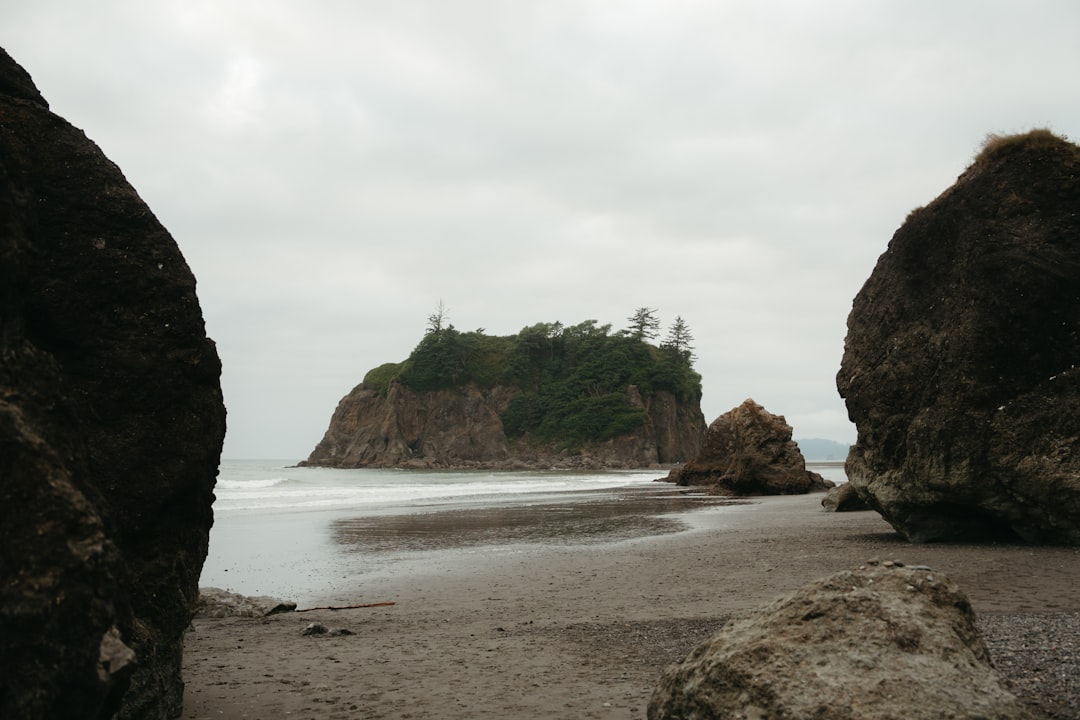
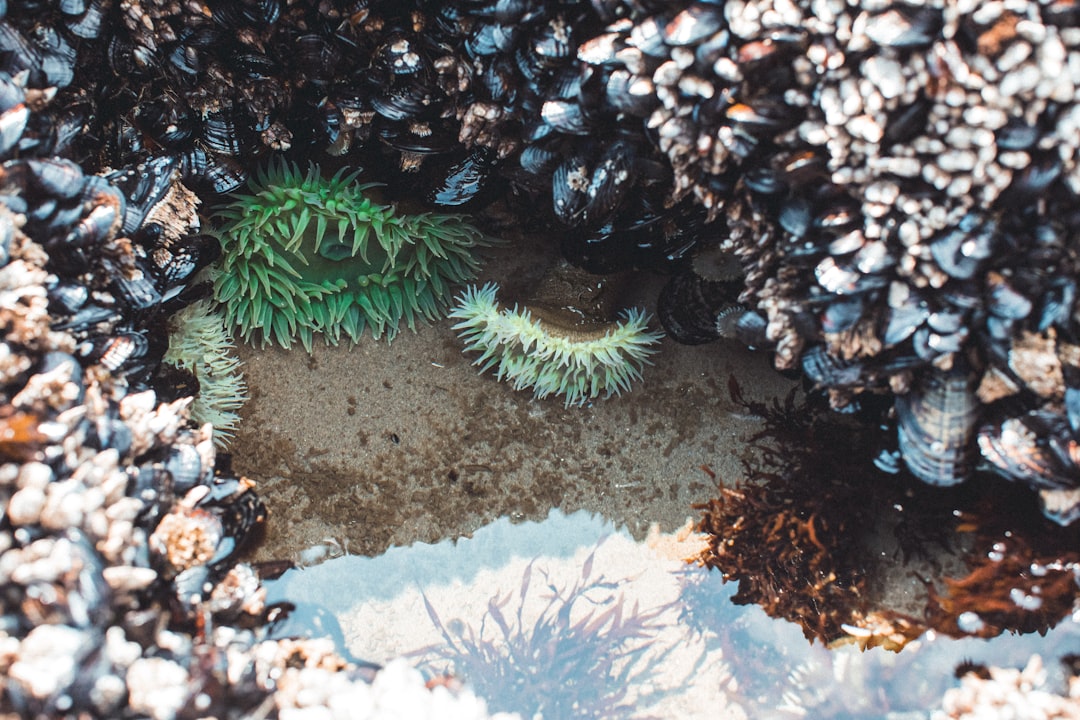
The must-do hike here is the 1.5-mile walk to Hole-in-the-Wall, a natural sea arch carved into a headland. Time it for low tide — at high tide, the route is impassable and genuinely dangerous. Grab a tide chart from the visitor center or check online before you go. When the tide is out, you’ll find tide pools brimming with purple ochre sea stars, green anemones, and tiny crabs. It’s the kind of intimate wildlife encounter that doesn’t require binoculars or patience — just a willingness to crouch on wet rocks.
What surprised me most about the Olympic coast was the sound. There’s no boardwalk, no concession stand, no road running behind the beach. It’s just waves and wind and the occasional bald eagle. Our crew sat on a driftwood log at sunset and didn’t speak for twenty minutes. That kind of silence is increasingly rare, and it’s worth the drive alone.
Lake Crescent and Sol Duc Falls: The In-Between
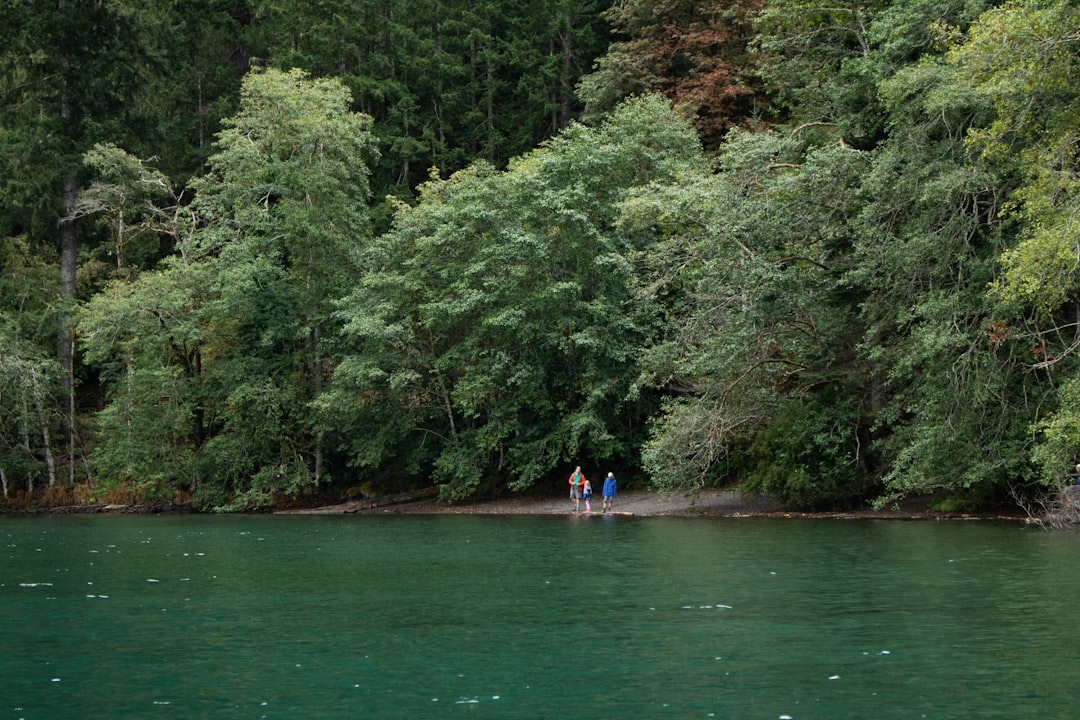
Between the mountains and the coast, two stops deserve a detour. Lake Crescent is a glacially-carved lake so clear you can see 60 feet down, with water so blue it looks edited. The Moments in Time Trail is an easy 0.6-mile loop through old-growth forest along the shore, and the longer Spruce Railroad Trail follows an abandoned railroad grade for four flat miles with swimming holes along the way.
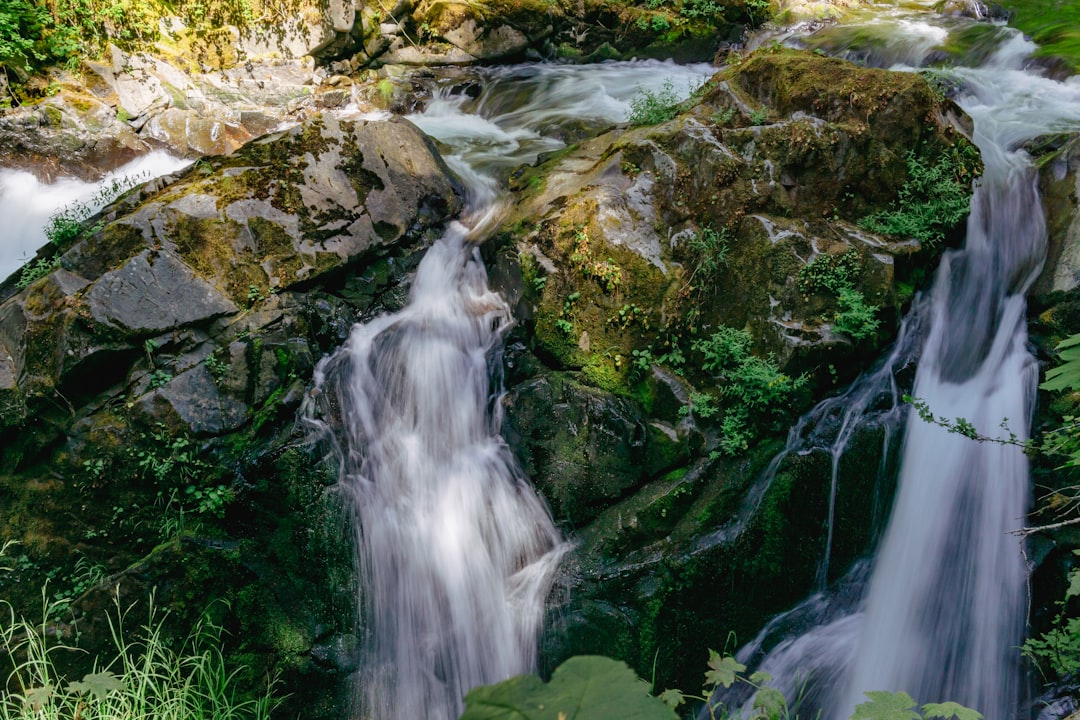
Sol Duc Falls is the other don’t-skip stop. It’s a 1.6-mile round trip through old-growth forest to a three-pronged waterfall that crashes into a narrow canyon. The trail is easy and family-friendly, and the falls are impressive in any season — but in August, when the snowmelt has slowed to a trickle elsewhere in the park, Sol Duc still roars.
The Gear That Earned Its Spot
Olympic’s diversity means you’re essentially packing for three different trips. After a week of testing, here’s what actually mattered:
Footwear is critical. You’ll go from dry mountain trails to muddy rainforest paths to slick coastal rocks in the same day. I wore NORTIV 8 waterproof hiking boots for the entire trip and never once had wet feet — even wading through ankle-deep mud in the Hoh. The ankle support matters on the coastal rocks, which are treacherous when wet.
For day hikes, the Maelstrom 40L backpack carried our rain gear, food, and camera equipment without complaint. It includes a rain cover, which sounds like a nice-to-have until you’re caught in one of Olympic’s infamous weather shifts. For shorter trail walks and tide pool exploring, I swapped to the Osprey Daylite Cinch — lighter, less bulky, perfect for a water bottle and snacks.
Hydration matters more than you’d think. Olympic’s trails can be deceptively long, and the cool air tricks you into under-drinking. I used a POWCAN 26oz insulated bottle that kept water cold all day, even sitting in a hot car between stops. For multi-hour hikes, TREKOLOGY Trek-Z trekking poles saved my knees on the downhill sections — they fold small enough to stash in a daypack when you don’t need them.
If you’re planning to camp — and you should, because Olympic’s campgrounds are stunning — a lightweight stove system changes the experience. The AOTU portable camping stove boils water for coffee and dehydrated meals without weighing down your pack. Waking up at the Hoh Campground to the sound of the river, with a hot cup of coffee and elk grazing 50 yards away — that’s the moment that hooked me on this park.
Wildlife You’ll Actually See
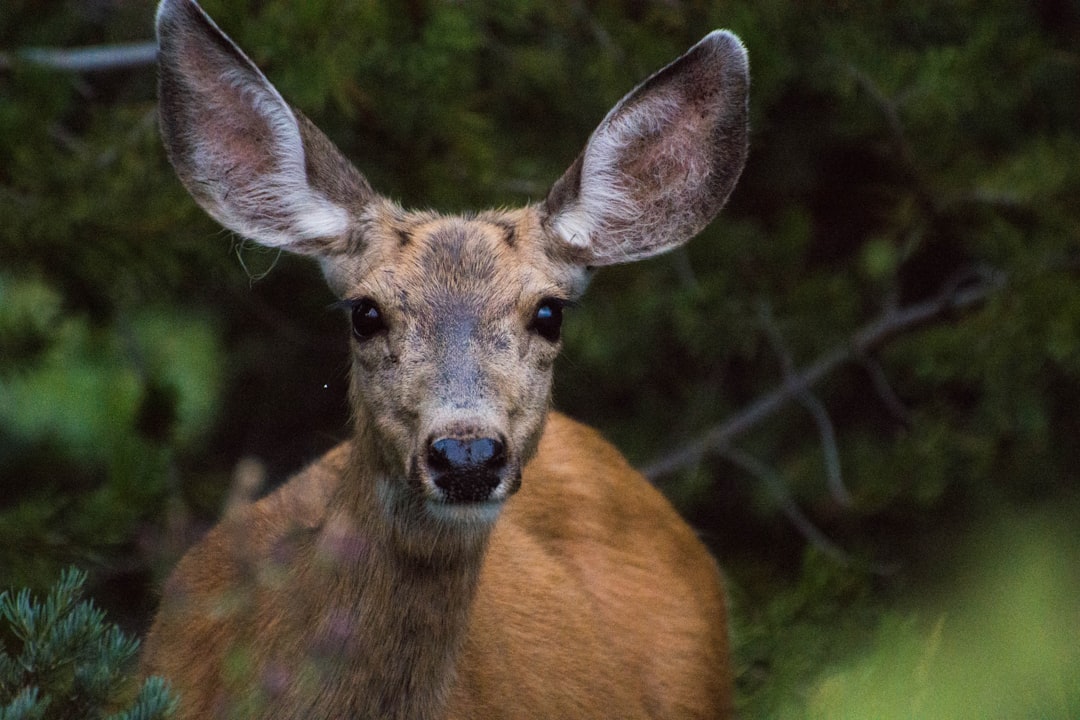
Olympic is one of the few national parks where wildlife sightings are practically guaranteed. The Roosevelt elk herd is the largest in the Pacific Northwest — we saw them in the Hoh, at the Quinalt Rainforest, and along the road to Hurricane Ridge. Black bears are present but reclusive; we spotted one crossing a meadow near Obstruction Point at dusk. Coubers exist but are almost never seen.
The coastal wildlife is different but equally accessible. Harbor seals haul out on offshore rocks. Bald eagles are so common along the coast that we stopped pointing them out by day three. And the tide pools at Rialto Beach and Ruby Beach are miniature ecosystems — sea stars, urchins, nudibranchs, tiny fish trapped in clear pools until the next high tide.
Planning Your August Visit
Here’s the practical reality: Olympic in August requires planning. Campgrounds fill by Thursday for weekend stays. Hurricane Ridge Road has timed entry restrictions on busy days — check the NPS alerts page before you go. The Hoh Rainforest entrance can have a 30-45 minute wait by mid-morning; arrive before 9 AM or after 4 PM.
For a three-day Olympic trip, I recommend basing yourself in two locations. Port Angeles gives you access to Hurricane Ridge, Lake Crescent, and Sol Duc. Forks or a coastal campground puts you within striking distance of Rialto Beach, the Hoh, and Ruby Beach. Driving between the two takes about 90 minutes — manageable, and far better than trying to see everything from a single base.
If you’re combining Olympic with other Washington parks, the North Cascades are a four-hour drive east and make a perfect two-park road trip. And if you’re traveling on a budget, the America the Beautiful pass covers your entrance fees at both parks for $80 — less than the cost of two individual visits.
One final tip: Olympic is one of the best arguments I know for visiting national parks in late August rather than July. The crowds thin noticeably after the third week, the weather stabilizes, and the elk start bugling in the meadows — a sound that’ll stop you mid-stride and make you forget whatever deadline you left at home.
Olympic National Park doesn’t fit neatly into a single category. It’s not just a mountain park, or a forest park, or a coastal park. It’s all three, smashed together on a peninsula that feels like it was designed by a committee that couldn’t agree on anything except excellence. Go in August. Bring rain gear and hiking boots and a sense of wonder. And give it more than two days — because the third ecosystem is always the one that ruins you for everywhere else.
1 thought on “Olympic National Park in August: Three Ecosystems, One Unforgettable Trip”