Why Your Van’s Electrical System Matters More Than You Think
There’s a moment every van builder hits: standing in an empty cargo van, staring at bare metal walls, trying to imagine where the wires will go. It’s equal parts exciting and terrifying. The electrical system is the nervous system of your camper van. Get it right, and you’ll wake up to fresh coffee in a BLM parking lot with your phones charged and your fridge cold. Get it wrong, and you’ll be that person sitting in a laundromat at 7 AM, begging for an outlet.
Most van builders settle for a modest setup — a couple hundred amp-hours of lithium, maybe 400 watts of solar on the roof, and a small inverter. That formula works fine for weekend warriors. But what happens when you want to run an air conditioner off solar? Or charge an electric vehicle from your van’s battery bank? Or spend weeks deep in the backcountry without ever starting the engine?
Designing a camper van electrical system that actually delivers on the promise of true off-grid independence requires thinking bigger — and smarter — than the standard build.
Start With the Math: Sizing Your Battery Bank
Before buying a single component, figure out what you actually need. Power consumption varies wildly depending on your travel style. A minimalist who runs a few LED lights and charges a laptop might get by on 200 amp-hours. Someone running a 12-volt refrigerator, a water pump, a vent fan, a diesel heater, and occasional air conditioning needs dramatically more.
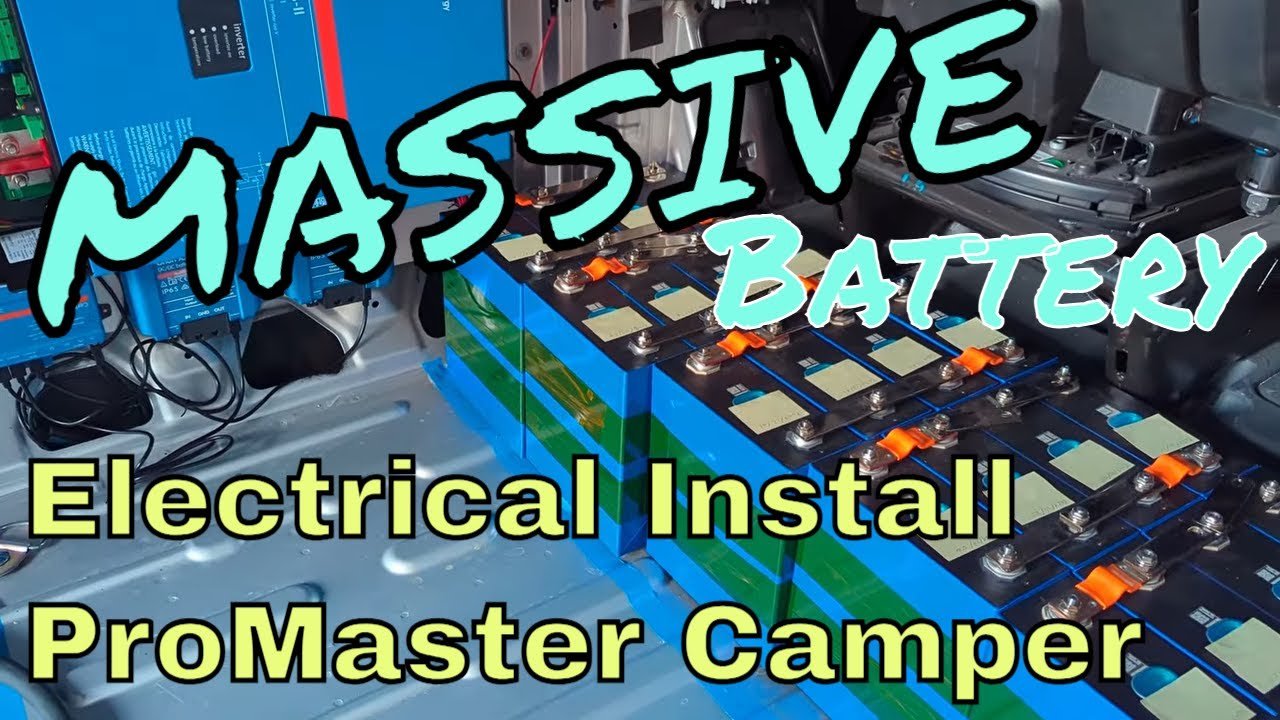
The approach worth studying is building for abundance rather than scarcity. A massive battery bank — think 30+ kilowatt-hours — fundamentally changes what a camper van can do. With that much stored energy, the van becomes a mobile power plant. You can run heavy-draw appliances without anxiety. You can weather a week of cloudy skies and still keep the fridge running. You can even charge an EV from your solar array, pulling free energy from the sun and delivering it to your car through an inverter.
The most common battery chemistry for van builds today is LiFePO4 (lithium iron phosphate). Individual cells like the EVE MB31 314Ah cells offer 3.2 volts nominal and can be arranged in series and parallel to hit your target voltage and capacity. An 8S4P configuration — eight cells in series, four parallel groups — yields a 24-volt system with over 37 kilowatt-hours of usable storage. That’s roughly thirty times the capacity of a typical entry-level van battery setup.
24 Volts Changes Everything
Most DIY van electrical systems run on 12 volts. It’s the standard — every RV appliance, every cigarette lighter plug, every Amazon-listed fan runs on 12V. But once your power needs scale up, 12 volts becomes a liability.
The problem is current. Power equals voltage times current. To deliver 3,000 watts at 12 volts, you need to push 250 amps through your cables. That requires massive, expensive, hard-to-bend welding cable — and even then, voltage drop over distance becomes a real problem. At 24 volts, that same 3,000 watts only requires 125 amps. The wire gauge shrinks. The connections become more manageable. The entire system gets more efficient.
Stepping up to a 24-volt architecture means you need a Victron MultiPlus-II inverter/charger designed for the higher voltage. You need a charge controller that can handle the input. You need distribution fuses rated for DC power at these levels. But the payoff is a cleaner, more efficient system that can scale without becoming an unmanageable tangle of thick copper cables.
The Solar Question: How Much Roof Is Enough?
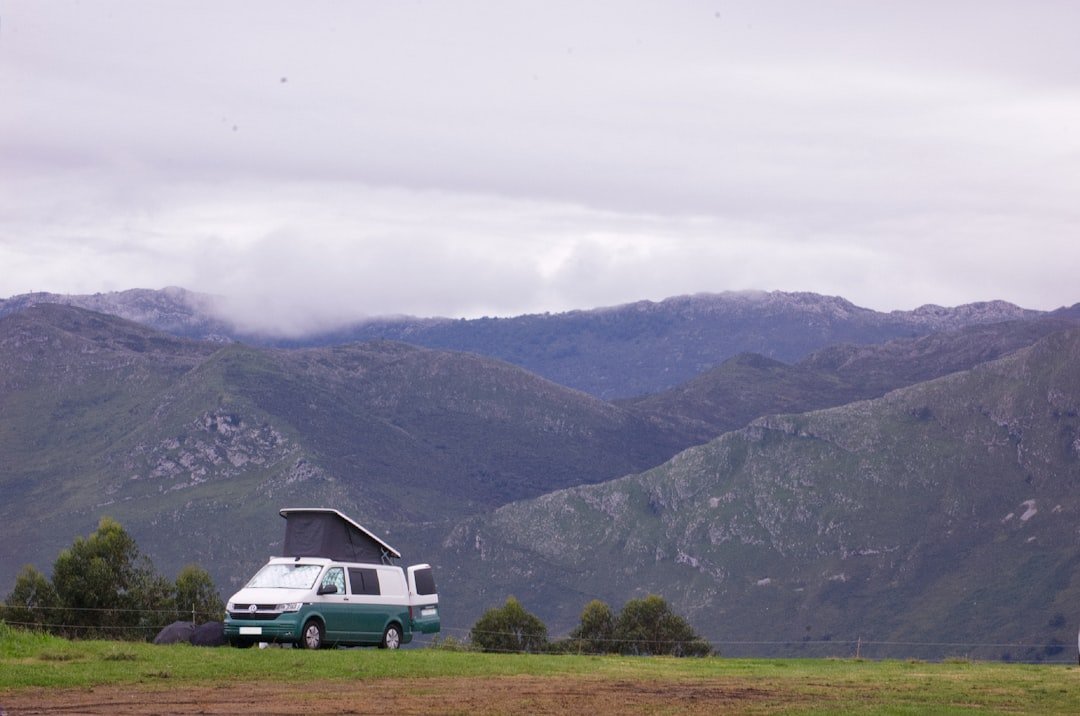
A massive battery bank is useless if you can’t recharge it. That’s where solar comes in — and the roof of a camper van is surprisingly limited real estate. A Ram ProMaster 159 (non-extended) has roughly twelve feet of usable roof length. After accounting for a vent fan, a Starlink dish, and the curvature of the roof itself, you’re working with maybe 40 square feet of panel space.
Four Renogy 320-watt monocrystalline panels fit on that roof if you skip the rooftop air conditioner and plan carefully. Wired in a 2S2P configuration (two in series, two parallel strings), they deliver 1,280 watts of peak generation. On a sunny summer day, that translates to roughly 5 kilowatt-hours of harvested energy — enough to run a refrigerator, a vent fan, lights, and device charging indefinitely, with surplus capacity for occasional high-draw tasks.
The choice to forgo rooftop AC is controversial in van life circles. But if your electrical system is large enough to run a split-system air conditioner mounted underneath the van — drawing from a massive battery bank rather than a gas generator — skipping the roof unit becomes the obvious tradeoff. More solar on the roof means faster charging, more boondocking days, and less dependence on shore power.
The Brain: Battery Management and Monitoring
A big battery bank without proper management is a fire hazard. Lithium cells need to be kept within safe voltage and temperature ranges, and that requires a dedicated Battery Management System (BMS). A quality BMS with active balancing monitors each cell group individually, prevents overcharging and over-discharging, and balances the cells to ensure they age evenly.
For monitoring, the Victron Cerbo GX serves as the central communication hub. It connects to the BMS, the solar charge controller, the inverter, and a battery monitor shunt to provide a real-time picture of exactly what’s happening in your electrical system. From a phone app, you can see how much power the solar panels are generating, how much the refrigerator is consuming, and how many hours of autonomy remain at the current discharge rate.
This level of monitoring isn’t just for peace of mind. It transforms how you travel. When you can see exactly how much energy you’re using and producing, you stop guessing. You know whether you can afford to run the air conditioner tonight. You know whether tomorrow’s drive will fully recharge the system via DC-to-DC charging. You know, with certainty, whether you need to find shore power or can stay another night in that incredible free camp spot.
Distribution: Where the Power Goes
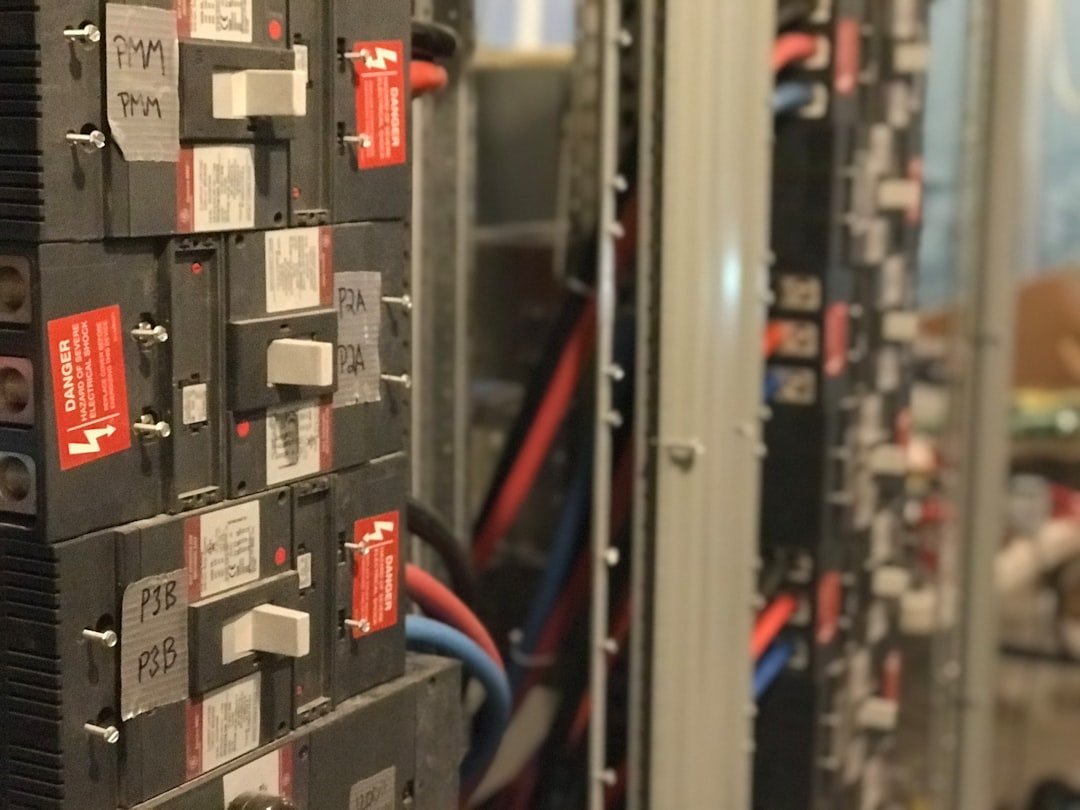
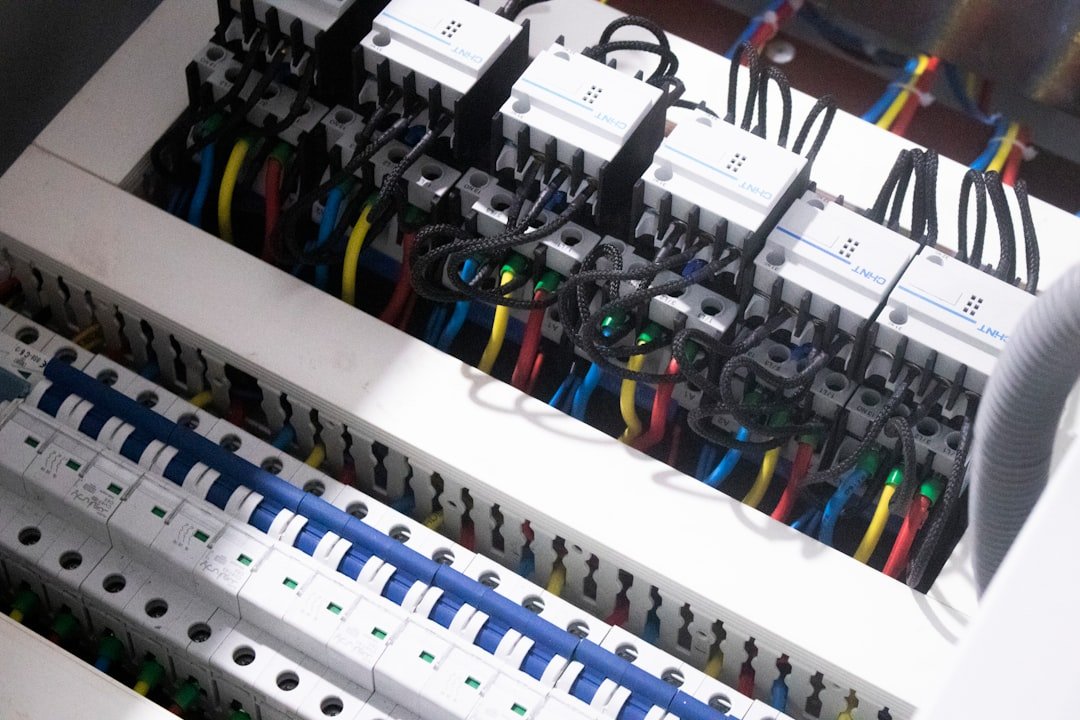
Getting power from the battery to your appliances safely requires a proper distribution system. The Victron Lynx Distributor is a modular bus bar system that centralizes all your high-current connections. Each fused output runs to a different load: the inverter, the DC fuse panel, the charge controller, the DC-to-DC charger. Without this kind of organized distribution, you end up with a nest of cables bolted directly to battery terminals — a maintenance nightmare and a potential safety hazard.
Every connection in a high-power van electrical system needs to be done right. That means using properly crimped heavy-duty copper lugs sealed with adhesive-lined heat shrink tubing. It means fusing every positive conductor as close to the battery as possible. It means using the right gauge wire for the current and the distance. Shortcuts in a 12-volt system might just result in a blown fuse. Shortcuts in a system pushing thousands of watts can melt cables, start fires, and destroy expensive equipment.
Charging While Driving: DC-to-DC
Solar is your primary charging source, but it shouldn’t be your only one. A DC-to-DC charger connects your van’s house battery to the vehicle’s alternator, turning every drive into a charging session. For a van with a massive battery bank, a single 30-amp charger barely makes a dent. That’s why many builders run dual units — two DC-to-DC chargers working in parallel to deliver 60+ amps of charging current while the engine runs.
On a front-wheel-drive van like the ProMaster, there’s an additional consideration: weight distribution. Because the engine and transmission are up front, the vehicle already has decent front-axle loading. Adding hundreds of pounds of batteries behind the driver’s seat — rather than in the rear garage — helps balance the load and improve handling. It’s an unconventional placement that most van converters don’t consider, but the physics make sense.
The MPPT Advantage
Between the solar panels on the roof and the batteries in the van, you need a charge controller. A Victron SmartSolar MPPT charge controller does more than just regulate voltage — it actively tracks the maximum power point of your solar array to squeeze every possible watt from available sunlight.
The difference between a basic PWM controller and a quality MPPT controller can be 20-30% more daily energy harvest. On a 1,280-watt array, that’s the difference between 4 kWh and 5+ kWh per day. Over a week of off-grid camping, that extra 7+ kilowatt-hours is the margin that keeps your refrigerator running through a stretch of overcast skies.
Installation: Plan Twice, Drill Once
The physical installation of a large electrical system demands careful planning. Components need to be mounted to a sturdy backing board — typically 5/8-inch plywood sealed with mold-resistant primer. That board gets secured to the van’s metal structural framing using self-tapping screws or rivnuts, and every component needs to be positioned with enough clearance for airflow, wiring runs, and future maintenance access.
Battery cells should be enclosed in a protective box that prevents accidental contact with terminals while allowing the top surface to serve as a walkable platform. Heating pads between the cells provide cold-weather protection — lithium batteries can be damaged if charged below freezing, and a few flexible heating elements wired in series add negligible power consumption while protecting a significant investment.
Every wire run should be planned before cutting cable. Leave service loops. Label both ends. Use loom or split-loom tubing to protect wires from chafing against metal edges. Route low-voltage sensor wires away from high-current cables to prevent electromagnetic interference. These details separate a professional installation from a hazardous one.
Real-World Power: What Does 37 kWh Actually Buy You?

To put 37 kilowatt-hours in perspective: a typical RV refrigerator consumes about 1.5 kWh per day. A 12-volt water pump uses roughly 0.3 kWh for a shower. A vent fan on medium speed draws about 0.05 kWh per hour. Charging a laptop and two phones adds another 0.2 kWh. In total, a van’s daily baseline consumption might run 3-5 kWh.
With 37 kWh stored and 5 kWh arriving daily from solar, the math becomes almost absurd. You could camp for a week without sun and still have power. You could run a 1,000-watt microwave for 37 hours straight. You could, as some ambitious builders have demonstrated, charge a Tesla from your van’s battery bank — adding roughly 100 miles of range to the car using nothing but the solar panels on your van’s roof.
That level of energy independence opens up a different kind of van life. You’re no longer planning your trips around campground hookups. You’re not rationing power on cloudy days. You’re not running the engine just to charge the house batteries. The van becomes truly self-sufficient — a mobile basecamp that generates, stores, and delivers power on your terms.

What It Takes to Get There
Building a system this large isn’t cheap, and it isn’t simple. The battery cells alone represent a significant investment. Add in a quality inverter/charger, MPPT controller, BMS, distribution system, monitoring gear, DC-to-DC chargers, wiring, fuses, and mounting hardware, and you’re looking at a five-figure electrical system. But spread that cost across years of off-grid travel — measured in free campsites instead of $40/night RV parks — and the math starts to shift.
The real value isn’t just financial. It’s the freedom to park anywhere and live comfortably. It’s the confidence that comes from knowing exactly what your system can handle. It’s the quiet satisfaction of watching your battery monitor tick upward on a sunny afternoon, knowing that every percentage point represents another hour of independence from the grid.
For travelers who want to explore the most remote corners of the country without sacrificing the comforts of home, a well-designed electrical system is the single most important investment in the build. Not the bed. Not the kitchen. Not the Instagram-worthy ceiling height. The power system. Because when the sun sets on your third day of boondocking in the desert, and your lights still work, your fridge is still cold, and your phone is still charged — that’s when you understand why the electrical system matters more than anything else.
If you’re planning your own build, start with a roof full of solar panels and a battery bank sized for the life you actually want to live. Not the life you think you can afford on 200 amp-hours. The life that lets you wake up anywhere, powered by nothing but sunlight and good decisions.
5 thoughts on “Powering Off-Grid Van Life: How to Design an Electrical System That Never Leaves You Stranded”